 Where to Eat Near Penn Station That Isn't a Chain
US Open 2026
Daniil Medvedev’s New York Experience Still Makes Him Dangerous
If Daniil Medvedev is in New York, his 2021 US Open title and unusual hard-court habits would give fans a clear tactical lens for watching him.
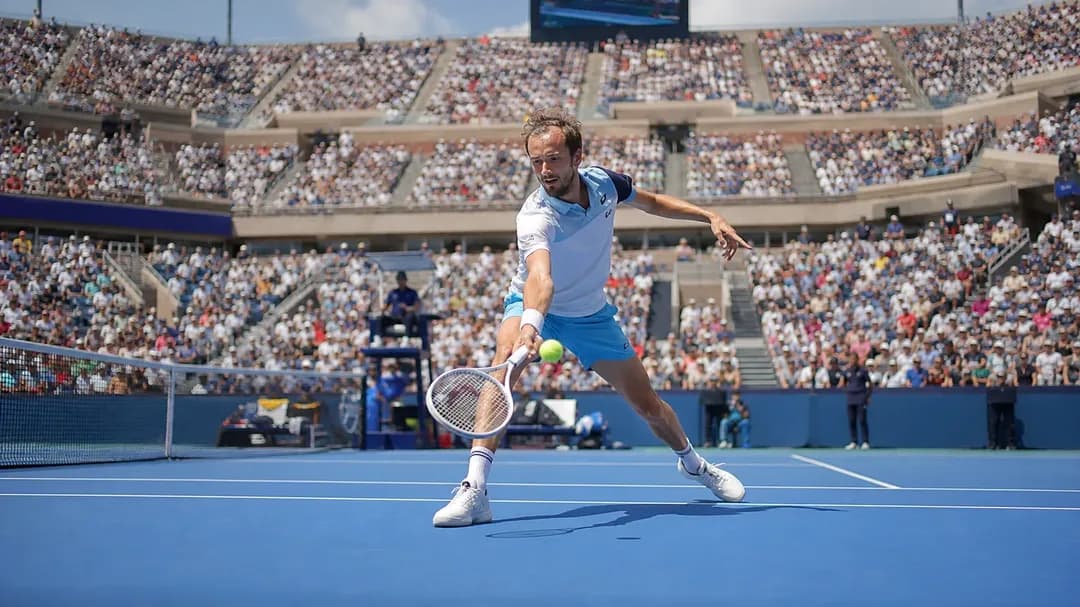
Daniil Medvedev’s New York story is anchored by one confirmed fact that still matters to tennis fans: he won the 2021 US Open. That does not guarantee anything about his 2026 participation, seeding, draw, form, or schedule, and fans should verify those details through official tournament channels when the time comes. But if Medvedev is part of the field, his hard-court identity remains unusually clear. He is known for deep return positions, broad defensive range, and unconventional patterns that can make a normal rally feel slightly distorted. For spectators, that makes him compelling because the point is not only about speed or shotmaking. It is about spacing, patience, and how one player can stretch the court while often standing farther back than expected. His best tennis asks opponents to solve repeated tactical problems under stress.
Text Karpo Now: Tell us what matters most for Daniil Medvedev s New York Experience, and Karpo can turn current US Open updates into a practical plan before you go.
Why New York Fits
New York hard courts can reward players who defend, redirect, and absorb pace without rushing. Medvedev’s game, at its best, is built around those skills. He can stand far behind the baseline to return serve, then use reach and timing to send the ball back with enough depth to reduce the server’s first-strike advantage. That stance can look strange because it gives away visible court space. The tradeoff is time. By backing up, he gives himself an extra fraction of a second to read big deliveries and make the server play one more ball.
The key is what happens after the return. A deep return is not only a survival shot. It can force the server to hit the next ball from an awkward height or from behind the baseline. If Medvedev reaches a stable rally, the point often becomes a geometry problem. The opponent may see open court and feel tempted to attack early, but Medvedev’s range can make that opening smaller than it appears. In a loud, high-pressure setting, that doubt can matter.
Serve And Return Patterns
Medvedev’s serve is not just about free points. It is also a tool for shaping the next shot. On hard courts, watch whether he uses wide serves to pull an opponent off the court, body serves to jam the return, or central serves to reduce angles. Even when the serve is not an ace, it can create a predictable reply. That predictability helps him begin points on his own terms and steer rallies toward patterns he understands well.
On return, the obvious visual cue is his deep position, but the better question is whether the return has depth, direction, and safe net clearance. A short return lets an aggressive server step in. A neutral deep return can erase much of the serve’s advantage. If he repeatedly makes a server hit another shot after a strong delivery, pressure shifts. Service games become more physical, and the server may start aiming closer to the lines.
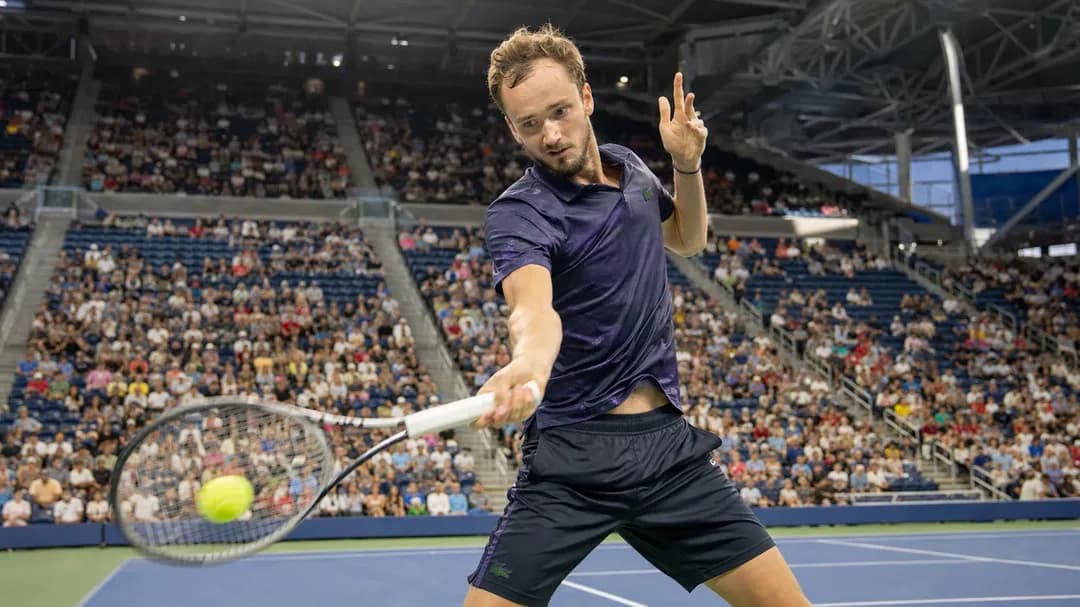
- Compare his return position on first serves and second serves.
- Notice whether his returns land deep enough to prevent immediate attacks.
- Track how often the server’s first forehand is struck from behind the baseline.
- Look for body serves, which can challenge spacing and longer swings.
Movement And Court Geometry
Medvedev’s movement can be deceptive because it does not always look textbook. His defensive range changes how opponents see the court. A crosscourt forehand that usually creates control may come back deep and low. A drop shot that works against a less efficient mover may need better disguise. A wide serve may open space, but only if the follow-up shot is accurate enough to beat his recovery.
This is where hard-court geometry becomes the match inside the match. Medvedev often benefits when rallies become diagonal: backhand to backhand, forehand to forehand, corner to corner. From there, he can test whether the opponent is willing to change direction down the line. That change is tempting, but it carries risk because the net is higher and the target is smaller. If the opponent misses too often, Medvedev can win points without appearing to force the issue. His pressure can be quiet: one more neutral ball, one more recovery step, one more awkward contact.
Fans should also watch his recovery after he hits. Does he return to the middle, or does he shade toward the opponent’s most likely pattern? Smart defense is not only running. It is anticipation. Medvedev’s hard-court patterns often involve inviting a shot that looks available, then arriving in time to make the opponent play again. Over a long set, that can affect shot selection.
Pressure Points To Watch
New York pressure is different from practice-court pressure. The crowd is louder, the sessions can feel larger, and momentum can swing quickly. Medvedev’s 2021 US Open title confirms that he has handled the event at the highest level, but any future match would still be its own test. Pressure management is not permanent; it is rebuilt point by point. The revealing moments are often not the highlight shots. They are the first point after a missed chance, the return at 30-all, or the second serve when the stadium senses tension.
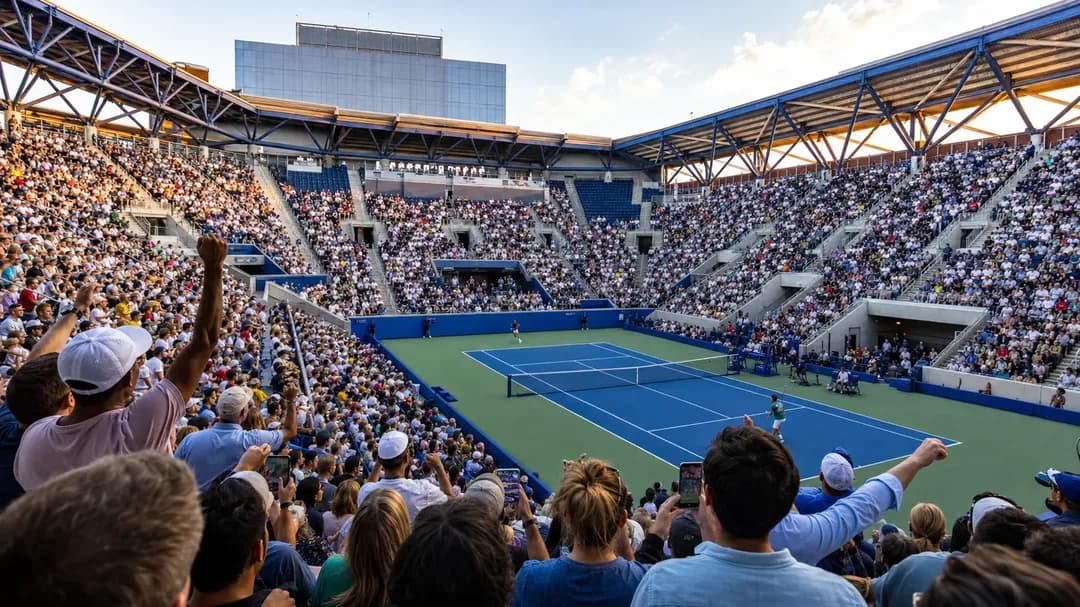
Because Medvedev can extend rallies, he can make pressure feel cumulative. Opponents may win spectacular points and still find themselves working hard in every service game. If he is returning deep and forcing long exchanges, the scoreboard can become mentally heavy. A server who starts freely may begin wondering whether a bigger serve is needed, whether the next forehand must be closer to the line, or whether a net approach is worth the risk.
- At deuce, see whether he values depth over flash.
- On break points, watch if he backs up farther to read the serve.
- After long rallies, notice whether the opponent rushes the next first strike.
- When behind, look for simple patterns that restore rhythm before risk.
The fan-friendly way to read his matches is to separate style from effectiveness. A deep return stance can look passive, yet be aggressive in purpose. A rally ball down the middle can look safe, yet deny angles. A wide defensive get can look like survival, yet reset the point. Medvedev’s danger often comes from making opponents prove they can finish cleanly again and again.
Practical Notes
If you are planning a US Open visit and want to watch Medvedev if he appears in the field, keep plans flexible until official player and schedule information is posted. Check the tournament’s player index and event schedule directly rather than assuming entry or court assignment. For live viewing, a seat that shows both baselines can help you appreciate return depth and recovery patterns. Warmups, when available, may reveal serve targets, return positioning, and movement intensity before the first game. The value is not only whether he wins, but whether you can recognize the tactical tug-of-war that makes his New York tennis distinctive.
Tags: #USOpen2026 #Tennis #GrandSlam #NewYorkTennis #ArthurAsheStadium #FlushingMeadows #USOpenGuide #TennisFans #SportsTravel #HardCourt #NewYork #KarpoFinds
Sources consulted: atptour.com — Official reference · usopen.org — Official reference · usopen.org — Official reference
All trademarks are the property of their respective owners.
Ask Karpo first
Want to know what is confirmed, when to show up, and how to make daniil medvedev s new york experience work for your day? Ask Karpo for current US Open updates, a respectful fan plan, and a live route around Flushing Meadows.
Ask Karpo for more information.
Keep reading
- Where to Eat Near Penn Station That Isn't a Chain
 Andytown Coffee in the Outer Sunset: The Snowy Plover Explained
- Best Things to Do in Chicago: What the City Gives Away