 Old Town Music Hall El Segundo Concerts: Silent Films and Mighty Wurlitzer Magic
Weekend Plans
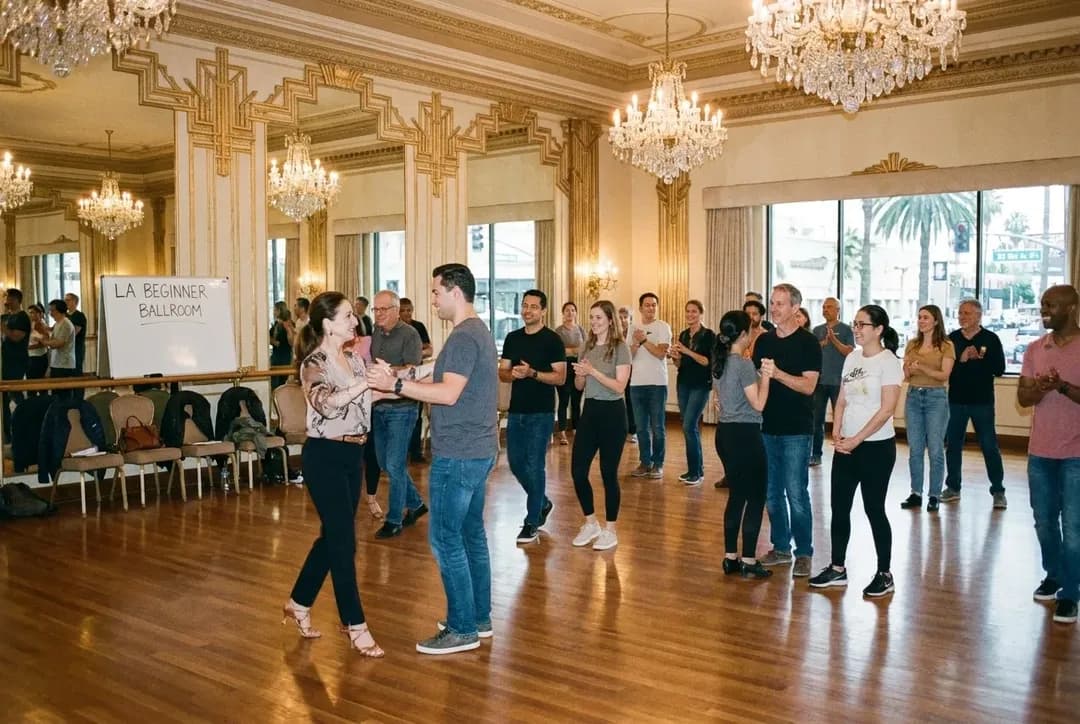
Dancing with the Stars: LA Beginner Ballroom Classes This Weekend
Your guide to finding the right beginner ballroom experience in LA—from trial formats and partner policies to footwear and social comfort.
The resurgence of dancing with the stars as a cultural touchstone has sparked curiosity among Angelenos who've long admired elegant footwork from their couches but never stepped onto a sprung floor themselves. Whether you're planning a solo Saturday adventure, hoping to surprise a date with something beyond dinner and a movie, or rallying a friend for mutual moral support, the prospect of walking into a ballroom studio triggers a familiar cocktail of excitement and self-consciousness. Los Angeles offers several established schools—Westmor Ballroom, Ballroom Dance Academy, and JT Ballroom Dance Studio among them—each with distinct trial formats, partner policies, and beginner philosophies. The challenge isn't finding a class; it's determining which structure matches your comfort level, schedule constraints, and tolerance for social friction when you're still learning left from right.
Text Karpo your LA starting point, preferred dance style, partner situation, and comfort level for a beginner class shortlist with transit timing and one lower-pressure backup.
Trial Formats: Complimentary Privates Versus Drop-In Groups
Studios in LA diverge sharply on how they introduce absolute beginners to ballroom. JT Ballroom Dance Studio in Tarzana offers a complimentary first private lesson and explicitly recommends starting there before joining group classes, allowing you to fumble through basic box steps without an audience. Westmor Ballroom provides a free thirty-minute wedding dance intro and sells private lessons in forty-five-minute blocks, but their group class schedule lists styles like foxtrot, waltz, and salsa without specifying beginner prerequisites or trial pricing. Ballroom Dance Academy runs weekend group series—Saturday Argentine Tango at eleven a.m., an all-levels Ballroom and Latin hour at noon—and promotes a two-for-one friend pass for first-time group buyers, plus bundled specials combining group and private instruction. The tradeoff is straightforward: private trials let you ask embarrassing questions and repeat the same step ten times without holding up a room, while group drop-ins cost less and immediately place you among peers who are equally lost.
If you're attending solo and dread the spotlight, a complimentary private session removes the performance anxiety but also delays the social payoff—you won't meet other beginners or observe how strangers navigate the same confusion. If you're bringing a date or friend, a group class spreads attention across the room and builds camaraderie through shared awkwardness, but you'll rotate partners in many formats, which some couples find uncomfortable and others find liberating. Before committing, verify whether the studio's "beginner" or "all levels" label genuinely accommodates zero experience or assumes you've seen a waltz before; call ahead to ask what percentage of the room will be first-timers on the date you're considering, and whether the instructor demonstrates every step or expects you to follow along from prior knowledge.
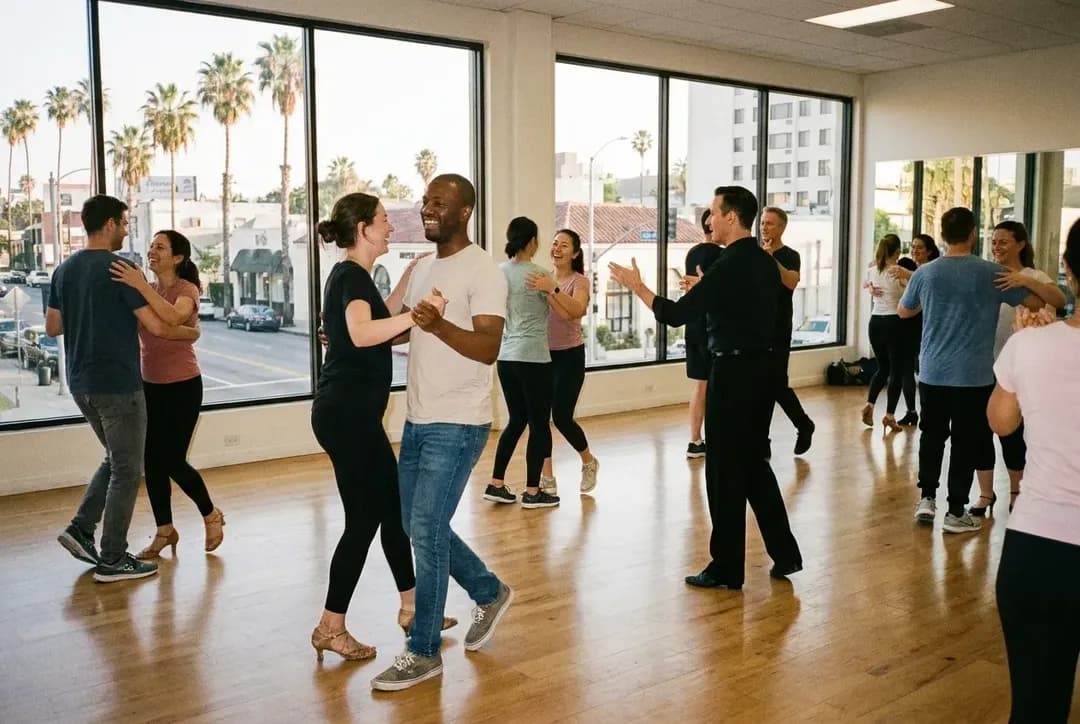
Partner Requirements and Rotation Policies
One of the most common beginner anxieties—"Do I need to bring someone?"—receives different answers depending on format. JT Ballroom Dance Studio explicitly states "No Partner? No Problem!" and notes that in private lessons your instructor becomes your dance partner, while group classes accommodate singles through rotation. Ballroom Dance Academy's weekend schedule includes both partner-based series and rotation-friendly formats, though the calendar itself doesn't specify rotation rules for each class. Westmor Ballroom emphasizes couples-focused wedding choreography and private lessons but offers group classes in styles like salsa and cha-cha that traditionally involve partner changes. The practical reality: if you arrive solo to a group class, you'll likely rotate every few minutes, dancing with strangers of varying skill and height; if you bring a date or friend, some studios let you stay paired the entire hour while others enforce rotation to ensure everyone gets practice leading and following.
Rotation can be a relief—it distributes the pressure of learning across multiple bodies and prevents one person from bearing the brunt of your mistakes—but it also introduces friction if you're self-conscious about proximity, sweat, or stepping on toes. If you're attending as a romantic date, rotation may feel counterproductive; confirm in advance whether the studio allows couples to opt out or offers couple-only sessions. If you're solo and nervous about physical contact with strangers, private lessons eliminate that variable entirely, though you'll pay significantly more per hour. For friend pairs hoping to learn together without romantic undertones, ask whether the studio teaches both lead and follow roles to everyone or assigns roles by gender, and whether you can switch roles mid-class to share the cognitive load.
Footwear, Attire, and What to Bring
JT Ballroom Dance Studio advises wearing "something you are comfortable in that does not restrict too much movement" and specifies that shoes should be "stable and secure on your feet," a guideline that leaves room for interpretation. Ballroom Dance Academy and Westmor Ballroom do not publish beginner attire requirements on their public pages, which means you'll need to ask when booking. The general beginner standard across studios: avoid sneakers with rubber soles that grip the floor and prevent pivoting, skip flip-flops or backless sandals that fly off during turns, and steer clear of stilettos unless you already know how to walk in them. Leather-soled dress shoes, jazz shoes, or even clean indoor-only flats work for most first sessions; some studios sell or rent ballroom-specific shoes, but that's an unnecessary expense until you've decided to continue.
For clothing, prioritize range of motion over fashion—jeans restrict hip movement, and overly loose fabrics can tangle during spins. Many beginners default to activewear or casual business attire; both are acceptable as long as you can lift your knees and extend your arms without strain. Arrive ten minutes early, as JT recommends, to handle check-in, stash your belongings, and observe the room's vibe before the instructor calls the class to order. Bring water, especially for weekend afternoon sessions in studios without robust air conditioning, and consider a small towel if you perspire visibly—partner dancing involves hand contact, and self-consciousness about damp palms can overshadow the entire experience. If the studio offers a tour or lobby observation window, use it to gauge whether the existing students look relaxed or stressed, whether the instructor demonstrates patiently or rushes through combinations, and whether the space feels welcoming or cliquish.
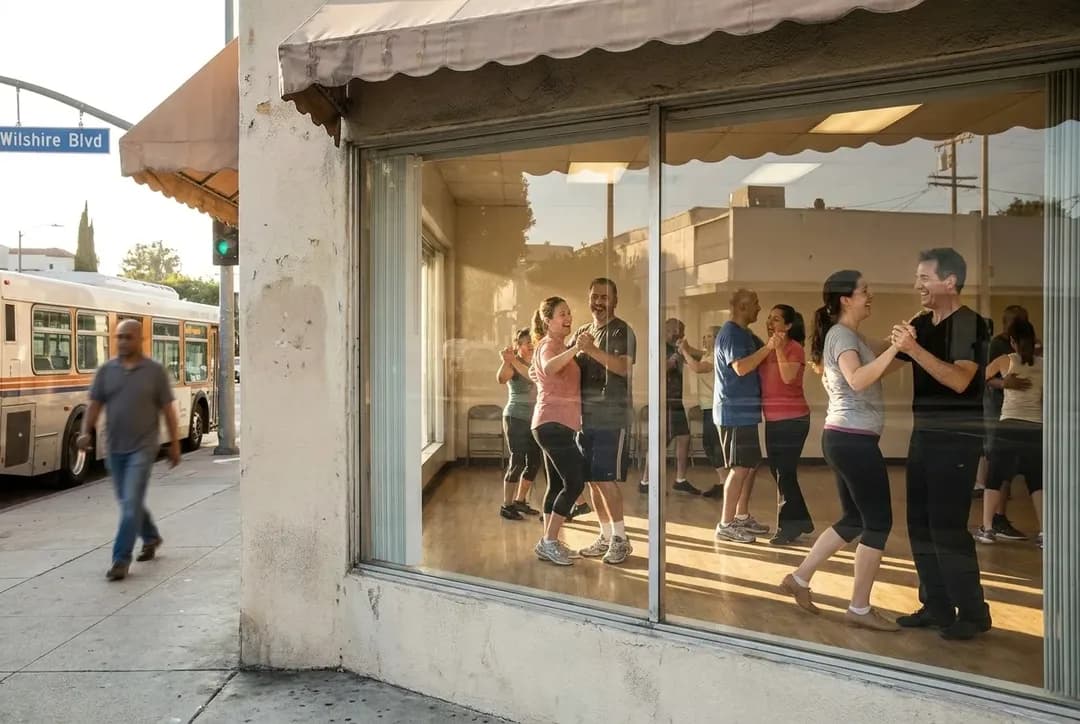
Transit, Parking, and Timing Your Arrival
Westmor Ballroom operates in central Los Angeles with a listed phone number but no address published in the provided source; Ballroom Dance Academy references Hollywood Dance Center for some evening teacher training sessions, suggesting multiple locations; JT Ballroom Dance Studio sits at 18928 Ventura Boulevard in Tarzana, serving the western San Fernando Valley. None of these studios appear on Metro rail lines, and weekend bus frequency to Tarzana or Hollywood can stretch to thirty-minute intervals. If you're relying on Metro, use the Trip Planner and check real-time arrivals before leaving; budget extra time for transfers and walking, and confirm the studio's exact address when booking so you're not searching for an unmarked door five minutes before class starts. The LA Metro app provides real-time updates and alerts for delays, which matter more on weekends when service gaps widen.
If you're driving, verify parking availability and cost—some studios offer free lots, others rely on metered street parking that runs out by mid-morning on Saturdays. Arriving ten to fifteen minutes early, as JT suggests, isn't just courtesy; it gives you time to find parking, locate the entrance, use the restroom, and settle your nerves before the instructor begins. If you're coordinating with a friend or date, agree on a meeting point outside the studio rather than inside, where you might feel pressured to start without them. For afternoon or early evening classes, consider whether the session overlaps with meal times—dancing on an empty stomach invites lightheadedness, but a heavy lunch beforehand can make movement uncomfortable. Pack a light snack and eat it an hour before class, and plan a post-class debrief location nearby where you can process the experience over coffee or a casual bite.
What to Verify Before Booking and Realistic Backup Plans
Before you commit to a weekend slot, confirm several details that studios don't always advertise clearly: whether the class runs as a drop-in single session or requires enrollment in a multi-week series (Ballroom Dance Academy lists four-week series for several styles); whether the advertised time is the start of instruction or the check-in window; whether the studio enforces a strict beginner cap or mixes skill levels in "all levels" classes; and whether cancellations are permitted if you lose your nerve or a conflict arises. Ask whether the instructor will teach one dance style for the full hour or rotate through multiple styles, which can either ease the learning curve by offering variety or overwhelm you with too many new patterns. Inquire about class size—an eight-person group allows individual attention, while a thirty-person room can feel anonymous and chaotic.
Have a backup plan for the likely scenario that your first class doesn't meet expectations. If the group pace is too fast, ask whether the studio offers slower beginner tracks or additional private coaching at a discount for students who've attended a group session. If the social dynamic feels cliquish or the instructor's teaching style doesn't click, research the other studios on your list rather than abandoning ballroom entirely—instructor personality varies widely, and a poor fit at one location doesn't predict your experience elsewhere. If you discover mid-class that you hate partner dancing but enjoy the music and movement, inquire about non-partner styles like solo Latin or rhythm classes. And if the whole experiment confirms that ballroom isn't your activity, that's valuable information too—better to spend one Saturday afternoon and a modest class fee discovering it than to buy a multi-month package out of misplaced optimism. The goal isn't perfection on your first attempt; it's gathering enough data to decide whether a second attempt is worth your weekend.
Tags: #ballroomdanceclassesLosAngeles #beginnerdancelessonsLA #weekendactivitiesLosAngeles #partnerdanceclasses #WestmorBallroom #BallroomDanceAcademyLA #JTBallroomDanceStudio #Latindancelessons #waltzclassesLosAngeles #salsalessonsLA #danceclassesforbeginners #thingstodothisweekendLA
Sources consulted: Source 1: westmorballroom.com · Source 2: ballroomdanceacademyla.com · Source 3: jtdancestudio.com · Source 4: metro.net
All trademarks are the property of their respective owners.
Ask Karpo first
Ask Karpo to turn this Los Angeles idea into a current plan for your date, budget, companion, transit preference, and energy level. Karpo can narrow the route and flag what to verify before you go.
Ask Karpo for more information.
Keep reading
- Old Town Music Hall El Segundo Concerts: Silent Films and Mighty Wurlitzer Magic
 Searching Dinner Near Me: Dear John's, Culver City's Retro Gem
 Messhall Kitchen Los Feliz: Your Perfect Dinner Near Me Destination