 Haaland Has Seven Goals and Norway Runs Entirely Through Him
⚽️2026 FIFA WORLD CUP
Cucurella’s Semifinal Role in Spain’s Win Over France
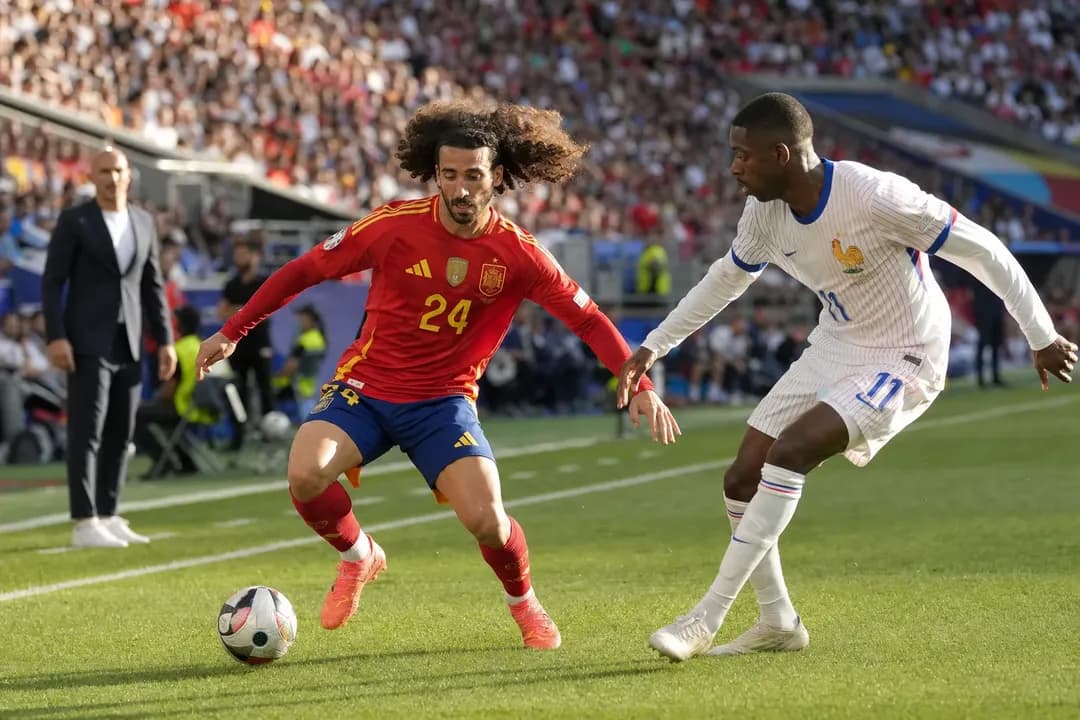
Marc Cucurella’s semifinal value came from balancing width, recovery, and support around Spain’s left side. His role illustrates how a modern fullback can protect a lead without disappearing from possession.
Marc Cucurella’s role in Spain’s 2-0 semifinal victory over France was less about one headline moment and more about solving a repeated positional problem. Spain wanted width and a reliable outlet on the left, yet France could punish an adventurous fullback if the ball was lost. Cucurella had to judge when to step forward, when to stay connected to the center backs, and when to recover toward his own goal. Those choices helped Spain keep another clean sheet and reach the final.
Following one player rather than the whole match? Text Karpo the name. Karpo can turn the semifinal into a focused player brief and help plan where and how you will watch Spain’s next game.
The fullback’s starting dilemma
A left back against France cannot make every decision from the same height. If Cucurella remained too deep, Spain risked losing an easy passing option and allowing France to press forward. If he advanced too early, the space behind him could become a direct target. His starting position needed to reflect the location of the ball, the support of midfield, and the readiness of France’s nearest runner.
This is why a touch map should be read as a sequence rather than a heat-colored verdict. A fullback may appear high because Spain held secure possession, then recover quickly as the attack ended. The important question is whether those positions connected the team. Cucurella’s value came from moving with the play instead of occupying one fixed lane. Cucurella’s communication with the left center back was especially important whenever France rotated a winger and midfielder through the same channel. One player had to engage while the other protected depth. A late or duplicated decision could leave either the sideline or the inside lane unguarded.
Defending the touchline without opening the inside
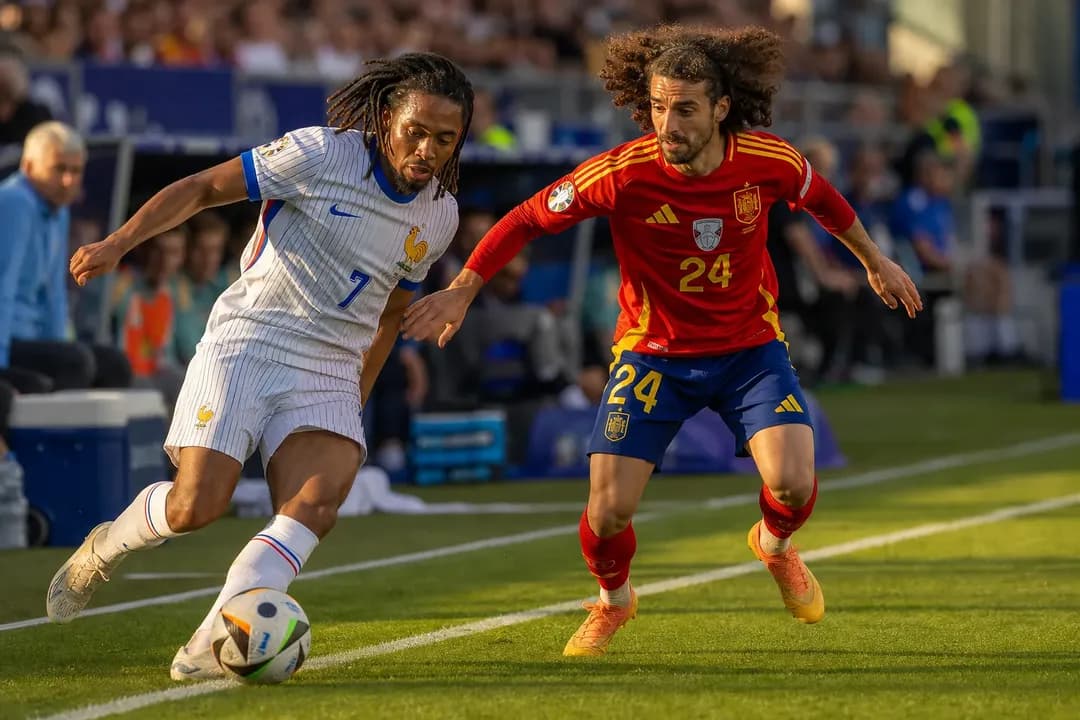
Wide defending is not only about stopping a cross. The defender must decide whether to show the attacker toward the sideline, protect an inside dribble, or delay until help arrives. Against France, opening the central lane could expose Spain’s midfield and center backs. Cucurella’s body angle and distance therefore mattered before any tackle occurred.
A controlled delay can be as useful as winning the ball. It slows the attacker, gives midfielders time to recover, and allows the back line to adjust. Diving into the duel too soon can turn a manageable situation into a chase. Spain’s compact structure gave Cucurella support, while his discipline helped keep that structure intact. His movement also helped Spain create a better angle for the next receiver. By stepping outside at the right moment, he could pull a French presser away from the central midfielder. That small shift gave Spain more time to turn and made the buildup less dependent on risky passes through traffic.
Offering a safe route out of pressure
When Spain regained the ball, Cucurella could help the team escape the first French pressure. A pass toward the left side changed the angle of the buildup and forced France to cover more width. Even when the move did not become an attack, it gave Spain a chance to settle possession rather than return the ball immediately.
The best outlet is not always the most aggressive one. Sometimes the useful action is a short pass back inside, a controlled carry, or a switch that moves pressure away. Those decisions helped Spain manage the periods after each goal. With France needing to chase, keeping the ball in a safe wide triangle could be more valuable than forcing an early cross. For viewers tracking his final performance, the best checkpoints are simple: where he begins when Spain build, how quickly he recovers after a turnover, and whether the left side remains connected. Those observations reveal more about the role than counting crosses or tackles alone.
Recovery runs protected the space behind
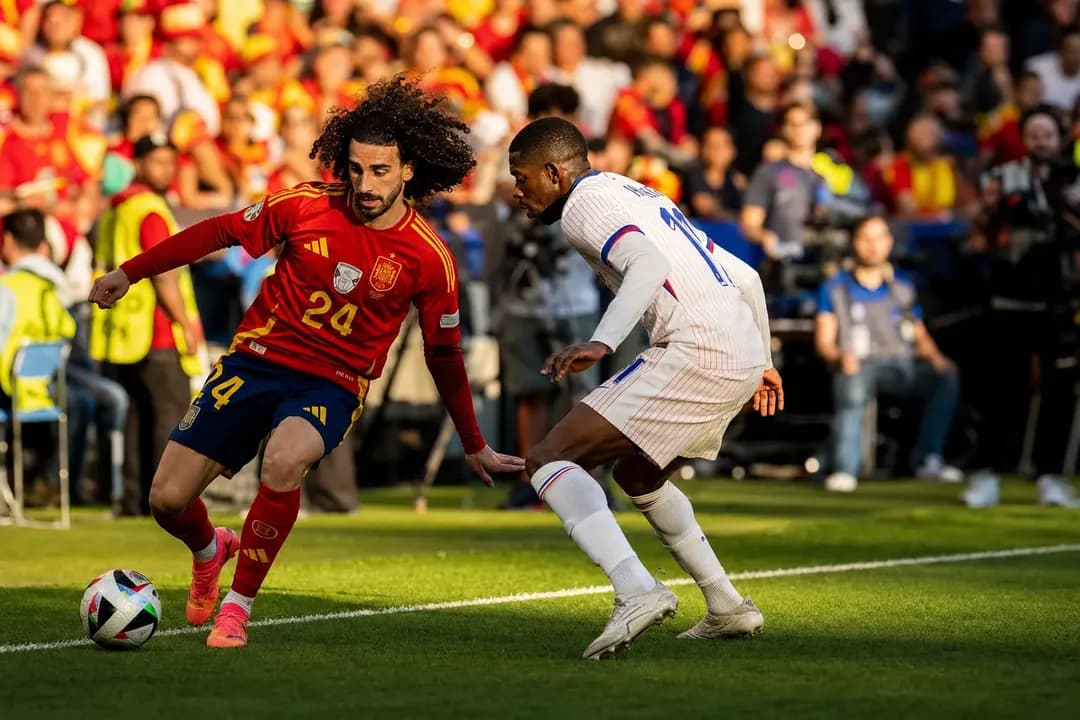
Every forward movement creates a recovery responsibility. If Spain lost possession while Cucurella was advanced, the nearest midfielder or center back needed to delay France, and Cucurella needed to return along the most useful route. Sprinting directly toward goal is not always enough; the run must close the passing lane France wants to use.
This shared protection allowed Spain to attack without treating each fullback movement as a gamble. The structure was strongest when one player pressured, another covered, and a third protected the central runner. Cucurella’s recovery work fit that chain. It helped prevent France from turning a turnover into an immediate, clean route toward Unai Simón.
Managing the match after 2-0
Pedro Porro’s second goal in the 58th minute changed the fullback calculation. Spain no longer needed to search for the next attack with the same urgency. Cucurella could choose his forward moments more selectively and prioritize the distances that kept France outside the most dangerous central spaces.
That did not require Spain to abandon width. A fullback who remains available can still help the leading team keep possession and make the opponent run. The difference is the risk attached to each movement. With a two-goal cushion, the smartest action often combines support with an immediate recovery path.
How the role may change in the final
Spain’s final opponent will be England or Argentina, and each possibility creates a different left-side challenge. The winger’s movement, the opposing fullback’s height, and the midfield cover behind them will determine how aggressively Cucurella can advance. The semifinal role offers a template, not an identical assignment.
What should remain is the balance: offer Spain a passing angle, protect the inside lane, and recover early enough to keep the back line connected. Cucurella does not need to dominate the ball to shape the match. His positioning can determine whether Spain build calmly and whether the opponent finds room to counter.
Tags: #WorldCup2026 #Cucurella #SpainFrance #Fullback #TacticalAnalysis
All trademarks are the property of their respective owners.
Ask Karpo First
Text Karpo with the player matchup you want to follow in the final. Karpo can prepare a focused briefing and match-day plan around your location and viewing style.
Ask Karpo for more information.
Keep reading
- Haaland Has Seven Goals and Norway Runs Entirely Through Him
 World Cup Trophy Ceremony Timing Medals and Postmatch Celebrations
 Olise and France's Attack: The Semifinal Tactical Question