 Haaland Has Seven Goals and Norway Runs Entirely Through Him
⚽️2026 FIFA WORLD CUP
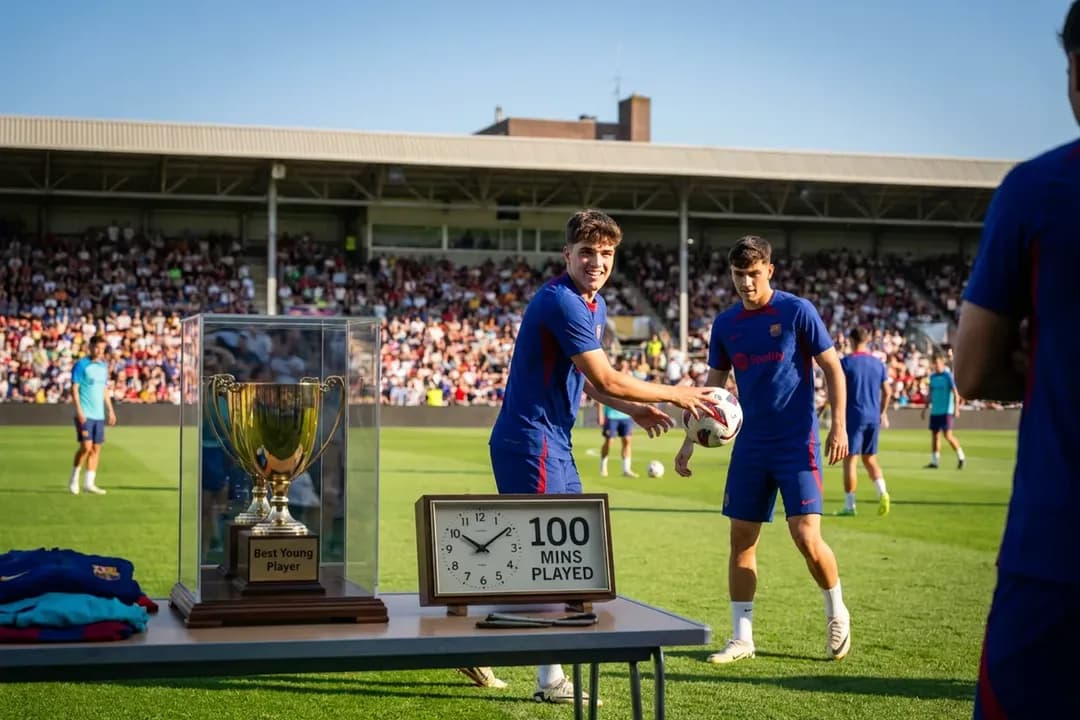
How to Verify Cubarsí’s Age and Every-Minute Claim
Cubarsí’s headline numbers are simple, but the best way to trust them is to check the original records. Here is how to verify age, minutes and context before a viral post outruns the facts.
East Rutherford and New York City were full of fast-moving World Cup conversation after Spain’s championship run, and Pau Cubarsí became an easy name for social posts to compress into a single claim. The verified example is straightforward: Cubarsí was 19, played every minute of Spain’s championship run and won Best Young Player. The more useful lesson is how to check that kind of statement before sharing it. Young-player claims often mix birth dates, tournament dates, minutes, substitutions and screenshots, so a careful reader should know where the reliable record begins and where speculation or sloppy reposting enters.
Text Karpo if you want a personalized final-recap plan in East Rutherford or New York City, including where to watch highlights with friends, where to celebrate, what food spots fit your route and how to build a city plan around the moments you actually care about.
Start With the Player Profile, Not the Viral Caption
The first step in checking any cubarsi claim is to separate identity from interpretation. A social post may say a player is “still a teenager,” “the youngest on the pitch,” or “already beyond his years,” but those phrases are not records. Look for an official player profile that lists the player’s full name, date of birth, nationality and club details. Once you have the date of birth, you can compare it with the tournament date being discussed instead of relying on a rounded age in a caption.
This matters because age claims can be true in one context and misleading in another. A player who is 19 during a final may have been 18 earlier in the season, and an old post can resurface without context. Screenshots also travel without timestamps, which makes a past profile look current. The clean method is simple: confirm the birth date from an official or established public profile, identify the relevant match or competition window, then calculate the player’s age for that exact period.

Use Match Reports to Check the Every-Minute Claim
An every-minute claim should be checked through match reports and minutes data, not by memory. Official match centers generally show starters, substitutions and full-time records, while tournament hubs often preserve summaries after the event. If a player started a match and was never substituted, the report should support that. If extra time was involved, the report should also clarify how long the match lasted. Without those records, a statement like “played everything” is just a phrase waiting to be misunderstood.
For Cubarsí, the verified example says he played every minute of Spain’s championship run, but a careful article should not invent a match-by-match table unless the underlying reports are open and checked. It is enough to explain the verification path: review each official match page, confirm whether the player started, confirm whether any substitution removed him, and account for the match duration. That process turns a broad claim into a reproducible check, which is more valuable than repeating a number without showing how it was confirmed.
Know What Minutes Data Can and Cannot Prove
Minutes data is useful, but it must be read precisely. A tournament summary, a match report and a statistics database may display time in slightly different ways, especially around stoppage time, extra time or substitution notation. One source might show regulation minutes, another might emphasize appearances, and another might list total playing time. Those differences do not automatically mean one source is wrong. They mean the reader has to understand what each field is measuring before turning it into a claim.
The safest wording avoids overpromising. If the verified record supports that a player was on the field for every minute of the championship run, say that plainly. Do not add invented totals, dramatic qualifiers or unnecessary comparisons. Young-player stories attract superlatives, and superlatives are where errors multiply. A clean verification article should distinguish between confirmed participation, calculated minutes and unsupported embellishment. That discipline protects the reader from confusing a documented achievement with a social-media upgrade of the same achievement.

Check Dates Before Sharing Age Superlatives
Age is one of the easiest facts to check and one of the easiest to distort. The date of birth is the anchor, but the claim still needs a date on the other side of the equation. Was the post talking about the opening match, the final, the entire tournament or the day the award list appeared? A player’s age can change during a competition window. Even when it does not, the claim should be tied to the right date so readers can reproduce the calculation.
For Cubarsí, saying he was 19 in the verified example is enough unless the article is specifically calculating age on a particular day. Avoid adding “youngest ever,” “record-setting,” or eligibility language unless that has been independently verified through official rules or historical records. Many misleading posts begin with a true age and then attach an unverified ranking to it. The better habit is to confirm the simple fact first, then refuse to carry any extra label that the available sources do not support.
Watch for Misleading Posts After Major Finals
After a major final, the fastest posts are not always the most accurate. Some accounts clip an official graphic, add their own caption and create a new claim that looks official because the image feels familiar. Others mix club-season facts with international-tournament facts, or use a player’s age as a hook for unrelated speculation. The risk is not only fake information; it is also half-true information presented without the boundaries that make it reliable.
A practical check is to ask three questions before sharing. Does the post identify the exact competition and date range? Does it rely on an official profile, match report or recognized tournament hub? Does it add claims about votes, rules, records or behind-the-scenes decisions that are not visible in the public record? If the answer to the third question is yes, slow down. The cubarsi example shows why verification should be narrow, factual and tied to documents rather than momentum.
Build a Reliable Verification Routine
A reliable routine starts with the basic profile, moves to the official competition page and then checks individual match records. Keep the player’s name consistent, because accents, abbreviations and shortened versions can affect search results. Search for the official tournament hub before relying on a reposted graphic. Then compare the player profile with the match pages. If the claim involves minutes, substitutions are the key detail. If the claim involves age, the date of birth and the relevant match date are the key details.
The final step is wording the conclusion with the same care used in the research. Say what is confirmed, avoid what is not, and do not fill gaps with assumptions. In this case, the confirmed example is strong without extra decoration: a 19-year-old player, every minute of a championship run, and one recognized young-player honor. That is enough. The point of source-checking is not to drain the excitement from football; it is to make sure the excitement rests on facts that can survive the next repost.
Tags: #WorldCup2026
Sources consulted: 2026 World Cup award winners · FIFA final hub
All trademarks are the property of their respective owners.
Ask Karpo First
Ask Karpo for a personalized World Cup final recap plan around East Rutherford or New York City, from viewing spots and celebration ideas to food stops and an easy city route.
Ask Karpo for more information.
Keep reading
- Haaland Has Seven Goals and Norway Runs Entirely Through Him
 World Cup Trophy Ceremony Timing Medals and Postmatch Celebrations
 Olise and France's Attack: The Semifinal Tactical Question