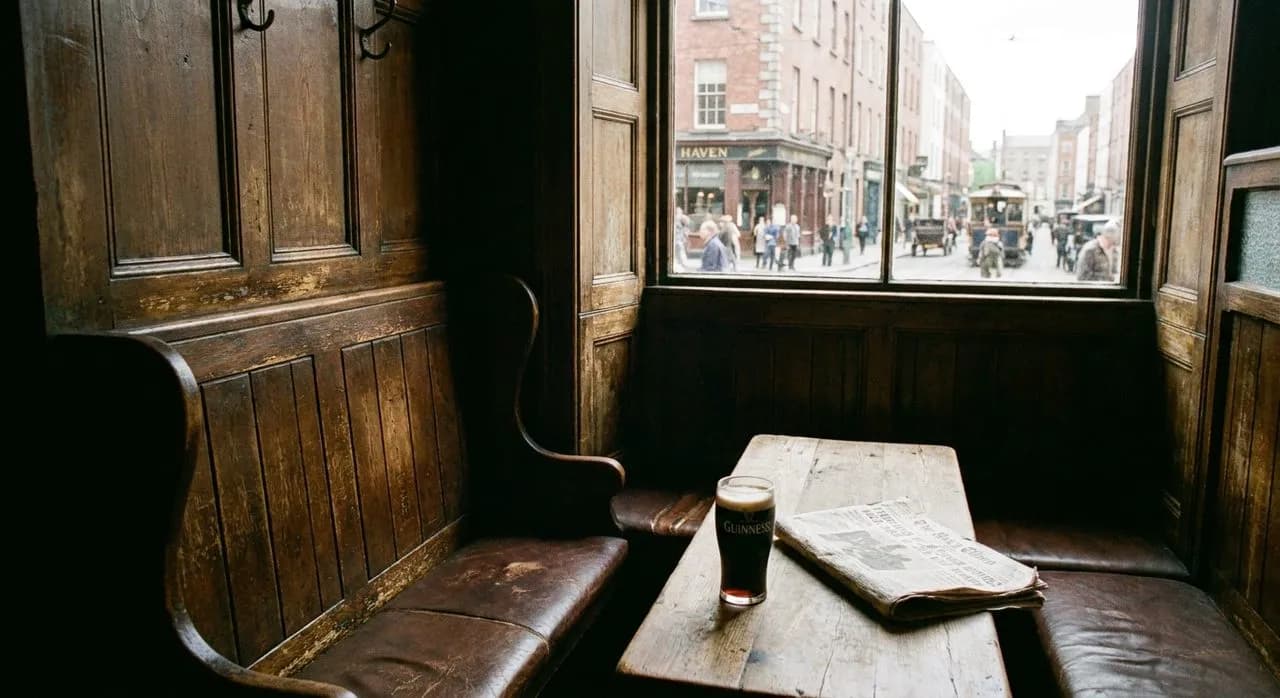
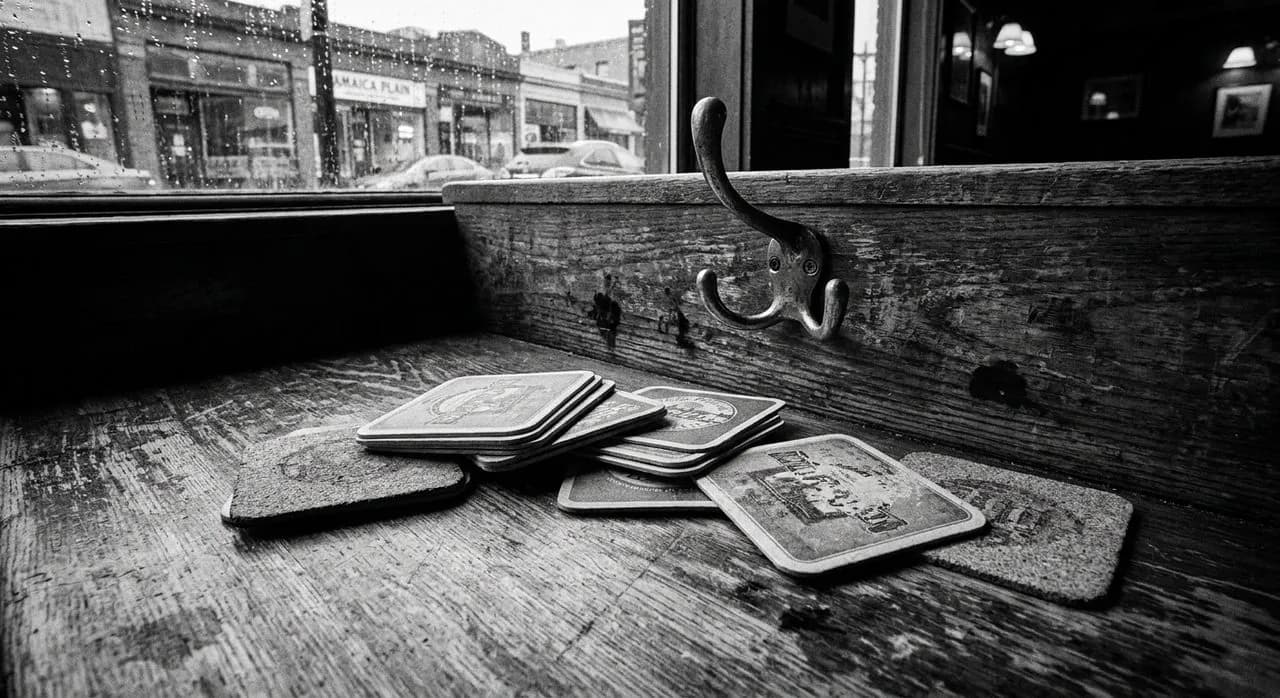
The corner booth is gone, but the ghost still holds court. For 137 years, the booth at Doyle's Café that faced Washington Street in Jamaica Plain anchored a particular kind of Boston citizenship: the wooden bench worn smooth by decades of elbows, the view of the 41 bus grinding to a stop, the Guinness rings overlapping on scarred oak. Politicians made promises there. Regulars settled arguments. The light came in low through the window in winter, cutting through Harp Lager signs and faded campaign posters. When Doyle's closed in October 2019, it took with it not just a bar but a template—a physical grammar for how a neighborhood gathers, argues, and belongs. The question since has been whether any booth in Jamaica Plain can inherit that weight.
What the corner booth meant
Doyle's corner booth wasn't simply a good seat. It was a throne and a confessional, depending on the hour. You could watch the street, monitor who was walking in, and still be part of the room's center of gravity. The booth's high wooden back provided just enough privacy for a quiet conversation, while its position—right inside the door, left wall, facing out—made it impossible to ignore. Regulars knew. First-timers learned. By the 2010s, that booth had become a kind of civic furniture, a place where Jamaica Plain's identity as a neighborhood that prided itself on being working-class, political, and stubbornly local was performed and renewed every night.
The material mattered too. The wood was dark, almost black in the low light, softened by decades of spilled pints and leaned-back shoulders. The vinyl had splits that someone had repaired with duct tape, then given up. You could smell the Guinness before you tasted it—yeast and wet wool and the faint diesel exhaust from Washington Street. The booth was not precious. It was used. That was the point.
The October it disappeared
Doyle's closing in 2019 felt like a punch to the neighborhood's solar plexus, even for those who hadn't been inside in years. The reasons were familiar to anyone watching Boston's real estate churn: rising costs, shifting demographics, the slow squeeze of landlords eyeing higher returns. The last night was crowded and maudlin, full of toasts and photographs. When the doors locked for good, the question wasn't whether Jamaica Plain would survive—it would—but whether it could rebuild the architecture of gathering that Doyle's had represented.
The corner booth itself, the physical object, didn't end up in a museum or a storage unit. According to former staff, the wooden bench was purchased by a regular and now resides in a private home in Roslindale. Other pieces—framed photographs, campaign signs, a wooden Harp tap handle—were distributed among former employees and loyal patrons. Several Jamaica Plain bars now display framed Doyle's memorabilia on loan from former staff, small altars to a place that can't be replicated but refuses to be forgotten.
The Haven's front window booth
The Haven, a few blocks south on Washington Street, opened not long before Doyle's closed, and it has become the de facto testing ground for succession. The space is brighter, the food more ambitious, the crowd younger and more mixed. But there's one booth—closest to the front window on Washington Street—that former Doyle's regulars claimed within weeks of The Haven's opening. The sightlines are nearly identical: the 41 bus, the foot traffic, the angle into the room. It's not the same wood, not the same wear, but the geometry is right.
Sitting there on a cold evening in late 2026, you can feel the attempt. The booth fills early. Regulars know to arrive by six if they want it. The light is different—more Edison bulbs, less nicotine stain—but the function is the same. You watch the street. You're part of the room. It's a booth trying to become a corner booth, and the jury is still out.
Where the Guinness pour survived
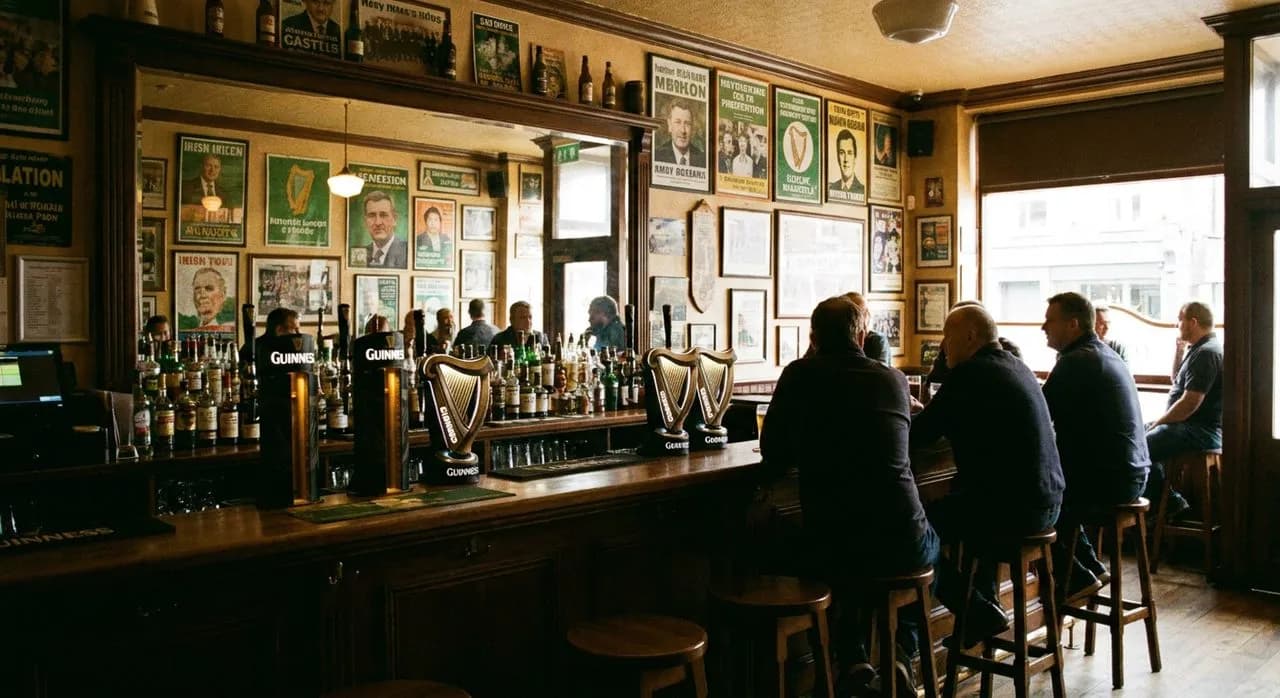
Brendan Behan Pub, over on Centre Street, hired two former Doyle's bartenders after the closure, and regulars say the Guinness pour technique remains identical: a two-part pour with exactly 119 seconds between pours, the glass tilted at forty-five degrees, the settle, the top-off. It's a small liturgy, easy to mock, impossible to fake. The bartenders who learned it at Doyle's brought it with them, and on a slow Tuesday night you can sit at the bar and watch the same careful choreography that played out a thousand times in that corner booth's sightline.
Brendan Behan doesn't have Doyle's bones—it's cleaner, quieter, less layered with political history—but it has the skill and the memory. The Guinness tastes right. That counts for something. For a certain kind of Jamaica Plain regular, the pour is the thread, the unbroken line between what was and what's trying to be.
The strange afterlife of third places
What Doyle's represented—what that corner booth represented—is harder to build now, even in a neighborhood as self-conscious about its identity as Jamaica Plain. Rents are higher. The crowds are different. The political culture that made Doyle's a kind of de facto city hall for local organizing has fragmented into text threads and neighborhood apps. The booth was a fixed point. You went there. You couldn't swipe past it.
Still, Jamaica Plain is trying. The Haven, Brendan Behan, even the back tables at J.P. Licks where older regulars gather with newspapers and campaign literature—these are all attempts to reconstruct the infrastructure of neighboring. They won't be Doyle's. They don't need to be. But they need to offer what that corner booth offered: a place to sit, to see, to be seen, to argue and belong. The city guide version of Jamaica Plain will tell you about the brewery and the pond and the brunch spots. The real guide is about finding the booth that makes you a regular.
Practical notes
The Haven is located on Washington Street in Jamaica Plain; the front window booth is first-come. Brendan Behan Pub is on Centre Street near the Stony Brook T stop (Orange Line). Both are accessible by the 41 bus. Street parking is tight; the Monument lot off Centre is your best bet. Verify hours directly, as winter schedules can shift. Most Jamaica Plain bars are wheelchair accessible at entry level, though booth seating varies. Bring cash for tips and patience for the Guinness pour—it takes as long as it takes. Late 2026 has seen steadier foot traffic as the neighborhood settles into its post-Doyle's identity; weeknights are quieter, weekends dense.
Tags: #PullUpAChair #JamaicaPlain #BostonBars #DoylesCafe #NeighborhoodPubs #TheHavenJP #BrendanBehanPub #GuinnessPour #ThirdPlaces #WashingtonStreetBoston #BostonHistory #CornerBooth #OrangeLine #LocalCulture #WinterInBoston
Please drink responsibly. Must be of legal drinking age.
Sources consulted: Jamaica Plain, Boston · Irish pub · City of Boston: Jamaica Plain · MBTA Route 41 Bus · Boston Magazine: Restaurants
All trademarks are the property of their respective owners.