The best time to walk Coney Island's boardwalk is when no one else wants to. That means pulling on sneakers before six in the morning, when the amusement parks are shuttered and the beach belongs to gulls and the occasional determined jogger. The roughly 2.5-mile stretch from Brighton Beach to Luna Park becomes something else entirely at this hour—a long wooden ribbon flanked by open ocean on one side and silent rides on the other, lit by the kind of early light that makes even faded paint look romantic. This is not a stroll for sleeping in. It is, however, a perfect addition to spring travel itineraries for anyone who wants Brooklyn's beachfront without the sunscreen crowds.
The Eastern Start and Pre-Dawn Provisions
Brighton Beach Avenue marks the boardwalk's eastern edge, where the wooden planks begin their westward march toward the amusement district. If you arrive before sunrise—and you should—the neighborhood's character works in your favor. Within two blocks of the boardwalk terminus, several 24-hour Russian cafés keep their lights on through the night, offering strong coffee and pastries that will outlast your walk. The boardwalk itself, by contrast, remains vendor-free until at least nine o'clock on weekdays, so fuel up before you step onto the boards.
The avenue hums with a specific energy even in the dark hours, a mix of late-shift workers and early risers that gives the starting point a lived-in feeling. You're not embarking from a postcard; you're launching from a working neighborhood that happens to own some spectacular real estate. The transition from street to boardwalk is abrupt and welcome.
Sunrise Timing and the Eastward Advantage
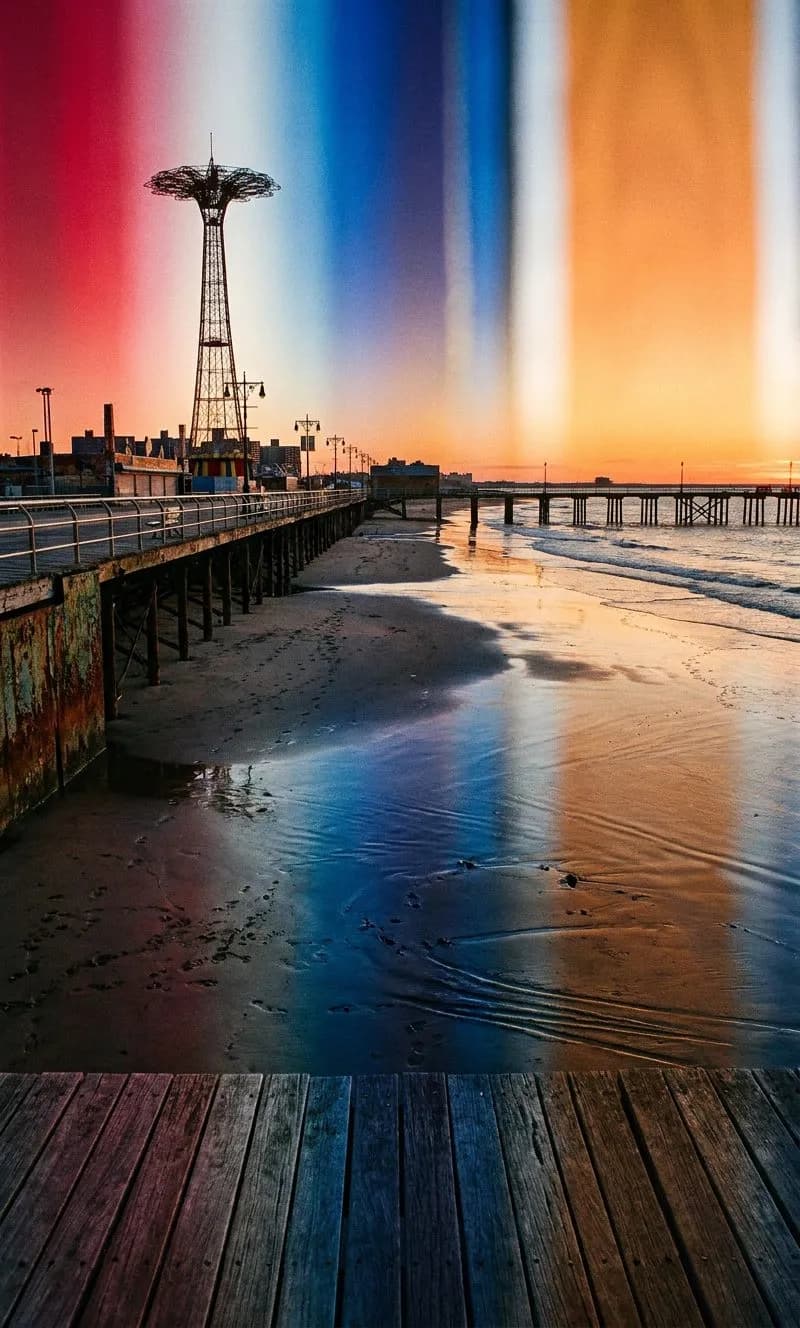
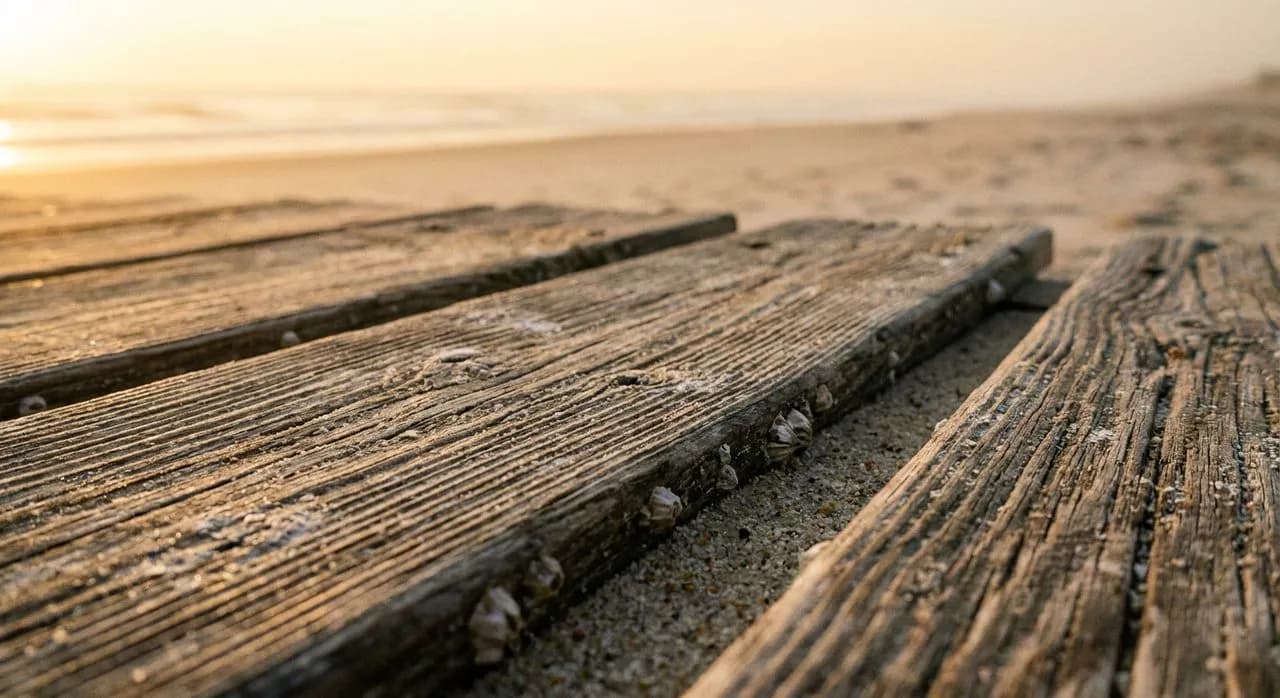
Spring months deliver sunrise between 6:05 and 6:45am from April through June, and the eastern-facing boardwalk offers unobstructed ocean views for the full color progression—the bruised purples giving way to coral, then the hard silver line where sky and water meet. The geometry here is straightforward: you're walking west, so the sunrise happens over your right shoulder, illuminating the shoreline in stages. The light hits the wet sand first, then climbs the pilings, then floods the boardwalk itself.
Tide timing matters less for walking than for watching. Low tide exposes more beach and pushes the waterline farther out, creating a wider canvas for reflected light. High tide brings the Atlantic closer to the boardwalk's edge, loud and insistent. Either way, the show is reliable. Spring delivers the kind of crisp mornings that keep the humidity low and the visibility high—conditions that turn the ocean into a mirror and the horizon into a clean edge.
The Parachute Jump Midpoint
Approximately 1.2 miles from the Brighton Beach start, the Parachute Jump tower rises into view—a 250-foot skeletal frame that has stood since 1939, no longer operational but still the most recognizable landmark on this stretch of shore. When approached from the east during sunrise, the tower is silhouetted against the brightening sky, a dark geometry that photographs better than it has any right to. This makes a natural midpoint, both for distance and for composition.
The jump marks the transition from residential Brighton Beach to the amusement core. Benches multiply. The boardwalk widens. The buildings behind you shift from apartment blocks to ride infrastructure—storage sheds, ticket booths, the backside machinery of summer entertainment still dormant in the early season. You're entering Coney Island proper, where the ghosts of hot dog vendors and arcade bells wait for their cue.
The Empty Amusement Zone
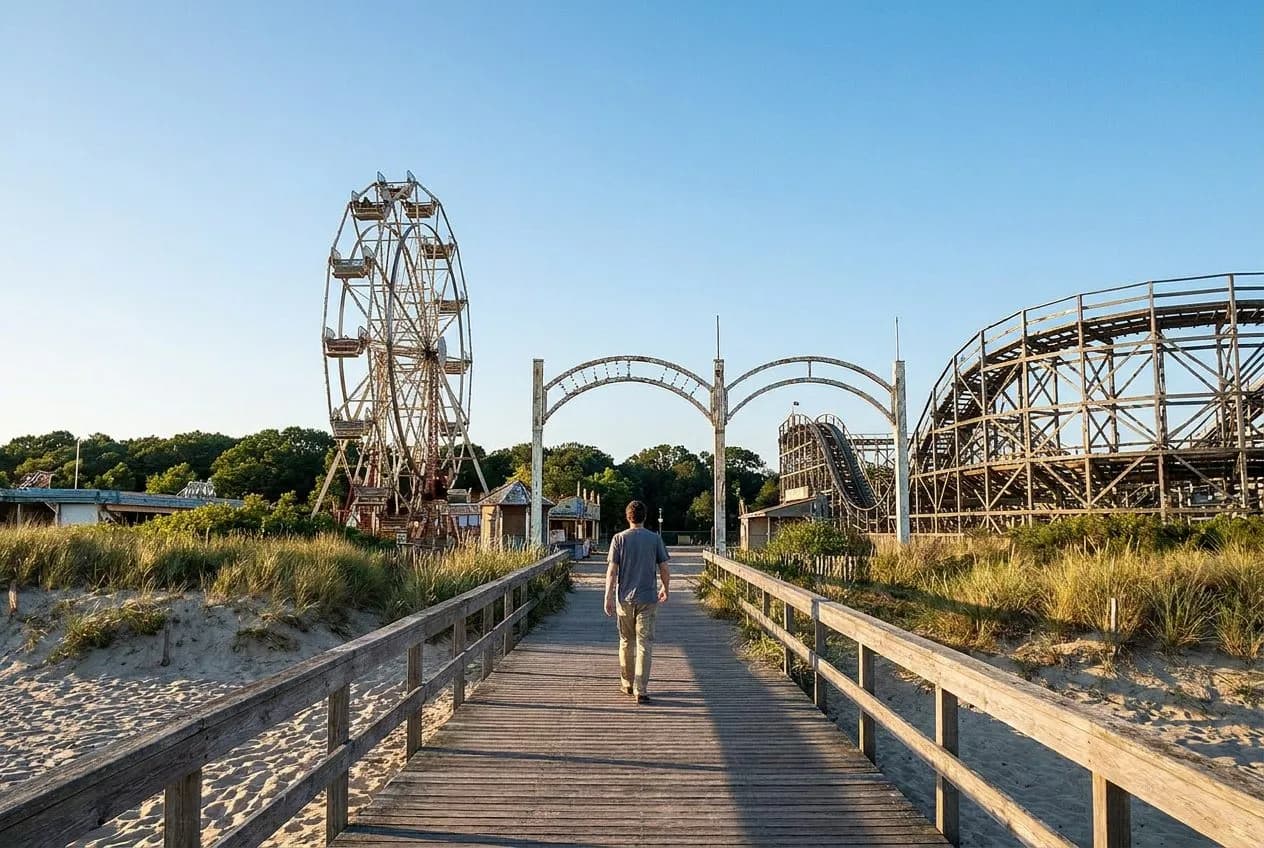
Luna Park and the Cyclone roller coaster sit silent in the pre-opening hours, their metallic loops and painted facades catching the new light but offering none of the kinetic chaos that defines them later in the day. Walking past shuttered amusement parks feels like trespassing, even when you're on public boardwalk. The contrast is the point. These are structures built for noise and motion, and seeing them still is oddly intimate—like catching a performer offstage, half in costume.
The western end of the route delivers the full sweep of Coney Island's architectural pastiche: Art Deco remnants, modern ride installations, and the occasional boarded-up relic that no one has bothered to demolish. The boardwalk itself remains beautifully consistent, the same weathered planks underfoot, the same iron railings, the same benches facing the water. It's the backdrop that shifts, from quiet residential to full carnival, all of it softened by the early hour and the slant of spring light.
What the Morning Walk Offers
The appeal here is not novelty—Coney Island is hardly undiscovered—but access. A sunrise walk gives you the infrastructure without the crowds, the ocean views without the beach umbrellas, the amusement park silhouettes without the ticket lines. You get the bones of the place, the physical facts of boardwalk and shore and sky, before the layers of summer commerce settle in. It is also, let's be honest, good exercise that doesn't feel like work. The boardwalk is flat, forgiving, and long enough to qualify as a legitimate workout if weekend plans have otherwise involved too many restaurant reservations.
Sound is part of the package: the slap of waves, the creak of boards, the occasional gull argument. Scent, too—salt and old wood, the faint funk of seaweed drying on the sand. These are not subtle sensory details, but they are consistent, the reliable signatures of a beachfront that has been performing this same routine for more than a century. The boardwalk doesn't try to be anything other than what it is, and at six in the morning, that honesty feels particularly generous.
Seasonal and Practical Considerations
Spring is the sweet spot. Summer brings the crowds you're trying to avoid. Fall and winter bring wind that can turn the open boardwalk into an endurance test. Late April through June offers mild temperatures, manageable breezes, and sunrise times that don't require a middle-of-the-night alarm. The boardwalk itself is open year-round, 24 hours, though lighting is minimal—bring a small flashlight if you're arriving in full dark. Wear layers; the temperature near the water runs cooler than inland Brooklyn, and the wind off the ocean has opinions.
The walk is an out-and-back or a one-way trip depending on your transportation plan. The round-trip pushes five and a half miles, manageable for most but not trivial. One-way walkers can start at Brighton Beach and finish near Luna Park, where transit options multiply. Either way, the return journey—if you choose it—offers the same boardwalk under different light, the sun now climbing higher, the first vendors beginning to set up, the day shifting from private to public.
Practical notes
Start at Brighton Beach Avenue and the boardwalk (near Brighton 6th Street). Nearest subway: B, Q to Brighton Beach. Street parking available on adjacent blocks, free before 10:00am. The boardwalk is open 24 hours; verify seasonal sunrise times before arrival. Surface is wheelchair-accessible, though benches and ramps vary. Bring water, layers, sunglasses, and a charged phone for photos. Luna Park (coney Island at 1000 Surf Avenue) marks the western end; nearest subway there is D, F, N, Q to Coney Island–Stillwell Avenue. No entrance fees for boardwalk access.
Tags: #ConeyIsland #BrightonBeach #BrooklynBeach #SunriseWalk #BoardwalkLife #SpringTravel #NYCOutdoors #WeekendPlans #AtlanticOcean #Lunapark #RightOnTime #EarlyMorning #BeachfrontWalk #NYCHiddenGems #ConeyIslandBoardwalk
Sources consulted: Coney Island · Riegelmann Boardwalk · NYC Parks: Coney Island Beach · MTA Subway & Bus · Time Out: Coney Island Guide
All trademarks are the property of their respective owners.