Columbus Park occupies a rare patch of green at the southern edge of Chinatown, bounded by Mulberry, Bayard, Worth, and Baxter Streets. It is not picturesque in the manicured sense. The lawns are patchy, the benches worn smooth by decades of use, and the perimeter hums with the ambient noise of Canal Street traffic. Yet on any given morning between seven and ten, the park transforms into a theater of routine—mahjong tiles clacking against stone, bodies moving through tai chi forms, grandmothers steering toddlers toward the playground. This is not a park designed for tourists, though plenty wander through. It is a neighborhood living room, and the morning hours are when the regulars hold court.
Enter through the Mulberry gate
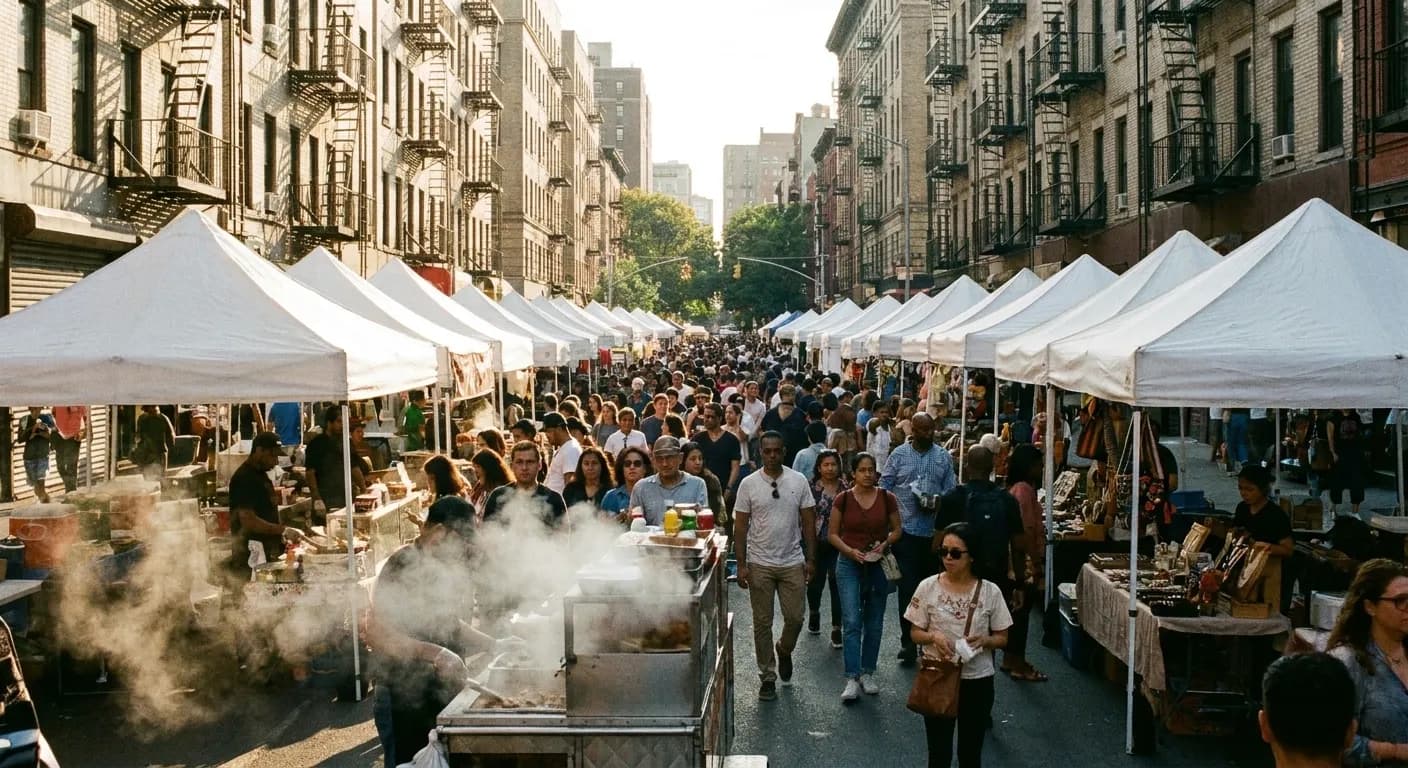
The Mulberry Street entrance is the most natural approach if you are coming from the south or west. You will pass dumpling vendors setting up their carts along the sidewalk, steam rising from bamboo baskets, the scent of pork and chive cutting through the morning air. The gate itself is modest, marked by a low metal rail and a path that slopes gently downward into the park. Once inside, the noise of the street recedes slightly, replaced by the sounds of the park itself—conversation in Cantonese and Mandarin, the rhythmic thwack of a soccer ball, the shuffle of cards and tiles.
The layout is straightforward. The octagonal pavilion sits near the center, its red tile roof visible from most vantage points. To the east, a row of permanent stone tables draws the mahjong crowd. To the north, a stretch of open lawn hosts pickup games. The playground occupies the western edge, and benches line the perimeter, many of them claimed early by regulars who arrive with thermoses of tea and newspapers folded under their arms. This is one of the genuinely free things to do in the city, a place where entrance costs nothing and observation is encouraged.
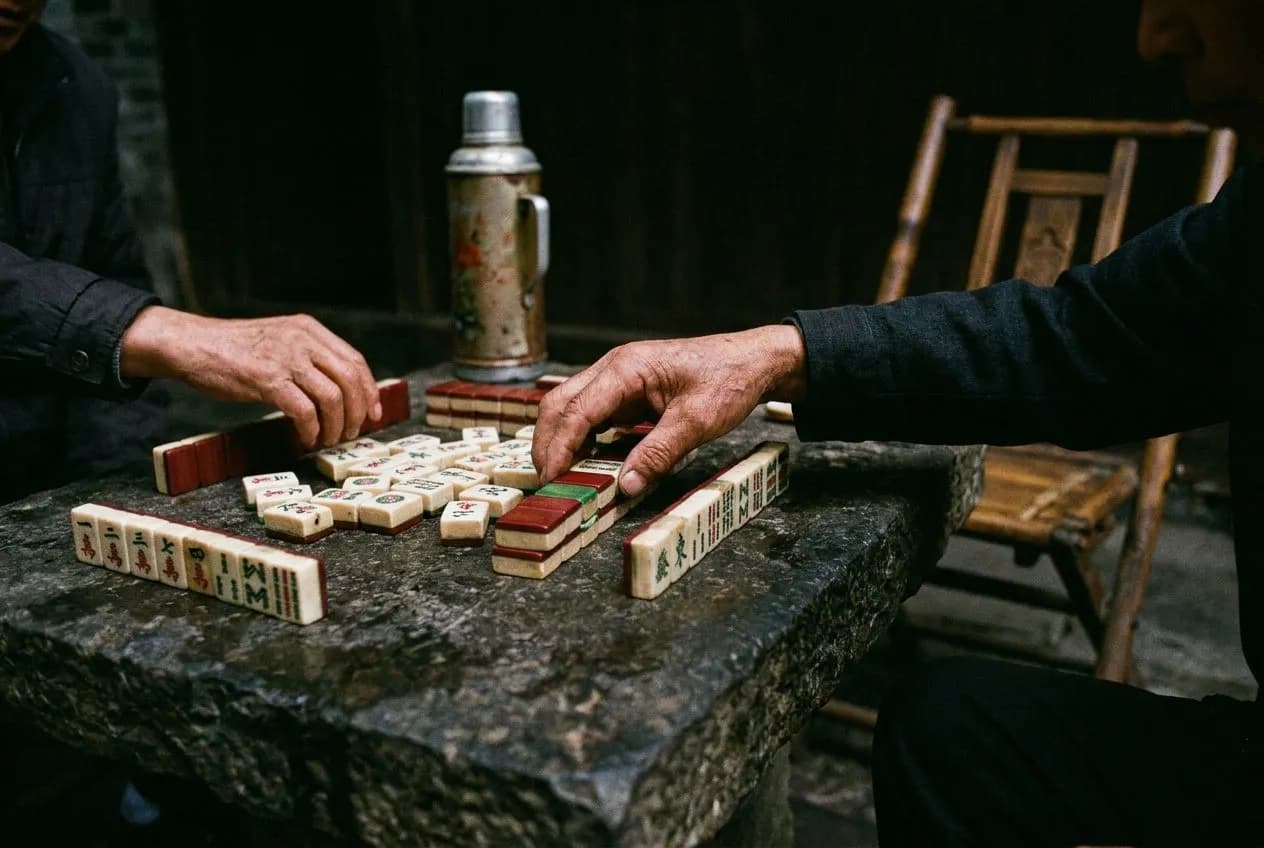
The eastern tables and their unwritten rules
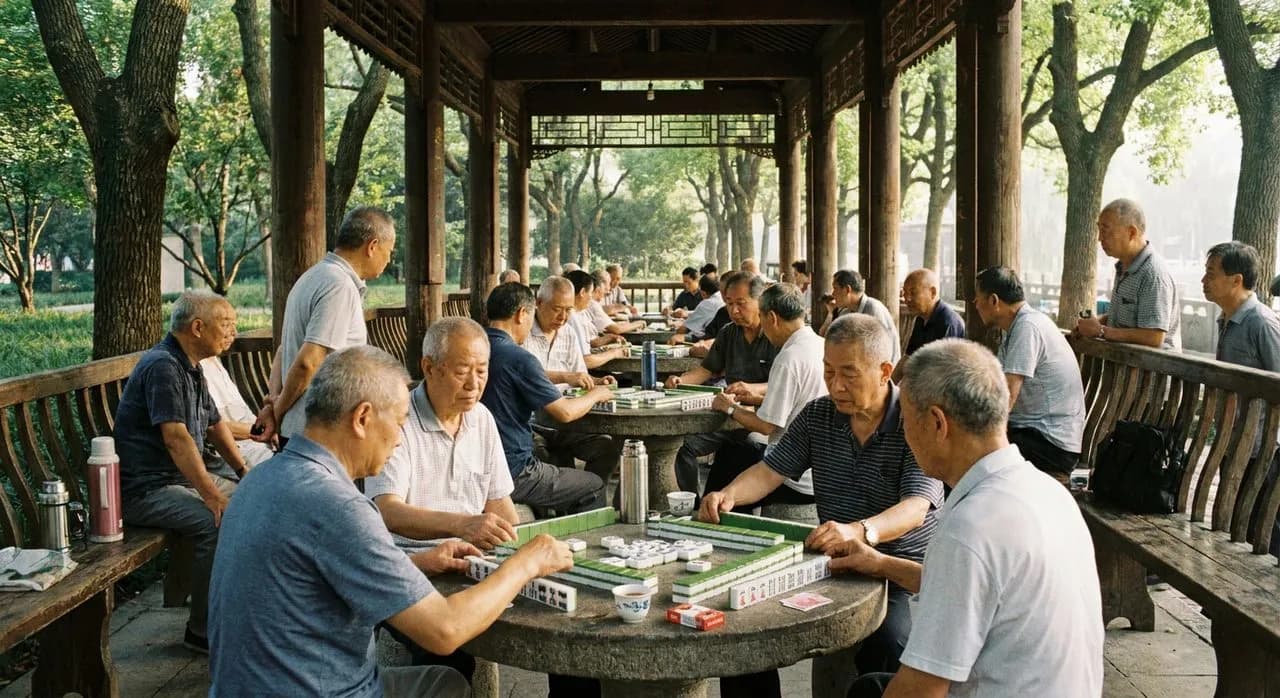
The stone mahjong tables are the park's most distinctive feature. Permanent, weatherproof, and arranged in neat rows, they have hosted thousands of games over the years. The eastern row of tables is used exclusively by a longstanding group of retirees who arrive at 6:45am; observers are welcome but participation is by invitation only. This is not posted anywhere. You learn it by watching, by noticing which tables fill first and who sits where, by understanding that some routines are earned rather than open.
The games themselves are hypnotic. The tiles are shuffled with a two-handed sweep, then stacked into walls. The draw and discard happen quickly, punctuated by bursts of laughter or mock groans. Spectators gather behind the players, standing rather than sitting, offering commentary or simply watching in silence. There is a rhythm to it, a cadence that feels both competitive and companionable. If you linger, you will begin to recognize faces, notice the regular pairings, understand that this is less about winning than about showing up.
The pavilion's quiet details
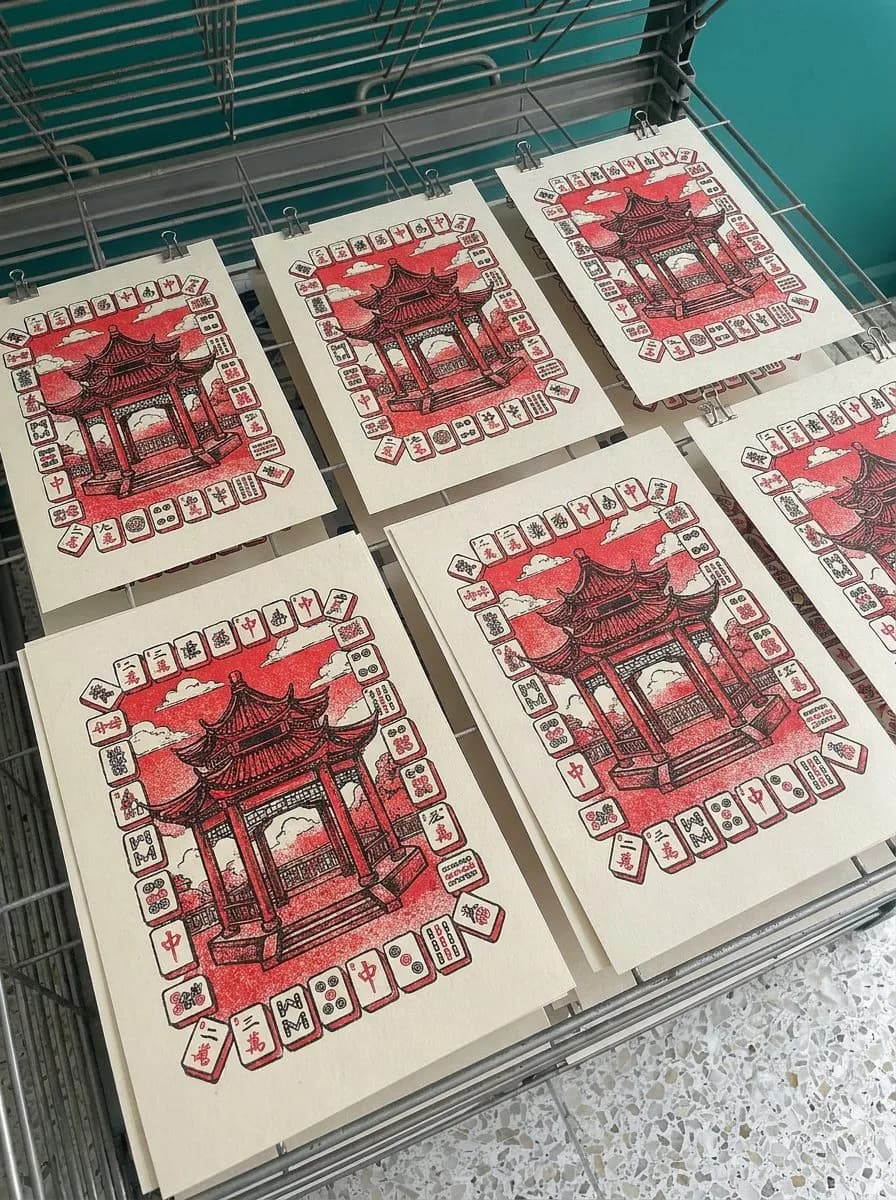
The octagonal pavilion anchors the park visually and socially. Its red tile roof and open sides make it a natural gathering point, offering shade in summer and a dry refuge when it drizzles. Most visitors pause here, taking in the view or resting between walks. What many miss is the ceiling. The pavilion's underside is painted with traditional Chinese cloud and dragon motifs, restored in 2019 by a local artist collective. The work is delicate, executed in muted reds and blues, and it repays a few minutes of upward attention. On bright mornings, the light filters through the eaves and catches the pigment, revealing layers of detail that vanish in flat afternoon sun.
Tai chi at dawn and the quiet hour
Arrive before seven and you will find the park at its most serene. Tai chi groups gather on the southern and western lawns, practitioners moving through forms in near silence. Some follow a teacher; others work solo, their movements deliberate and internally focused. The visual effect is striking—ten or fifteen bodies tracing arcs and circles, advancing and retreating in unison or staggered sequence, all against the backdrop of tenement facades and fire escapes.
This is the golden hour for photographers, though most who visit at this time are not there to document. They are there to participate or to sit quietly with coffee and let the morning unfold. The light is softer, the air cooler, and the park feels temporarily insulated from the city's velocity. By eight, the tempo picks up. The mahjong tables are fully occupied. Vendors are doing brisk business. Children begin to arrive. The quiet hour passes, and the park enters its busier phase.
Weekend mornings and the soccer crowd
On weekends, the park's northern lawn hosts informal soccer games starting around 9am, with players from the nearby Chinatown YMCA. The games are casual but spirited, with shifting rosters and no formal referees. The coexistence of activities—soccer, mahjong, tai chi, children on swings—gives the park its layered character. It is not zoned for a single purpose. It accommodates many rhythms at once. If you visit on a Saturday or Sunday, plan to stay longer. The morning energy builds rather than dissipates, and by mid-morning the park is at full capacity.
Why this matters for a city guide
Columbus Park is not hidden. It appears on every city guide map, and visitors to Chinatown often pass through on their way to dim sum or Canal Street shopping. But most treat it as a pass-through, a shortcut or a photo stop. What they miss is the lived texture of the place—the fact that this park operates on neighborhood time, governed by unwritten codes and sustained by routines that predate any smartphone calendar. To sit here for an hour or two is to glimpse a version of New York that resists the algorithmic, the transactional, the curated. It is a space that rewards patience and repeat visits, where familiarity reveals layers that a single walk-through cannot capture.
Practical notes
Columbus Park is located at 67 Mulberry Street, bounded by Mulberry, Bayard, Worth, and Baxter Streets. The nearest subway stations are Canal Street (J, Z, N, Q, R, W, 6 trains) and Chambers Street (4, 5, 6 trains), both about a five-minute walk. Street parking is scarce; public garages are available along Centre Street. The park is open daily from dawn to dusk. Pathways are paved and accessible, though the stone mahjong tables and pavilion steps may present mobility challenges. Bring water, especially in summer, and consider timing your visit for the 7am-10am window to catch the morning rituals. Dumpling vendors operate along the perimeter; cash is preferred. Verify hours and seasonal variations directly, as schedules shift.
Tags: #ColumbusPark #ChinatownNYC #FreeAndFine #MahjongTables #TaiChi #MorningRitual #NYCParks #NeighborhoodLife #CityGuide #HiddenGems #SummerInTheCity #UrbanRituals #LowerManhattan #CommunitySpaces #NYCExplorer
Sources consulted: Columbus Park, Manhattan · NYC Parks – Columbus Park · Mahjong · Chinatown Online · New York Times – New York
All trademarks are the property of their respective owners.