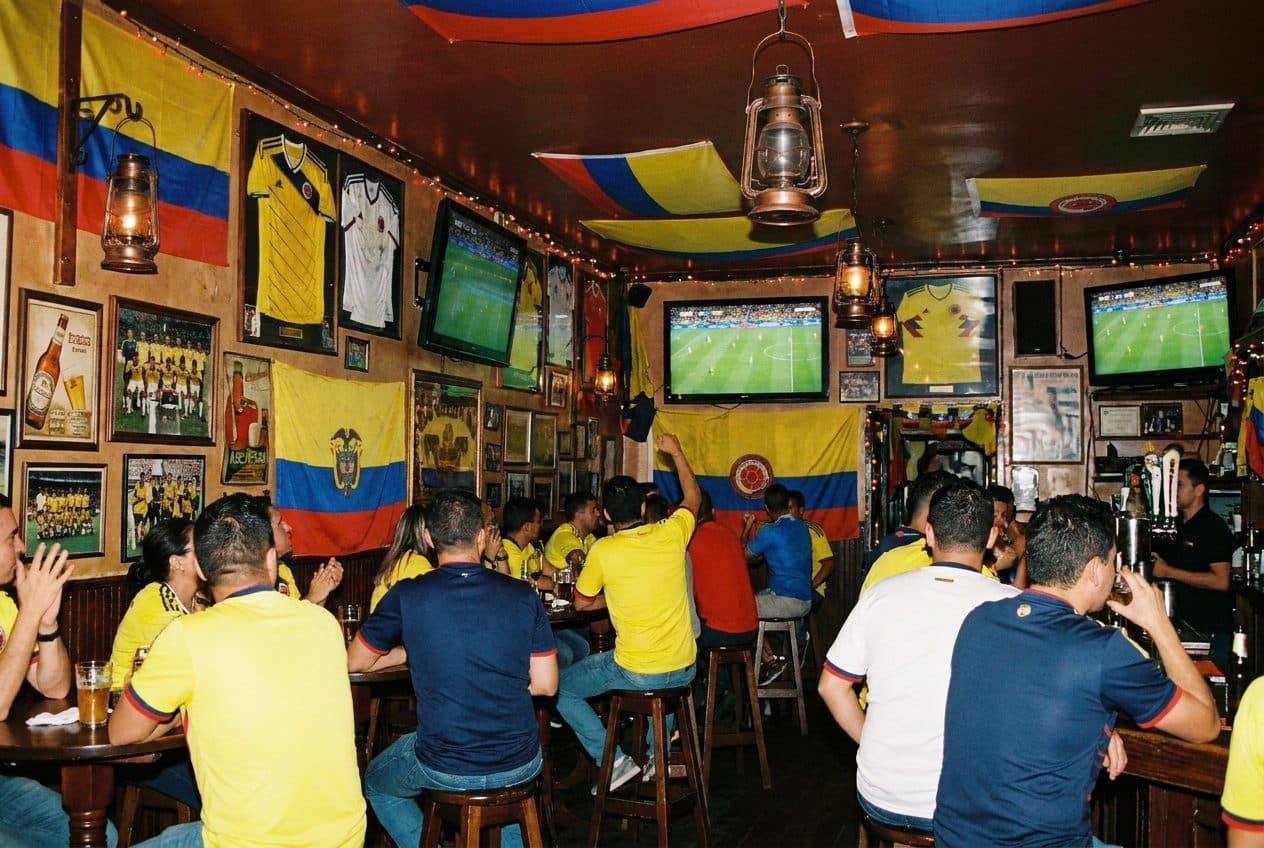
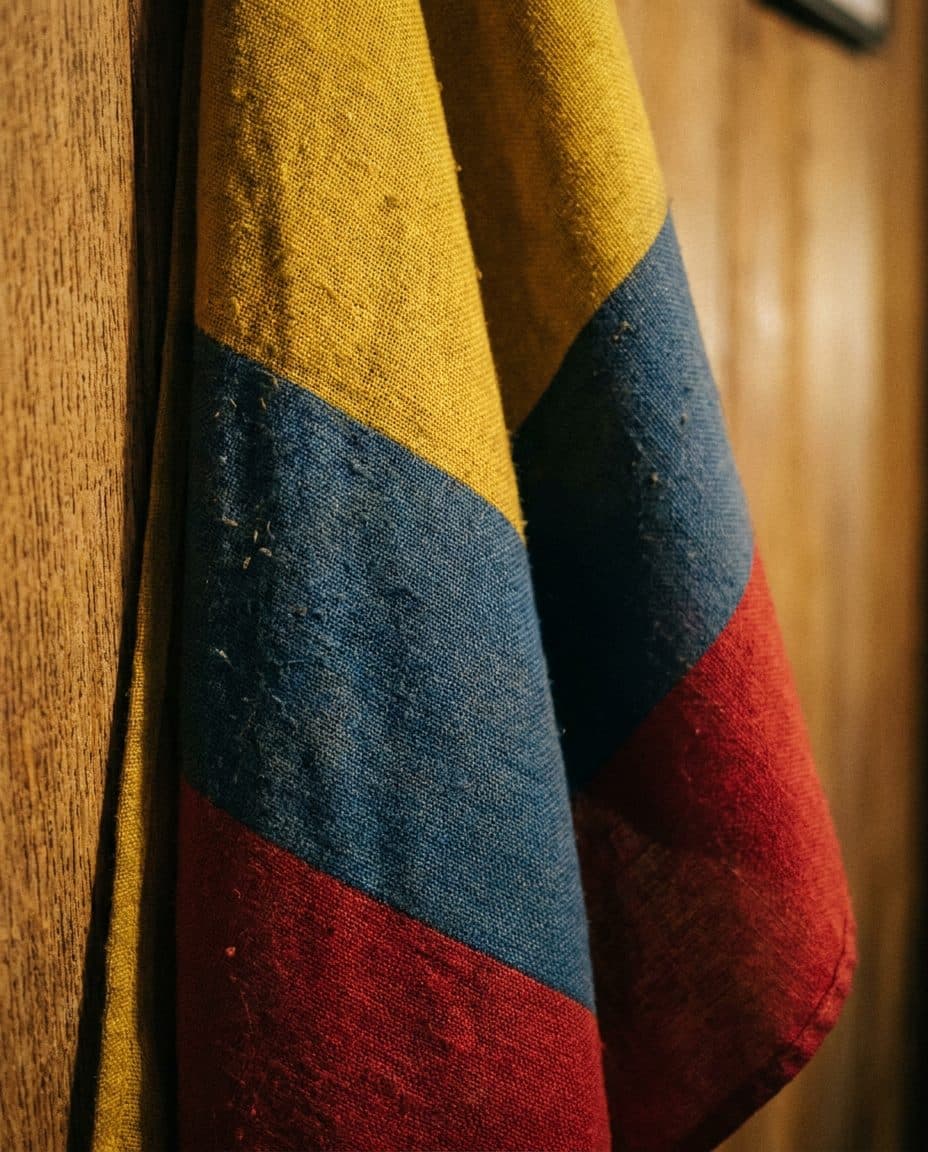
The yellow jerseys start appearing on Roosevelt Avenue two hours before kickoff. By the time the match clock ticks closer, the narrow bar three blocks south of the 74th Street station is already shoulder-to-shoulder, the air thick with anticipation and the sharp scent of aguardiente mixing with fried plantain from the kitchen. A Colombian flag the size of a bedsheet hangs behind the bar, flanked by smaller banners from Bogotá, Medellín, and Cali. The bartender moves in rhythm, pouring shots and pulling beers without looking up, the muscle memory of a thousand pre-match rushes guiding every motion.
The Wall of Nations and a Congregation of Strangers
Flags cover every vertical surface—not just Colombian tri-colors but banners from across Latin America, a few African nations, and one faded Italian pennant that no one can quite explain. The decorations accumulate over years, gifts from regulars, souvenirs from international tournaments, fabric memories of matches past. During Colombia fixtures, though, the yellow-blue-red drowns out everything else. Men in replica jerseys claim their territory early, leaning against the back wall or wedging themselves near the television mounts. The crowd skews older than the clubs a few blocks north—more salt-and-pepper beards than fresh fades, more weathered hands clutching beer bottles than manicured nails scrolling phones. Conversations happen in rapid-fire Spanish, switching between coastal and highland accents, the kind of linguistic geography that marks who came from where and when.
The Rhythm of Arrival and the Claiming of Space
The first wave arrives ninety minutes out. These are the veterans, the ones who know that standing room disappears fast and that the corner near the kitchen offers the best sightline to the main screen without catching the glare from the front windows. They settle in with the ease of people who have done this dozens of times, ordering Aguila or Club Colombia in bottles, not bothering with glasses. The second wave hits an hour before kickoff—larger groups, families with teenage sons, younger guys in matching jerseys who've clearly coordinated their arrival. The volume rises with each new cluster. By forty-five minutes out, the doorway is clogged, and latecomers crane their necks from the sidewalk, hoping for a glimpse through the window. The bartender stops taking food orders. The kitchen can barely keep up with the empanadas and chicharrón already on the ticket rail.
The Pre-Match Rituals and Superstitions Nobody Admits
Certain regulars occupy the same spots for every match, as if the floorboards themselves hold luck. One man in a vintage Valderrama jersey always stands beneath the flag from Barranquilla, touching the fabric before kickoff. Another refuses to sit, convinced that standing keeps the energy flowing toward the screen and somehow toward the pitch itself, thousands of miles away. The bartender pours a shot of aguardiente and leaves it untouched on the back counter—an offering to the game, a tradition borrowed from someone's grandmother and repurposed for football. No one discusses these habits outright. They simply happen, woven into the fabric of the gathering, small acts of faith in a sport that rewards belief as often as it crushes it. The crowd hums with nervous energy, voices rising and falling in waves, laughter breaking tension that hasn't even built yet.
The Kitchen Window and the Smell of Home
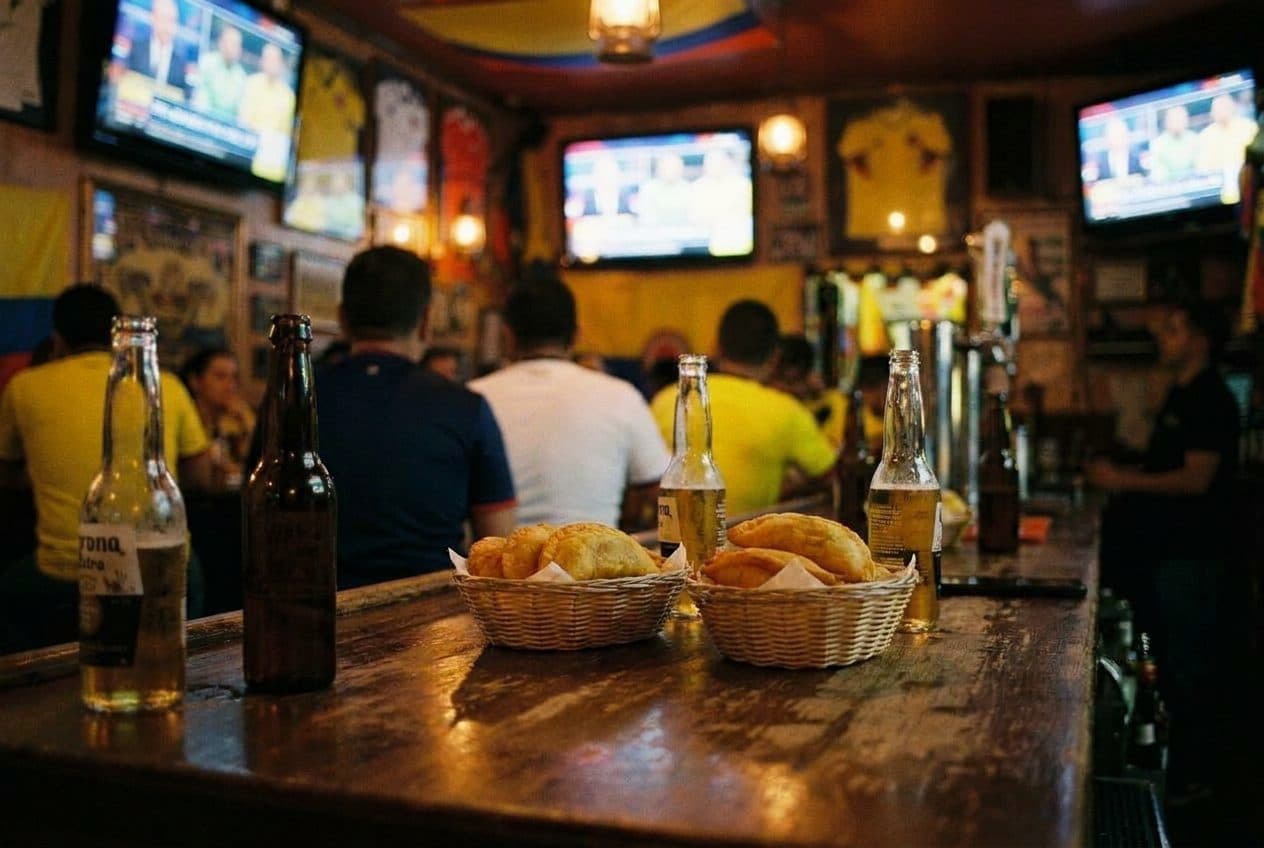
Behind a narrow window cut into the wall, the kitchen exhales smoke and heat. Plantains sizzle in oil, their sweetness cutting through the beer-and-sweat density of the room. Empanadas emerge golden and blistered, filled with seasoned beef and potato, served in paper boats with ají sauce that varies in heat depending on who's cooking that day. The food isn't elaborate—no one comes here for plating or presentation—but it tastes like someone's mother made it in a kitchen in Medellín or Cali, the kind of cooking that doesn't translate well to menus but makes perfect sense at a moment like this. Regulars know to order early or risk missing out entirely. By thirty minutes to kickoff, the kitchen is slammed, and anything that requires more than assembly gets waved off. The smell alone is enough to anchor the experience, a sensory reminder that this is more than just a bar with a television.
The Countdown and the Collective Breath
Fifteen minutes before kickoff, the volume dips. Not silence, but a shift—less chatter, more focus. Eyes fix on the screens as the broadcast cuts to the stadium, the anthem ceremony, the lineup graphics. Someone near the back starts a chant, tentative at first, then building as others join. The bartender turns up the volume. The crowd presses tighter, bodies angled toward the screens, drinks held chest-high to avoid spills. There's a particular tension in these final minutes, a shared understanding that the next ninety minutes will dictate the mood of the neighborhood for hours, maybe days. Strangers stand hip-to-hip, connected by jersey colors and the hope that their team delivers. The air feels electric, charged with something bigger than the match itself—a reminder of home, of identity, of belonging to something that stretches across oceans and time zones.
When the Whistle Blows and the Room Explodes
The opening whistle triggers an eruption. Every touch, every pass, every near-miss draws a visceral response—groans, shouts, sharp intakes of breath. The room moves as one organism, swaying and surging with the flow of play. When Colombia pushes forward, the crowd leans in. When the defense scrambles, hands fly to heads, curses spill out in rapid Spanish. The bartender abandons any pretense of service, eyes locked on the screen, only moving when someone waves an empty bottle with enough urgency to break through. Goals—if they come—turn the place into chaos, bodies colliding in celebration, strangers embracing, the ceiling rattling with the force of collective joy. Even near-misses feel monumental, the kind of moments that will be dissected and debated long after the final whistle. This is football as communion, the bar as cathedral, the crowd as congregation.
Practical Notes
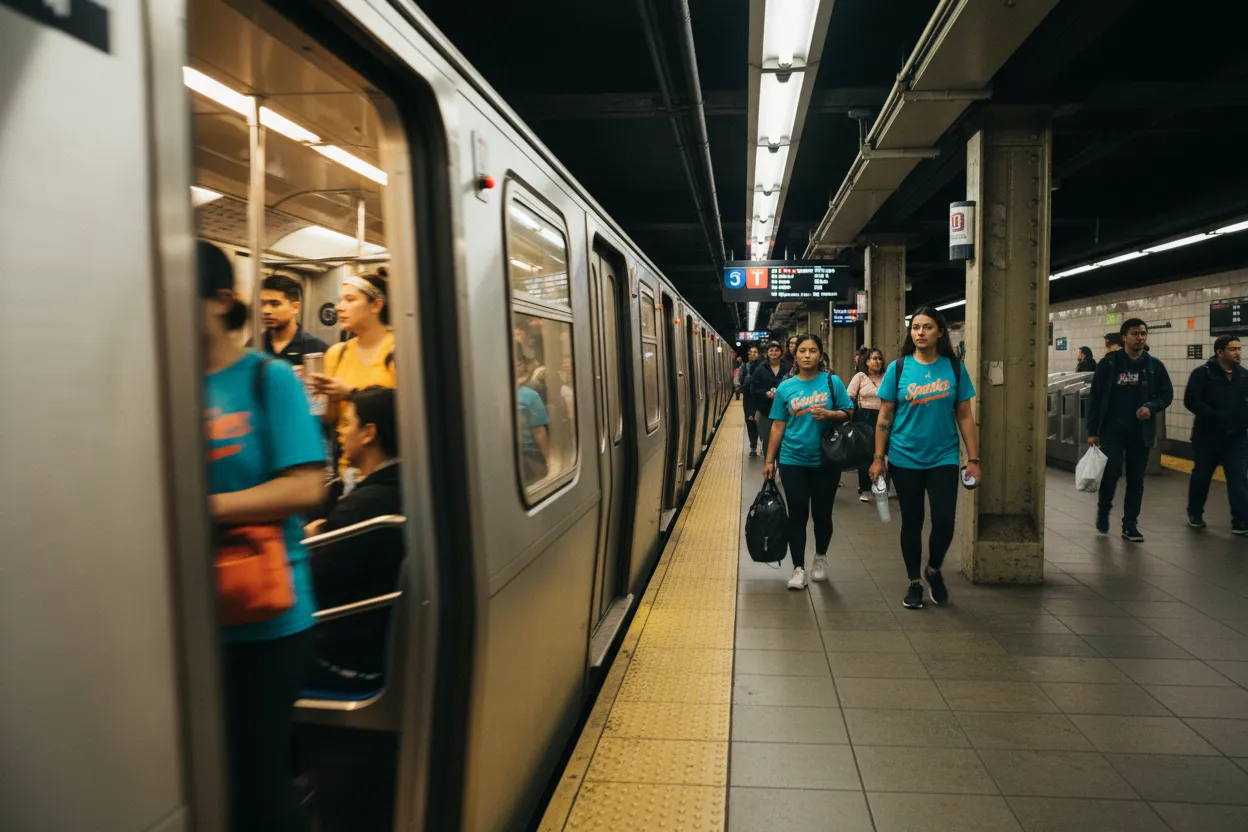
The bar sits on a side street just south of Roosevelt Avenue, close enough to the 74th Street–Broadway subway station that the walk takes less than five minutes. Doors typically open late morning on match days, but the real crowd arrives in the two hours before kickoff. Cash works best—cards are accepted, but the transaction takes longer when the bartender is juggling orders. Empanadas and chicharrón run a few bucks each, beers stay affordable, and no one expects table service. Standing room is the norm, so arrive early or accept a view from the doorway. The place fills fast for Colombia fixtures, especially tournament matches, and the crowd skews heavily toward Spanish speakers. Reservations aren't a thing. The atmosphere is the draw.
Tags: #JacksonHeights #QueensNYC #ColombianCulture #FootballCulture #SoccerBar #NewYorkNeighborhoods #DiasporaCommunity #MatchDayRituals #RooseveltAvenue #AuthenticNYC #LocalBars #ColombianDiaspora #NeighborhoodGems #KarposFinds #RightOnTime
Sources consulted: timeout.com · secretnyc.co · thrillist.com
Please drink responsibly. Must be of legal drinking age.
All trademarks are the property of their respective owners.
Ask Karpo first
Want to know when to arrive to get a seat and what to order before the rush?
Ask Karpo for the reserved table policy and the kitchen's halftime empanada schedule before you head out.