 Where to Eat Near Penn Station That Isn't a Chain
US Open 2026

Cincinnati Pachuca Late Night Food Near US Open Queens
A practical guide to 24-hour diners, late-night dumplings, and midnight snack spots along the 7 train corridor for fans returning from evening US Open sessions in Flushing.
When you're searching for Cincinnati–Pachuca updates and stumble into planning a late August or early September trip to Queens, you're probably mapping more than tennis. Evening sessions at the US Open routinely stretch past 11 p.m., and after three hours of tiebreaks under the lights at Arthur Ashe Stadium, you'll want more than a pretzel from a kiosk. Flushing and the neighborhoods strung along the 7 train offer a remarkable density of 24-hour diners, late-night dumpling counters, and midnight bakeries—places where the kitchen stays open, the booths stay warm, and nobody blinks if you arrive at the posted time still clutching your ticket stub. This guide walks through the practical rhythm of eating well after dark during US Open weeks, when the city's tennis energy spills into Queens' everyday late-night restaurant culture.
Text Karpo with your US Open session time and Queens starting point, and we’ll turn this 24-hour diners and midnight snack spots in Flushing for fans returning from evening matches into a practical local plan.
Why evening sessions change your dinner math
The US Open evening session typically begins at 7 p.m., and marquee matches on Ashe or Armstrong can easily run until midnight or later. If you enter the grounds at the posted time, grab a seat, and settle in for a five-setter, you're not thinking about dinner until the final handshake. The food concessions inside the Billie Jean King National Tennis Center close progressively as the night wears on, and by the time you're walking back toward the Mets–Willets Point station, most of the grab-and-go stands have rolled down their gates. That's when the 7 train becomes your lifeline to neighborhoods where late-night eating is woven into the fabric—Flushing's 24-hour dim sum parlors, Corona's taco trucks, Jackson Heights' roti shops, and Woodside's classic Greek diners all keep their stoves lit long after the final point.
Flushing's around-the-clock dumpling and noodle culture
Flushing is the natural first stop. One subway stop east of the tennis center, the neighborhood's restaurant density is legendary, and several spots operate on schedules that accommodate night-shift workers, insomniacs, and tennis fans alike. Look for hand-pulled noodle counters, dumpling houses with steaming bamboo baskets visible through the window, and Sichuan spots where the menu runs to thirty pages. The rhythm here is unhurried: you order at the counter or from a laminated menu, the kitchen works fast, and within ten minutes you're facing a bowl of soup or a plate of pan-fried dumplings that tastes like someone's grandmother is in the back. Many of these restaurants stay running late only when current hours confirm it.m., and a few never close at all. Confirm current hours on the door or by phone, but the culture of late-night eating is reliable.

Classic Greek and American diners along the 7 corridor
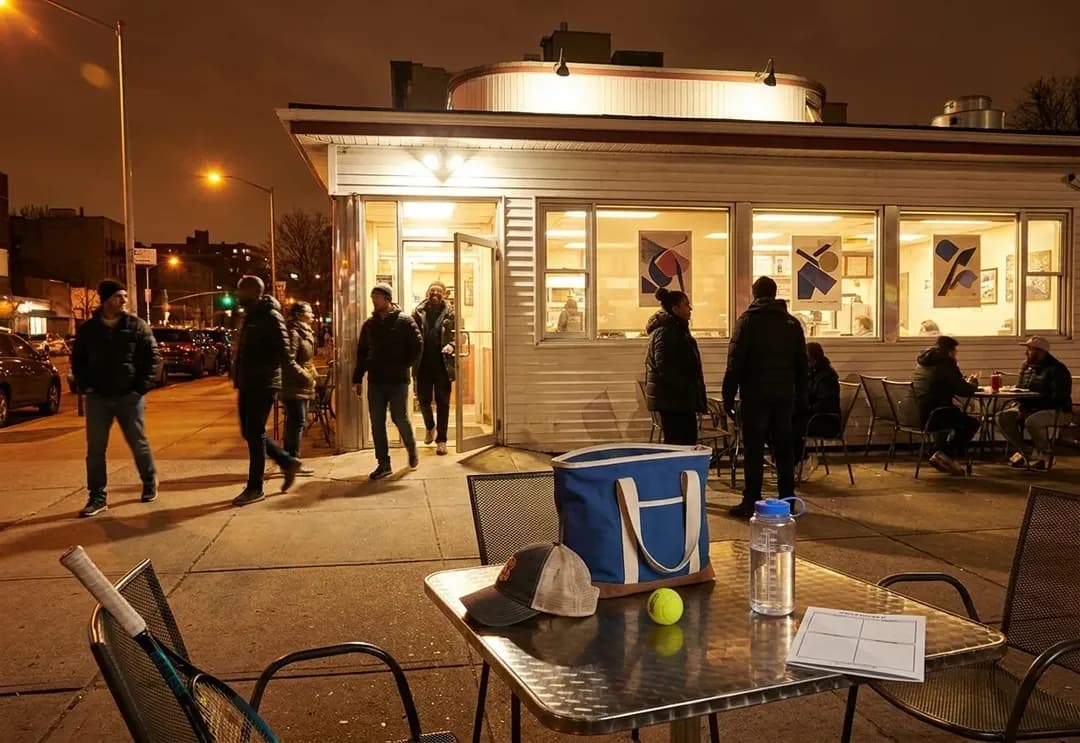
If you're craving eggs, pancakes, or a patty melt at midnight, the Greek diner tradition is alive and well in Woodside, Jackson Heights, and Astoria. These are the chrome-trimmed, booth-lined institutions where the menu spans breakfast, lunch, and dinner simultaneously, and the coffee pot never empties. Many operate 24 hours or close only for a few hours before dawn. The vibe is fluorescent, friendly, and utterly unpretentious—perfect for a post-match debrief over a plate of fries and a milkshake. You'll share the room with cab drivers, hospital workers, and other night owls, all of whom understand that sometimes the best meal is the one served at 1 a.m. with no judgment and no hurry.
Taco trucks, roti counters, and the informal late-night economy
Corona and Jackson Heights also offer a vibrant informal food scene that peaks after dark. Taco trucks park near busy intersections, their grills glowing and their menus scrawled on posterboard. Roti shops and Guyanese Chinese spots stay open late, serving doubles, curry, and fried rice to a steady stream of regulars. These aren't sit-down restaurants in the traditional sense—you might eat standing at a high-top, perched on a plastic stool, or back on the subway platform with your takeout bag. But the food is hot, generous, and priced for everyday life, not tourism. If you're comfortable navigating by feel and asking locals where they eat, this layer of the neighborhood will reward you.
Timing your exit and reading the 7 train crowd
Leaving the tennis center after a night session means joining a river of people flowing toward the Mets–Willets Point station. The MTA runs additional 7 train service during US Open weeks, but the platform will still be crowded, especially if a popular match just finished. Once you're on the train, watch the crowd: if half the car empties at 61st Street–Woodside or Junction Boulevard, that's a signal that people know where to eat. Flushing is the end of the line, so if you stay on, you'll arrive at Main Street with plenty of company and a neighborhood that's still fully awake. The walk from the station to the densest restaurant blocks takes about five minutes, and the streets remain busy and well-lit.
What to carry and what to expect
Why this rhythm matters beyond tennis weeks
The US Open is a two-week window, but the late-night food culture it lets you discover is year-round. Flushing, Corona, Jackson Heights, and Woodside don't transform for the tournament—they simply become more visible to visitors who might not otherwise venture past Manhattan. Once you've tasted soup dumplings at 1 a.m. or shared a diner booth with strangers after a long match, you'll understand why so many New Yorkers treat Queens as the city's most reliable eating borough. The tennis is the occasion, but the neighborhood is the reward.
Tags: #USOpen2026 #Queens #FlushingMeadows #KarpoFinds #Karpo #cincinnati-pachuca #NewYorkLocal #TennisTravel #NYCLocalLife #TennisTravel
Sources consulted: usopen.org — Official event schedule · usopen.org — Official visitor A-Z guide · usopen.org — Official transportation directions · usopen.org — Official prohibited-items guide · MTA — Official US Open transit guide · NYC Parks — Flushing Meadows Corona Park · NYC Tourism — Queens · NYC Health — Food Safety
All trademarks are the property of their respective owners.
Ask Karpo first
Want to know what is actually open, how to time the trip, and where to pause around Queens? Ask Karpo for the latest public US Open context, a respectful visitor plan, and a live route around Flushing Meadows before you head out.
Ask Karpo for more information.
Keep reading
- Where to Eat Near Penn Station That Isn't a Chain
 Andytown Coffee in the Outer Sunset: The Snowy Plover Explained
- Best Things to Do in Chicago: What the City Gives Away