
The child bison encounter Yellowstone incident that circulated widely online serves as a stark reminder for educational parents planning weekend wildlife activities with young children in Miami. While South Florida lacks roaming bison, the fundamental lesson—teaching kids to respect animal boundaries—applies equally to local alligators, manatees, and captive zoo residents. Miami offers multiple weekend morning routes for beginner families seeking hands-on wildlife education, but the challenge lies in distinguishing programs that actively teach safe interaction principles from passive viewing experiences. Zoo Miami houses more than 2,000 wild animals and operates as the only subtropical climate zoo in the continental United States, while Everglades ranger programs and Seaquarium touch tanks present different learning models. Concerned parents must weigh whether keeper talks, guided ranger experiences, or supervised touch encounters better instill respect for wildlife boundaries in children who are still learning impulse control and spatial awareness.
Text Karpo your starting point, timing, group size, and priorities for a Miami plan tailored to this exact situation, with one realistic backup before you leave.

Zoo Miami Keeper Talks Versus Self-Guided Viewing
Zoo Miami's keeper talk schedule presents a decision point for educational parents: arrive early for scheduled presentations where staff demonstrate feeding protocols and explain safety distances, or allow children to wander exhibits at their own pace. Keeper talks typically occur at specific animal habitats throughout the day, though the county website does not publish exact times or guarantee availability. The structured format means families commit to a fixed route and timeline, potentially missing other exhibits, but gain direct access to professionals who can answer questions about why barriers exist and what happens when humans breach them. Children witness trained staff following strict protocols, reinforcing that even experts maintain boundaries.
Self-guided routes through Zoo Miami's 750-acre facility offer flexibility for families with young children who need bathroom breaks or snack stops, but sacrifice the educational narrative that connects animal behavior to human responsibility. Parents must supply their own explanations when a child asks why they cannot pet the flamingos or feed the giraffes. The tradeoff becomes apparent on crowded weekend mornings when multiple families cluster at popular exhibits—without staff guidance, children may observe peers attempting to touch animals through fencing or tossing unauthorized food, normalizing boundary violations rather than discouraging them. Verify current keeper talk availability by calling 305-755-7800 before planning your route, as staffing levels and animal care needs affect daily schedules.

Everglades Ranger Programs and Age-Appropriate Wilderness Context
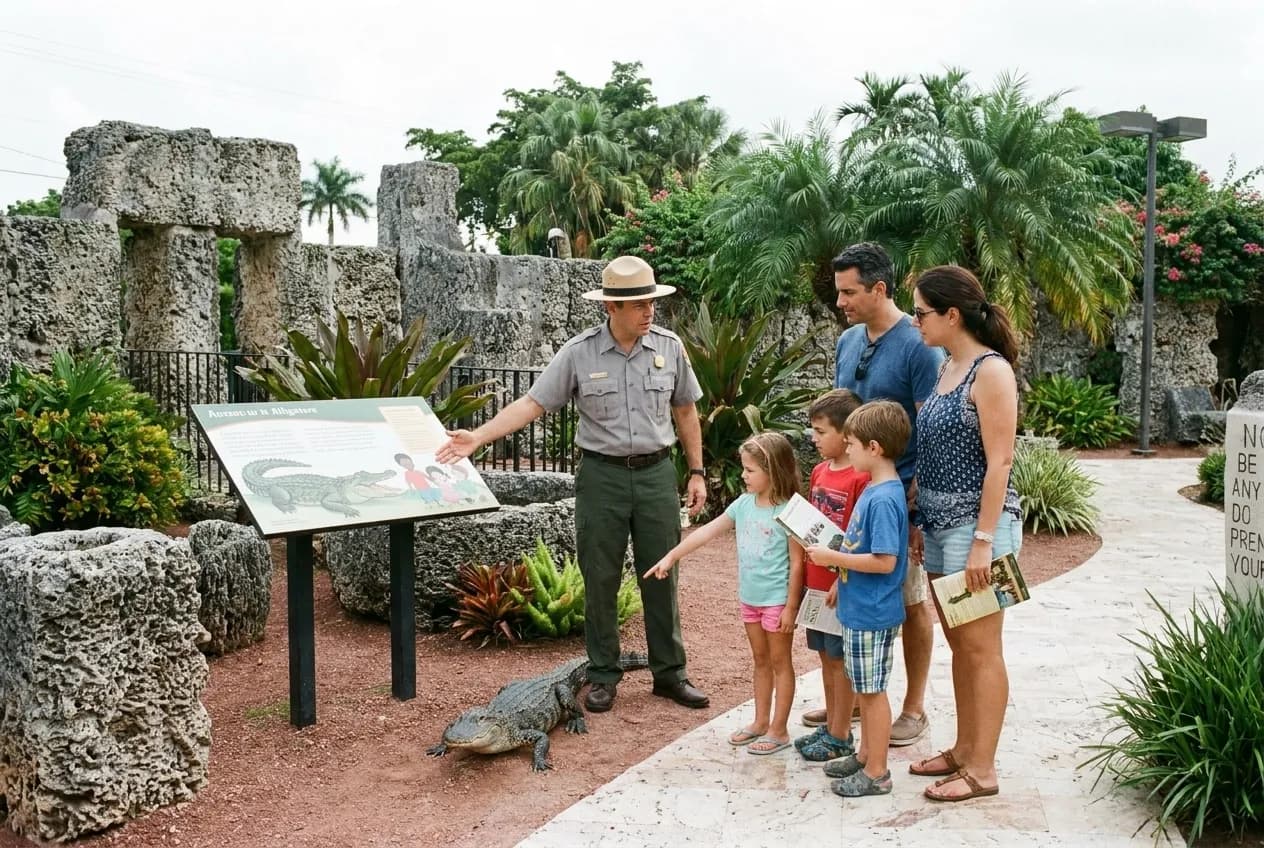
Everglades National Park ranger programs introduce a different educational model where wildlife remains genuinely wild rather than habituated to human presence behind barriers. Weekend morning ranger-led walks teach children that alligators, wading birds, and snakes occupy their natural habitat, making human visitors the guests who must adjust behavior. This context directly parallels the child bison encounter Yellowstone situation—both involve megafauna in protected landscapes where tourists sometimes forget animals are not entertainment props. The beginner-friendly Anhinga Trail boardwalk offers a contained route where rangers can supervise young children while pointing out wildlife at safe distances, though specific program schedules require verification through official park channels rather than county websites.
The challenge for concerned parents lies in assessing whether preschool and early elementary-aged children can grasp the distinction between zoo animals and wild Everglades residents. A four-year-old who learns not to approach Zoo Miami's captive alligators may not automatically transfer that caution to a wild alligator sunning beside a trail, particularly if the animal appears motionless or if other visitors are standing nearby taking photos. Ranger programs address this through repeated verbal cues and physical positioning—staff place themselves between children and wildlife, modeling appropriate distance. However, Everglades routes involve heat exposure, mosquitoes, and limited shade, factors that can shorten attention spans and reduce a young child's ability to absorb safety lessons during a weekend morning outing.
Seaquarium Touch Tanks and Supervised Contact Protocols
Miami Seaquarium's touch tank experiences represent the opposite end of the wildlife education spectrum—supervised direct contact with marine animals specifically conditioned to tolerate gentle human interaction. Stingrays, sea stars, and small sharks in shallow pools allow children to feel textures and observe behavior up close under staff supervision, creating memorable sensory experiences that passive zoo viewing cannot match. For educational parents concerned about teaching boundaries, touch tanks offer a controlled environment where rules are explicit: two-finger touches only, no grabbing, no chasing animals around the pool. Staff can immediately correct inappropriate behavior and explain why rough handling harms animals, delivering real-time lessons that stick with young children.
The tradeoff emerges when considering whether touch tank experiences inadvertently teach children that wildlife is accessible for human entertainment. A child who pets stingrays on Saturday morning may struggle to understand why they cannot touch a sea turtle encountered while snorkeling on Sunday, or why approaching a manatee in open water violates federal law. Critics of touch tank education argue it blurs the boundary between domestic pets and wild animals, while supporters contend that positive supervised interactions build empathy that translates to conservation ethics. Parents planning weekend routes must decide whether their young children can compartmentalize "these specific animals in this specific setting" or need a more consistent "look but don't touch" message. Verify current touch tank availability and age restrictions before visiting, as animal welfare protocols may limit access during certain periods.
Transportation Logistics for Multi-Site Weekend Routes
Combining multiple wildlife education sites into a single weekend morning route requires realistic assessment of Miami traffic patterns and young children's stamina. Zoo Miami sits in southern Miami-Dade County, roughly 45 minutes from downtown Miami and over an hour from northern suburbs during weekend traffic. Everglades National Park entrances lie even farther south, while Miami Seaquarium occupies Virginia Key between downtown and Key Biscayne. A family attempting all three locations would spend more time in car seats than learning about wildlife, defeating the educational purpose. The free Metromover system operates in downtown Miami, Omni, and Brickell areas but does not reach any major wildlife education sites, meaning personal vehicles or ride-sharing become necessary.
Practical weekend morning routes for families with young children typically focus on a single primary destination with a backup option nearby. Zoo Miami pairs logically with Deering Estate's nature programs, both located in southern Miami-Dade, though the county website notes Deering offers daily tours without specifying weekend availability or age-appropriate content. Seaquarium combines well with beach time at nearby Crandon Park, allowing children to transition from structured learning to free play. Everglades visits work best as standalone trips given the distance and the physical demands of even short boardwalk walks in subtropical heat. Parents should verify current operating hours through official channels rather than assuming standard schedules, particularly given the August 2026 date when summer hours may differ from winter tourist season patterns.
Verification Steps Before Committing to Weekend Plans
The Miami-Dade Parks, Recreation and Open Spaces Department achieved Certified Autism Center designation through the International Board of Credentialing and Continuing Education Standards, indicating some programs accommodate sensory sensitivities and behavioral needs. However, the county website does not specify which wildlife education programs carry this certification or what accommodations apply. Parents of children with disabilities or sensory processing differences should contact the department at 305-755-7800 at least seven days in advance to request specific accommodations, as noted in the official accessibility policy. This advance planning window affects spontaneous weekend decision-making, requiring families to choose routes earlier in the week rather than deciding Saturday morning based on weather or mood.
Age-appropriate content verification remains the parent's responsibility, as official sources rarely specify minimum ages or developmental readiness for wildlife programs. A "family-friendly" designation may include everything from toddlers to teenagers, while "beginner" difficulty does not necessarily mean suitable for preschoolers. Call ahead to ask specific questions: How long does the program last? Are there bathroom facilities along the route? Can children leave mid-program if overwhelmed? What happens if a child tries to touch an animal despite warnings? Programs that cannot answer these questions clearly may lack the structure concerned parents need when teaching young children about wildlife boundaries. The goal is not to eliminate all risk—wildlife education inherently involves unpredictable animal behavior—but to select routes where staff training and physical design support rather than undermine the safety lessons parents want their children to learn.
Tags: #wildlifeeducationMiami #ZooMiamiwithkids #Evergladesrangerprograms #MiamiSeaquariumtouchtanks #weekendfamilyactivities #teachingkidsanimalsafety #Miamiweekendplans #educationalparentactivities #beginnerwildliferoutes #MiamiDadeParksprograms
Sources consulted: Source 1: miamidade.gov · Source 2: miamidade.gov · Source 3: mdpls.org · Source 4: miamibeachfl.gov
All trademarks are the property of their respective owners.
Ask Karpo first
Ask Karpo to turn this Miami idea into a current plan for your date, budget, companion, transit preference, and energy level. Karpo can narrow the route and flag what to verify before you go.


