A three-dollar taco in San Francisco now reads as a typo. The standard across most of the city has drifted to four or five, and at the newer places it can be seven or eight for something served on a small plate with tweezers involved. But the cheap taco has not disappeared — it has concentrated. Finding the best tacos in San Francisco at the low end is a matter of knowing which three formats have held their pricing and why.
Truck locations move and taqueria specials are rarely posted online. Ask Karpo what is near you right now and what it costs.
Format one: the trucks
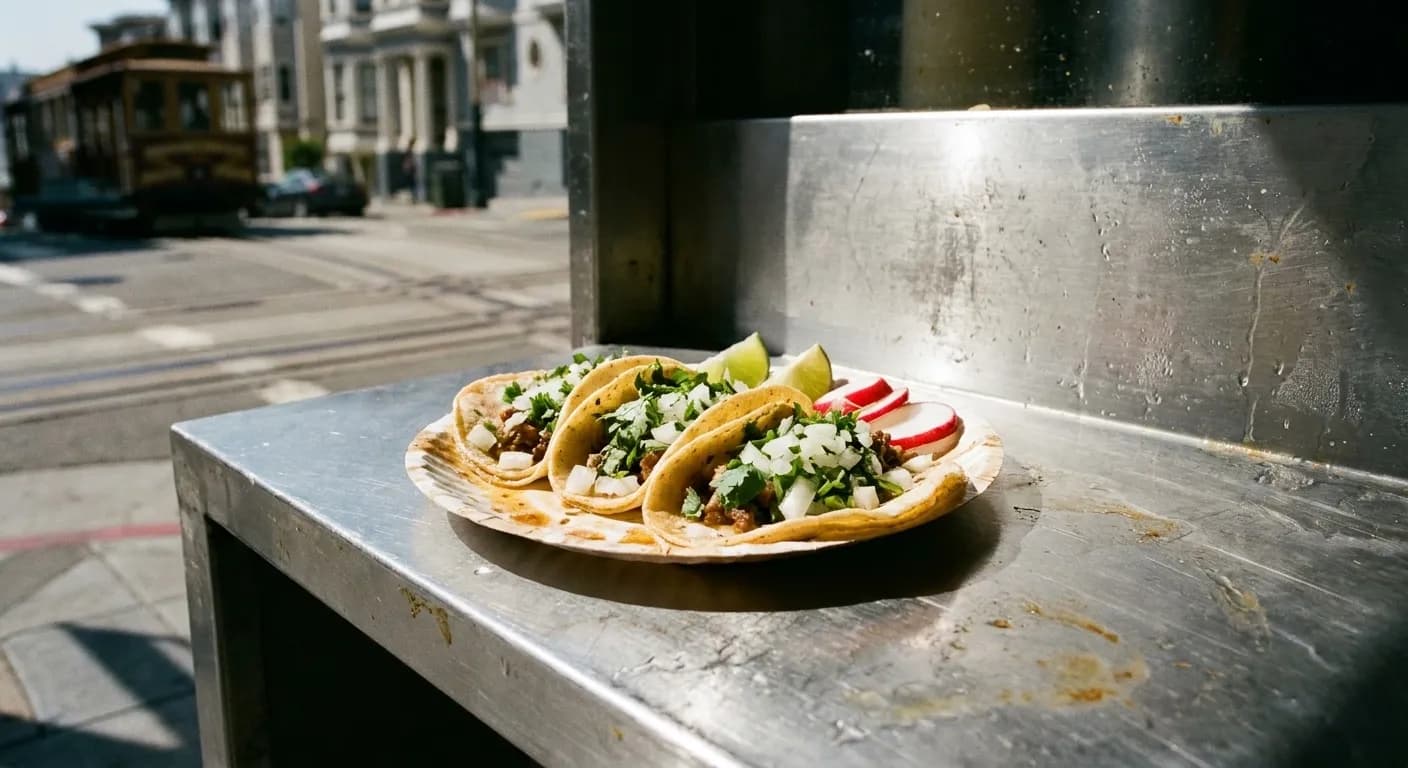
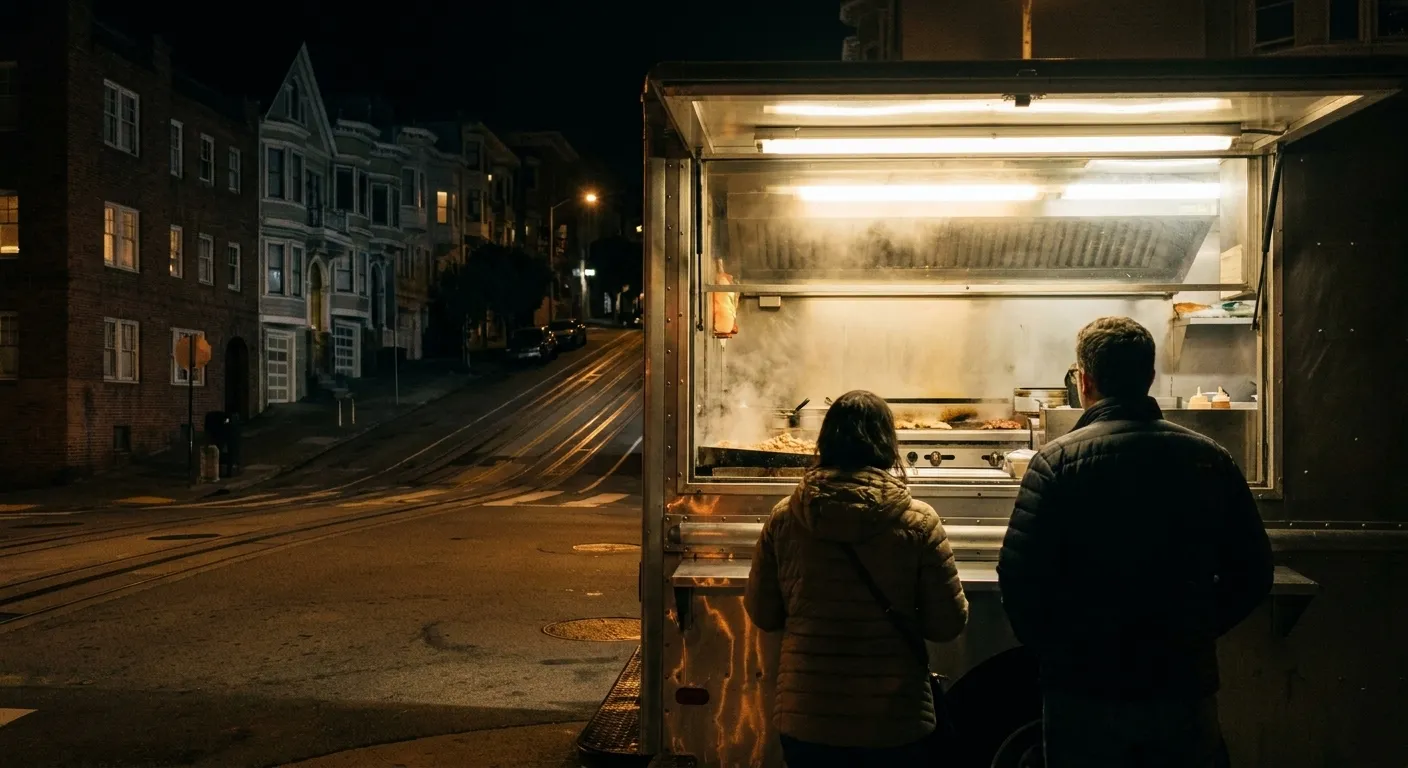
The lowest prices in the city are on wheels. Taco trucks operating in the Mission, the Excelsior, Bayview and out along the industrial edges routinely sell single tacos at or near three dollars, because their cost structure is fundamentally different from a restaurant's — no dining room, no lease, minimal staff, and a menu tight enough to run almost no waste. The tacos are small in the traditional way, which is the point: three or four of them make a meal, and the format was never designed around a single large item.
The catch is discovery. Trucks move, keep irregular hours, and are frequently at their best late at night when a construction site or a bar crowd makes the pitch worth working. They are also the format most likely to be cash-only, and the least likely to appear accurately in any listing.
Format two: the market and grocery counters
The second reliable tier is the taqueria counter embedded inside something else — a carnicería, a Latin grocery, a corner market with a griddle at the back. These are common through the Mission and the Excelsior and are systematically cheaper than standalone restaurants for the same reason market coffee counters are cheaper: the rent is being carried by the shop. The meat is frequently better too, because the butcher counter is eight feet away.
This is the single most under-used category in San Francisco cheap eating. Most people walk past these places because they read as shops rather than restaurants, and there is rarely anywhere to sit.
Format three: the old-guard taquerias, ordered correctly
The established Mission taquerias — the ones that have been arguing with each other about burritos for forty years — are not cheap by taco, but they become cheap if you order correctly. A single taco at La Taqueria or El Farolito costs more than a truck taco; what those places actually offer at the low end is volume for money in the burrito, which remains one of the best value propositions in American food. If your goal is spending under ten dollars and leaving full, the burrito beats three tacos at the same counter almost every time.
The other lever at these places is the meat. Al pastor, carnitas and asada sit at the top of the price list; suadero, cabeza, lengua and the vegetarian options sit below, and at a good taqueria the cheaper cuts are frequently the better tacos. Ordering lengua is not a compromise; it is what the people who eat there every week are having.
The salsa test, and how to read a taqueria
A quick way to judge any taqueria in San Francisco before you have eaten anything: look at the salsa. A place making its own will have at least three, in squeeze bottles or tubs rather than sachets, and at least one of them will be genuinely hot rather than decorative. A place putting out a single mild red sauce from a catering tub is telling you what the rest of the operation is like. The pickled carrots and jalapeños are the same signal — house-made means somebody is prepping properly.
The second tell is the tortilla. Corn tortillas that are being warmed on a griddle to order, or better, pressed on site, will be pliable, slightly charred and will not fall apart. Tortillas taken cold from a bag and microwaved go grey and split. This single detail separates the good cheap tacos from the merely cheap ones more reliably than anything else, and you can see it happening from the queue.
The timing that lowers the price
Tuesday is not a marketing invention in San Francisco — a genuine number of taquerias and bars run a reduced taco price midweek, most commonly Tuesday, and it can take a four-dollar taco down to two. It is advertised on a whiteboard by the door and almost nowhere else. Late-night pricing occasionally goes the other way, with a small premium after midnight at a few places, though this is less common than people assume.
What you give up, and what you do not
The honest trade at the cheap end is seating, card payment and consistency of hours. You are frequently standing up, frequently paying cash, and occasionally arriving to find the truck is not there. What you are not giving up is quality. This is the unusual thing about tacos as a category in San Francisco: unlike almost every other cuisine, the cheapest tier is genuinely competitive with the most expensive one on flavour, and in several cases beats it. The seven-dollar taco is usually buying you a chair, a cocktail list and a nicer room, which are real things to want but are not the taco.
If you want a rule: go where the menu is short, the tortillas are being pressed on site, and the queue is people who live within four blocks. That heuristic has never once been wrong in this city, and it costs about three dollars to test.
Tags: #SanFrancisco #SFEats #BestTacosSF #CheapEatsSF #MissionSF #TacoTruck #Taqueria #MexicanFood #Excelsior #BudgetSF #SFFood #BayArea #StreetFood #TacoTuesday #EatLikeALocal
All trademarks are the property of their respective owners.
Ask Karpo first
Ask Karpo where the nearest genuinely cheap tacos are in San Francisco right now, whether the place takes cards, and if there is a midweek special on tonight.