Most visitors never make it past Central Park's 86th Street, which means they miss the North Woods entirely. This 90-acre tract in the park's northwest corner remains what Frederick Law Olmsted intended: a rambling, hilly woodland laced with streams, stone bridges, and trails that descend into ravines deep enough to muffle traffic. The Loch—a narrow watercourse that runs through the heart of the woods—carves a steep-sided gorge beneath Huddlestone Arch, a massive rustic span built from boulders in 1866. The cascade beneath the arch is temperamental, the forest canopy is thick, and the stone benches are hidden. It feels less like a designed park than a lucky accident of topography.
Getting into the ravine
The North Woods entrance at West 100th Street and Central Park West is the main access point, and if you want the ravine to yourself, you should be walking the trails by 7:30 in the morning. After ten o'clock, dog walkers from the nearby neighborhoods arrive in force, and the quiet evaporates. Early summer light filters through oak and maple leaves at a low angle, catching mist over the Loch. The air is cooler by several degrees once you step off the paved path and descend into the trees.
The trail network is intuitive but not signposted aggressively. Follow the sound of water. The Loch runs roughly north-south through the ravine, and most paths either parallel the stream or drop down to cross it. Footing is uneven—exposed roots, stone steps worn smooth, the occasional muddy patch after rain. Wear shoes with grip.
Huddlestone Arch and the cascade
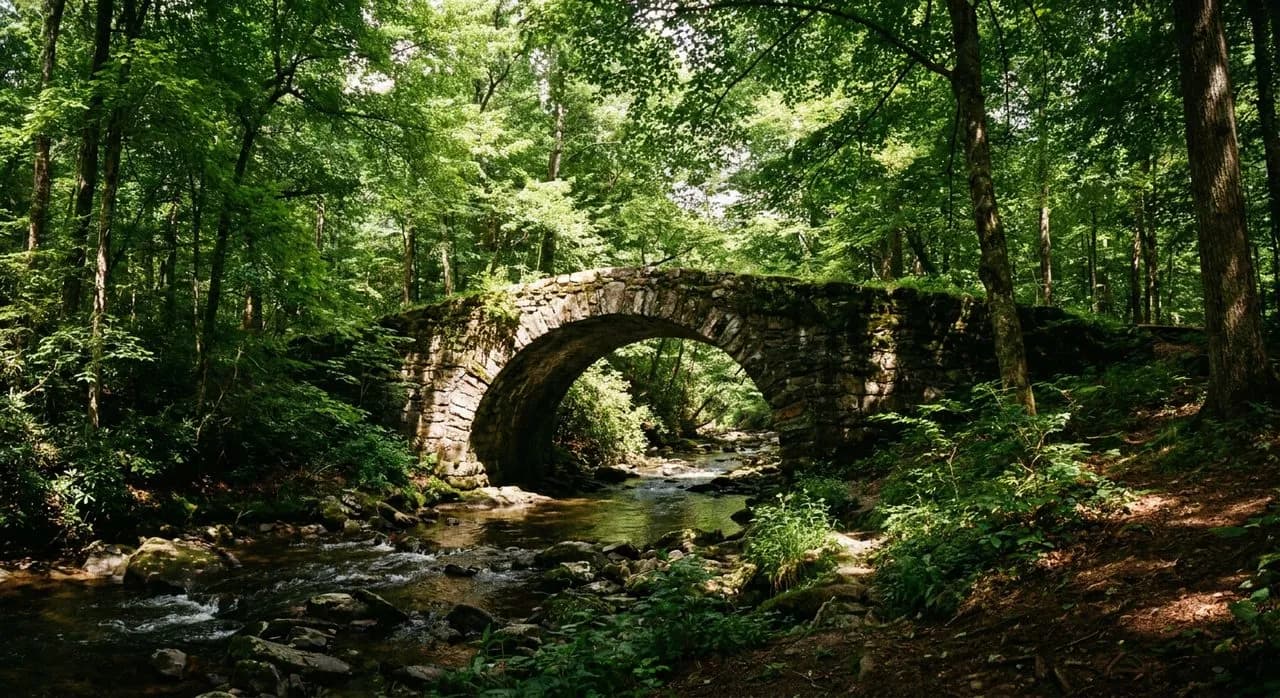
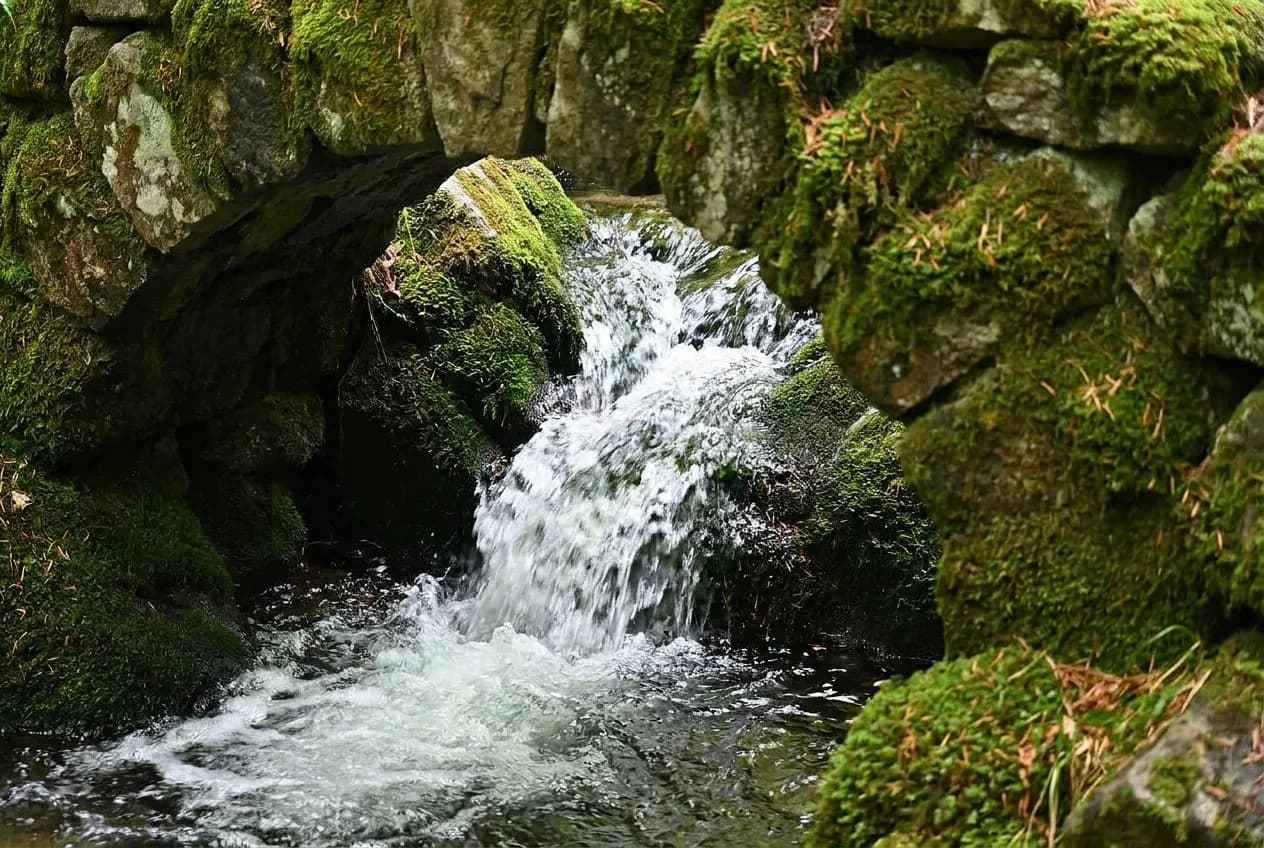
Huddlestone Arch is the visual anchor of the ravine, a single-span stone bridge assembled without mortar from enormous glacial boulders. It sits low and wide, framing the Loch as it flows beneath. The cascade is directly under the arch, a short tumble over rocks that creates the loudest feature in the woods—when it's running. The water flow is entirely rain-dependent. Check within 24 hours of a storm for the strongest current and sound; after two dry days, the cascade shrinks to a trickle or stops altogether. Late-2026 rainfall patterns have been erratic, so don't assume.
Stand on the arch and look downstream. The ravine walls rise steeply on both sides, dense with undergrowth. In summer the canopy closes overhead, filtering sunlight into shifting patches. The stone is dark schist, cool to the touch. Upstream, the Loch bends out of sight. Downstream, the water quiets and spreads into a shallow pool before continuing south toward the Pool, another body of water outside the ravine proper.
The hidden bench
Most visitors photograph the arch and move on. If you descend the western bank about 50 feet downstream, tucked into a niche between two large rocks, there's a stone bench that almost no one finds. It's the only seat in the ravine completely hidden from the adjacent trails, and from this spot, traffic noise disappears entirely. You hear the stream, woodpeckers, the rustle of foraging squirrels. In late afternoon, dappled light moves across the water. It's a place to sit for twenty minutes and let the city recede.
The bench is not marked. Look for a narrow footpath that splits off the main trail just past the arch, heading downstream on the west side. The stone is weathered, lichen-covered, slightly damp even on dry days. Bring a small towel if you're particular. The sightline is upstream toward the arch, framed by hemlocks and the curve of the ravine wall.
The wider loop
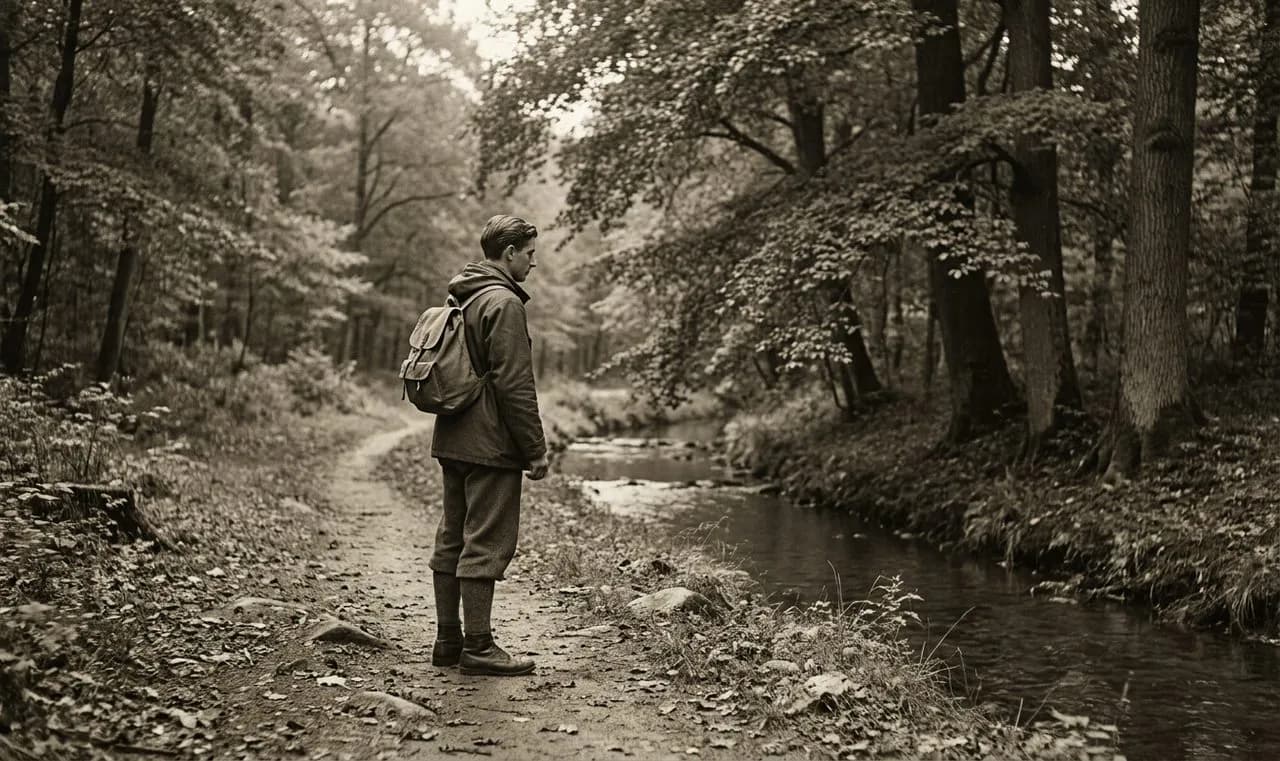
The North Woods trail system connects the Loch ravine to higher ground. If you loop east from Huddlestone Arch, the path climbs out of the gorge and opens onto a plateau dotted with oak and cherry trees. In summer, wildflowers—black-eyed Susans, Queen Anne's lace—grow in the sunny clearings. The trails here are wider, less dramatic, and you'll encounter more runners and casual walkers.
To the north, trails lead to the Ravine, a separate watercourse that feeds into the Loch. This section is even less trafficked, though the footing is rougher and the trails narrower. The full loop—ravine, arch, plateau, and back—takes about 45 minutes at a leisurely pace. Extend it by wandering the side paths that dead-end at overlooks or small stone staircases leading nowhere in particular. Olmsted designed redundancy into the network, so getting lost is temporary and harmless.
What to notice
The North Woods rewards slow observation. Stone walls and wooden railings decay at different rates. The schist outcroppings are scored with glacial striations pointing southwest. In summer, the canopy hums with cicadas; by late afternoon, the light turns gold and horizontal. The stream smells of wet leaves and algae. Birdsong is constant—robins, cardinals, the occasional red-tailed hawk circling the canopy gap above the Loch.
The park's microclimates are pronounced. The ravine floor stays noticeably cooler than the open lawns to the south, and humidity lingers after rain. Moss grows thick on the north-facing rocks. By late summer, the undergrowth is dense enough that off-trail exploration becomes impractical. Stay on the paths; you'll see more that way.
Why it matters
The North Woods is proof that Central Park's northern reaches remain underutilized, which is to say, still functional as actual wilderness. The southern lawns and Bethesda Terrace see millions of visitors annually; the North Woods sees a fraction. It's a странge asymmetry for an urban park, and it works in favor of anyone willing to walk an extra fifteen blocks. The ravine offers what the rest of the park cannot: the sensation of solitude in the middle of Manhattan, the sound of water moving over stone, and the shade of a forest dense enough to forget the skyline.
It's also free, which matters more than the word suggests. The North Woods asks nothing—no reservation, no ticket, no suggested donation. You show up, you walk, you sit on a hidden bench if you find it. That kind of access is rare and worth protecting.
Practical notes
The North Woods occupy Central Park's northwest corner, roughly between 101st and 110th Streets. Primary entry at 102nd Street and Central Park West. Nearest subway: B or C to 103rd Street. Street parking is difficult; consider cycling or walking from adjacent neighborhoods. The park is generally open daily from early morning until 1 a.m.. Trails are unpaved and uneven; avoid sandals. Bring water, especially in summer. The cascade is rain-dependent—check the forecast. No restrooms in the immediate area; nearest facilities are near the Pool at 100th Street. The North Woods are accessible by paved paths at entry points, but interior trails involve stairs and slopes.
Tags: #CentralParkNorthWoods #HuddlestoneArch #TheLoch #NYCHiddenGems #FreeAndFine #CentralParkTrails #UrbanWilderness #NYCParks #ManhattanNature #SummerInNYC #NYCForests #UpperWestSide #NYCOutdoors #CityEscape #KarposFinds
Sources consulted: Central Park - Wikipedia · North Woods - Central Park Conservancy · Central Park - NYC Parks · Central Park - New York Times
All trademarks are the property of their respective owners.