 Where to Eat Near Penn Station That Isn't a Chain
US Open 2026

Caty McNally Tennis Fans Doubles Clinics Near 2026 US Open
How recreational doubles players can build partner skills, explore team strategy workshops, and enjoy tournament energy across Flushing Meadows and the 7 train corridor during the…
Interest in Caty McNally—known for her doubles prowess and on-court chemistry—reminds recreational players that the US Open isn't only about singles stars. The 2026 tournament fortnight, scheduled for late August into early September at the USTA Billie Jean King National Tennis Center in Flushing Meadows Corona Park, offers Queens-based and visiting tennis enthusiasts a rare chance to watch world-class doubles, attend partner-focused clinics hosted by local clubs and coaching groups, and practice team strategy in the same borough where champions compete. Whether you're a weekend player looking to sharpen net play, a social-league pair hoping to improve communication, or a newcomer curious about doubles tactics, the energy around the Open creates a natural moment to book instruction, join drop-in workshops, and explore the 7 train corridor's tennis-friendly parks and community courts.
Text Karpo with your US Open session time and Queens starting point, and we’ll turn this Partner tennis instruction and team strategy workshops in Flushing for recreational players during tournament week into a practical local plan.
Why Doubles Clinics Align With US Open Week
The US Open showcases five disciplines—men's and women's singles, men's and women's doubles, and mixed doubles—and the doubles draws often feature creative shot-making, rapid exchanges at net, and the kind of teamwork recreational players can study and adapt. Many New York tennis clubs, park programs, and independent coaches schedule special clinics during tournament week to capitalize on the buzz, offering sessions that focus on positioning, poaching, return-of-serve tactics, and partner communication. These workshops typically run mornings or early evenings to avoid conflicting with marquee matches, and they're designed for intermediate to advanced recreational players who want structured feedback in a group setting. Checking club websites, NYC Parks tennis permit pages, and community boards in late spring will help you identify which programs are confirmed for 2026 and whether pre-registration is required.
Finding Instruction Near Flushing Meadows
Flushing Meadows Corona Park itself holds public tennis courts managed by NYC Parks, and during Open week the park hums with players warming up before heading to the tournament or cooling down afterward. While the USTA National Tennis Center's professional courts are reserved for the event, nearby community facilities in Corona, Flushing, and Jackson Heights often host drop-in doubles round-robins and short-format clinics. Independent coaches and teaching pros sometimes rent court time at these parks or at indoor clubs along the 7 train corridor, advertising sessions through local tennis groups, Meetup pages, or neighborhood listservs. If you're traveling in for the Open and want to squeeze in a lesson, reaching out to Queens-based coaches a few weeks ahead ensures you can book a slot that fits around your match schedule and allows time to explore the borough.

What a Partner Strategy Workshop Covers
A typical two-hour doubles clinic begins with a warm-up emphasizing volleys and overheads, then moves into drills that simulate match situations: serving and following to net, defending against lobs, covering the alley on wide returns, and switching sides smoothly. Coaches often pair participants randomly to encourage adaptability and communication with unfamiliar partners—a skill that mirrors mixed-doubles or social-league play. The second half usually involves live points or short sets with rotation, giving everyone a chance to apply tactics under light pressure. Many instructors pause between games to discuss positioning adjustments, signal systems for poaching, and how to read opponents' body language. These workshops are less about stroke mechanics and more about decision-making, court geometry, and the mental side of teamwork, making them especially valuable if you already have solid groundstrokes but struggle with doubles-specific patterns.
Timing Your Clinic Around Match Sessions
The US Open runs day and night sessions, with gates typically opening mid-morning for day play and early evening for night matches. If you've secured tickets for an evening session starting at 7 p.m., a morning clinic from 8 to 10 a.m. gives you time to shower, grab lunch in Flushing or Corona, and ride the 7 train to Mets–Willets Point by early afternoon to explore the grounds, watch practice courts, and settle in before your ticketed match. Conversely, if you're attending a day session, an early-evening clinic after you leave the tournament lets you decompress, apply what you observed, and enjoy the cooler temperatures. Coaches familiar with Open week often build flexible start times into their schedules, so mentioning your match window when you inquire can help them propose a slot that avoids the midday heat and the rush-hour crush on the 7 train.
Exploring Tennis-Friendly Stops Along the 7 Train
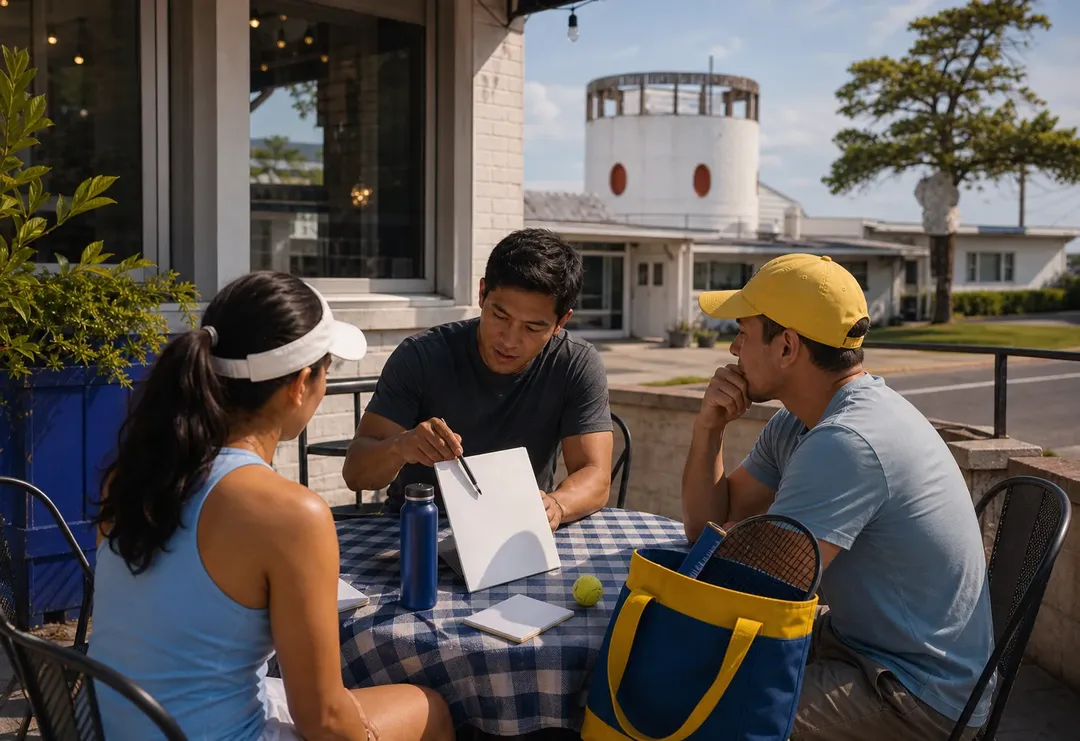
The 7 train corridor threads through neighborhoods rich in food, culture, and casual hangouts that suit a tennis-focused day. In Jackson Heights, South Asian and Latin American bakeries offer quick breakfast before a morning clinic; in Woodside, Filipino diners serve hearty post-practice meals. Flushing's downtown, a short walk or bus ride from the park, is packed with dim sum parlors, bubble-tea shops, and Korean barbecue spots ideal for refueling between a clinic and an evening session. Long Island City and Astoria, closer to Manhattan, feature waterfront parks, craft-beer bars, and independent bookstores where you can rest your legs and review the day's match notes. Carrying a small backpack with a change of shirt, sunscreen, a water bottle, and a notebook for drill ideas keeps you comfortable as you move between courts, food stops, and the tournament grounds.
Gear, Etiquette, and Practical Considerations
Most clinics ask participants to bring their own racquet, a can of balls to contribute to the session, court-appropriate shoes, and a hat or visor. Some coaches provide shared ball hoppers and teaching aids, but confirming the gear list when you register avoids surprises. Doubles etiquette—calling the ball clearly, congratulating good shots, and rotating partners gracefully—matters as much as technique, and clinics are a low-stakes environment to practice those habits. If you're visiting from out of town, many Queens hotels near the 7 train offer luggage storage, so you can check out, attend a morning clinic, stash your bag, and head to the Open without dragging a suitcase onto the court. Checking the official US Open prohibited-items guide before you pack ensures your tennis bag complies with tournament security, especially if you plan to carry the same bag into the grounds later.
Practical Notes for Doubles Clinic Planning
Combining a recreational doubles clinic with US Open attendance turns a spectator trip into an active learning experience, letting you test new tactics on the same courts where neighborhood players train year-round, then watch professionals execute those patterns under pressure a few subway stops away. The 7 train corridor's mix of public parks, diverse food scenes, and easy access to Flushing Meadows makes it simple to design a day that balances instruction, exploration, and world-class tennis. By planning your clinic time around match sessions, packing smart, and staying flexible with transit and weather, you'll leave Queens with sharper doubles skills, a deeper appreciation for team strategy, and memories that extend far beyond the stadium seats.
Caty McNally · US Open · doubles clinics · Flushing Meadows · Queens tennis · 7 train · partner instruction · recreational tennis · USTA Billie Jean King National Tennis Center · NYC Parks courts · team strategy workshops · Jackson Heights · Corona · Long Island City · Astoria · tournament week · tennis coaching · public courts · Flushing · Mets–Willets Point · doubles tactics
Tags: #USOpen2026 #Queens #FlushingMeadows #KarpoFinds #Karpo #catymcnally #NewYorkLocal #TennisTravel #NYCLocalLife #TennisTravel
Sources consulted: usopen.org — Official event schedule · usopen.org — Official visitor A-Z guide · usopen.org — Official transportation directions · usopen.org — Official prohibited-items guide · MTA — Official US Open transit guide · NYC Parks — Flushing Meadows Corona Park · NYC Tourism — Queens · NYC Health — Food Safety
All trademarks are the property of their respective owners.
Ask Karpo first
Want to know what is actually open, how to time the trip, and where to pause around Queens? Ask Karpo for the latest public US Open context, a respectful visitor plan, and a live route around Flushing Meadows before you head out.
Ask Karpo for more information.
Keep reading
- Where to Eat Near Penn Station That Isn't a Chain
 Andytown Coffee in the Outer Sunset: The Snowy Plover Explained
- Best Things to Do in Chicago: What the City Gives Away