Carlos Alcaraz has transformed the US Open into his personal showcase of modern tennis brilliance. The Spanish champion's performances in New York reveal a player who thrives under pressure, feeds off crowd energy, and deploys a tactical arsenal that overwhelms opponents in the tournament's most demanding moments. His victories demonstrate patterns that go beyond raw talent, showing calculated approaches to endurance management, shot selection, and psychological warfare on hard courts. For fans planning to watch tennis at the USTA Billie Jean King National Tennis Center, understanding these patterns adds depth to the viewing experience and highlights why Alcaraz matches generate such electric atmospheres.
Text Karpo Now: Tell us what you want from Carlos Alcaraz’s Best US Open Matches and Winning Patterns, and Karpo can track official updates, match timing, tickets, transit, and the easiest way to plan your US Open day.
The 2022 Quarterfinal Marathon
The five-set quarterfinal victory over Jannik Sinner in 2022 stands as a defining moment in Alcaraz's career and remains one of the most physically demanding matches in recent US Open history. The match stretched past the five-hour mark, finishing after 2 a.m. in conditions that tested every aspect of both players' games. What separated Alcaraz in that encounter was not simply his ability to sustain high-level tennis deep into the night, but his capacity to raise his intensity precisely when fatigue should have diminished it. The pattern that emerged showed a player who compartmentalized each set, treating the fifth as if it were the first, with fresh legs and sharp decision-making.
The tactical blueprint Alcaraz employed involved aggressive baseline positioning that forced Sinner to generate extra pace and precision. Rather than retreating behind the baseline as fatigue accumulated, Alcaraz maintained his court position, taking balls early and denying his opponent time to set up attacks. His forehand became increasingly dominant as the match progressed, targeting Sinner's backhand side with heavy topspin that pushed the Italian deeper into defensive positions. The drop shot emerged as a crucial weapon, deployed not merely as a change of pace but as a strategic tool to break rhythm and force additional movement from an opponent already covering enormous court distances.
Championship Patterns in 2025
The 2025 final against Sinner showcased an evolved version of Alcaraz's game, one that had learned from the 2022 marathon and applied those lessons with greater efficiency. The four-set victory demonstrated improved energy management, with Alcaraz controlling points more economically and avoiding unnecessary extended rallies when shorter patterns could achieve the same result. His serve placement showed marked improvement, particularly on the deuce side where he consistently pulled Sinner wide and opened the court for forehand winners. The match revealed a player who had developed the champion's skill of knowing when to expend maximum effort and when to conserve energy for critical moments.
Defense remained central to Alcaraz's success, but with a more aggressive flavor than traditional retrieving. His court coverage forced opponents to hit additional shots, but rather than simply returning balls, he constructed defensive sequences that gradually shifted momentum. The pattern involved deep, heavy returns that neutralized opponent advantages, followed by sudden changes of direction or pace that caught opponents leaning the wrong way. His ability to transition from defense to offense within a single shot sequence became a signature element, turning potential break points against him into break point opportunities through a combination of speed, anticipation, and shot tolerance.
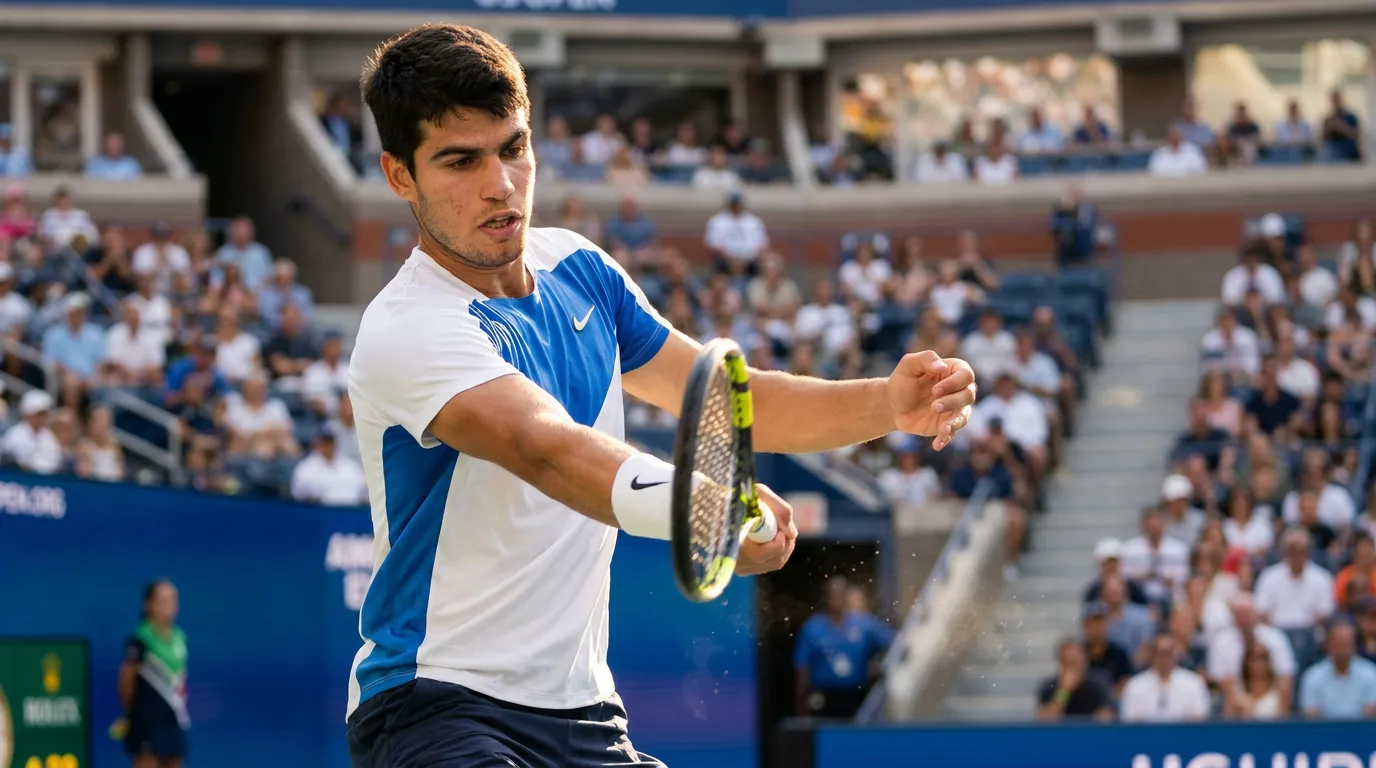
The Forehand as Primary Weapon
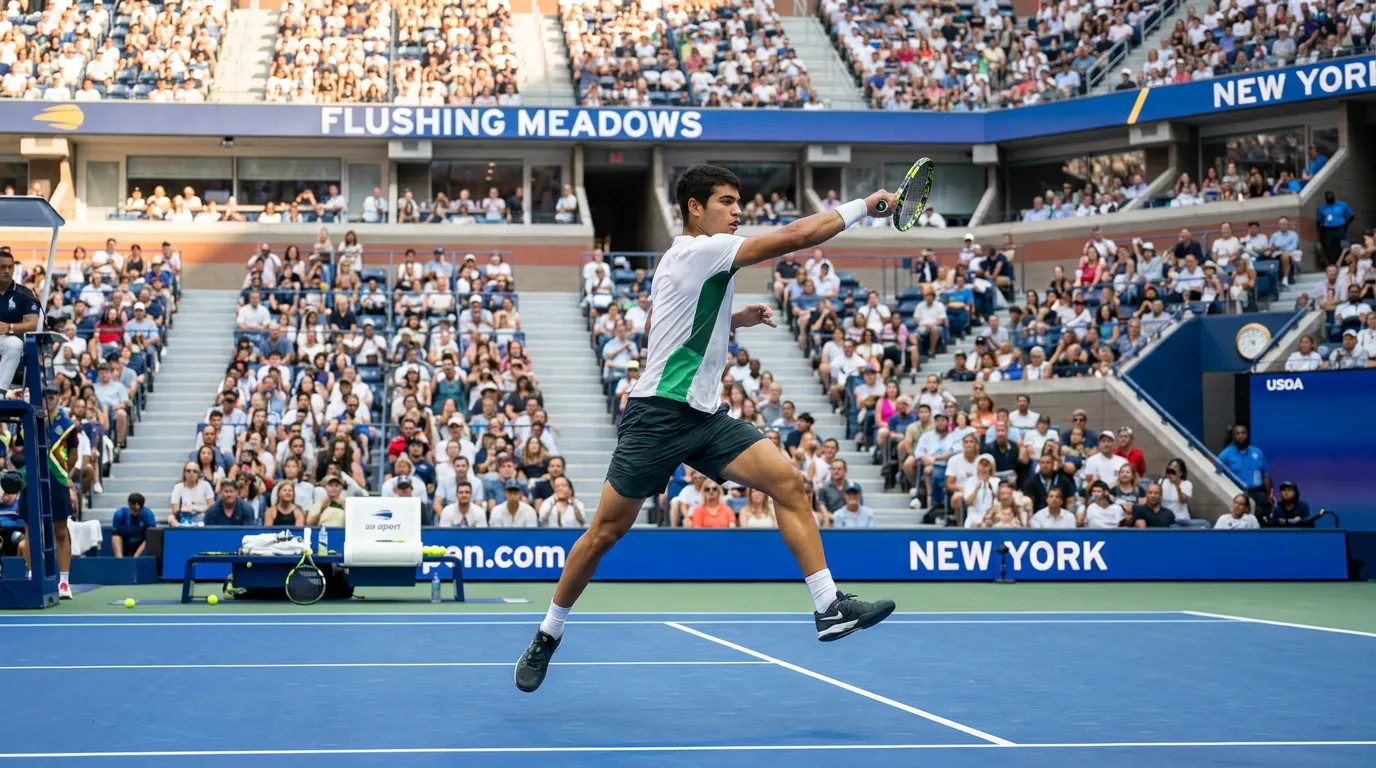
Across his best US Open performances, Alcaraz's forehand has functioned as both a finishing weapon and a tactical organizing principle. The shot generates exceptional racket head speed, producing heavy topspin that allows him to aim aggressively while maintaining margin over the net. What makes the forehand particularly effective on the US Open's hard courts is his ability to adjust the trajectory and pace based on court position and opponent location. From inside the baseline, he flattens the shot for penetrating winners. From defensive positions, he lifts the ball with extreme topspin, buying recovery time while still applying pressure.
The forehand's effectiveness multiplies when combined with his court positioning. Alcaraz frequently runs around his backhand to unleash inside-out forehands, a pattern that forces opponents to defend their own forehand side, typically their stronger wing. This tactical choice creates psychological pressure, as opponents realize their strength is being attacked. The pattern also opens the court for subsequent shots, as the cross-court angle pulls opponents wide and creates space for down-the-line winners or drop shots into the open court. Against top opponents who defend well, this forehand pattern becomes a war of attrition that eventually produces openings.
Drop Shot Mastery and Crowd Connection
The drop shot in Alcaraz's arsenal functions as more than a tactical variation. It serves as a rhythm disruptor, a crowd energizer, and a physical test that accumulates damage over the course of a long match. His willingness to attempt drop shots from defensive positions, a high-risk choice that most players avoid, demonstrates confidence and creates uncertainty in opponents who cannot predict when the shot might arrive. The execution combines disguise, with his preparation resembling a groundstroke, and touch, with the ball dying quickly after crossing the net.
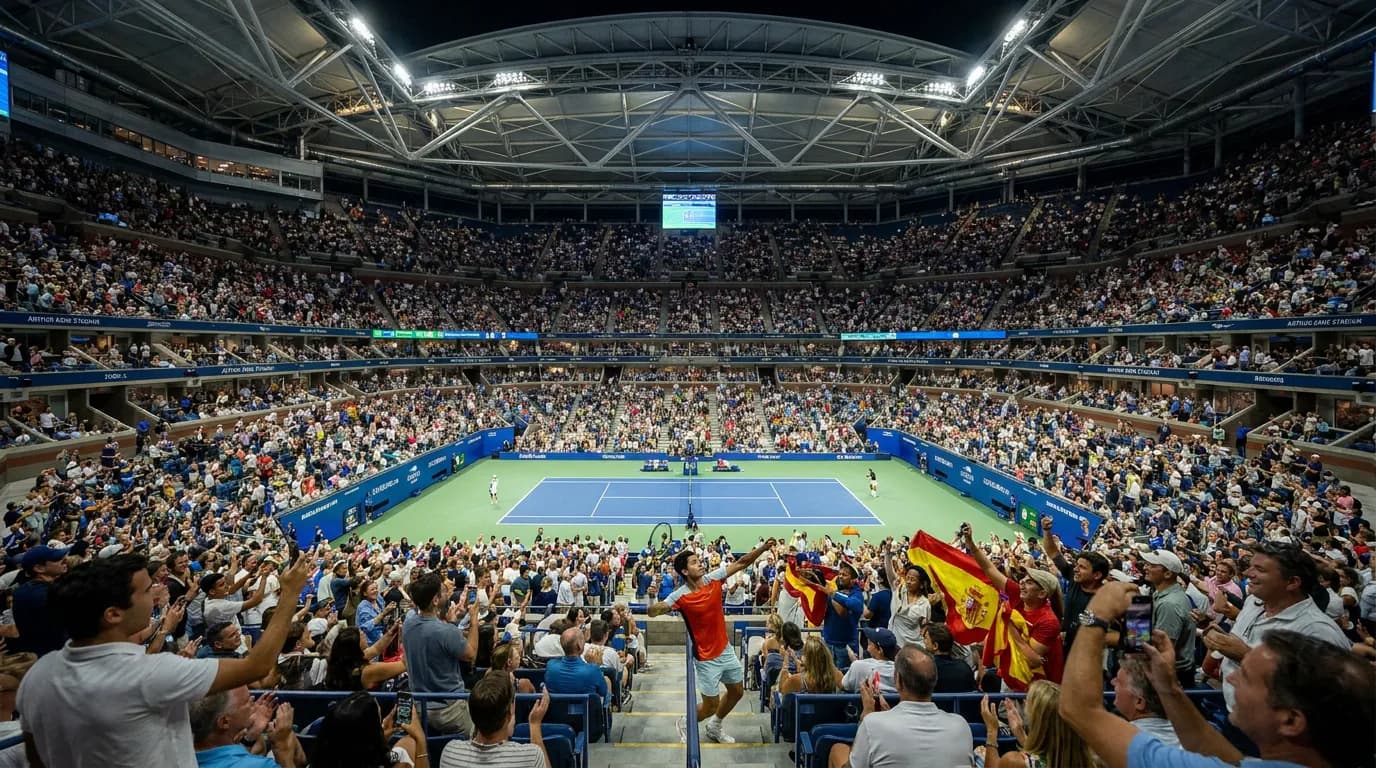
The Arthur Ashe Stadium crowd responds viscerally to these moments of creativity, and Alcaraz clearly draws energy from that response. The symbiotic relationship between player and audience becomes self-reinforcing, with spectacular shot-making generating crowd enthusiasm that in turn elevates his performance. This pattern distinguishes his US Open success from other tournaments, as the New York crowd's appreciation for aggressive, creative tennis aligns perfectly with his natural style. Evening sessions under the lights amplify this dynamic, creating an atmosphere that can energize players who embrace the moment.
- Aggressive baseline positioning that takes time away from opponents and maintains offensive pressure throughout matches
- Strategic drop shot deployment that disrupts rhythm, forces additional movement, and energizes both player and crowd
- Forehand dominance through varied trajectories, targeting opponent weaknesses while creating court geometry advantages
- Defensive-to-offensive transitions that turn potential vulnerabilities into momentum-shifting sequences
Practical Notes
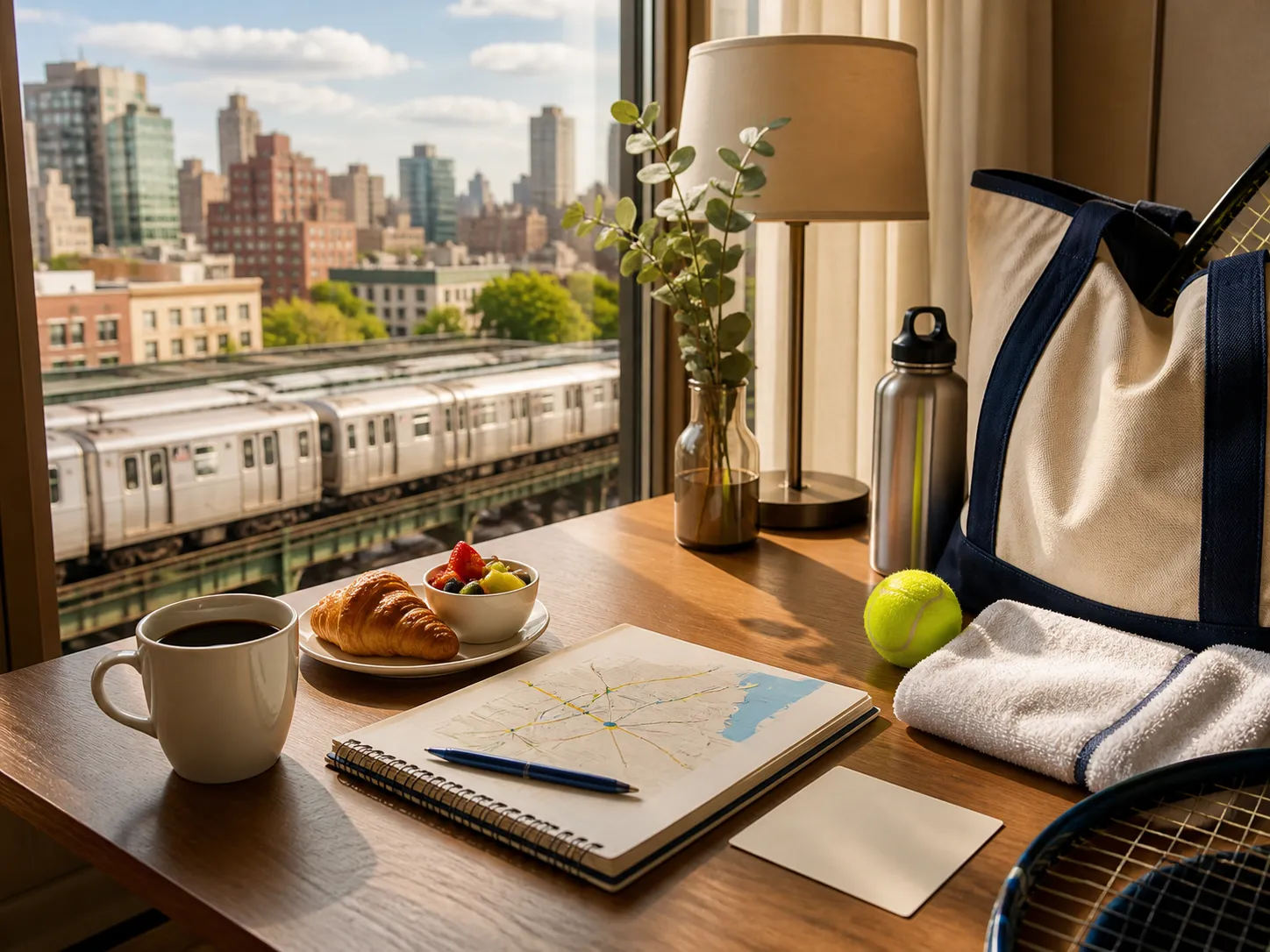
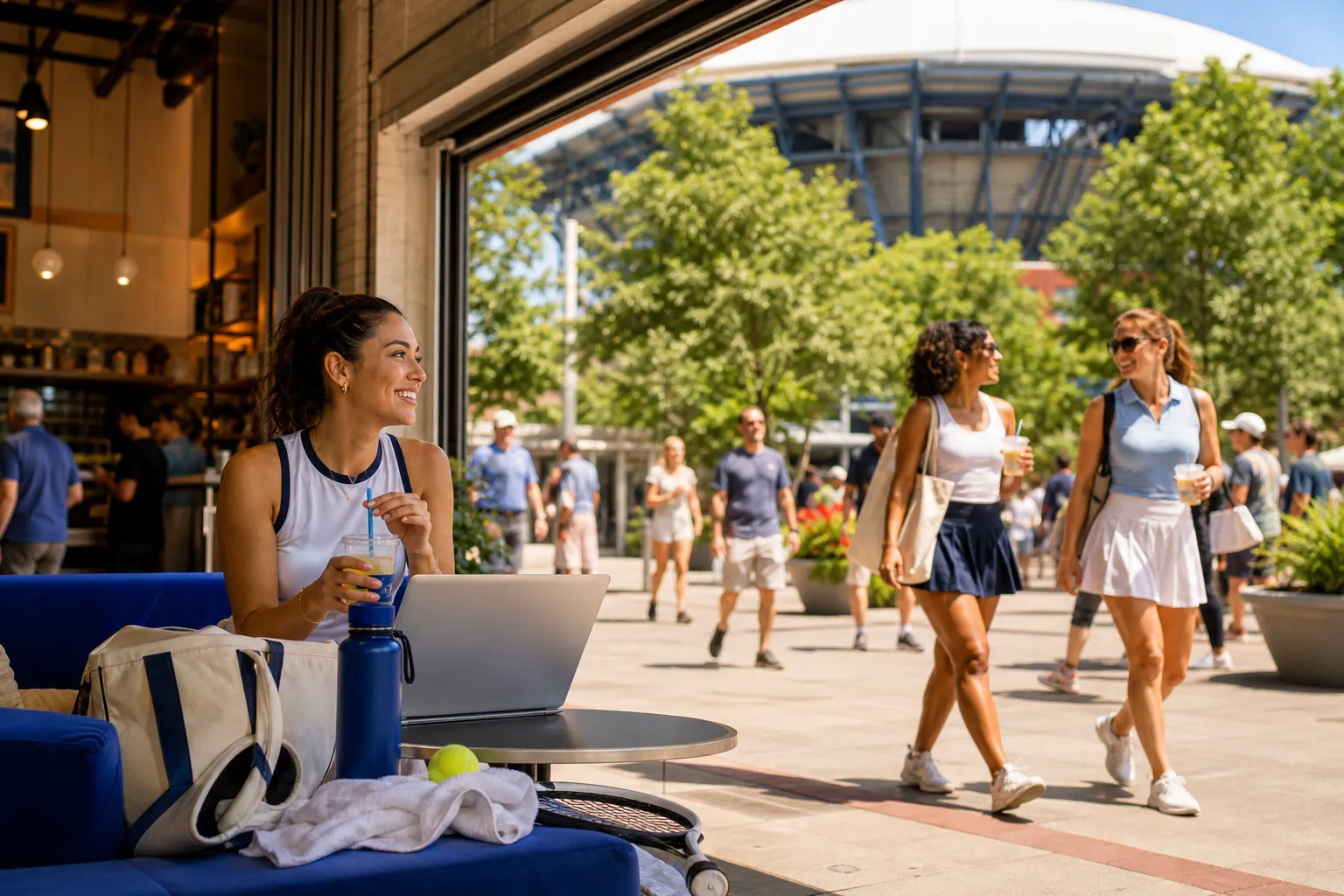
The 2026 US Open runs from late August through early September, with the main draw beginning after qualifying rounds conclude. Evening sessions in Arthur Ashe Stadium offer the best opportunity to experience the electric atmosphere that characterizes memorable matches, though the draw has not yet been announced. Tickets for night sessions typically offer better value than weekend day sessions, and the atmosphere intensifies as matches progress deeper into the evening. The Grandstand and Louis Armstrong Stadium provide excellent sightlines at lower price points, and fans can move between outside courts freely with grounds passes. Arriving early allows exploration of the facility and access to practice courts where players warm up. The USTA Billie Jean King National Tennis Center in Flushing Meadows is accessible via subway, with the 7 train providing direct service from Manhattan.
Tags: #USOpen2026 #Tennis #GrandSlam #NewYorkTennis #ArthurAsheStadium #FlushingMeadows #USOpenGuide #TennisFans #SportsTravel #HardCourt #NewYork #KarpoFinds
Sources consulted: usopen.org — Official reference · usopen.org — Official reference · usopen.org — Official reference
All trademarks are the property of their respective owners.
Ask Karpo first
Before you lock in tickets or build a full day around an unconfirmed schedule, ask Karpo first. Share your dates, budget, and favorite players, and Karpo can help turn official US Open updates into a practical New York plan.