
The Smallest Nation With the Biggest Heart
Cape Verde's 2026 FIFA World Cup campaign will be remembered as one of the most extraordinary debuts in the tournament's 96-year history. A nation of approximately 600,000 people — smaller than the city of Memphis, Tennessee — arrived in the United States ranked 62nd in the world and departed having never lost a match in regular time. Their record reads: played four, won one, drawn two, lost one (in extra time). Goals scored: 3. Goals conceded: 2 in regular time, 3 total. Clean sheets: 2. The numbers are impressive. The story behind them is miraculous.
Rooting for Cape Verde? Ask Karpo where to follow the tournament's best underdog story.
The Group of Death Survival
Cape Verde were drawn in Group F alongside Germany, Costa Rica, and Saudi Arabia — a group that presented challenges from every angle. Their opening match against Saudi Arabia in Philadelphia produced a 1-0 victory through a 55th-minute header from Ryan Mendes, the Vitoria de Guimaraes forward who plays his club football in Portugal's second division. The result sent shockwaves through the tournament. Their second match, against Germany in Atlanta, produced a 0-0 draw that was the most talked-about result of the group stage. Tim Payne's double save in the 71st minute — parrying Florian Wirtz's volley and then blocking Kai Havertz's follow-up — was voted the save of the tournament. Their final group match, a 1-1 draw with Costa Rica, secured qualification for the Round of 32 as one of the best third-placed teams.

Tim Payne: The Wall
Cape Verde's World Cup would not have been possible without Tim Payne. The English-born goalkeeper, who was playing for Braintree Town in England's sixth tier two years ago, recorded a save percentage of 88.2% across four matches — the second-highest in the tournament. His performances transformed him from a complete unknown into a global celebrity with over 3 million Instagram followers and a Nike endorsement deal. But Payne was more than statistics. His personality — humble, humorous, openly emotional — connected with fans worldwide. His post-match interviews, delivered in his Essex accent while wearing a Cape Verdean flag as a cape, became appointment viewing. His tearful farewell to the Cape Verdean fans after the Morocco match was one of the tournament's most moving moments.
The Morocco Match: A Heartbreak in Extra Time
Cape Verde's Round of 32 match against Morocco was the cruelest possible ending. For 90 minutes, Cape Verde held Morocco — the tournament's most dominant defensive team — to a 0-0 draw. Payne made four saves. The Cape Verdean defense, organized by veteran center-back Stopira, defended with a discipline that would have honored any European nation. In extra time, fatigue overwhelmed them. Youssef En-Nesyri scored in the 97th minute, and Hakim Ziyech added a second in the 114th minute. The 2-0 defeat in extra time preserved Cape Verde's record of never losing in regular time, but it was cold comfort. The players collapsed on the pitch at the final whistle. Payne was the last to leave, walking a full lap of Lincoln Financial Field, applauding every section of the crowd.
What Cape Verde's Debut Means for Small Nations
Cape Verde's performance validates FIFA's decision to expand the World Cup to 48 teams. Critics of the expansion argued that smaller nations would be humiliated — that matches between Germany and Cape Verde would be embarrassing mismatches. The opposite occurred. Cape Verde drew with Germany and could have won. They competed in every match. They entertained millions. Their presence enriched the tournament immeasurably. For other small island nations — Comoros, Sao Tome and Principe, the Maldives — Cape Verde's performance is proof that the World Cup dream is achievable, that population size and economic power do not determine footballing potential.
The Homecoming
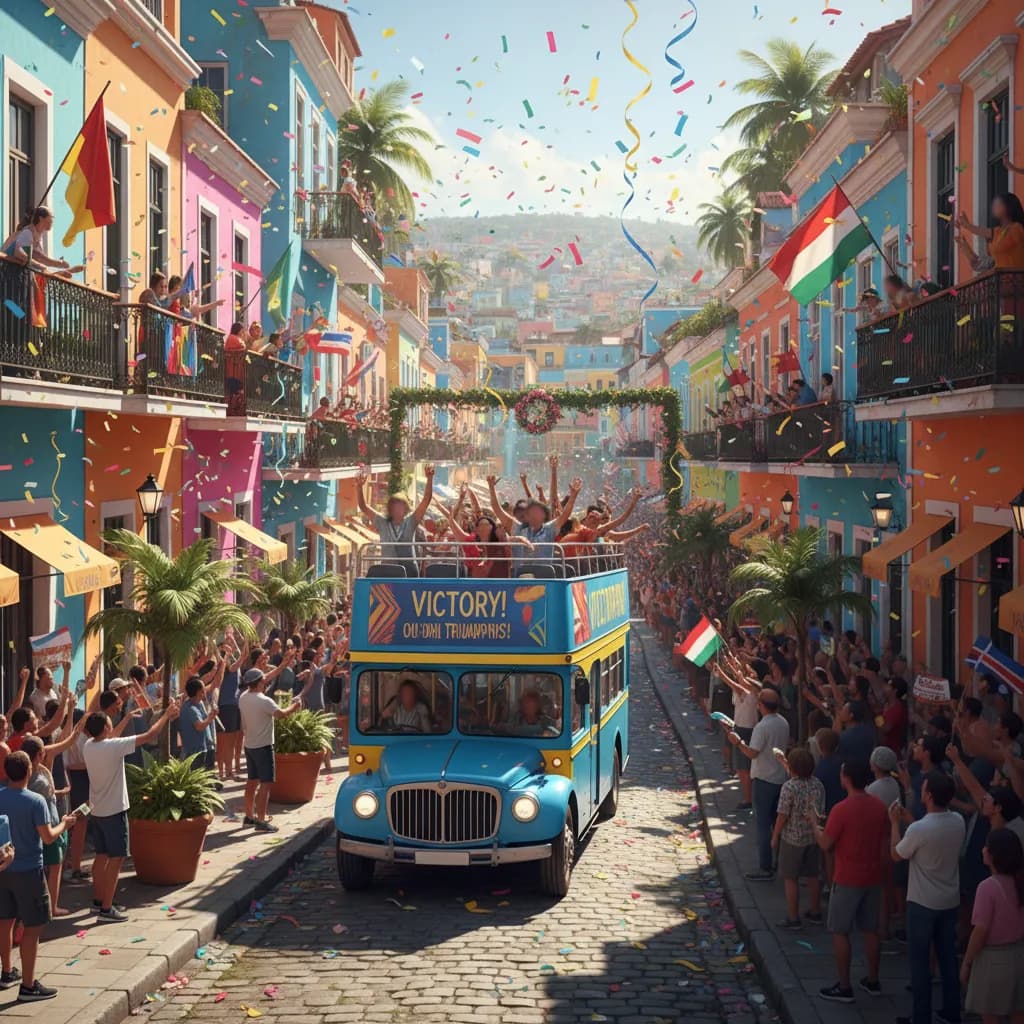
The Cape Verdean squad returned to Praia, the capital, on July 8, where they were greeted by an estimated 80,000 people — approximately one-seventh of the nation's entire population. President Jose Maria Neves declared a national holiday. The team paraded through the city in an open-top bus, with Payne holding the Cape Verdean flag aloft while "Sodade" by Cesaria Evora — the archipelago's most famous song — played from speakers lining the route. For a nation that has struggled with poverty, emigration, and the challenges of small island development, the World Cup campaign was more than sport. It was proof that Cape Verde exists, that it matters, and that its people can compete with anyone in the world.
Tags: Cape Verde, World Cup 2026, debut, unbeaten, Tim Payne, Germany draw, small nation, Morocco, Round of 32, 600000 population
Sources consulted: ESPN · CBS Sports · FIFA · Yahoo Sports
All trademarks, team names, league names, and player likenesses mentioned in this article are the property of their respective owners and are used here for informational and editorial purposes only.
Ask Karpo First
Want to learn more about Cape Verde's historic World Cup journey or discover the islands? Ask Karpo for Cape Verde's complete match results, Tim Payne's highlight reel, and travel guides to the Cape Verdean archipelago.