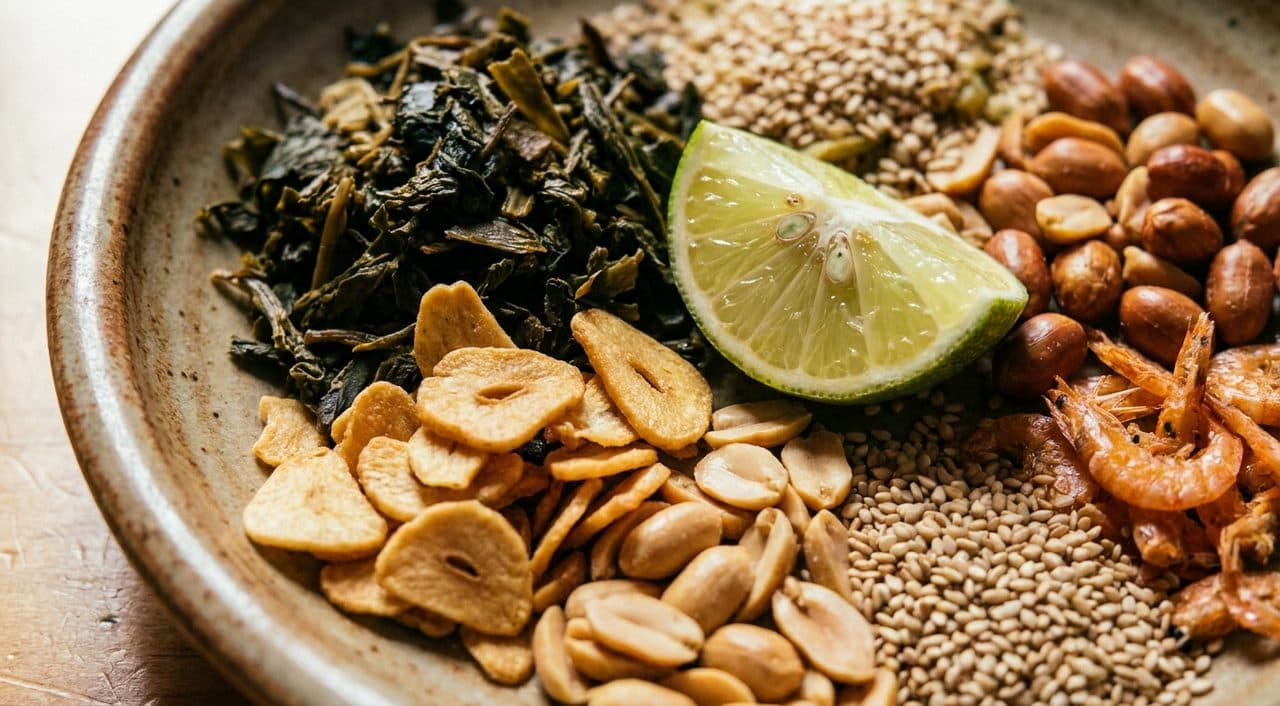
The tea leaf salad arrives first, even when no one orders it. At this narrow Burmese spot on a side street in Elmhurst, the fermented leaves come tossed with fried garlic, split peas, and sesame seeds, the bowl placed at the center of the table like an anchor. Regulars know the rhythm. They settle into mismatched chairs, glance at the laminated menu out of habit, then order in Burmese while the kitchen exhales steam and the smell of lemongrass and fish sauce.
The Mid-Day Window When the Room Breathes Differently
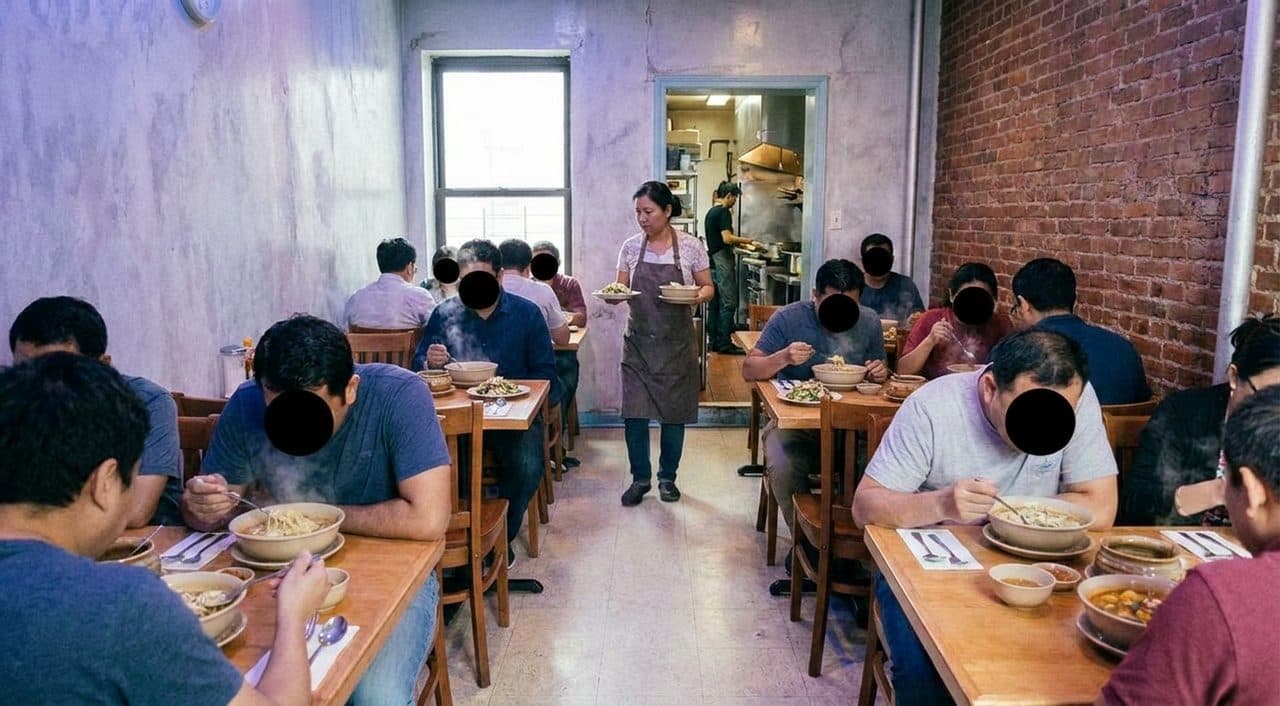
Between the lunch rush and the dinner prep, the restaurant holds a different quality of light. The fluorescents stay on but somehow soften. A few tables fill with older men nursing Myanmar beer, their conversation a low hum beneath the Burmese pop playing from a phone propped behind the register. The cook behind the counter moves without urgency, stirring a pot of mohinga that's been simmering since morning. This is the borrowed time—the hour when the place belongs to those who know it exists, who live within a ten-block radius, who treat the cramped dining room like an extension of their own kitchens.
Mohinga That Demands Attention and All Its Fixings
The mohinga arrives in deep ceramic bowls, the broth murky with catfish and rice noodles tangled beneath the surface. A side plate comes loaded: halved hard-boiled eggs, fried split peas, sliced banana stem, cilantro, lime wedges, and chili flakes in a small dish. The assembly is left to whoever's eating. Some dump everything in at once. Others add incrementally, tasting between each addition, adjusting the heat and acidity as they go. The noodles themselves are thick and slippery, the kind that require committed slurping. The broth clings to them, fishy and earthy, with a faint bitterness from the banana stem that cuts through the richness.
Regulars Who Order Without Menus and the Unspoken Hierarchy
A woman in scrubs walks in just after two, nods at the cook, and takes the corner table without waiting to be seated. Her order arrives in under five minutes—ohn no khao swe, the coconut chicken noodle soup, with extra lime. She eats alone, scrolling her phone, pausing only to adjust the chili oil. At the next table, a trio of construction workers in paint-splattered jeans speak rapid Burmese, their plates already half-cleared. They've ordered family-style: the tea leaf salad, a plate of samosas still glistening with oil, and a whole fried fish that someone's picking apart with chopsticks. There's an unspoken hierarchy in the seating—the corner by the window for solo diners who want to be left alone, the center tables for groups, the counter stools for anyone willing to sit elbow-to-elbow with strangers.
The Tea Leaf Salad That Anchors Every Meal
Laphet thoke is less a side dish and more a ritual. The fermented tea leaves have a tannic bitterness, almost medicinal, that pairs with the crunch of fried beans and the oily richness of the garlic chips. The texture is everything—each bite a collision of soft, crunchy, chewy, oily. Some tables mix it tableside, tossing the components together with their hands. Others eat it in layers, picking at each element separately. The salad doesn't fade into the background the way a side usually does. It commands attention, demands to be tasted between bites of curry or soup, a palate reset that's both astringent and addictive. Newcomers often under-order it, then flag down the server for a second bowl halfway through the meal.
The Narrow Room Where Every Sound Carries
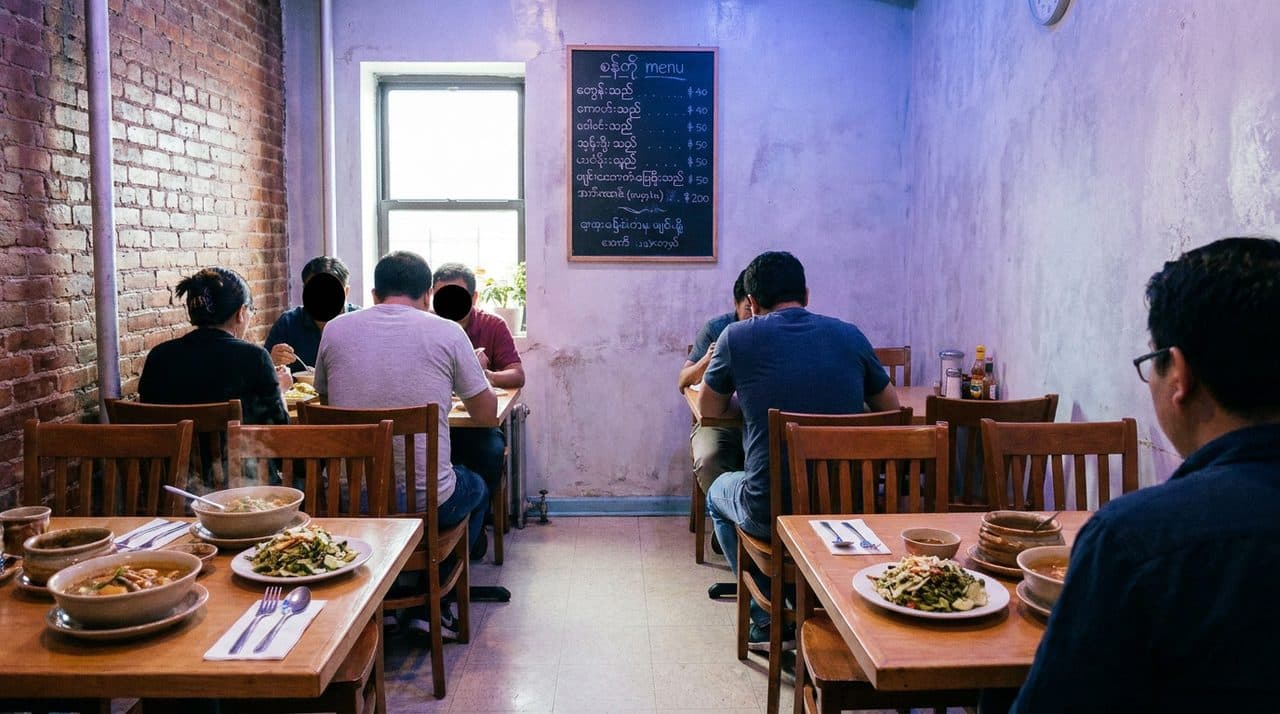
The space is tight enough that conversations bleed into one another. A phone rings and three people check their pockets. The kitchen is separated from the dining area by a half-wall, so the clatter of woks and the hiss of oil become part of the ambient noise. There's no music system, just whatever's playing from someone's device—sometimes Burmese pop, sometimes a soccer match streaming live from Southeast Asia, sometimes nothing at all. The walls are bare except for a couple of faded posters and a handwritten specials board that hasn't changed in weeks. The floor tiles are cracked in places, the kind of wear that suggests decades of foot traffic. It's the sort of room that doesn't photograph well but feels right once someone's sitting in it, elbows on the table, steam rising from a bowl.
The Curries That Stain the Plate and the Hands
The curries here are oil-slicked and unapologetic. A chicken curry comes with a visible layer of red oil pooling at the edges, the meat falling apart at the touch of a spoon. A goat curry is darker, almost mahogany, with chunks of bone-in meat that require hands as much as utensils. The flavors are deep and funky, built on shrimp paste and fermented beans, with a slow-building heat that sneaks up after a few bites. Rice is served on the side, plain and sticky, the only thing that can temper the intensity. Those who order curry leave with stained fingertips and napkins piled high, the kind of meal that lingers on the tongue long after the check is paid.
Practical Notes
The restaurant operates late morning through evening most days, with a break in the late afternoon when the kitchen resets. Getting there is easiest via the subway, with a short walk through residential blocks lined with produce markets and bakeries. The dining room seats maybe twenty people, so peak meal times can mean a wait. Reservations aren't a thing—it's first-come seating, with turnover that moves quickly once the lunch crowd clears. Cash is preferred, though cards are accepted without fuss. The menu is bilingual, but pointing works just as well as pronunciation. For anyone unfamiliar with Burmese food, the mohinga and tea leaf salad are the anchors. Everything else builds from there.
Tags: #PullUpAChair #BurmeseFood #ElmhurstQueens #QueensEats #NewYorkRestaurants #TeaLeafSalad #Mohinga #ImmigrantCuisine #NeighborhoodGems #AuthenticEats #NYCFood #HiddenQueens #ElmhurstDining #DiasporaKitchen #FermentedFlavors
Sources consulted: eater.com · timeout.com · infatuation.com
All trademarks are the property of their respective owners.
Ask Karpo first
Want to know which dishes first-timers should order, or if they do weekend specials?
Ask Karpo for menu recommendations and weekend availability before you head out.