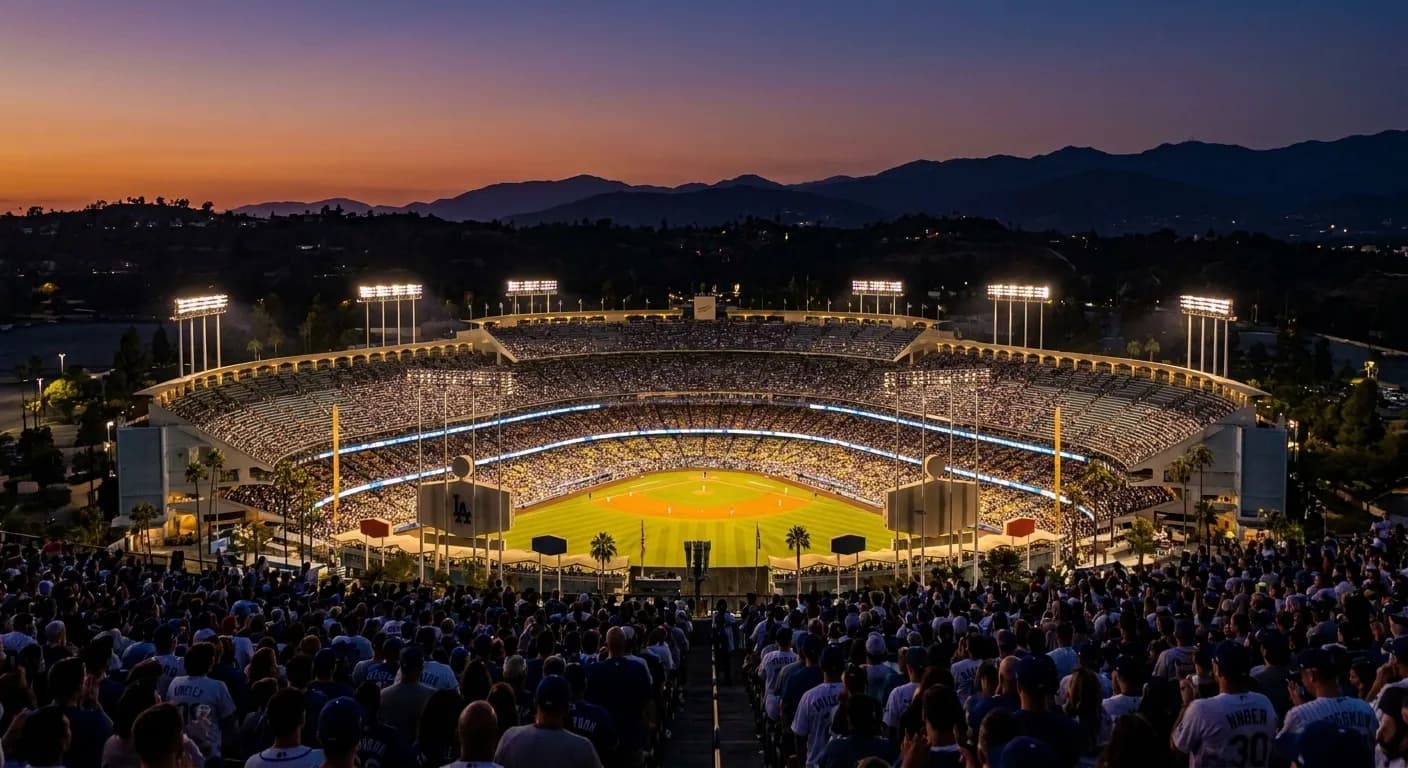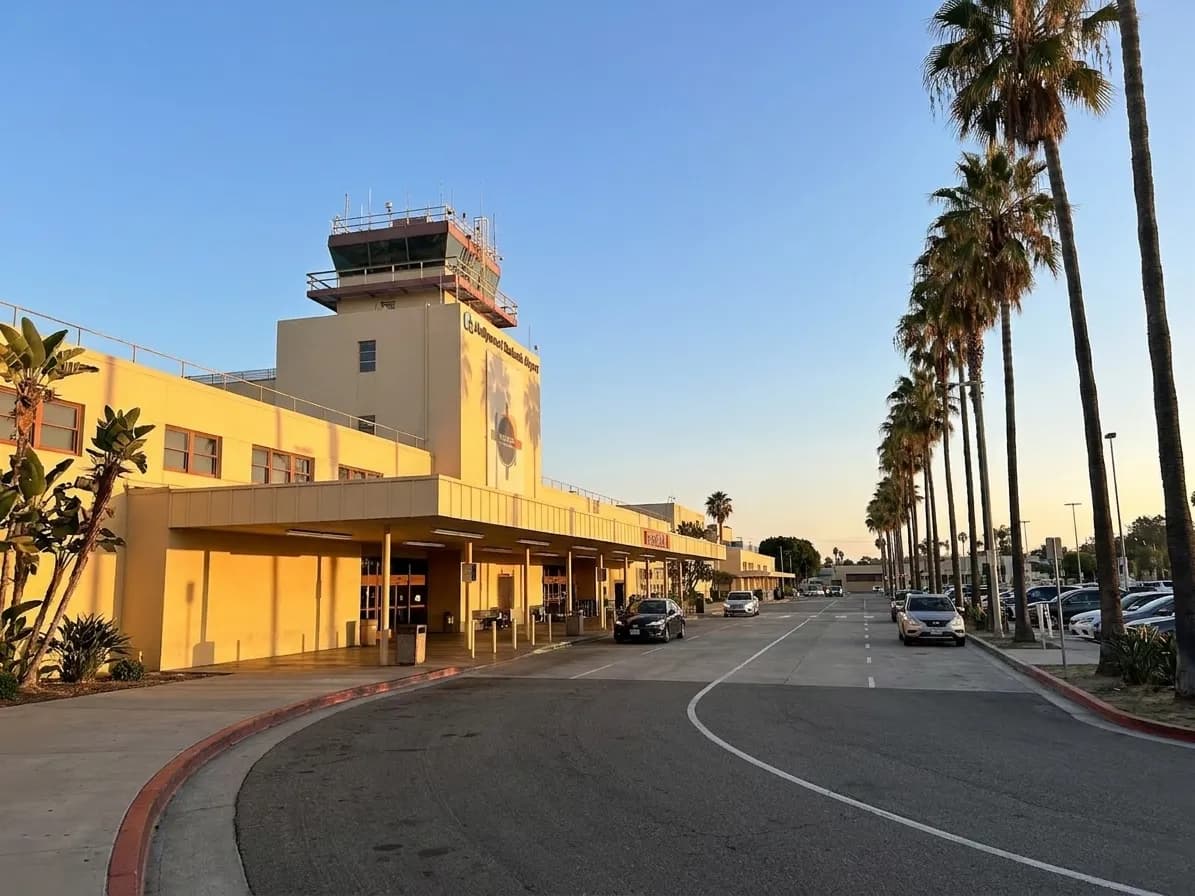
The $55 fare gap between Hollywood Burbank Airport and Los Angeles International on a June 2026 Miami roundtrip tells half the story. The other half unfolds in the 61 minutes a Glendale-based traveler saves by choosing Burbank's seven-minute security line and curbside rideshare pickup over LAX's 20-minute checkpoint queue and mandatory LAX-it shuttle. Whether that hour matters more than the fare premium depends on your origin ZIP code, your route's nonstop availability, and how you value predictable timelines against predictable costs. The choice between BUR and LAX in 2026 is not about which airport sits closer—it is about which one actually delivers you to the gate faster when you account for the full door-to-boarding sequence.
Karpo tracks live security wait times, rideshare surge pricing, and terminal-specific delays at both BUR and LAX so you can choose the airport that actually saves you time today.
The fare premium and what it buys
A late-June 2026 roundtrip from the LA area to Miami—booked during World Cup demand surge—prices $55 higher out of Hollywood Burbank Airport than the matching departure from LAX. That spread widens to $120 on some routes, and it holds across carriers: American, Southwest, Delta, and United all charge more to use Burbank's compact terminal. The premium reflects lower seat inventory, fewer daily frequencies, and the fact that most BUR itineraries connect through Dallas, Denver, or Phoenix rather than offering nonstop service to secondary markets.
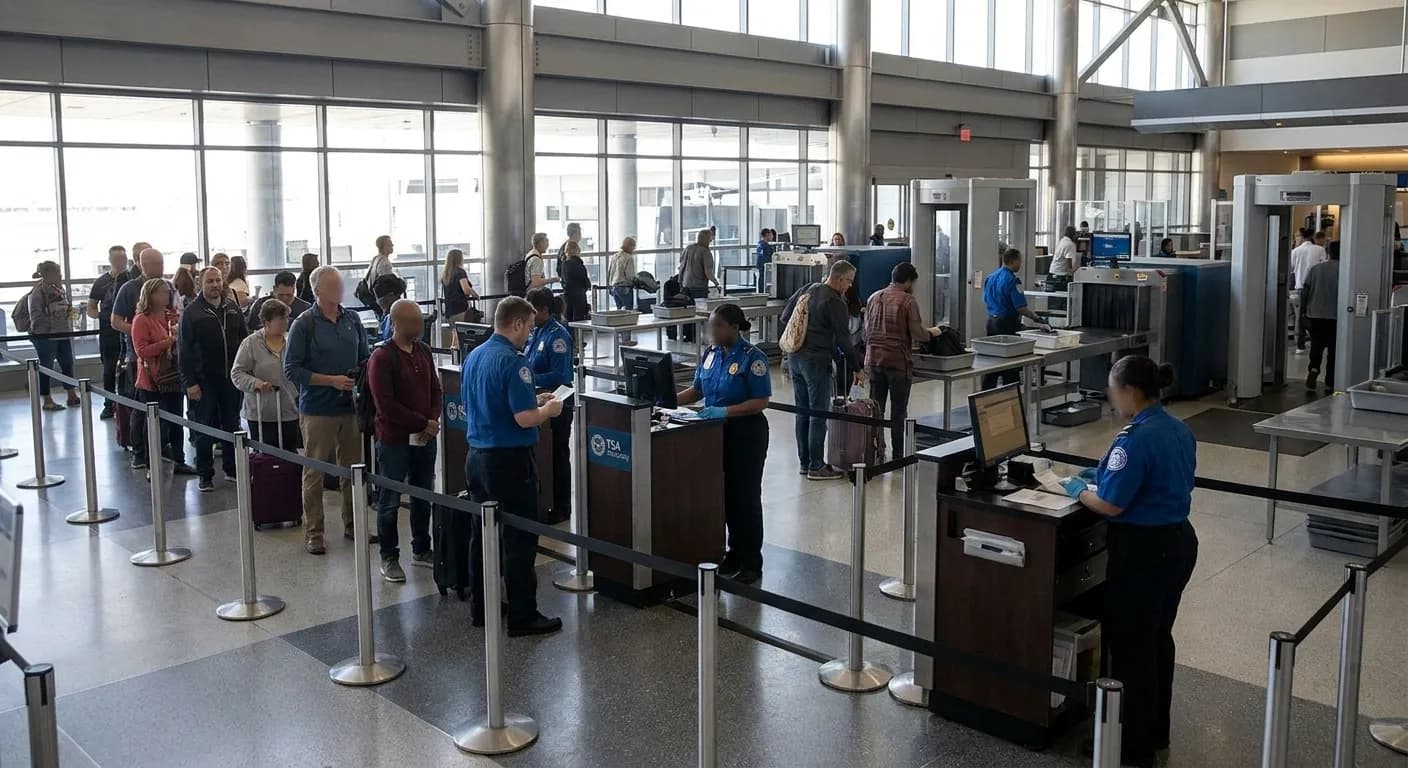
What that extra cost delivers is measurable time on the ground. Burbank operates a single security checkpoint that averages 7–10 minutes even during the 6 a.m. to 9 a.m. departure bank, according to TSA's MyTSA historical data. LAX checkpoints, spread across eight terminals plus the Tom Bradley International Terminal, average 20–30 minutes during the same morning and evening waves. That 10–20 minute advantage recurs on the return leg, compounding across the round trip. For a traveler based in Glendale, the full outbound sequence—drive, park, walk to gate, clear security—clocks 35 minutes via Burbank versus 70 minutes via LAX, a 35-minute savings before boarding even begins.
The decision turns on whether those minutes matter more than the fare difference. A solo business traveler on a tight morning schedule may gladly pay $55 to reclaim an hour of sleep or an extra client call. A family of four looking at a $440 round-trip upcharge will likely choose LAX and build the longer timeline into the day. Neither answer is universal, and the calculus shifts when you account for where in Los Angeles County you actually start.
Geography that works backward
Hollywood Burbank Airport sits 20 kilometers northwest of Downtown LA in the San Fernando Valley, while LAX sprawls 27 kilometers southwest near the coast in Westchester. The common shorthand—"Burbank is closer"—describes raw distance from a handful of Valley neighborhoods but ignores the freeway geometry that governs most trips. A traveler starting in Glendale, Studio City, or Burbank itself reaches BUR in under 25 minutes. That same traveler drives 46 minutes to LAX, passing through the Cahuenga Pass or over the Sepulveda corridor.
Reverse the origin and the math flips. A household in Manhattan Beach, Culver City, or Santa Monica reaches LAX in 20 to 35 minutes but faces a 50-minute slog north to Burbank, often crossing the 405 and the 101 during peak congestion windows. Residents of Downtown LA or the Eastside—Boyle Heights, the Arts District, Little Tokyo—split the difference: both airports land roughly 35 to 45 minutes away depending on traffic, making the drive time a wash and elevating other factors like security speed and rideshare logistics.
The 2026 reality is that "closer" only applies if you live in the Valley or the northwestern corner of the basin. For the majority of LA County's 10 million residents, the airport choice hinges on terminal efficiency and ground-transport friction, not freeway miles.
Security, parking, and the LAX-it bottleneck
Burbank's single checkpoint sits steps from both Terminal A and Terminal B, and the walk from economy parking to the gate rarely exceeds 10 minutes. Travelers dropping off or picking up passengers pull directly to the curb, and rideshare drivers meet arrivals within a two-minute walk from baggage claim. The entire facility occupies the footprint of a mid-sized shopping mall, and that compression eliminates the multi-stage transit sequences that define LAX.
LAX spreads nine terminals—numbered 1, 2, 3, 4, 5, 6, 7, 8, plus the Tom Bradley International Terminal—around a horseshoe-shaped loop road that handles 88 million passengers a year. Each terminal operates its own checkpoint, and wait times vary by carrier concentration and time of day. Terminal 7, serving United's morning departures, can quote a 25-minute standard line at 6 a.m., while Tom Bradley's international banks between 7 p.m. and 11 p.m. routinely push 30 to 40 minutes for passengers without TSA PreCheck. PreCheck lanes shave that to under 10 minutes in most cases, but short surges still occur when multiple flights board simultaneously.
Rideshare pickups at LAX now funnel exclusively through LAX-it, a dedicated lot east of Terminal 1 that opened in 2019 to clear cars from the terminal loop. After collecting baggage, passengers take a free shuttle or the new Automated People Mover train to the lot, then queue for their assigned vehicle. The process adds 15 to 25 minutes to every pickup, and the lot itself can back up during evening arrival waves. A comparable Uber or Lyft pickup at Burbank happens at the curb in five minutes. That 10- to 20-minute delta per direction—outbound dropoff, return pickup—compounds the security savings and explains why Burbank wins the terminal-efficiency comparison even when the fare costs more.
When LAX still makes sense
Los Angeles International remains the only LA-area airport offering nonstop service to secondary domestic markets and most international destinations. A traveler flying to Boise, Spokane, or Raleigh finds no Burbank option. A passenger heading to London, Sydney, Seoul, or Mexico City books through LAX by default, because Burbank handles almost no long-haul international service beyond a handful of Mexican resort routes. American Airlines, Delta, United, and Alaska all concentrate their West Coast connecting banks at LAX, and the sheer volume of daily departures means more flexibility when a meeting runs late or a delay forces a rebooking.
The June 2025 opening of the LAX/Metro Transit Center also shifts the ground-transport calculus for travelers staying near a Metro Rail line. The free LAX Metro Connector shuttle runs every 10 minutes from the lower arrivals level of each terminal to the transit center, where the K Line and C Line light-rail routes connect to Downtown LA, Inglewood, Hollywood via the B Line, and other rail-adjacent neighborhoods for a $1.75 base fare. That bypasses the rideshare queue entirely and undercuts both taxis and the $12.75 FlyAway bus for travelers comfortable with rail transfers. The shuttle works now; when the Automated People Mover train opens later in 2026, it will replace the shuttle on the same corridor, further tightening the terminal-to-rail connection.
For groups of three or more, LAX's taxi flat-rate system to Downtown—$49.95 plus a $4 airport fee—splits to around $18 per person, competitive with rideshare surge pricing and faster than waiting in the LAX-it queue. Burbank taxis meter by distance, so a longer trip to, say, Santa Monica or the Westside can run higher than the LAX flat rate, depending on traffic. Neither airport is objectively better; the right choice depends on route availability, origin ZIP code, and whether you value predictable fares over predictable timelines.
The American Airlines Dallas factor
American Airlines operates a major connecting bank at Dallas/Fort Worth, and many Burbank departures route through DFW before continuing east or south. That adds a stop but often prices lower than LAX nonstops, especially on leisure routes during peak seasons. The trade-off matters when operational disruptions ripple through the network. A recent incident involving an American Airlines flight from Dallas that experienced smoke in the cabin and diverted safely highlighted the vulnerability of single-connection itineraries: passengers who missed their onward flights faced rebooking delays that stretched into the next day.
Burbank's smaller schedule means fewer rebooking options when a Dallas connection fails. LAX, by contrast, runs multiple American frequencies to DFW plus competing nonstops on Delta, United, and Southwest to other hubs, giving agents more inventory to reroute delayed passengers. That redundancy costs more upfront but buys insurance against the cascading delays that turn a two-hour smoke diversion into a 24-hour hotel stay. Travelers booking Burbank itineraries through Dallas should budget extra connection time—90 minutes minimum—and consider travel insurance that covers missed connections, because the next available BUR departure may not leave until the following morning.
Practical notes
Hollywood Burbank Airport is located at 2627 N Hollywood Way, Burbank, CA 91505, directly off the 5 Freeway. Parking starts at $4 per hour in the economy lot, a five-minute walk from the terminals. LAX is at 1 World Way, Los Angeles, CA 90045, accessible via the 405 and 105 freeways. Economy parking costs $12 per day, requiring a shuttle to the terminals. Both airports recommend arriving two hours before domestic departures and three hours before international flights. TSA PreCheck is available at all checkpoints. The LAX Metro Connector shuttle runs every 10 minutes from the lower level of each terminal to the LAX/Metro Transit Center, where the K and C Lines connect to the Metro Rail network. Rideshare pickups at LAX occur only at the LAX-it lot; at Burbank, drivers meet passengers at the curb.
Tags: #BurbankAirport #LAXAirport #HollywoodBurbankAirport #LosAngelesTravel #AirportComparison #TSAPreCheck #LAXit #SanFernandoValley #TravelHacks #AmericanAirlines #FlightDelays #AirportSecurity #LosAngelesAirports #TravelTips #CaliforniaTravel
All trademarks are the property of their respective owners.
Ask Karpo first
Planning a trip out of the LA basin and stuck between Hollywood Burbank and LAX? Ask me to compare live security queues, rideshare wait estimates, and gate-to-curb timing for your specific departure window—I'll show you which airport delivers the smoother door-to-gate experience today, not just which one sits closer on a map.