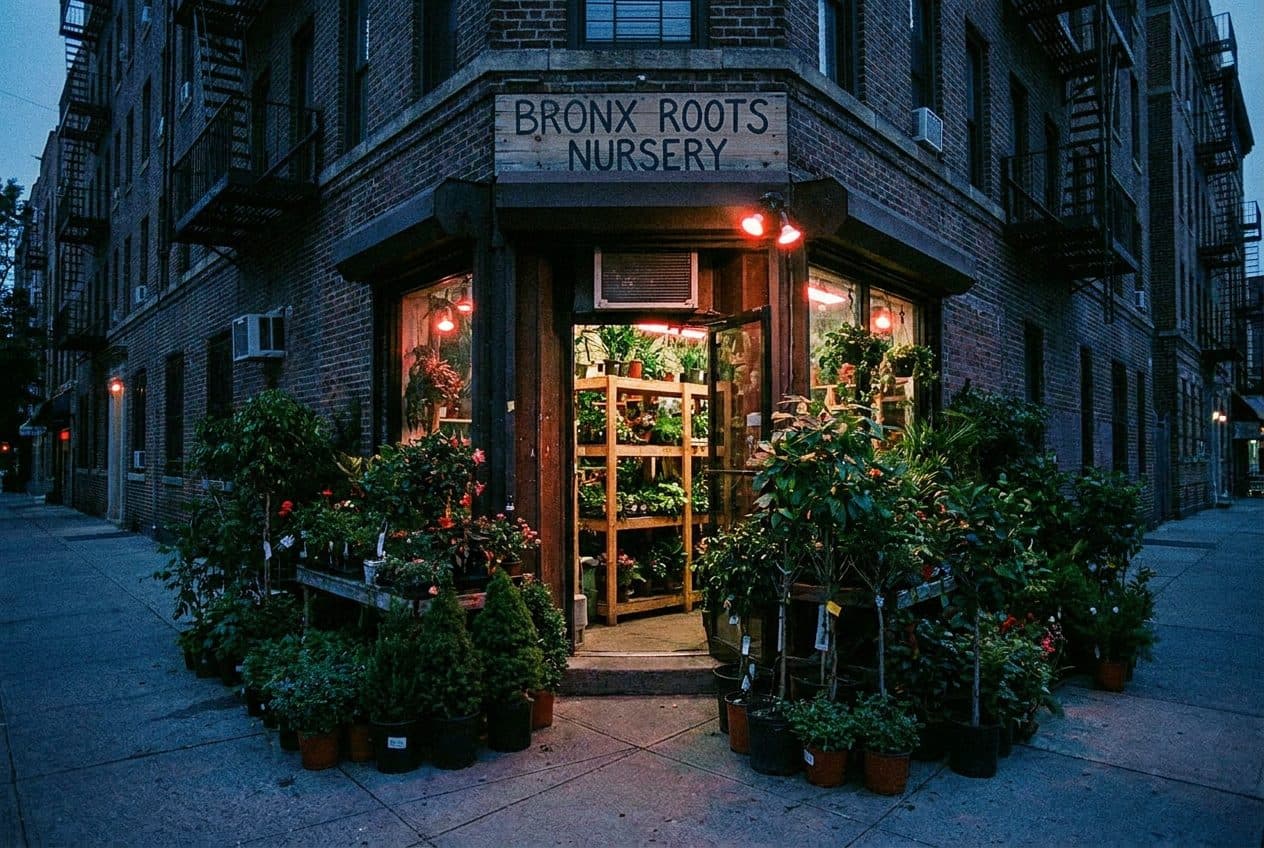
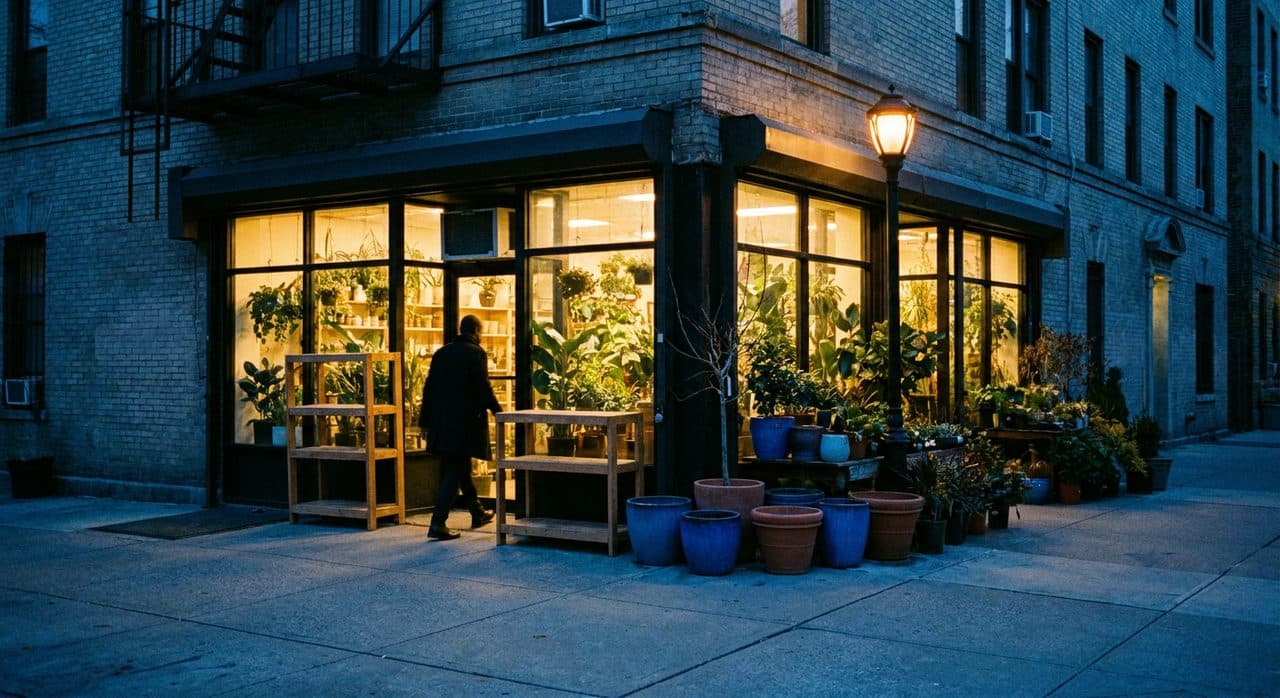
The storefront sits mid-block on a residential stretch where most neighbors keep potted geraniums on their stoops and call it a day. This place does the opposite—dozens of plants crowd the sidewalk in mismatched containers, creating a green gauntlet that forces pedestrians into single file. The nursery has held this corner of Morris Heights for forty years, long enough that the owner can recall which fiddle-leaf fig came from a closed hotel lobby in Midtown and which snake plant survived three different apartment fires before landing here.
A Sidewalk That Changes With the Seasons But Never Clears
Even in January, when most urban nurseries retreat indoors, the pavement outside remains lined with cold-hardy specimens. Ornamental kale in chipped terracotta. Russian sage gone dormant but still fragrant when brushed. The arrangement shifts weekly—not for aesthetic reasons but because the owner rotates stock based on what needs more light or less wind. Regulars know to check the outer rows first, where the newest arrivals get parked before they're priced. On warm Saturdays, the spillover reaches halfway to the curb, and double-parked cars inch past with side mirrors folded in.
The front window holds a rotating display that operates on no discernible schedule. One month it's all bromeliads, their alien blooms pressed against the glass. The next it's a jungle of pothos vines trained along fishing line, creating a green curtain that makes it impossible to see inside. Passersby either know what they're walking into or they don't stop at all.
An Interior That Feels More Like a Greenhouse Than a Shop

The door sticks in humid weather, which is most of the year. Inside, the air sits heavy and earthy, thick with the smell of wet peat and something faintly mineral that comes from the misting system running on a timer no one can predict. The aisles—if they can be called that—are narrow passages between waist-high tables loaded with four-inch pots, six-inch pots, plants in no pots at all, just root balls wrapped in damp newspaper. Overhead, hanging baskets drip occasionally onto shoulders and hats.
The back half of the space houses the larger specimens: rubber trees in plastic nursery containers, a monstera that has outgrown its support stake and leans dramatically toward the skylight, a fiddle-leaf fig with a price tag written in Sharpie on masking tape. The floor is perpetually damp, not from leaks but from watering cans that get refilled from a utility sink in the corner and sloshed liberally over everything. Boots are a better choice than sneakers.
A Proprietor Who Operates on Institutional Memory, Not Inventory Software
The owner works from behind a counter buried under seed catalogs, hand-labeled plant tags, and a landline phone that rings infrequently but loudly. Questions about care requirements get answered with specifics—not generic advice but the exact story of how this particular Boston fern spent two years in a windowless basement and survived, or why that philodendron has a weird lean because it came from an office that only had light on one side. There's no printed price list. Everything gets quoted from memory, and the numbers seem to shift based on factors that aren't entirely clear—maybe how long the plant has been in stock, maybe how much the customer seems to know, maybe just the mood of the day.
Transactions happen in cash more often than not, though a credit card reader sits on the counter, its screen perpetually dim. The receipt is a hand-written slip torn from a pad, and any care instructions come verbally, delivered in quick sentences while the plant gets wrapped in yesterday's newspaper. Regulars don't ask for guidance anymore. They just point, nod, and wait for the total.
The Customers Who Treat This Like a Weekly Ritual, Not an Errand
Certain faces appear on predictable schedules. The woman who comes every Thursday just before noon and stands in the succulent section for twenty minutes, rearranging her mental list. The older man who only buys herbs—basil, cilantro, oregano—and grows them on his fire escape until they bolt, then returns for more. The couple who arrive together but split up immediately, each hunting their own targets, reconvening at the counter with arms full and no overlap in their selections.
Conversations happen in the aisles, not at the register. Someone asks about spider mites, and three other customers stop to contribute theories. A debate about the correct watering schedule for calatheas stretches on while the owner wraps someone else's purchase, interjecting only to settle disputes with firsthand evidence from plants currently in the shop. The social fabric here isn't loud or performative—just the quiet accumulation of people who show up often enough to recognize each other's voices before they see faces.
The Unspoken Rules That Govern How This Place Functions
Touch the plants, but gently. The owner doesn't hover, but there's an awareness when someone gets too rough with a delicate fern or tries to lift a heavy pot without checking its stability first. Kids are tolerated if they're supervised. Dogs are fine as long as they don't knock anything over, which means small dogs only, realistically.
Asking for a discount is pointless. The prices are already lower than what the same plants would cost in Manhattan, and everyone seems to understand that the margin here is thin enough without negotiation. What does work: mentioning that a previous purchase didn't make it, and being honest about why. The owner has been known to offer a replacement at cost or suggest a hardier alternative without being asked.
No one lingers without intent. This isn't a space designed for browsing in the aspirational sense—no Instagram-friendly vignettes, no curated aesthetic. People come because they need a plant, or because they've decided they need a plant, and the visit has a purpose that gets fulfilled and concluded.
Practical Notes
The nursery operates most days, though the exact schedule can be fluid—early morning until early evening is the safest bet, with shorter hours in winter. Reaching it requires a bus or a walk from the nearest subway station, neither of which is particularly close. Street parking exists but fills quickly on weekends. Bringing cash simplifies everything, though cards work when the machine cooperates. There's no website, no social media presence, no way to check inventory remotely. The phone number exists but doesn't always get answered. The most reliable approach is simply showing up, ideally not in a hurry, and seeing what's available that day. Bringing your own bag or box helps, since the newspaper wrapping is functional but not always sufficient for a long commute.
Tags: #BronxFinds #MorrisHeights #UrbanNursery #PlantShop #HiddenGems #LocalBusiness #IndoorJungle #PlantPeople #NeighborhoodSpots #BronxCulture #GreenThumb #TheOddEdit #NYCPlants #BotanicalLife #ConcreteJungle
Sources consulted: atlasobscura.com · timeout.com · nytimes.com
All trademarks are the property of their respective owners.
Ask Karpo first
Want to know when rare plants typically arrive or which varieties thrive in Bronx apartments?
Ask Karpo for the owner's care recommendations and the best days to find unusual specimens before you head out.