 Where to Eat Near Penn Station That Isn't a Chain
US Open 2026
Braxton Garrett Marlins Pitching: NYC Sports Photography Spots US Open Week
A Queens-focused guide to camera gear access, transit-friendly shooting locations, and action-photography planning around the 2026 US Open tennis tournament.
When Braxton Garrett's pitching mechanics trend in search—smooth delivery, sharp angles, athletic motion—it's a reminder that capturing fast action on camera requires preparation, the right glass, and a location strategy that works with New York transit. The 2026 US Open at the USTA Billie Jean King National Tennis Center in Flushing Meadows Corona Park offers two weeks of world-class athletic movement, and for photography enthusiasts who want to practice sports shooting, document the energy around the grounds, or test new telephoto lenses in a dynamic setting, Queens during tournament weeks becomes a practical classroom. This guide connects camera equipment rental options, scenic shooting locations along the 7 train corridor, and the visitor rules that shape what you can bring into the tournament grounds, so you can plan a realistic day that balances gear access, transit logistics, and the photographic opportunities that make US Open week memorable.
Text Karpo with your US Open session time and Queens starting point, and we’ll turn this Camera equipment rentals and scenic locations for action photography enthusiasts into a practical local plan.
Camera Equipment Rentals and Pickup Logistics in Queens and Manhattan
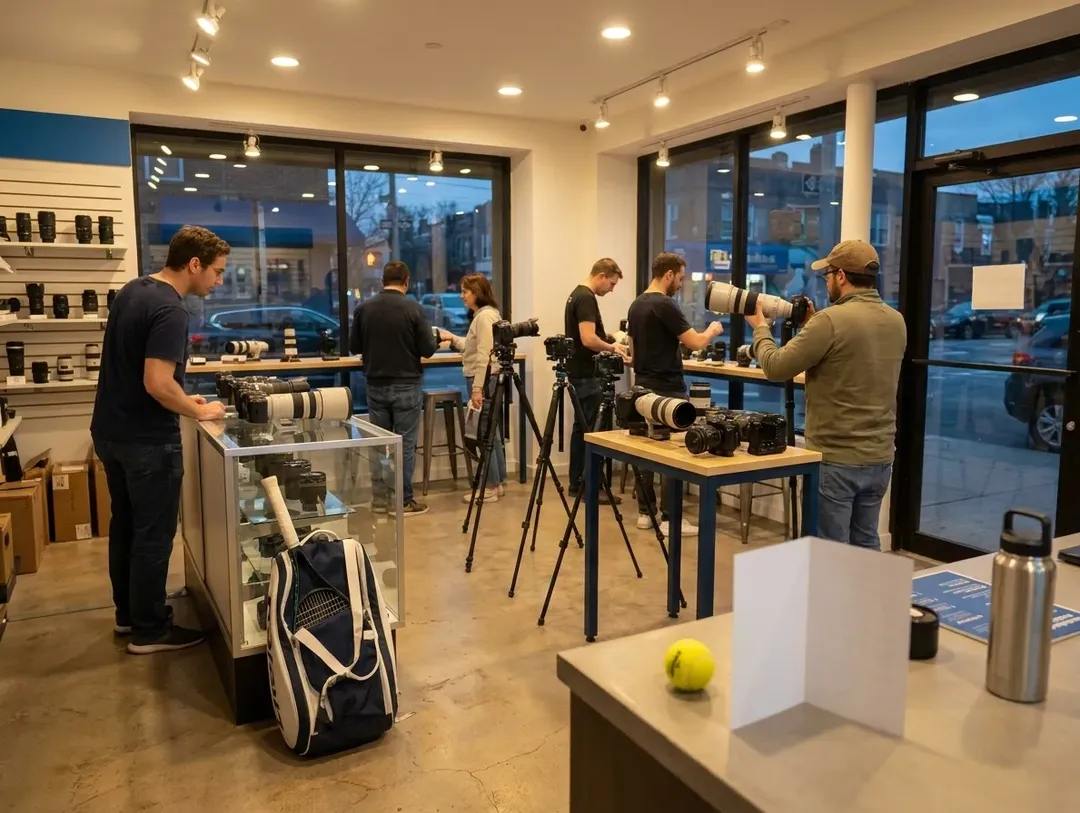
If you're traveling to New York for the US Open or you're a local who wants to try a longer lens without committing to a purchase, several rental houses serve the metro area with daily and weekly rates. Manhattan-based shops in Midtown and the Flatiron district typically stock Canon, Nikon, Sony, and Fujifilm bodies plus telephoto zooms in the 70-200mm and 100-400mm range—useful focal lengths for capturing action from the stands or documenting the crowds and architecture around the tournament grounds. Some shops offer same-day reservation and pickup, while others require advance booking during high-demand weeks like the US Open. Queens has fewer dedicated camera rental storefronts, but courier delivery to hotels in Long Island City, Flushing, or Astoria is often available for an additional fee. Check each rental house's website for current inventory, deposit requirements, insurance options, and whether they accept credit-card holds in lieu of cash deposits. Pickup times vary—some locations open as early as eight, others not until ten—so coordinate your rental window with your planned session time at the tournament or around the park.
What You Can and Cannot Bring Into the US Open Grounds
Before you rent a professional camera body and a 400mm prime, review the official US Open prohibited-items guide at usopen.org. The tournament has historically allowed compact cameras and smartphones but restricts professional video equipment, detachable lenses longer than a certain focal length, tripods, monopods, and large camera bags. These policies are designed to keep aisles clear, protect player privacy, and prevent commercial photography without credentials. If your goal is to shoot tennis action from the stands, confirm current camera rules well before your visit—policies can shift year to year, and what was permitted in 2024 may not be allowed in 2026. For many enthusiasts, the practical compromise is a mirrorless body with a 24-70mm or 70-200mm zoom that fits inside a small backpack, letting you document the atmosphere, architecture, and crowd energy without running afoul of security. If you're planning to shoot outside the gates—around the Unisphere, along the park paths, or in nearby neighborhoods—you have much more flexibility with gear, and that's where a longer lens and a lightweight tripod can shine.
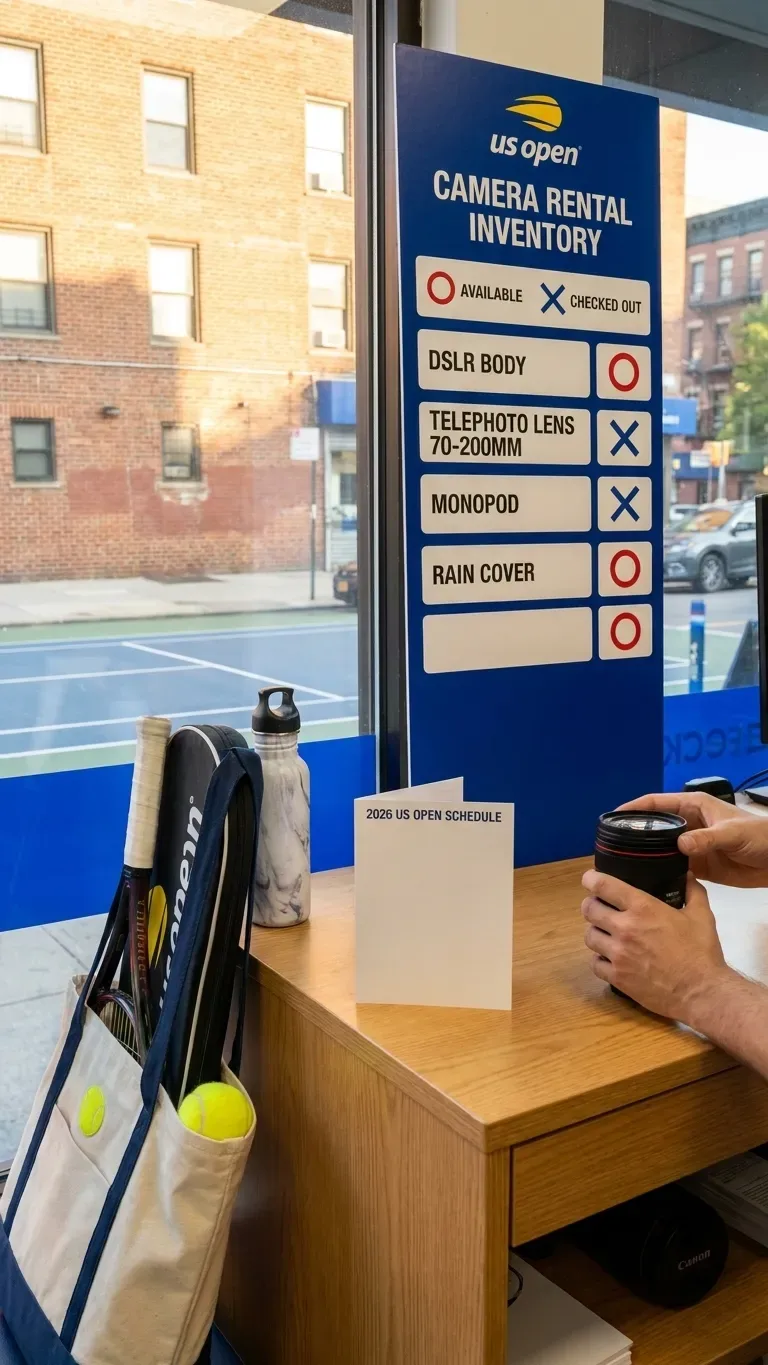
Scenic Shooting Locations Around Flushing Meadows Corona Park
Flushing Meadows Corona Park is New York City's second-largest park, and its mix of open meadows, water features, iconic structures, and pedestrian traffic makes it a rich environment for action and documentary photography. The Unisphere—the 140-foot stainless-steel globe built for the 1964 World's Fair—anchors the park visually and draws visitors year-round, but during US Open weeks the foot traffic multiplies, offering candid street-photography opportunities as fans in tournament gear move between the 7 train station and the tennis center. Early morning and late afternoon light rake across the Unisphere's latitude rings, and if you position yourself on the western side with a longer lens, you can compress the globe against the Manhattan skyline in the distance. The park's Meadow Lake loop is another strong location: joggers, cyclists, and families create natural action subjects, and the water reflects sky and foliage in ways that change hour by hour. For architectural photography, the New York Hall of Science and the Queens Museum—both short walks from the Unisphere—offer mid-century modern lines and colorful facade details. Check each institution's website for current public hours and any restrictions on tripod use or commercial shooting.
7 Train Corridor Neighborhoods for Street and Documentary Work
The 7 train connects Grand Central Terminal to Flushing, and the stations between—Hunters Point, Vernon Boulevard–Jackson Avenue, Court Square, 46th Street, 52nd Street, 61st Street–Woodside, Junction Boulevard, and others—serve neighborhoods with distinct visual character. Long Island City has transformed over the past two decades into a mix of glass residential towers, converted warehouses, and street art, with Gantry Plaza State Park offering waterfront views of Midtown Manhattan that are especially dramatic at sunset. Jackson Heights is known for its garden-apartment courtyards, South Asian commercial strips along 74th Street, and the elevated train structure itself, which casts geometric shadows on the street below. Corona's residential blocks and small parks provide a quieter, more intimate scale, while Flushing's downtown around Main Street pulses with multilingual signage, produce markets, and pedestrian density that rewards patient observation. If you're carrying a camera during US Open week, these neighborhoods offer narrative context—the journey to and from the tournament, the everyday life that continues alongside the global event—and they're all accessible with a single MetroCard swipe.

Transit, Timing, and Gear-Carry Considerations
The MTA publishes a dedicated US Open transit guide at new.mta.info/guides/stadiums/us-open, with service updates, recommended routes, and crowd-management tips for tournament days. The Mets–Willets Point station on the 7 line is the primary stop for the tennis center, and during evening sessions and weekend matches, trains run more frequently and platforms fill quickly. If you're carrying a camera bag, telephoto lens, and a small tripod, plan for crowded conditions and keep your gear secure and compact. A cross-body strap or a backpack with lockable zippers reduces the risk of bumps and snags. Arriving early—before the first session or during the midday lull between day and night matches—gives you more space on the train and more time to scout shooting positions around the park. Leaving after a marquee night match means dense crowds and longer platform waits, so budget extra time and consider a later dinner in Flushing or Jackson Heights to let the rush subside. The MTA's service-status page at new.mta.info offers real-time updates on delays, track work, and alternative routes, and checking it before you leave your hotel or rental pickup location can save significant frustration.
Practical Notes for Action Photography Around the US Open
- Confirm current US Open camera and lens policies at usopen.org/en_US/visit/prohibited_items.html well before your visit—rules can change between tournament years.
- Reserve rental camera gear at least a week in advance during high-demand periods; popular telephoto lenses and mirrorless bodies book quickly in late August and early September.
- Bring a lightweight, collapsible tripod for shooting around the park and neighborhoods, but leave it at your hotel or in a locker if you plan to enter the tournament grounds.
- Use the MTA's US Open transit guide at new.mta.info/guides/stadiums/us-open to plan your 7 train timing and identify alternative subway routes if service is disrupted.
- Scout the Unisphere, Meadow Lake, and the New York Hall of Science area in the morning or late afternoon for the best natural light and fewer crowds.
- Carry extra batteries and memory cards—August and September heat can drain power faster, and you won't want to miss a shot because of a dead cell.
- Check the Queens Public Library branches at queenslibrary.org for free restrooms, water fountains, and air-conditioned rest stops along your route.
- Review the official US Open event schedule at usopen.org/en_US/about/eventschedule.html to understand session times, gate openings, and peak crowd periods.
Where to Pause, Refuel, and Review Your Shots
After a morning or afternoon of shooting around Flushing Meadows and the 7 train corridor, you'll want a comfortable spot to review images, charge devices, and plan your next move. Flushing's downtown has dozens of cafes, bakeries, and food courts where you can sit with a laptop or tablet and cull your take—look for spots with accessible power outlets and strong air conditioning during summer tournament weeks. Jackson Heights offers quieter cafes along 37th Avenue and Roosevelt Avenue, many with outdoor seating under the elevated tracks. Long Island City has waterfront benches in Gantry Plaza State Park and a growing number of coffee shops in the blocks around Court Square, though weekend crowds can make table availability unpredictable. Queens Public Library branches—including the Flushing, Jackson Heights, and Long Island City locations—provide free Wi-Fi, seating, and restrooms, and they're useful waypoints if you need to adjust your route or wait out a sudden rainstorm. Confirm current library hours at queenslibrary.org before you rely on a branch as part of your plan. For a longer meal, Corona and Flushing both have deep benches of Latin American, Chinese, Korean, and South Asian restaurants; many open early and stay busy through evening, so you can time your break around the light and crowd conditions you want for your next shooting location.
Tags: #USOpen2026 #Queens #FlushingMeadows #KarpoFinds #Karpo #braxtongarrett #NewYorkLocal #TennisTravel #NYCLocalLife #TennisTravel
Sources consulted: usopen.org — Official event schedule · usopen.org — Official visitor A-Z guide · usopen.org — Official transportation directions · usopen.org — Official prohibited-items guide · MTA — Official US Open transit guide · NYC Parks — Flushing Meadows Corona Park · Queens Public Library · MTA — Service status
All trademarks are the property of their respective owners.
Ask Karpo first
Want to know what is actually open, how to time the trip, and where to pause around Queens? Ask Karpo for the latest public US Open context, a respectful visitor plan, and a live route around Flushing Meadows before you head out.
Ask Karpo for more information.
Keep reading
- Where to Eat Near Penn Station That Isn't a Chain
 Andytown Coffee in the Outer Sunset: The Snowy Plover Explained
- Best Things to Do in Chicago: What the City Gives Away