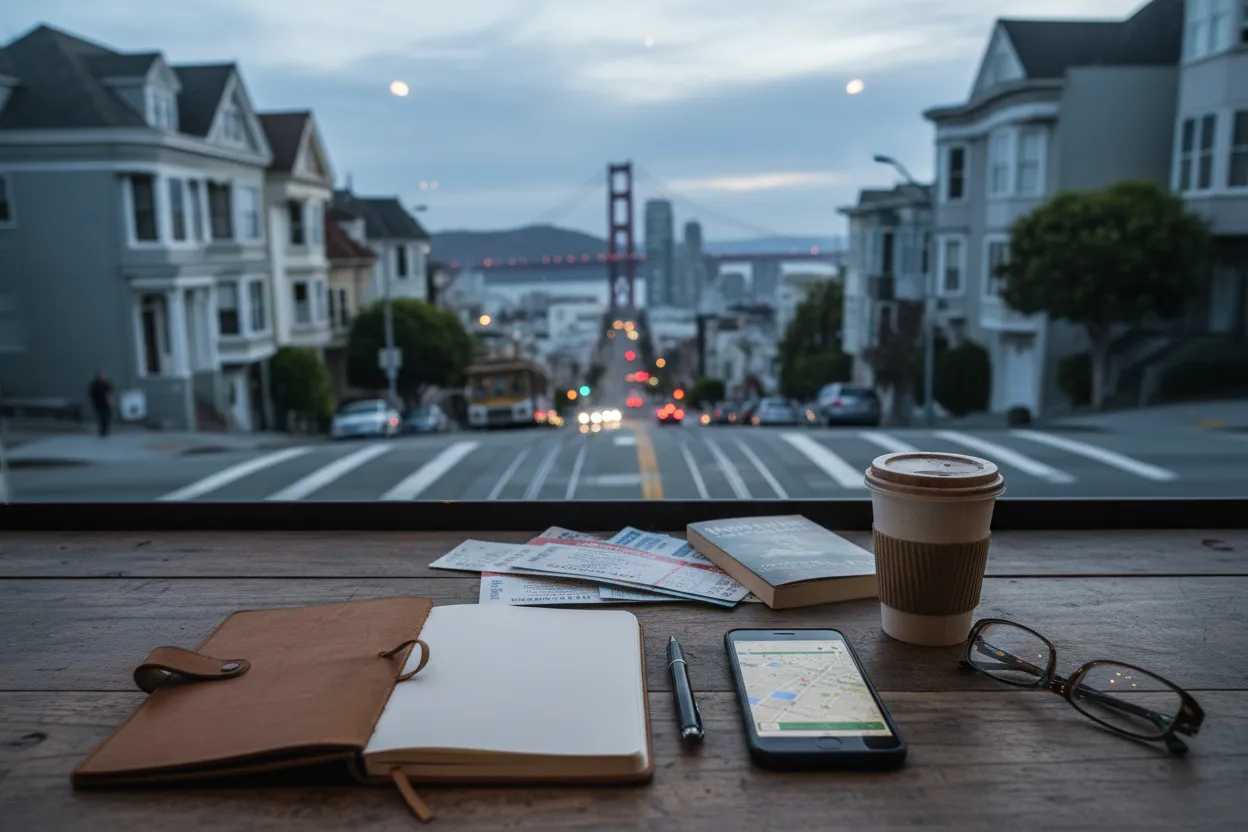
brad pitt: A Useful San Francisco City Guide is not a promise that anyone famous is in town, appearing at an event, or connected to a San Francisco school routine. Treat the search interest around brad pitt as a reminder to teach a better habit before the school year gets busy: verify first, then move. For students, caregivers, and anyone rebuilding a weekday rhythm, the city already has public tools worth using before chasing rumors or crowded feeds. The San Francisco Public Library lists locations, hours, research resources, events, homework help, eLearning, accessibility services, and library card information. SFMTA posts trip planning tools, alerts, travel updates, and back-to-school travel tips. SF.gov centralizes City services, departments, jobs, meetings, housing, permitting, government information, and 311 contact paths.
Want a cleaner San Francisco back-to-school plan before you cross town? Text Karpo with your start point, study goal, access needs, and backup window, then verify against official city pages.

Turn curiosity into a research question
Start by naming the task. If a student is searching brad pitt because a classmate mentioned a movie, an interview, or a rumor, turn that into a research question: What is the claim, who published it, and what primary source can confirm it? That small shift matters. It keeps a back-to-school afternoon from becoming a scroll session and gives the student a repeatable method for entertainment, civic issues, homework, and local logistics.
A workable public plan can be simple: choose one topic, identify two official or primary resources, write down what is confirmed, and separate it from commentary. For a San Francisco errand day, combine that research task with one verified library stop and one verified transit plan. Do not build the day around an unconfirmed celebrity appearance, private access claim, or social post. Build it around places and services that publish their own information.
Start with a reliable public resource
The San Francisco Public Library is the strongest first stop for this kind of back-to-school routine because its official site points readers to books and media, research and learning, events and exhibits, support and services, homework help, job resources, eLearning, articles and databases, SF Digital Collections, and accessibility services. The site also lists “Get a Library Card,” which is worth checking before assigning a student any digital research plan.
For a central public anchor, SFPL lists the Main Library at 100 Larkin Street, San Francisco, CA 94102, with telephone contact at 415-557-4400. On the official extract for Tuesday, August 11, 2026, Main Library hours are listed as Tuesday 9 to 8. Because hours can change, use that as a planning clue, not a permanent guarantee. Check the current Main Library page before leaving, especially if the visit depends on evening study time.
If you are working with younger students, teens, or mixed-age siblings, scan the SFPL site by audience and task rather than by hype. The official navigation includes Kids, Teens, Research & Learn, Events & Exhibits, and Support & Services. That structure helps families pick the right kind of stop: research, reading, technology help, storytime, homework support, or a quieter place to reset.
Compare primary reporting before opinions
Before students summarize anything about a person, film, book, civic issue, or local service, require a source comparison. One source may provide a catalog record, another may provide a database article, and a third may be an opinion or fan post. SFPL’s official site points to articles and databases, research tools, and digital collections; those categories are better starting points than an unsourced clip passed around in a group chat.
This method also protects the city plan. If someone says there is a special event, transit disruption, school-related change, or public meeting, compare it with official pages before changing your route. SFMTA’s homepage includes alerts, a Trip Planner, Muni routes and stops, travel and transit updates, and a calendar. SF.gov provides City services, departments, meetings and events, government information, and 311 contact options. Use those before trusting a screenshot.
For today’s plan, write three columns on paper or in a notes app: confirmed, needs checking, and opinion. “Main Library has an address listed by SFPL” belongs in confirmed after you check the official page. “A celebrity may be nearby” belongs nowhere in the plan unless an official source verifies a public event. “This route feels faster” is an opinion until SFMTA’s tools and alerts support it.
Choose a study stop that fits the task
A good back-to-school study stop is not always the biggest building or the trendiest room. Match the stop to the task. If the assignment requires databases, research help, printing from home, homework help, or a library card question, start with SFPL’s official categories and location pages. If the task is a short reading sprint, a neighborhood branch may work better than a cross-town trip; SFPL lists many branches, including Anza, Bayview, Bernal Heights, Chinatown, Excelsior, Marina, Mission, Mission Bay, North Beach, Richmond, Sunset, West Portal, Western Addition, and others.
For a Civic Center-centered plan, the Main Library is practical because the official listing gives a clear address and published hours to verify. Build a time block around arrival, orientation, the research task, and a departure buffer. Do not assume every room, service, seat, computer, exhibit, or event will be available exactly when you want it. Use the official SFPL page to confirm current hours, event details, access notes, and the service category you need.
If a student needs a structured public activity, check SFPL’s events listing before leaving. The official extract shows examples on Tuesday, August 11, 2026, including financial counseling, technology assistance in English and Chinese, family storytime, baby storytime, toddler storytime, preschooler storytime, and craft activities at different locations. Event times and locations are details to verify directly on SFPL because listings can change.
Add one low-cost reset nearby
A back-to-school city plan should include a reset that does not require buying another thing. At SFPL, that may mean switching from a research database to a reading list, browsing an exhibit listing, checking a digital magazine option, or using a library card benefit from home later. The official SFPL site highlights Summer Stride, exhibitions, eResources, Kanopy free movie streaming with a library card, Flipster digital magazines, reading recommendations, and learning tools.
Keep the reset modest. After 60 to 90 minutes of research, choose one low-pressure action: note three books for later, save one database citation, check whether a library card is active, or identify one SFPL support service for the school year. If you are at Main, verify what is open that day before promising a specific exhibit, room, or program to a child. A calm backup beats a dramatic disappointment.
For families with younger children, a reset may be choosing a verified storytime or early learning event at a branch that fits the day’s travel path. For teens, it may be scanning eLearning, research tools, job resources, or homework help. The point is not to fill every minute. The point is to leave with one completed task and one next step.
Verify hours and access before leaving
Do the final check in this order: library page, transit page, city service page. First, confirm SFPL hours, location, event status, accessibility service needs, and whether the service you want is tied to a library card. Second, use SFMTA’s Trip Planner, route and stop pages, alerts, and travel updates. The official SFMTA extract also flags back-to-school travel tips and notes that Muni service changes start August 29, so late-August plans deserve an extra route check.
Crowd risk is not only about tourists or headlines. School start patterns, meetings, festivals, construction, substitutions, and service alerts can all change the feel of a trip. SFMTA’s homepage shows that alerts and travel updates are active categories, and it lists contact paths including 311, 511 Regional Info, customer service, fares, maps, accessibility, and getting around resources. Check those before assuming a normal ride.
Use SF.gov for the broader civic layer. Its official homepage points to services, departments, jobs, City Hall, meetings and events, permitting, housing, government information, elected officials, contact paths, reporting a problem, accessibility, and 311. If your backup plan involves a city office, meeting, eligibility check, or public service, verify it there instead of guessing. Your backup choice should be boring and executable: a different SFPL branch, a shorter research task from home, or a transit route that SFMTA currently supports.
Tags: #AskKarpo #BeforeYouGo #SanFrancisco #BackToSchool #SFPL #SFMTA #SFgov #CityGuide #LibraryLife #TransitCheck #HomeworkHelp #PublicServices #ResearchFirst #LocalPlanning
Sources consulted: sfpl.org · sfmta.com · sf.gov
All trademarks are the property of their respective owners.
Ask Karpo first
Ask Karpo first before you turn a headline into a cross-town plan. Share the study goal, preferred library area, time window, mobility needs, and backup tolerance. Karpo can help you organize the official checks so the day stays useful, realistic, and rumor-resistant.


