The Art of the Reflex Save
A goalkeeper's job distills to fractions of a second: read the striker's hips, shift weight, spring. In the Boston-area quarterfinal, Morocco's keeper demonstrated that arithmetic repeatedly, turning point-blank efforts into corner kicks and free kicks into routine catches. Shot-stopping at this level isn't luck—it's geometry, anticipation, and hours of video study condensed into a single dive.
Text Karpo Now: Let us map your route to every knockout match, shuttle schedule, and fan zone across the host cities—no guesswork, just the inside line.
France brought waves of attack, probing down the flanks and threading passes through the middle. Each time a boot met leather inside the eighteen-yard box, the keeper was there: low to parry a driven effort, high to tip a curling shot over the bar, quick off the line to smother a through ball before the striker arrived. Those interventions didn't always make the highlight reel, but they kept Morocco within touching distance when the scoreboard might have told a different story.
What separates a good save from a great one is context. A routine stop in the opening minutes becomes heroic in the seventy-fifth, when legs are heavy and concentration frays. The keeper's positioning—always a step ahead, always narrowing the angle—meant France's forwards saw less net than they expected. That psychological edge, the sense that every chance must be perfect, can tilt a knockout tie as surely as a goal.
Command Beyond the Posts
Shot-stopping grabs headlines, but a keeper's command of the penalty area often decides tight matches. Morocco's custodian owned the six-yard box, calling for crosses with authority, punching away corners when the crowd was at full roar, and organizing the defensive line with sharp, clear instructions. In a knockout game, where one lapse can end a campaign, that vocal presence steadies nerves and closes gaps.
Set pieces are chaos by design—bodies jostling, runs crossing, the ball swinging unpredictably. The keeper who hesitates invites disaster; the one who attacks the ball with conviction turns danger into a counter-attack. Time and again, high balls into the mixer were met by gloves rising above a forest of heads, the keeper claiming possession and immediately looking to release quickly. That decisiveness not only cleared immediate threats but also set the tempo for Morocco's transitions, turning defense into offense in a heartbeat.
Equally important was the communication. A shouted warning about an unmarked runner, a hand signal to shift the wall, a calm word to a center-back after a near-miss—these micro-adjustments are invisible to most spectators but vital to the players around him. In the cauldron of a World Cup quarterfinal, where the margin between advancing and going home is razor-thin, a goalkeeper who leads from the back can be worth an extra defender.
Reading the Moment
Elite keepers don't just react; they predict. Film study reveals tendencies—does a certain forward favor the near post? Does a midfielder telegraph his shots with a telltale shoulder drop?—and the best shot-stoppers catalog those patterns. In the Boston-area clash, Morocco's keeper seemed to know where the ball was going before it left the boot, edging a half-step to the right or left, buying the extra inch that turned a goal into a save.
One sequence in particular captured that instinct: a quick combination on the edge of the box, a defender beaten, a shot arrowing toward the bottom corner. The keeper had already begun his dive, reading the striker's body shape, and his fingertips deflected the ball just wide. Replays showed how tight the margin was—another millisecond of hesitation and the net would have bulged. That kind of anticipation comes from thousands of training repetitions and an almost obsessive attention to scouting reports.
Yet reading the game also means knowing when not to dive, when to hold position and trust the angle. A rash lunge can leave the goal exposed; staying upright and big forces the attacker to place the shot perfectly. Morocco's keeper struck that balance beautifully, making himself a wall when needed and launching into acrobatics only when the situation demanded it. The result was a performance that felt both calm and electric, a paradox only the very best can pull off.
The Weight of a Nation
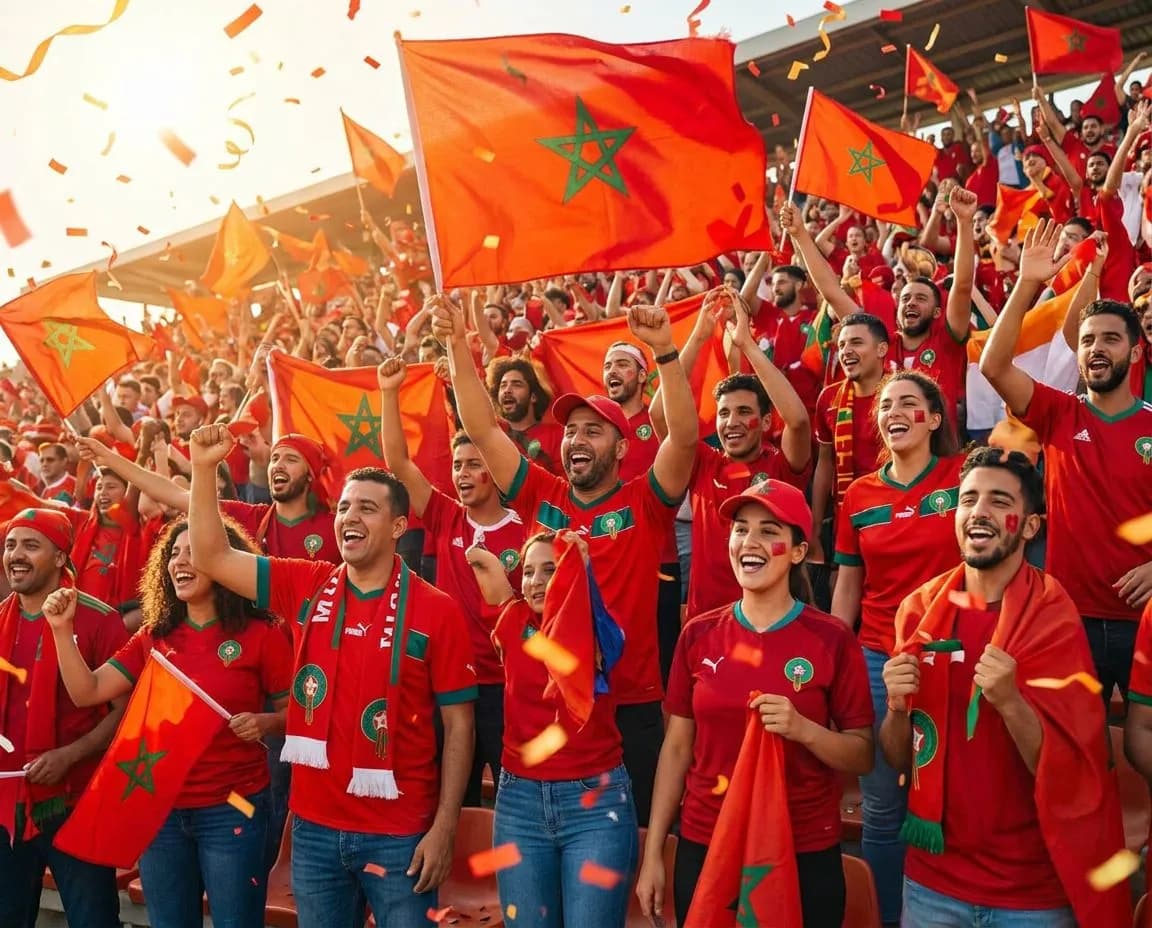
Morocco's World Cup run carried the hopes of an entire region, and nowhere was that pressure more visible than on the keeper's shoulders. Every save was met with a roar that seemed to shake the stands; every punch clear or confident catch sparked chants that echoed long after the whistle. Playing in goal for a team making history means every touch is magnified, every decision scrutinized, and the keeper handled that spotlight with remarkable composure.
The crowd in the Boston area was a sea of red, Moroccan flags waving in unison, drums pounding out rhythms that never stopped. For a goalkeeper, that energy can be both fuel and burden—fuel because the support lifts you when fatigue sets in, burden because the expectation to deliver a miracle save on demand never relents. Yet rather than shrink from the moment, Morocco's keeper seemed to draw strength from it, feeding off the noise and turning it into focus.
When France finally found a way through, the keeper's reaction told the story: frustration, yes, but also immediate resolve. There was no hanging of the head, no dwelling on what might have been. Instead, he clapped his hands, called his defenders together, and reset. That mental resilience—the ability to compartmentalize a setback and move on—is what allows great keepers to stay sharp deep into extra time, when one more save might be all that stands between glory and heartbreak.
Lessons from the Knockout Stage
Knockout football is unforgiving. A league campaign offers thirty-eight chances to recover from a bad day; a World Cup quarterfinal offers none. Morocco's keeper understood that arithmetic and played accordingly, taking no unnecessary risks, making no flashy attempts that might backfire. Every decision was calculated: when to come for a cross, when to stay on the line, when to hold the ball an extra second to let teammates recover their shape.
That pragmatism doesn't mean playing scared. It means playing smart. A quick throw to a wide player caught France's defense scrambling more than once, turning a routine save into a dangerous counter. A well-placed goal kick found a target man's chest, bypassing the midfield press and creating space for Morocco's attackers to run into. In modern football, the goalkeeper is the first attacker, and Morocco's number one embraced that role with intelligence and precision.
For fans watching from the stands or back home, the keeper's performance was a reminder that tournaments are won on fine margins. A fingertip save here, a brave dive at an attacker's feet there—these moments don't always show up in the final score, but they shape the narrative. Morocco may have exited in the quarterfinal, yet the keeper's display ensured they did so with heads held high, having pushed one of the tournament favorites to the limit.
Carrying the Legacy Forward
World Cups create legends, and Morocco's goalkeeper added his name to that list with a quarterfinal performance that will be replayed for years. Young keepers across North Africa and beyond will study his positioning, his decision-making, his calm under pressure. That's the gift of a deep tournament run: it doesn't just inspire in the moment; it plants seeds for the next generation.
The 2026 tournament, sprawling across the United States, Canada, and Mexico, will bring forty-eight teams and countless new stories. Some will be about strikers who can't miss, midfielders who dictate tempo, defenders who shut down the world's best. But just as many will be about goalkeepers who stand tall when it matters most, who turn the impossible into the routine, who carry their nations on their backs. Morocco's keeper in the Boston-area quarterfinal showed exactly what that looks like.
As the tournament marches toward the final at MetLife Stadium on July 19—complete with Coldplay's Chris Martin curating a halftime show featuring Madonna, Shakira, and BTS—the saves and the stories will accumulate. But the lesson from Morocco's run is already clear: in knockout football, a great goalkeeper doesn't just stop shots. He shapes belief, steadies nerves, and turns a quarterfinal into a stage where a nation's dreams feel within reach, one save at a time.
Practical notes
- Quarterfinals and beyond require official shuttles or NJ Transit with return wristband; no on-site parking or tailgating at MetLife Stadium.
- AT&T Stadium in Arlington hosts the most matches (nine) and offers the largest capacity for knockout-stage atmosphere.
- Semifinals take place at AT&T Stadium (Dallas area) and Mercedes-Benz Stadium (Atlanta) before the July 19 final.
- Arrive early for knockout matches—security lines lengthen and fan zones fill quickly as stakes rise.
- Check official FIFA channels for real-time updates on match schedules, shuttle routes, and any last-minute venue changes.
A goalkeeper's save sheet is more than a tally of stops—it's a map of a match's pressure points, the moments when belief hung in the balance. Morocco's keeper in the Boston-area quarterfinal delivered a masterclass in reading the game, commanding the box, and rising to the occasion when the world was watching. As the 2026 tournament unfolds across three nations, those performances will define legacies and inspire the next wave of shot-stoppers dreaming of their own World Cup stage.
Tags: #WorldCup2026 #MoroccoFootball #GoalkeeperSaves #KnockoutStage #Quarterfinal #FranceMorocco #BostonWorldCup #ShotStopping #PenaltyBoxCommand #TournamentHeroes #MetLifeStadium #ATTStadium #FIFAWorldCup #FootballLegends #KarposFinds
All trademarks are the property of their respective owners.
Ask Karpo first
Planning your own World Cup journey—whether it's securing shuttle wristbands for MetLife, finding the best fan zones near AT&T Stadium, or timing your arrival for a knockout thriller? Ask Karpo first. We'll sort the logistics, map the routes, and make sure you're in position when the next great save unfolds.