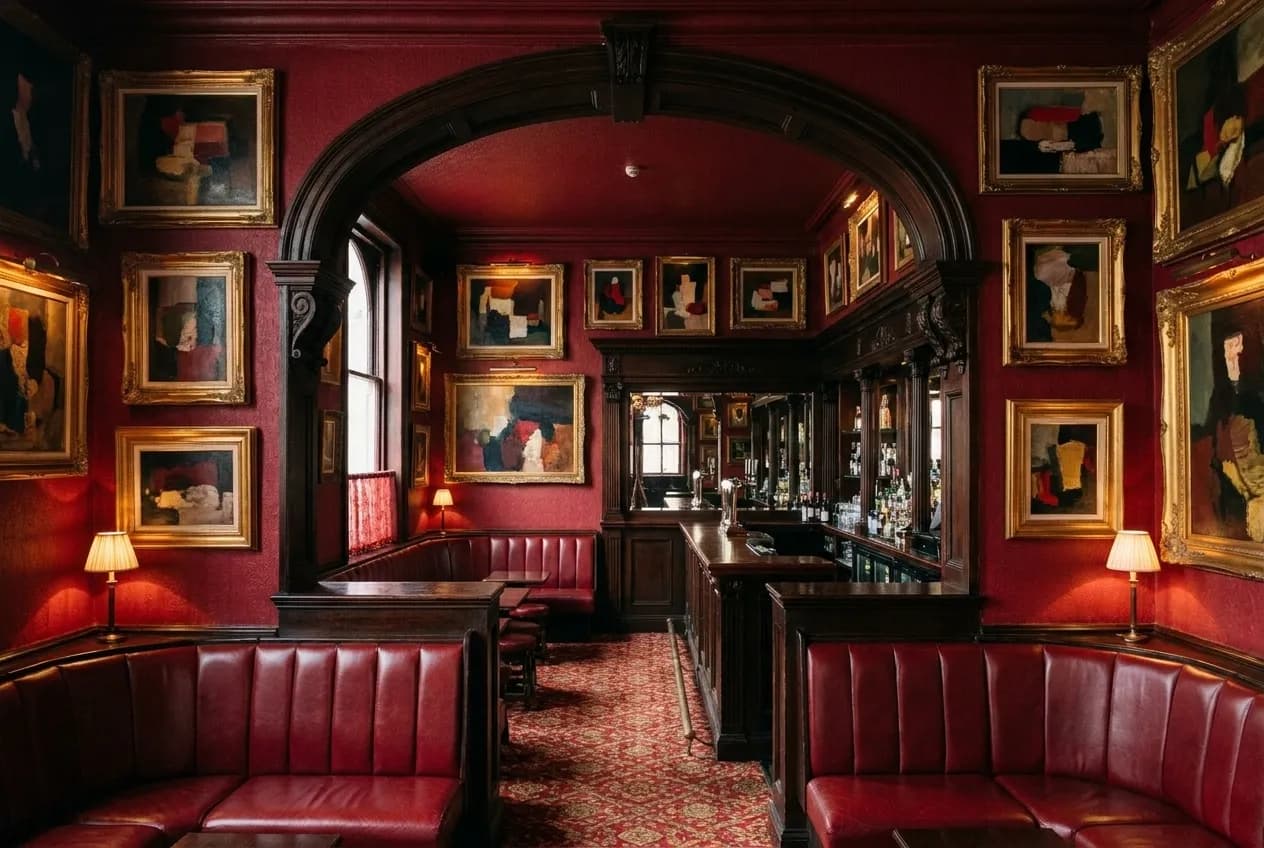
Most small venues sound bad and almost nobody says so. A low room with hard parallel walls, a PA pushed past what the space can absorb, and a bar running down one side is a recipe for a wash of noise in which a good band and a mediocre one are difficult to tell apart. The exception on Pico Boulevard is a room that has been open since 1937 and was treated, at some point in its long life, as a recording space rather than as a bar with a stage in it.
Room size tells you almost nothing about how a band will sound; what the walls are made of tells you everything. Ask Karpo which small rooms near you are actually worth hearing something in.
What 'acoustically engineered' actually means here
It means the room has been built to control reflections rather than simply to be loud. In practice, from a seat in the audience, what you notice is separation: the snare is a snare rather than a smear, a Hammond and a guitar occupy different parts of the space, and a singer does not have to shout over their own band.
That is the difference between hearing a blues trio and hearing that a blues trio is happening somewhere in front of you. It is also why the room punches well above its size in bookings — players know which rooms flatter them and which ones fight them, and word travels.
The list of people who have played it
Stevie Wonder. Ray Charles. Willie Dixon. Natalie Cole. More recently Ben Harper, Macy Gray and The Wallflowers. That is not a roster a two-hundred-capacity room on Pico should have, and it is a direct consequence of the two things above: it has been there since 1937, and it sounds good.
The useful implication for anyone booking a ticket is that the calendar tends to be better than the venue's profile suggests. Thirty-odd shows across the coming season, mostly blues and soul, in a room where the audience is measured in dozens rather than thousands.

The neighbourhood, which is the reason it is under-visited
6010 West Pico is Mid-City, which in Los Angeles terms means it is close to everything and adjacent to nothing. It is not in a nightlife district, there is no strip of bars either side of it, and nobody is passing on the way to somewhere else.
The consequence is an audience that came for the show, which is the single best thing that can happen to a small room. It also means this is a destination rather than a stop — plan dinner separately and specifically, because the block itself will not solve it for you.
- 6010 West Pico Boulevard, Mid-City
- Open since 1937; an intimate room treated for sound
- Blues and soul programming with around thirty shows a season
- Past bills include Stevie Wonder, Ray Charles, Willie Dixon and Natalie Cole
- A destination venue, not part of a bar strip — plan the whole evening
Where to stand, and when to arrive
In a room built for sound, position matters more than usual, and the instinct to get as close to the stage as possible is wrong. Directly in front of a PA stack you hear the PA; two-thirds of the way back, roughly in line with the sound desk, you hear what the engineer is hearing, which is the mix as it was intended.
Arrive for the support rather than the headliner. At a venue where the booking is this consistent, the opening act is chosen rather than tolerated, and in a room this size the difference between a full house and a half-empty one during the first set is something the band will feel and respond to.
Blues in Los Angeles, properly
There is a version of blues programming that exists as decor — a covers band on a Sunday in a restaurant, playing the same twelve songs. That is not what this is, and the distinction is worth drawing because it determines whether you go once or repeatedly.
A working blues and soul room books players who are still developing material, which means the same night in two months is a different night. The city has lost a great many of these rooms over the past two decades. The ones still standing are standing because people kept turning up to them, which is less sentimental than it sounds and more literally true than most venue histories.
Why a room survives ninety years
Almost nothing in Los Angeles nightlife lasts a decade, let alone nine of them. A room that opened in 1937 has outlived the studio system, three or four complete turnovers in what the city listened to, the collapse of the small-venue economy in the 2000s and a pandemic that shut every stage in the state.
What that longevity buys, beyond the anecdotes, is a building that has been tuned by use. Ninety years of bands playing in the same space means every fixable acoustic problem has been found and fixed by somebody, which is the unglamorous reason old rooms so often sound better than new ones with far more expensive equipment in them.
The practicalities of a Mid-City night
Driving is the realistic option and street parking on the surrounding residential blocks is generally findable, with the usual instruction to read every sign twice. There is no rail station within comfortable walking distance, and Pico runs buses that are useful in daylight and thinner late.
For dinner, La Brea and the Fairfax district are five to ten minutes away in one direction and Koreatown is about the same in the other, both with kitchens running late enough to eat after a show rather than before it. Eating afterwards is the better structure here: it means you can get to the venue for the support act without rushing a meal.
Practical notes
The Mint, 6010 West Pico Boulevard in Mid-City, has been operating since 1937 and is an intimate room treated acoustically like a recording space, which is why it sounds considerably better than its size would suggest. Programming leans blues and soul with roughly thirty shows across a season; past bills include Stevie Wonder, Ray Charles, Willie Dixon and Natalie Cole, and more recently Ben Harper, Macy Gray and The Wallflowers. Stand around two-thirds back, in line with the sound desk, rather than against the stage. Arrive for the support act. Drive and park on the residential blocks, and plan to eat in Koreatown or around La Brea afterwards rather than nearby beforehand.
Tags: #LosAngeles #TheMint #LiveMusic #Blues #PicoBoulevard #BarsAndNightsOut #LANightlife #SmallVenues #SoulMusic #ThingsToDoLA #Acoustics #MidCity #LAMusic #Gigs
Please drink responsibly. Must be of legal drinking age.
All trademarks are the property of their respective owners.
Ask Karpo first
Want to know which small rooms near you sound good, who is playing and when the headliner actually goes on? Ask Karpo rather than guessing from a ticket page.