This is an argument, not a listicle, and it goes like this: for the money you were going to spend on a San Francisco dinner, you can get a better meal in Oakland, and the journey is twelve minutes on a train that runs under the water. San Franciscans resist this in a way that people from any other metropolitan area would find incomprehensible. The East Bay has the depth, the prices and — this is the part that settles it — the two-star restaurant.
The whole trip works if the timing does: BART out, dinner, last train back. Ask Karpo what has tables tonight in Oakland, how long the ride is from your station, and what time you would need to leave the table.
The high end is already over there
Commis, on Piedmont Avenue, holds two Michelin stars and has for years. It is a narrow room with a counter looking into the kitchen, a tasting menu, and none of the theatre that usually accompanies that level of cooking. There is no equivalent value proposition in San Francisco, where the same accolade comes attached to substantially higher prices because the rent is substantially higher.
Beneath it sits a deep tier of rooms that would be talked about constantly if they had a San Francisco address: the pasta rooms of Rockridge, the long-running vegetarian kitchens, the wine bars of Temescal, and a generation of small chef-owned restaurants in Old Oakland and the Dimond that opened precisely because the rent made it possible.
The Fruitvale corridor is the real headline
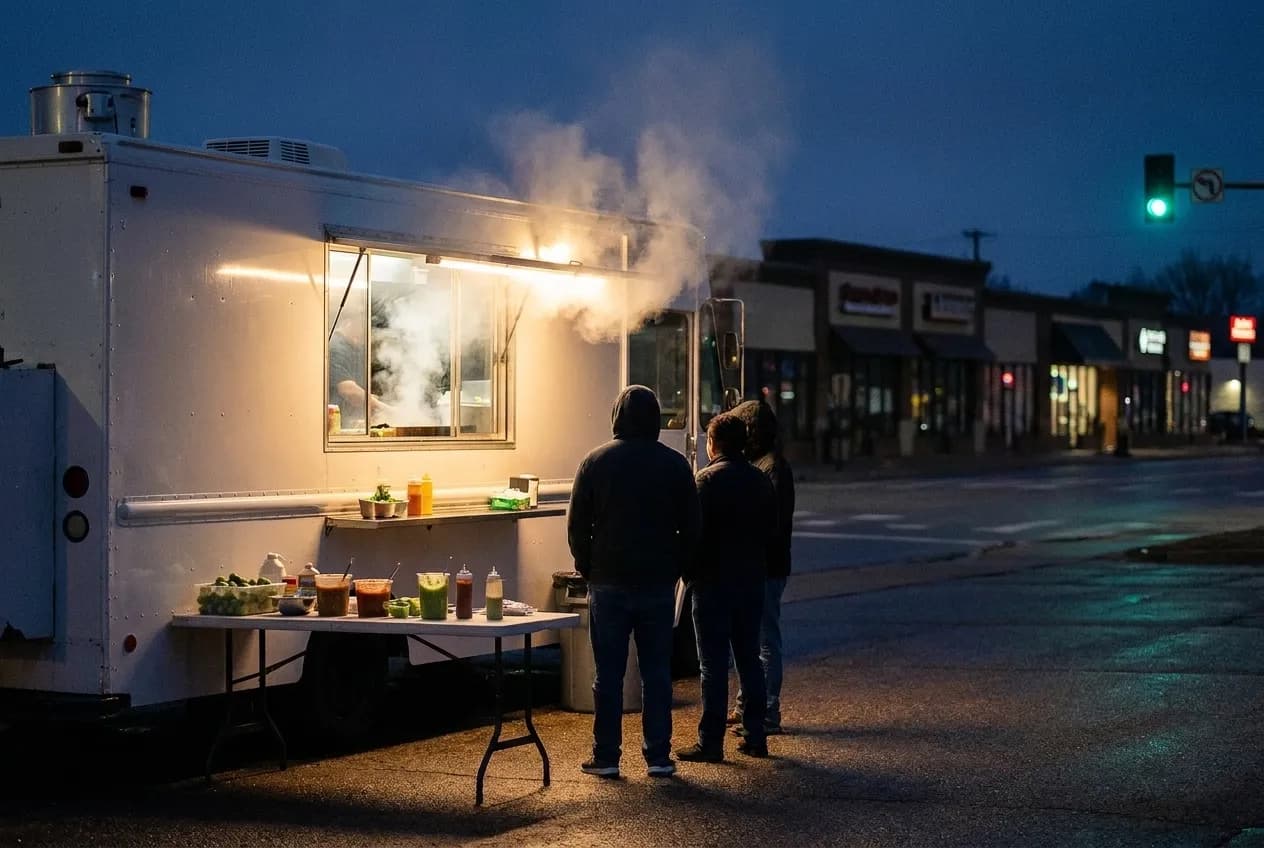
International Boulevard through Fruitvale is the best taco corridor in Northern California, and it is not close. Trucks and storefronts run for blocks, the mariscos counters do Sinaloan and Nayarit seafood, and the whole thing operates late into the night. Fruitvale has its own BART station, which means this is a car-free trip from anywhere in San Francisco: platform, twenty minutes, dinner.
The neighborhood's food is not a novelty or an outing. It is a working commercial district serving the people who live there, which is exactly why it is better than the curated version of the same food on the other side of the bay.
The economics behind this are not complicated. Commercial rent per square foot in downtown Oakland runs well below the equivalent in San Francisco's restaurant districts, and rent is the line that decides whether a chef-owned room can exist at all. Lower fixed costs mean smaller rooms survive, menus stay shorter, and prices sit where a neighborhood can actually pay them. That is the entire reason the East Bay's restaurant scene looks the way it does, and it is why the interesting openings keep happening on that side of the water.
Things you cannot eat in San Francisco at all
Nyum Bai brought serious Cambodian cooking to the Bay Area's mainstream attention from a small room in Fruitvale. Cafe Ohlone — mak-'amham — serves Ohlone cuisine, the food of the people whose land the entire region sits on, from a site at UC Berkeley, and it is unlike any other meal available in the United States. Oakland's Ethiopian, Salvadoran, Yemeni and Vietnamese communities each support rooms with no San Francisco equivalent.
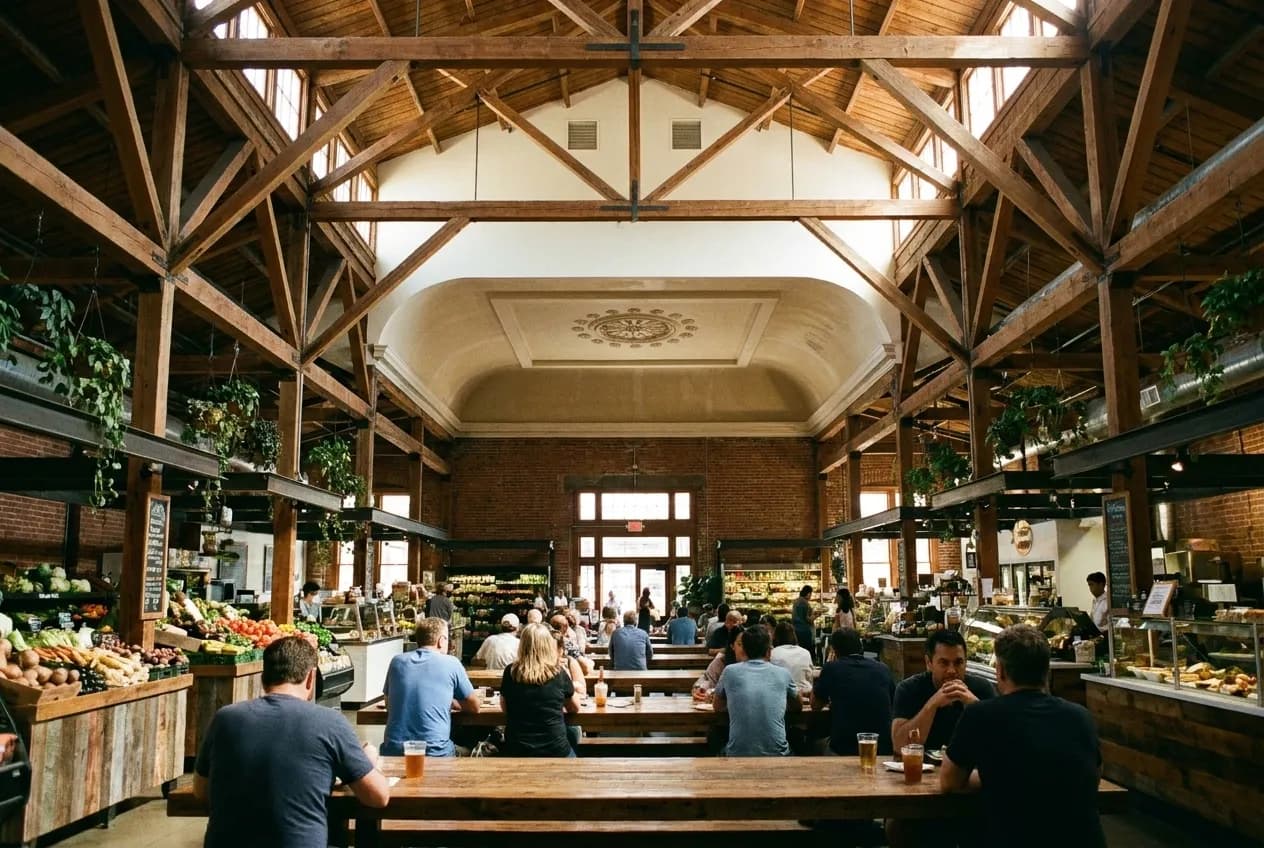
Swan's Market in Old Oakland collects a set of these under one roof, which makes it the efficient introduction if you have one evening and a group with different appetites.
Berkeley belongs in the same argument, fifteen minutes further out on the same line. Chez Panisse has been running on Shattuck Avenue since 1971 and effectively invented the way American restaurants talk about ingredients; the café upstairs is the affordable half and takes bookings that are actually gettable. Around it sits the Gourmet Ghetto, a few blocks of bakeries and counters that have been quietly excellent for fifty years.
The daytime version
If dinner is a hard sell, do a Saturday instead. The Grand Lake farmers market is one of the largest in the region and runs under the freeway beside Lake Merritt; Jack London Square has its own on Sundays. A morning at either, a walk around the lake, and lunch in Old Oakland is a better day out than most people's weekends in San Francisco, and it costs the price of a BART ticket.
Making the logistics work
BART is the whole plan. Twelve to twenty minutes from downtown San Francisco to downtown Oakland depending on the station, trains every few minutes at peak and every quarter of an hour off-peak, and — the constraint — a last transbay departure around midnight that changes on weekends. Check it for your line and set an alarm on your phone for fifteen minutes before you need to leave the restaurant.
If you drive, the Bay Bridge toll applies westbound and parking in most of Oakland is easier than in most of San Francisco. If you miss the train, AC Transit runs all-nighter buses across the bridge, and they are slow but real.
Practical notes
Book Commis well ahead; it is small and it sells out. Almost everything else on this list takes walk-ins, including the Fruitvale trucks, which are cash-friendly and busiest between 8pm and 11pm. Weeknights are materially easier everywhere. Oakland is warmer than San Francisco in the daytime and the same temperature at night, so bring the layer anyway. And if the point of the evening is a show, the Fox and the Paramount are both within walking distance of Old Oakland's restaurants, which makes the whole trip one journey rather than two. Two more things worth saying plainly: Oakland is a real city with its own reasons to exist rather than an annexe of San Francisco, and the food is better because the people who live there have been asking more of it for longer. Treat it as a destination and it repays the trip; treat it as a cheaper substitute and you will order badly.
Tags: #Oakland #BestRestaurantsNearMe #EastBay #Fruitvale #BayAreaEats #SanFrancisco #BART #Commis #OldOakland #LakeMerritt #TacosOakland #HiddenGems #FarmersMarket #DateNight #EatLocal
All trademarks are the property of their respective owners.
Ask Karpo first
Want to know what has a table in Oakland tonight, how long BART takes from your station, and what time the last train back leaves? Ask Karpo for availability, the ride and a plan that gets you home without a bridge surge.