Kaiseki is the most codified form of cooking in Japan — a fixed sequence of courses, each with a defined role, developed over centuries around the tea ceremony and the seasons. n/naka takes that structure seriously and then cooks it in Los Angeles with Californian produce, which is a much harder thing to do well than either abandoning the form or copying it. Niki Nakayama has been doing it in a small room in Palms since 2011.
n/naka releases reservations in monthly blocks and they are gone within minutes, so the booking is a calendar exercise rather than a decision. Ask Karpo when the next release lands.
What modern kaiseki actually is
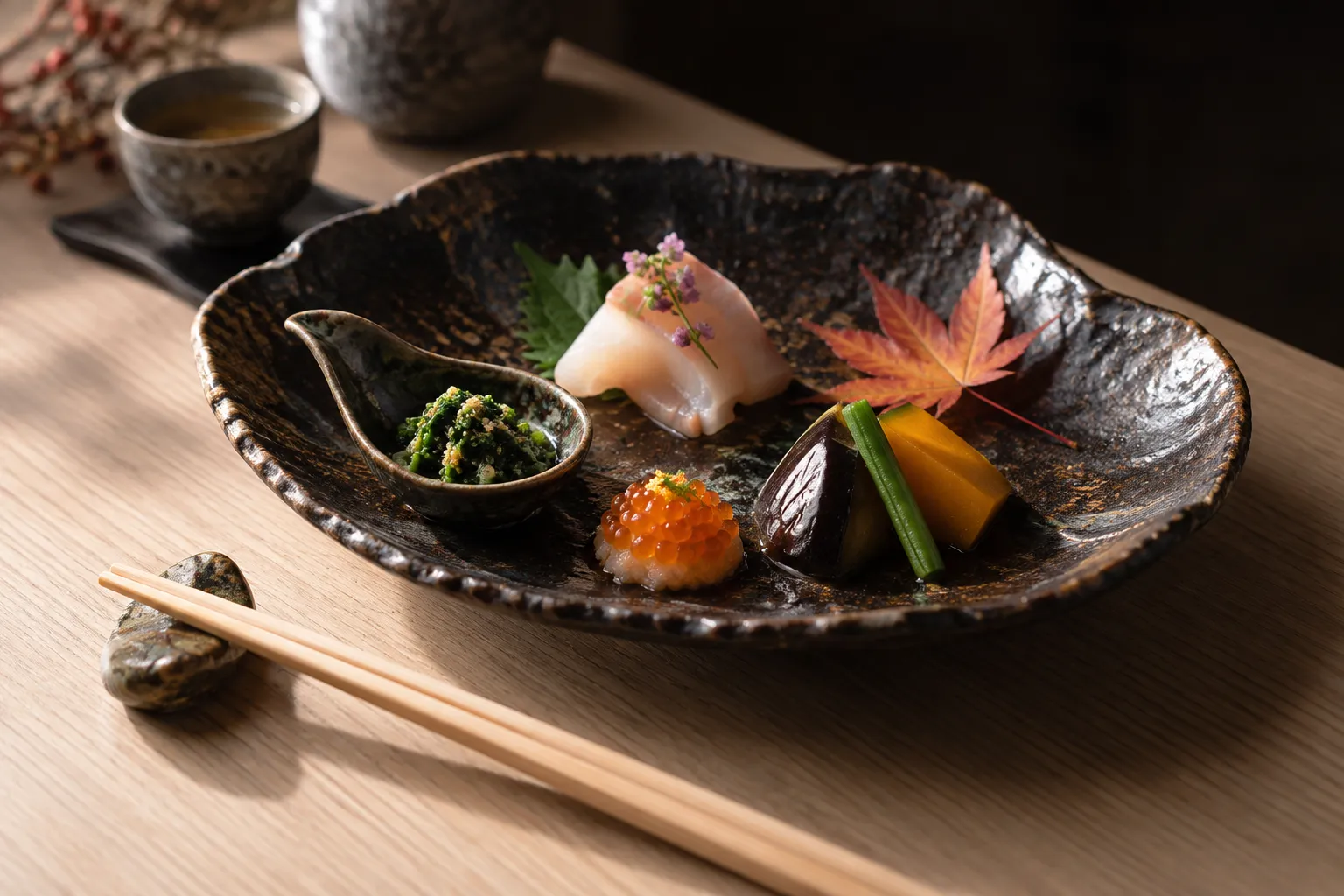
A traditional kaiseki menu moves through a defined progression: a seasonal opener, a clear soup, sashimi, something grilled, something simmered, something fried, a rice course, and so on. Each course has a job, and the pleasure of the form comes from watching a kitchen solve the same set of problems differently across a year.
The modern part at n/naka is what goes into that structure. Nakayama uses the produce of Southern California — much of it from a garden the restaurant grows itself — and allows in techniques and ingredients that a Kyoto kaiseki kitchen would not. There is a course, traditionally slotted where the chef is free to do whatever they like, that is often pasta. Purists occasionally object. The form has always allowed for exactly that.
How the evening runs
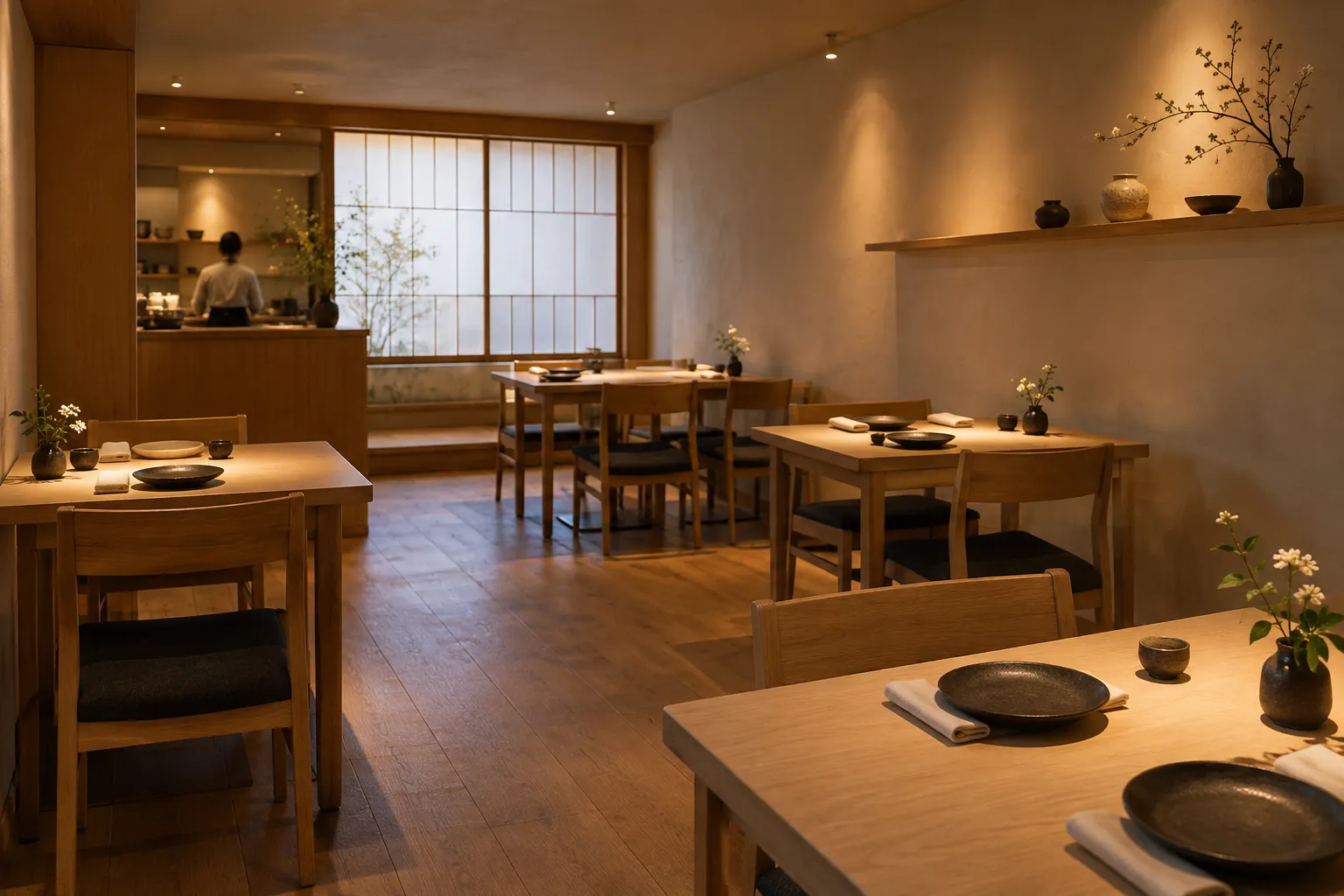
It is a long set menu — thirteen or so courses — over roughly two and a half to three hours, in a small room with a handful of tables. There is a vegetarian version of the full menu, which is not a substitution exercise but a separately constructed sequence, and it is one of the better vegetarian tasting menus in the country.
Pacing is deliberate and quiet. The room is not loud, the service is precise without being stiff, and there is no performance. If you have been to tasting menus where the theatre is the product, this is the opposite of that.
The reservation is the hard part
This is the single most important practical fact. Reservations release in blocks — historically a month at a time, at a set time on a set day — and they are taken within minutes. That means booking is not something you do when you decide to go; it is something you diarise and act on the moment the window opens.
Check the restaurant's current release schedule rather than relying on what somebody told you, because the mechanism has changed over the years. Cancellations do surface closer to the date and are worth watching for. And be aware there is a cancellation policy with real teeth attached to a booking this scarce.
n/soto next door
Nakayama and her partner Carole Iida-Nakayama opened a second, more casual restaurant nearby serving Japanese comfort cooking à la carte rather than a set menu. It is a genuinely good restaurant in its own right and it is the answer for anyone who wants this kitchen's sensibility without the calendar exercise and the cost.
If you have tried and failed to book the main room, go there instead rather than treating the trip as wasted. It is a considerably easier reservation and a much shorter evening.
Where it is
Palms is a quiet residential stretch of West Los Angeles between Culver City and the 10, and the restaurant is a small, unshowy building on a commercial street with almost nothing announcing it. That anonymity is deliberate and it is part of the experience — you arrive at what looks like nothing in particular.
There is street parking in the surrounding blocks and it is manageable by Los Angeles standards. Culver City's restaurants and bars are a few minutes away if you want somewhere to go before or after, which given the length of the meal you probably will not.
What it costs, and the vegetarian question
This is one of the more expensive meals in Los Angeles and the price is per person before drinks, service or the cancellation deposit. It sits in the same band as the city's other long-form tasting menus. What is unusual is the vegetarian menu, which is priced the same and is built as its own thirteen-course sequence rather than as the standard menu with the fish taken out.
That distinction is worth spelling out because it almost never holds true elsewhere. A vegetarian at most tasting-menu restaurants eats a diminished version of what everybody else is having. Here they eat a menu that was designed, and the fact that a kaiseki kitchen — a form built substantially around fish — went to that trouble is the clearest signal of what the restaurant is about.
How the room feels
Small, low-lit, quiet and unhurried. There is no open kitchen theatre, no music competing with conversation, and no sense of the room being turned. You are given the table for the length of the meal and the pacing is set to fill it. For a certain kind of evening — an anniversary, a long conversation, a meal you want to remember in order — that is exactly right.
For a certain other kind of evening it is too much. Three hours is three hours, and if anybody at the table is likely to be restless after ninety minutes, this is the wrong booking to have fought so hard for.
Chef's Table and what it changed
Nakayama appeared in an episode of a widely watched documentary series about chefs, and the effect on the restaurant's reservation book was immediate and permanent. It is worth knowing because it explains the booking scarcity better than the food alone does — this is a small room with a global audience, and the mismatch between those two things is the entire difficulty.
It also means a share of the room on any night has travelled specifically. That is not a criticism; it is context for why the atmosphere is attentive and slightly formal rather than casual.
Practical notes
n/naka is in Palms, West Los Angeles, and has served modern kaiseki since 2011 under Niki Nakayama. It is a set menu of roughly thirteen courses over two and a half to three hours, with a fully separate vegetarian version rather than a substituted one. Reservations release in blocks on a schedule and go within minutes — check the current mechanism and diarise it. Cancellations appear closer to the date. A cancellation policy applies. The sibling restaurant nearby serves à la carte Japanese comfort food and is a far easier booking. Street parking in the surrounding residential blocks is manageable.
Tags: #LosAngeles #nnaka #Kaiseki #BestRestaurantsNearMe #NikiNakayama #MichelinStar #JapaneseFood #Palms #LADining #TastingMenu #WeekendPlans #CulverCity #LAEats #FineDiningLA
Please drink responsibly. Must be of legal drinking age.
All trademarks are the property of their respective owners.
Ask Karpo first
Want to know when the next reservation block opens, whether any cancellations have surfaced and whether the sibling restaurant has space tonight instead? Ask Karpo for a live read on availability, the release schedule, and a Culver City plan if the answer is no.