There is a specific way that a South Beach dinner goes wrong, and it is not the food or the bill. It is that at nine o'clock the music goes up, the room fills, and the two of you spend the next hour leaning across the table saying 'what?'. A great many restaurants on this island are designed as high-energy rooms - hard surfaces, loud music, close tables, an evening that is meant to feel like the beginning of a night out. That is a legitimate thing to be, and it is the opposite of what most people want from a date.
Noise levels on the beach change sharply by the hour and by the night, and the same room is two different places at seven and at ten. Tell Karpo when you are booking and Karpo can steer you.
Reading a room's acoustics before you go
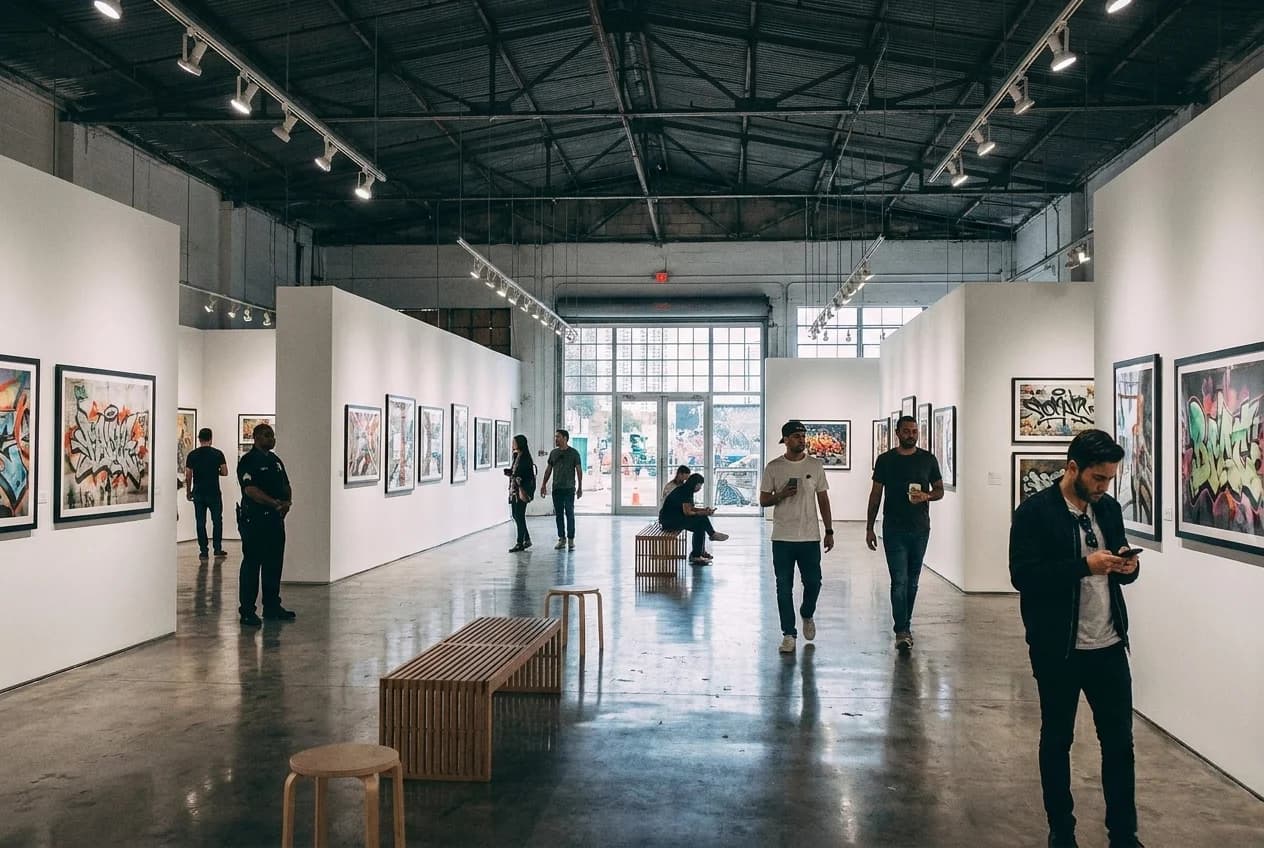
Photographs tell you more than reviews do. Look at the ceiling: exposed concrete, ducting or a hard flat surface means sound has nowhere to go, whereas fabric, acoustic panels, timber slats or a low irregular ceiling means someone thought about it. Look at the floor: bare tile and polished concrete are loud, carpet and rugs are not, and Miami almost never uses carpet. Look at the walls: glass and render reflect, banquettes and drapes absorb.
Then look at the table spacing and count the covers. A room with sixty seats in a space that could comfortably hold forty will be loud regardless of its materials, because the dominant noise source in any restaurant is other people talking. And check whether there is a DJ booth in any photograph. A DJ booth is not a warning sign about the food; it is a definitive statement about the volume after nine.
The formats that reliably work
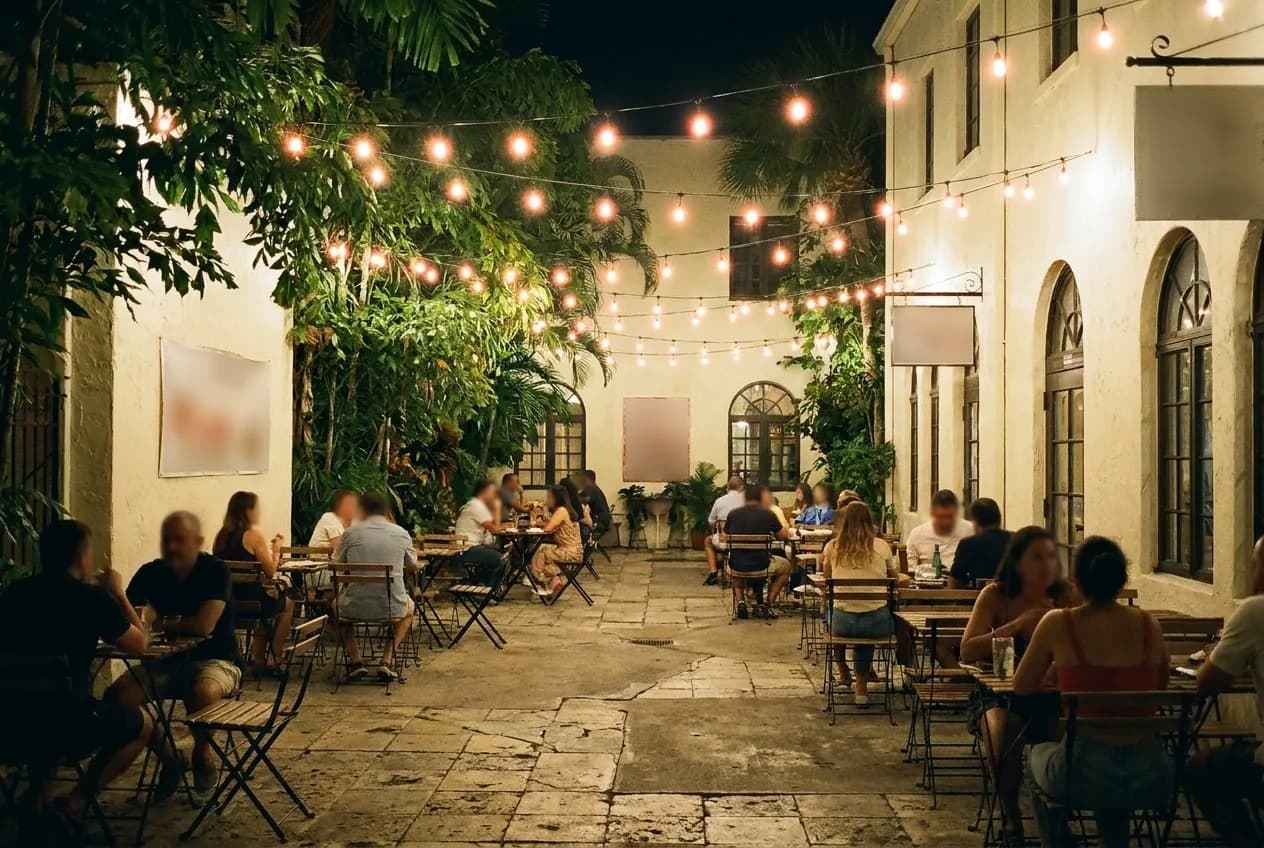
Outdoor courtyards are the strongest option on Miami Beach and the island has a lot of them, because the art deco building stock is full of small interior spaces. Sound dissipates upward, there is no ceiling to bounce it back, and the ambient noise floor is lower. Espanola Way - the pedestrianised block between Washington and Drexel - is essentially a street of these, and it is the single best answer to this whole problem.
The second reliable format is the hotel dining room. The historic Collins Avenue and Ocean Drive properties mostly have ground-floor restaurants that are quieter than standalone rooms, partly because they are designed for guests rather than for a scene and partly because hotels care about noise travelling upstairs. You do not need to be staying there. The third is any room whose main trade is lunch, since it will not have been designed around a late-evening energy curve.
Timing, which is half the answer
The same restaurant is two different venues at seven-thirty and at ten. South Beach's dinner crush runs from about eight to half past nine, and the music volume climbs with the occupancy. A booking at seven means a room that is a third full, staff who are not yet stretched, and a conversation you can have at a normal volume. It is an unfashionably early time to eat here and it solves the problem almost entirely.
The other end works too but less reliably: after about half past ten the first sitting has cleared and some rooms quieten, while others have by then fully converted into bars. Which of those happens is specific to the venue and is the single most useful thing to ask when you book. Sunday to Wednesday, the whole issue largely disappears - the island is much quieter and almost any room will do.
The table to ask for
When you book, ask for a corner or a banquette against a wall, and away from the bar, the kitchen pass and any speaker. This is a completely ordinary request and hosts field it constantly; the phrase that works is 'somewhere quieter, we want to be able to talk'. Do not ask for a window on Ocean Drive unless you want to be part of the street, which is loud in a different way.
Avoid the middle of any room, which is acoustically the worst seat in almost every restaurant, and avoid tables directly under a hard ceiling void. If you arrive and the table you are given is impossible, ask to move before you sit down rather than after ordering - it is much easier for everyone at that point and nobody minds.
Where else on the beach
The geography helps. Ocean Drive is the loudest strip on the island and its business model is built around people who will be here once; the automatic service charge is printed at the bottom of the menu and is worth reading before you order. One and two blocks west of Washington Avenue, the character changes completely: this is where people who work on the beach eat, prices are ordinary, and the rooms are quieter because they are not selling an atmosphere.
North of the main strip, Mid-Beach and the Collins corridor above about 40th Street are calmer again, and Sunset Harbour on the western side of the island is the most residential and most conversation-friendly pocket on Miami Beach. If the evening's priority is genuinely hearing each other, Sunset Harbour is the answer more often than South Beach proper is.
Practical notes
Book for seven or seven-thirty rather than eight-thirty; it solves most of the problem. Ask for a corner or banquette away from the bar and the speakers, and ask what the room is like after nine. Prefer courtyards, hotel dining rooms and lunch-oriented kitchens. Espanola Way and Sunset Harbour are the two most reliable pockets. Read the bottom of any Ocean Drive menu for the service charge. Sunday to Wednesday the whole island is quieter and none of this matters much. Parking is a garage decision - the municipal ones are cheaper than valet and a five-minute walk. And if the table is wrong, move before you order.
Tags: #BestRestaurantsNearMe #SouthBeach #MiamiBeach #DateNight #EspanolaWay #SunsetHarbour #CollinsAvenue #QuietRestaurants #WeekendPlans #MiamiEats #Acoustics #OceanDrive #MidBeach #MiamiDining
All trademarks are the property of their respective owners.
Ask Karpo first
Nobody wants to spend a dinner shouting, and no listing site records how loud a room gets at nine. Ask Karpo which South Beach rooms near you stay conversational, which have courtyards, and what time to book so you are eating before the music comes up.