San Francisco has fewer ramen shops than a city of its size and its Japanese-American history ought to have, and the reason is mostly rent — a ramen shop needs volume and long hours, and the economics are hostile here. The upshot is that the best ramen in San Francisco is concentrated in a smallish number of places, they are all busy, and choosing between them is entirely a question of which broth you want rather than which one is best.
Most of these have a queue by half past six and stop seating early. Ask Karpo where the wait is shortest right now.
Start with the broth, not the shop
Ramen is categorised by broth and by seasoning, and getting this straight makes every menu in the city legible. Tonkotsu is the pork-bone broth boiled hard for many hours until it emulsifies into something opaque and rich. Shio is salt-seasoned and clear, usually chicken or seafood based, and is the hardest to hide behind. Shoyu is soy-seasoned, darker and more savoury. Miso is the northern style, heavier and often served with corn and butter.
Most shops in this city do one of these properly and the rest as an afterthought. Ordering the house speciality rather than your usual preference is the single biggest improvement available, and any shop will tell you what that is if asked.
Japantown and the western neighbourhoods
Japantown is the historical centre and still has the highest concentration, with several shops inside and around the Japan Center malls. It is worth understanding that this neighbourhood is a survivor — the community here was forcibly removed and interned during the Second World War and the district was substantially destroyed by redevelopment afterwards. What remains is one of only three Japantowns left in the entire country.
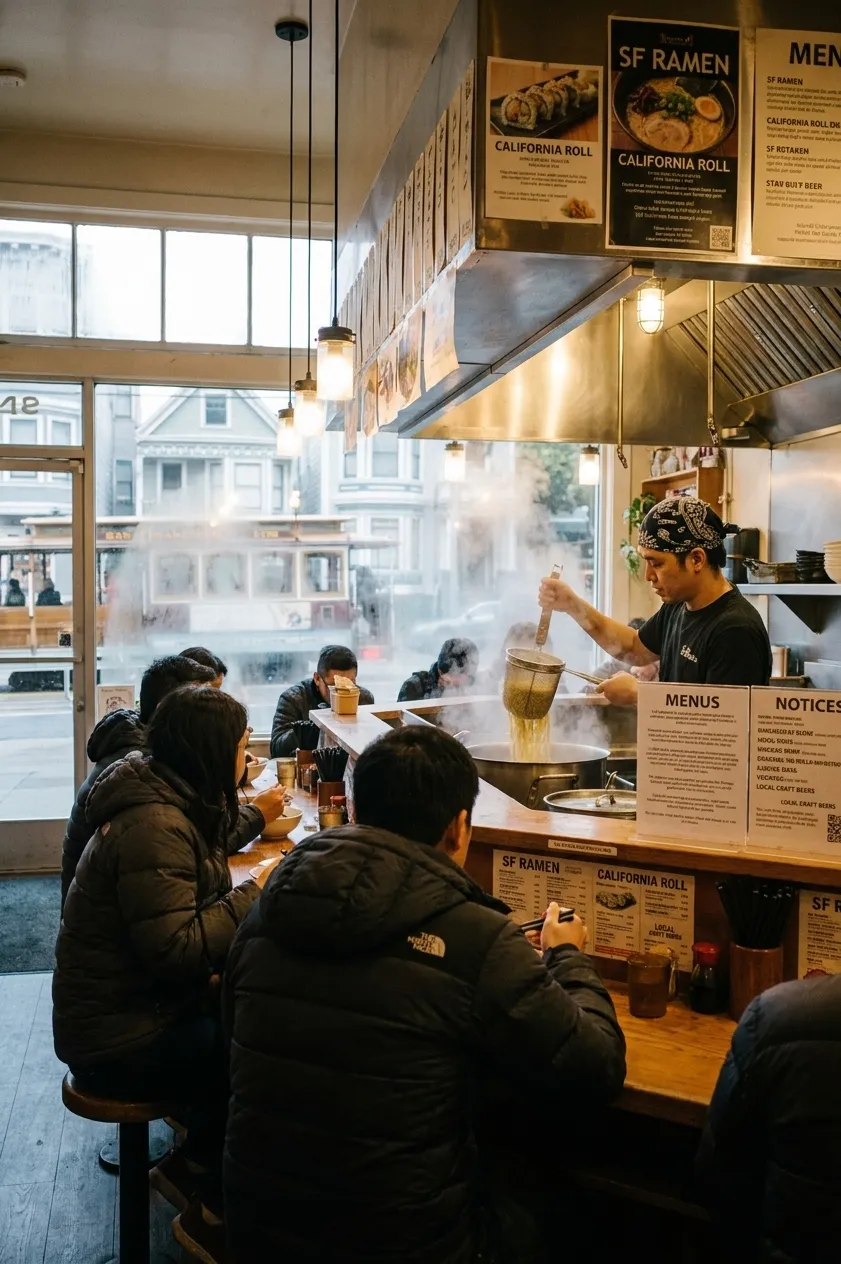
The Inner Richmond along Clement and Geary is the other cluster and is the better one for value. Rents are lower, the rooms are smaller, and several shops there are doing serious work with no queue at all on a weeknight. If you want good ramen without waiting, that is where to go.
The queue question
The famous shops in this city run genuine waits at peak times, and it is worth being clear about when a wait is justified. Ramen does not improve with anticipation and the difference between an excellent bowl and a very good one is smaller than an hour of standing on a sidewalk. Going at half past five, or at half past two on a weekend, gets you the same bowl with no wait at all.
The exception is any shop making its own noodles on site, which is a real and visible difference in texture and is worth some inconvenience. Fresh noodles have a chew and a surface that hold the broth differently, and a shop that has invested in a noodle machine has made a commitment worth respecting. Most will say so on the menu, and the ones that do not will confirm it if asked.
Vegan and vegetarian, which is unusually good here
San Francisco does vegan ramen better than most cities, partly because the demand is real and partly because the technique for building a rich broth without animal products — roasted vegetables, kombu, dried mushroom, sesame and nut pastes — suits the local cooking culture. Several shops offer a genuine vegan bowl rather than a token one, and a couple are entirely plant-based, which in a category built on pork bones is a genuine achievement rather than an accommodation.
The tell for a serious vegan bowl is whether the broth has body. A thin, clear vegetable stock with noodles in it is soup. A properly built vegan tonkotsu-style broth is opaque and coats the spoon, and it takes as long to make as the pork version.
The tsukemen and mazemen alternatives
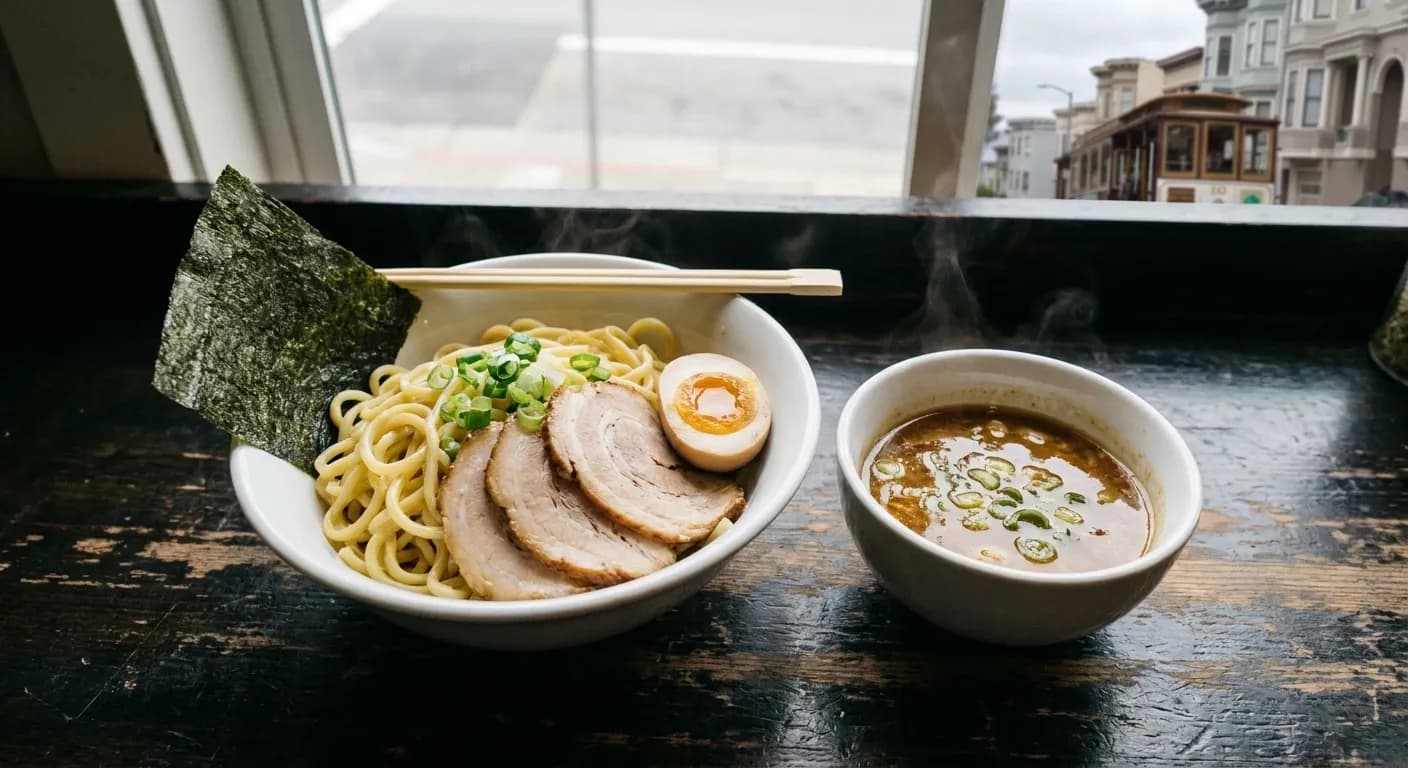
Two adjacent formats are worth knowing about and are under-ordered here. Tsukemen serves the noodles cold and dry alongside a small bowl of very concentrated broth for dipping, which keeps the noodles at their best texture from first bite to last and gives you considerably more food for the money. Mazemen has no broth at all — a thick sauce tossed through the noodles with a raw egg yolk, minced pork and aromatics.
Both are what ramen cooks tend to order on their own time, and both are better propositions in summer than a bowl of boiling pork broth. If a shop offers either, it is a sign of confidence, because there is nowhere to hide when the noodle itself is the main event rather than a vehicle for the broth.
How to order well
Ask for the noodles firm if you are a slow eater, because they keep cooking in the bowl. Take the extra egg — the marinated soft-boiled egg is where a lot of the craft sits and it is usually a couple of dollars. Skip the extra chashu unless you are very hungry, since a standard bowl is already balanced and the additions push it toward heaviness.
And eat it immediately. Ramen has a window of about eight minutes before the noodles soften past their best, which is why the counter seat directly in front of the kitchen is the correct place to sit and why takeaway ramen is a compromise no matter how well the shop packages it. Shops that do offer takeaway usually pack the noodles and broth separately, and following their reheating instructions rather than improvising makes a real difference.
Tags: #SanFrancisco #Ramen #BestRamenSF #Japantown #InnerRichmond #Tonkotsu #ShioRamen #VeganRamen #NoodleShop #SFEats #ClementStreet #BayArea #FoodGuide
All trademarks are the property of their respective owners.
Ask Karpo first
Ask Karpo which ramen shops near you in San Francisco are open now, what broth they specialise in, and how long the wait is at this hour.