Los Angeles had serious ramen before almost anywhere else in the country, for the straightforward reason that it has the largest Japanese-American population on the mainland and direct commercial ties to Japan going back a century. Several of the significant Japanese chains opened American branches here first. The result is a scene deep enough that the interesting question is not where to find a good bowl - there are hundreds - but which of four fairly different soups you are actually in the mood for, and which neighbourhood does it.
Ramen counters here keep unusual hours and the late ones are not the famous ones, which is precisely the information you need at midnight. Tell Karpo the time and where you are, and it will find a counter still serving.
Tonkotsu: the default, and the heaviest
Pork bones boiled hard for twelve hours or more until the collagen and fat emulsify into an opaque, almost creamy broth, with thin firm noodles to stand up to it. This is what most people mean by ramen and it is what the chains built the Los Angeles scene on.
It is also the most fatiguing bowl on the list and the least suited to a warm evening, which in this city is most of them. If you have had tonkotsu three times and found it heavy, the answer is not a better tonkotsu shop.
Shoyu and shio are the ones to try next
Shoyu is a clear chicken-and-dashi broth seasoned with soy - the Tokyo style, lighter and more savoury, usually with wavy medium noodles. Shio is the same idea seasoned with salt, and it is the most delicate of the four, which means a thin broth has nowhere to hide.
These are the bowls to order at a shop you are trying to judge. Tonkotsu can carry a mediocre kitchen on richness alone; a shio bowl cannot. Fewer places put one on the menu and the ones that do are usually worth paying attention to.
Miso, and the two months it makes sense
The Sapporo style - fermented soybean paste stirred into a pork or chicken base, often with sweetcorn, butter and bean sprouts. It has the most going on of the four and is the most forgiving of a late appetite.
In Los Angeles this is a genuinely seasonal call. There are perhaps three months of the year when a bowl of miso ramen is the obviously right thing and nine when it is a choice you have to justify to yourself. The window opens around now, which is worth knowing.
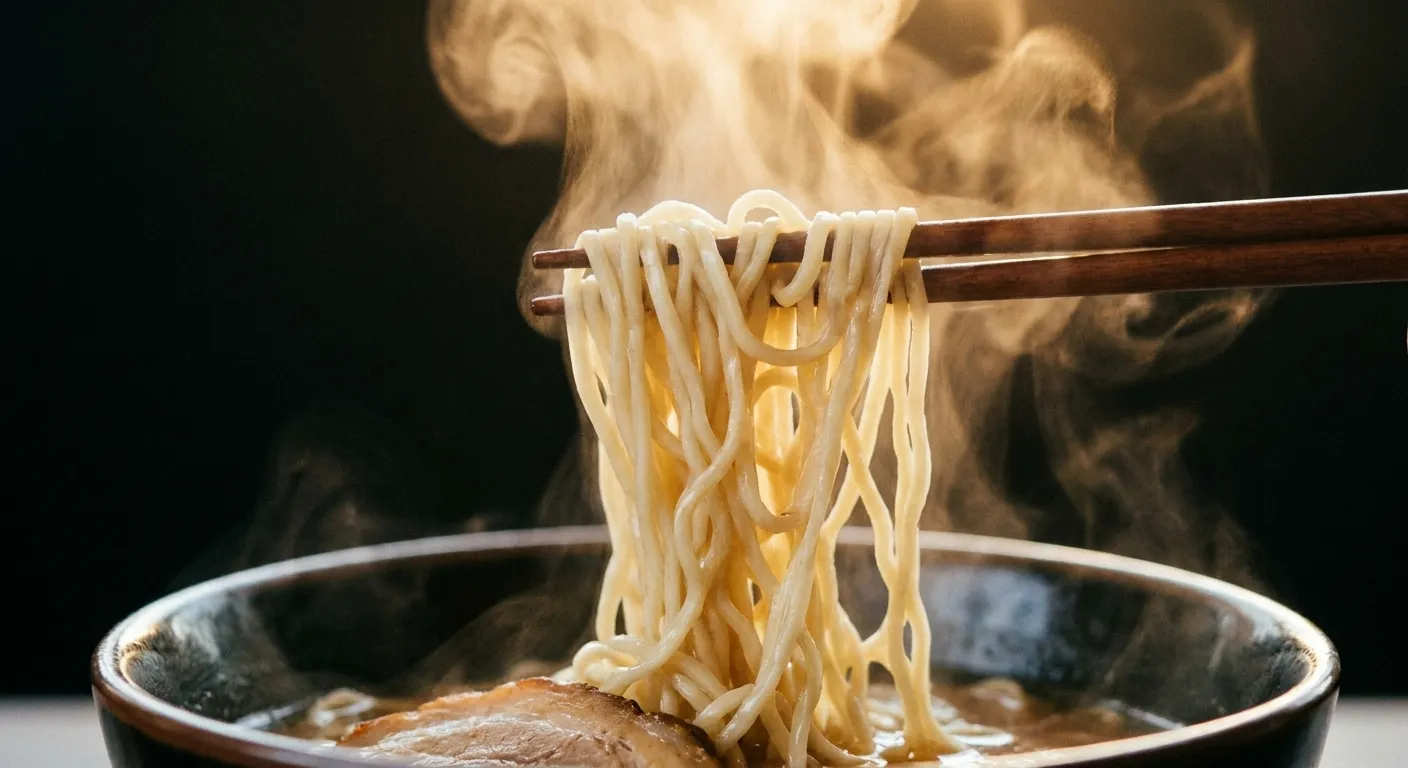
Three neighbourhoods, three characters
Little Tokyo downtown is the oldest and the most concentrated, with several counters within a couple of blocks and the strongest showing on the traditional styles. Sawtelle on the Westside is the densest per block and the most crowded, with the longest queues and the newest arrivals from Japan.
The South Bay - Torrance, Gardena - is where the largest Japanese-American community actually lives, and the ramen there is the least visited by outsiders and frequently the best value. It is also where you will find the regional specialists doing one style properly rather than four adequately.
The late-night map is a different map
Most of the well-known shops close by ten or eleven. The counters that serve past midnight are a largely separate set, and in this city they concentrate in Koreatown and the eastern edge of Little Tokyo rather than in Sawtelle, which shuts early.
Koreatown is the practical answer for anything after midnight. It has ramen counters, it does not close, and it is the one neighbourhood in Los Angeles where a one in the morning bowl of noodles is an ordinary rather than an ambitious request.
How to order and how to eat it
Ask for noodles firm - katame - if you eat slowly, because standard doneness goes soft in the broth before most people finish. Order the egg. Beyond that, extra chashu is worth it at a shop that torches its own and the rest of the add-ons are optional.
Then eat quickly and talk less. Ramen is a fifteen-minute dish that measurably deteriorates from the moment it lands as the noodles absorb broth and go slack. A bowl left for half an hour while you catch up with someone is a different and worse bowl - have the conversation before or after.
The queue question
Sawtelle in particular generates long waits at peak hours and the correlation between queue length and bowl quality in this city broke some time ago. A shop with an hour wait is not an hour better than one with none, and there is usually a very good alternative two blocks away with four people ahead of you.
The reliable way around it is timing rather than research. Two in the afternoon and after nine in the evening are both dramatically easier at almost every counter in the city, and neither requires giving up on the place you wanted.
What the discourse gets wrong
Two things get argued about far more than they deserve. Whether a shop makes its own noodles sounds decisive and mostly is not - several excellent counters in this city buy from the same small number of suppliers, and the broth and the tare are where the actual differences live.
The other is the assumption that a Japanese-owned shop is automatically better than one that is not. In a city with this much depth that has not been reliably true for a decade, and some of the most interesting bowls here are being made by cooks who came to it sideways. Judge the broth.
Tags: #BestRamenInLosAngeles #Tonkotsu #LateNightLA #LAFood #RamenNearMe #LittleTokyo #Sawtelle #Koreatown #LosAngeles #LANights
All trademarks are the property of their respective owners.
Ask Karpo first
Four styles, three neighbourhoods, and a late-night map that looks nothing like the daytime one. Ask Karpo which counters near you are open at the hour you got hungry.