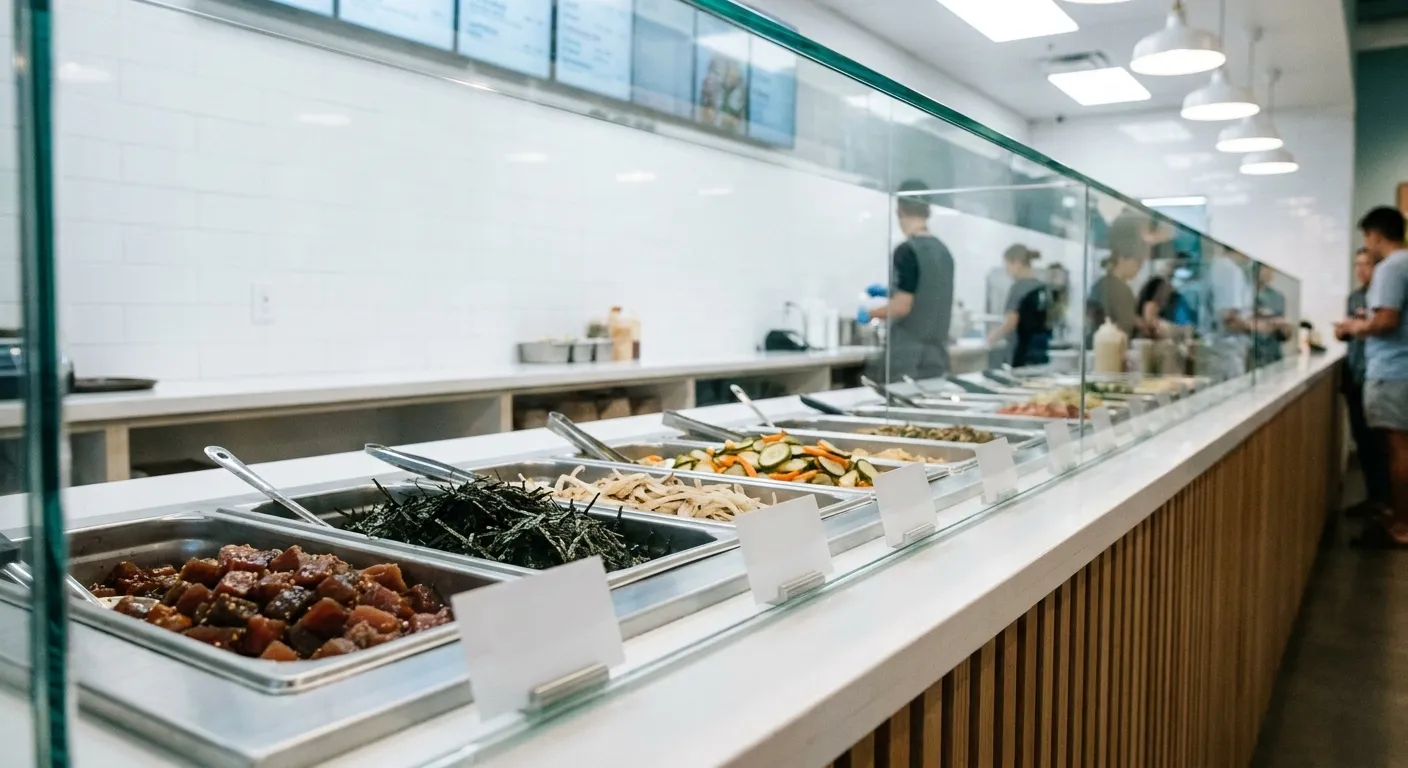
Poke arrived in New York around 2016 as a Hawaiian dish and was digested within about eighteen months into something else entirely: a build-your-own counter where you point at twenty toppings and someone assembles a bowl. That format is fine. It is also not really poke, and it is why a lot of people have decided they do not like the dish when what they actually do not like is a cold rice salad with mango and sriracha mayonnaise on it. The distinction is easy to see once you know what to look at.
The difference between a counter that cuts its fish that morning and one that opens a bag is not visible from the street or from a photo of the menu. Tell Karpo roughly where you are and it will steer you toward the places actually worth the twenty dollars.
The original is a marinated dish, not an assembled one
Poke in Hawaii means cut fish that has been sitting in something - shoyu, sesame oil, limu seaweed, sweet onion, a little chilli - for long enough to take it on. It is sold by weight out of a case, often at a supermarket, and it is eaten as is or over rice. The fish is dressed before you arrive, which is the entire technical point.
The New York build-your-own model inverts this. Undressed cubes sit in a cold well, you choose a sauce, the sauce goes on at the end and never penetrates anything. What you get is raw fish with dressing on it rather than marinated fish, and the texture difference is immediately obvious once you have had the other version.
Count the options - fewer is better
This is the single most reliable signal on the street. A counter offering three or four fixed preparations - shoyu ahi, spicy ahi, maybe a salmon and an octopus - is making poke and pre-mixing it in batches. A counter offering twenty-six toppings across four categories is running a Chipotle model, and the fish is a component rather than the dish.
The corollary is that a short menu is not a limitation, it is the kitchen telling you it makes decisions. If you can order avocado, edamame, corn, mango, jalapeño, crispy onions and three sauces on the same bowl, nobody in the building has an opinion about what the bowl should taste like.
Look at the fish itself
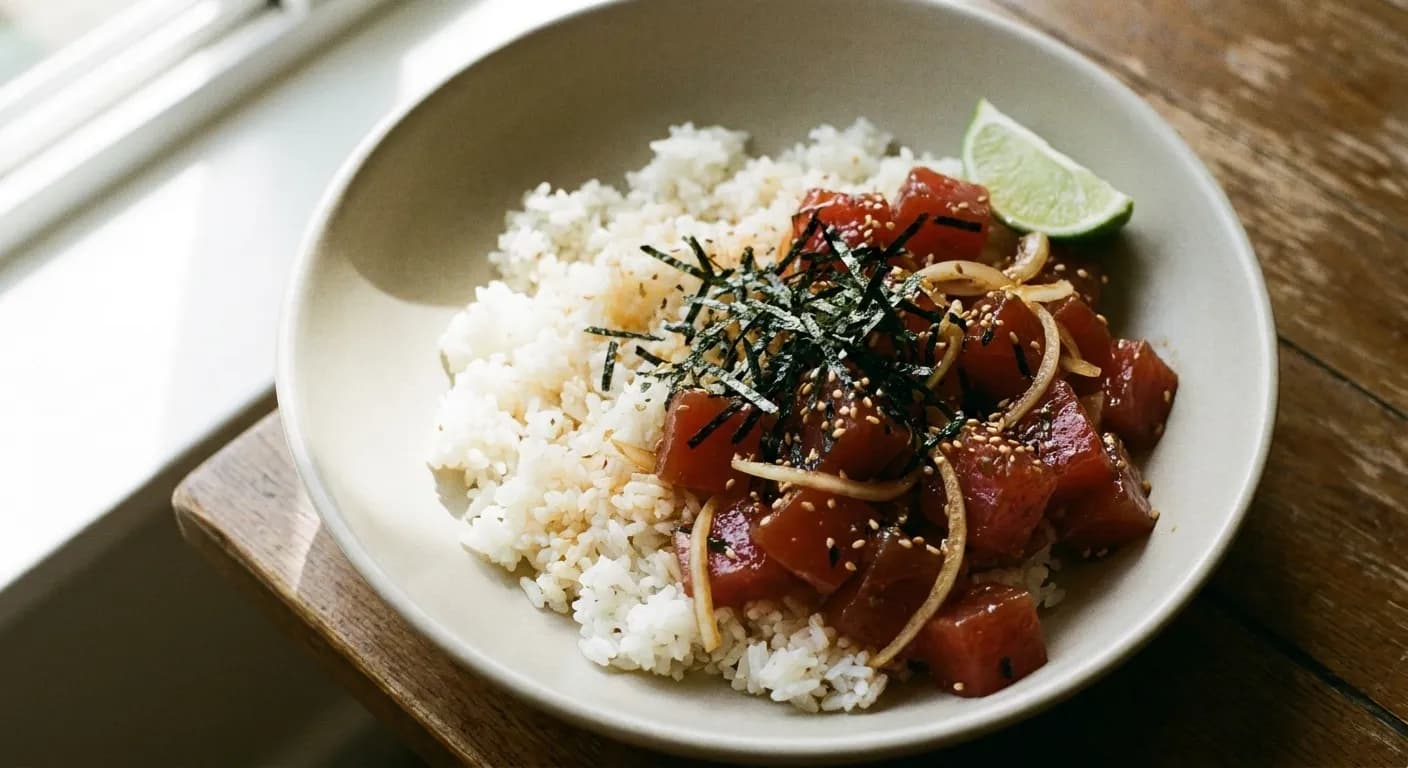
Cubes should be roughly two centimetres and cut cleanly with visible flat faces, not torn or ragged. Ahi should be a deep translucent red that goes darker at the edges where the marinade has worked in, not a uniform bright pink - uniform bright pink usually means treated with carbon monoxide to hold colour, which is legal, common and tells you the fish is older than it looks.
Salmon is more forgiving and is the safer order at a place you do not know. Anything described as a spicy mix that has been bound into a paste with mayonnaise is hiding texture, and while it can be very good, it is not something you can judge by eye.
The rice matters more than people expect
A proper bowl uses sushi rice - short grain, seasoned with vinegar and sugar, served warm or at room temperature. The warm rice against cold fish is a large part of why the dish works. A great many New York counters use unseasoned brown rice or cold white rice straight from a fridge because it holds better through a lunch rush.
Ask, or look at whether there is a steamer behind the counter. Cold hard rice will sink an otherwise decent bowl, and it is the most common single failure in the city.
Where the honest versions are
The Hawaiian-run places are scattered and few, mostly in the East Village and pockets of Brooklyn, and they are the ones with the short menus and the case rather than the assembly line. They tend not to be marketed as healthy, which is itself a useful signal.
The other honest category is the Japanese counters that sell chirashi and kaisendon - a bowl of rice with cut raw fish arranged on top. It is not poke and does not claim to be, but if what you actually want is very good raw fish over properly seasoned rice, that is where it is, and often for the same money.
How to order at a build-your-own without ruining it
If you are at an assembly counter anyway, restraint is the whole technique. One fish, sushi rice, shoyu-based sauce, seaweed salad, sliced sweet onion, scallion, sesame. Stop there. That approximates the original and costs the same as the version with mango and crispy garlic on it.
Skip the mayonnaise-based sauces unless you have decided that is the meal you want, and skip anything crunchy dumped on top at the end - it goes soft in four minutes and it is there for the photograph rather than the bowl.
A seasonal note
Poke is a warm-weather order and September is the last comfortable month for it in New York. The dish is served cold, it is best eaten outside, and it stops making much sense somewhere around the first properly cold week in October.
It also happens to be an unusually good lunch to carry to a park or a waterfront, which is the way it is eaten in Hawaii and not the way it is eaten in most Manhattan offices. Worth doing at least once while the weather still allows it.
Tags: #BestPokeBowlsNYC #PokeNearMe #NewYorkCity #NYCFood #HawaiianFood #PokeBowl #NYCLunch #RawFish #EastVillage #NYCEats
All trademarks are the property of their respective owners.
Ask Karpo first
Poke is easy to sell and hard to do properly, and the difference is mostly invisible from the menu. Ask Karpo which counters near you actually marinate their fish and season their rice, and skip the assembly lines.