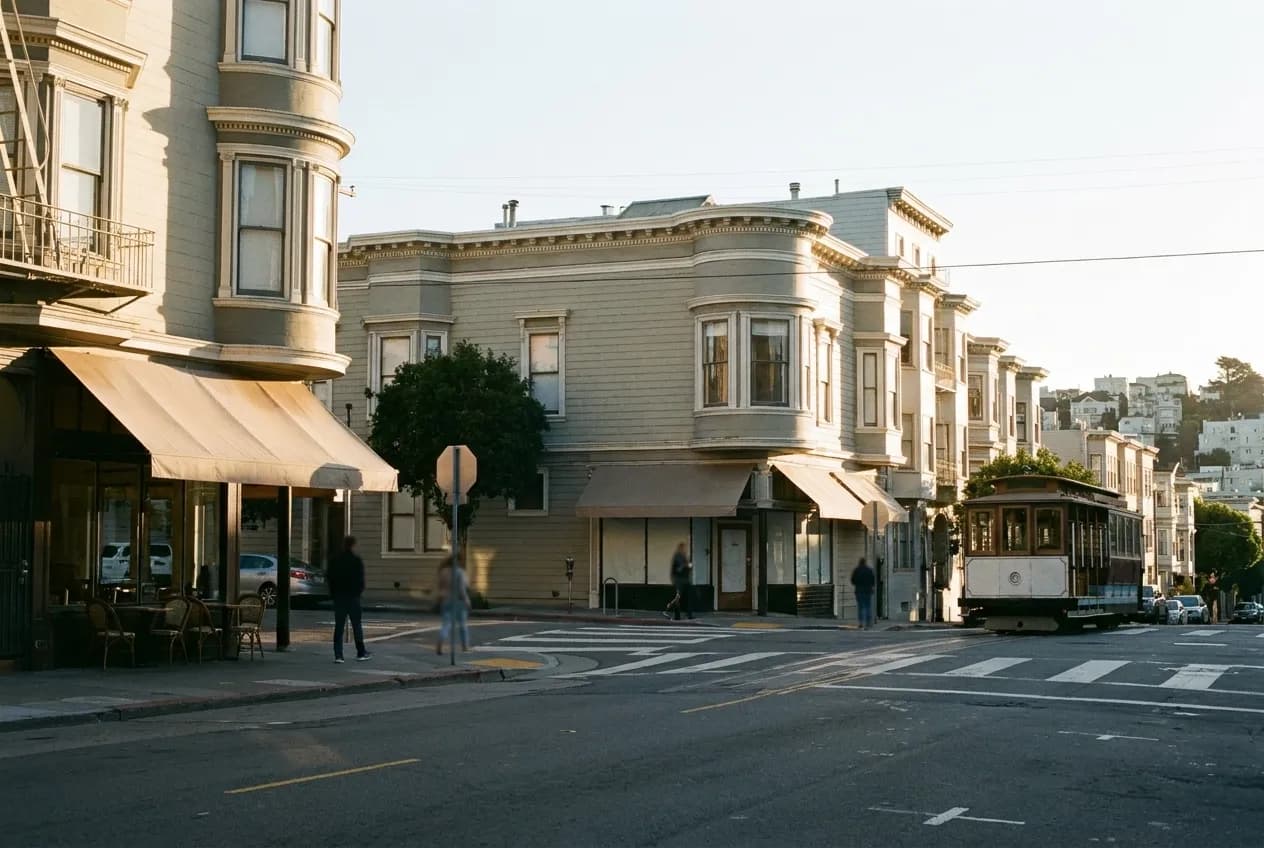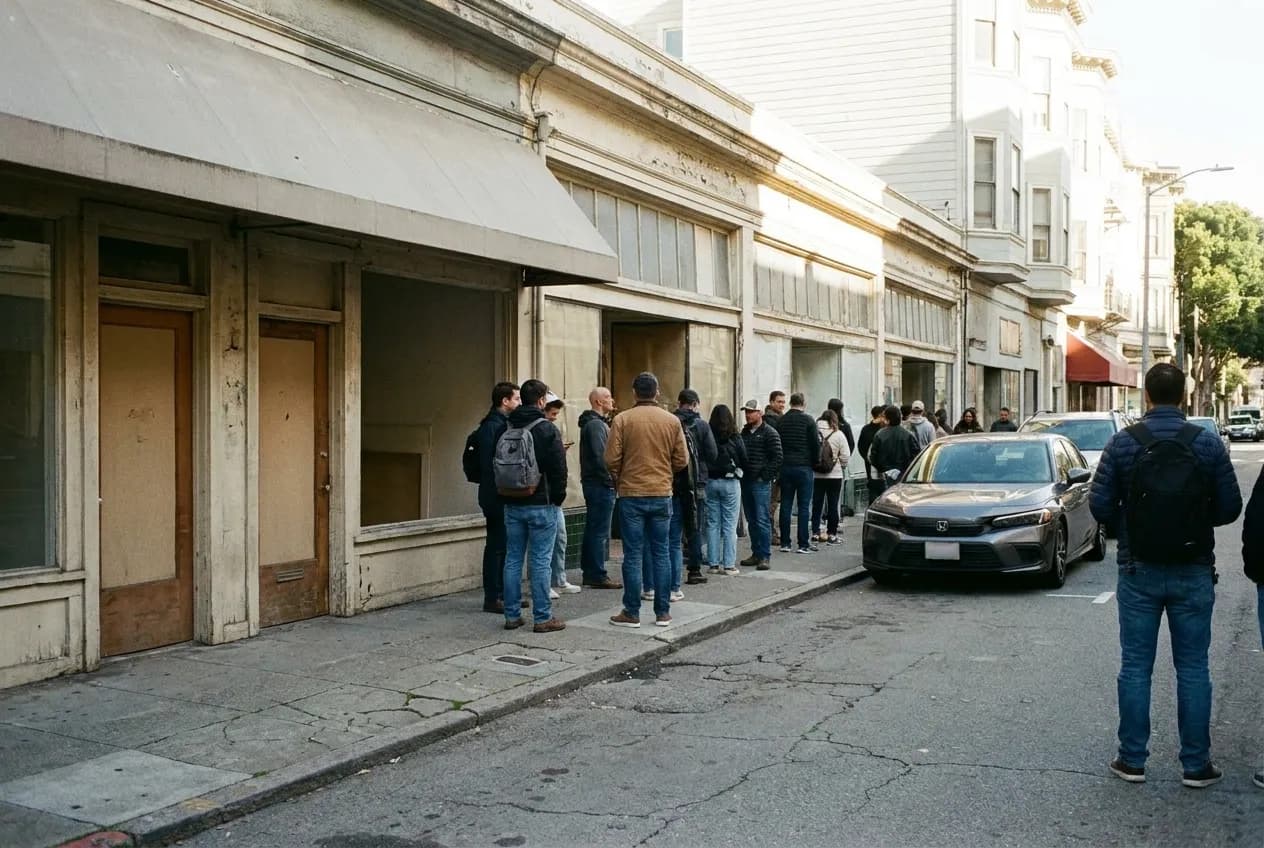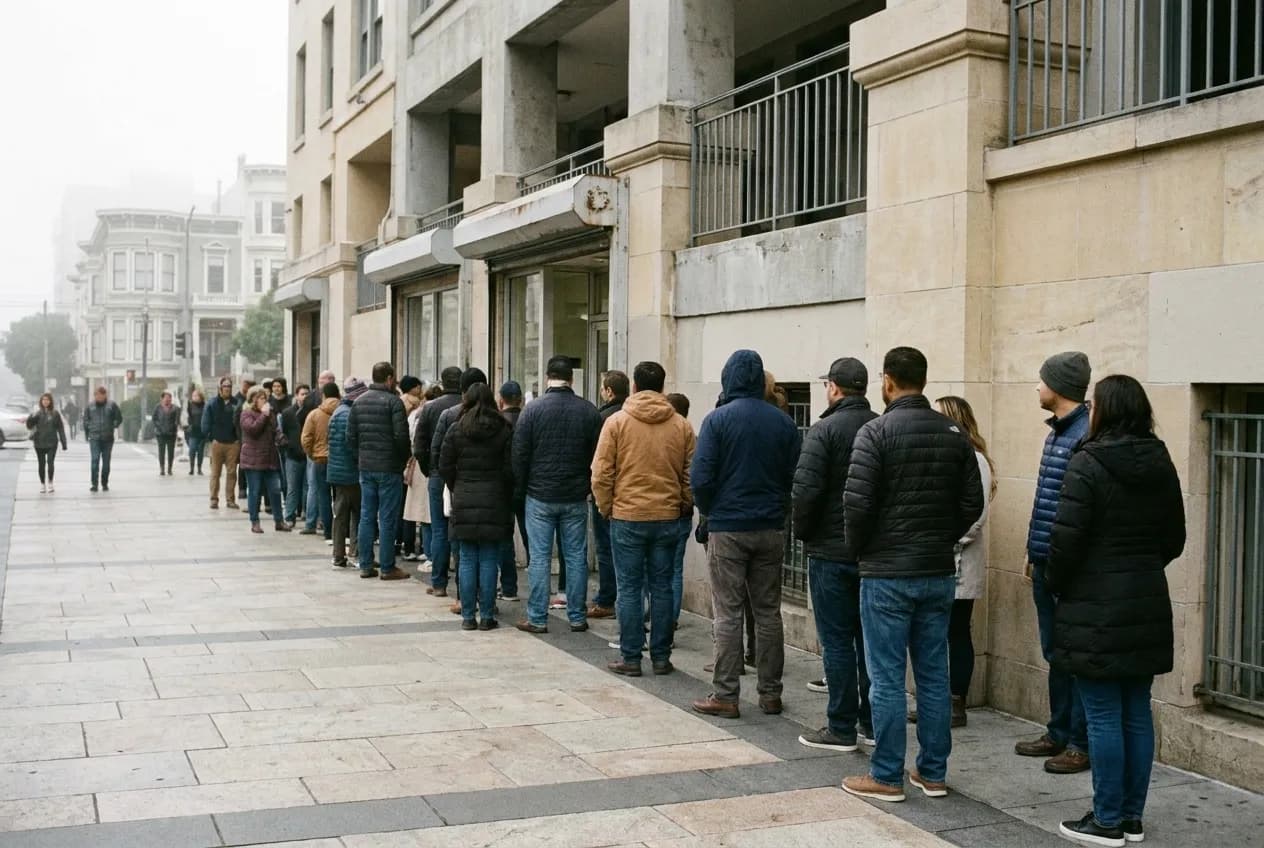
San Francisco has a peculiar relationship with reservations. A number of its best and most characteristic rooms have refused to take them for decades, and a further set have adopted no-booking policies more recently as a matter of principle. The result is a city with an unusual amount of very good food behind a queue. The queues are not all the same, though, and treating them as one phenomenon is why people end up standing for two hours somewhere they could have walked into at a different time.
Every one of these queues has a specific best hour, and several of these places close in the afternoon rather than the evening. Tell Karpo your dates and let it slot the queue-based meals into the right parts of the day.
Queue type one: the counter that closes in the afternoon
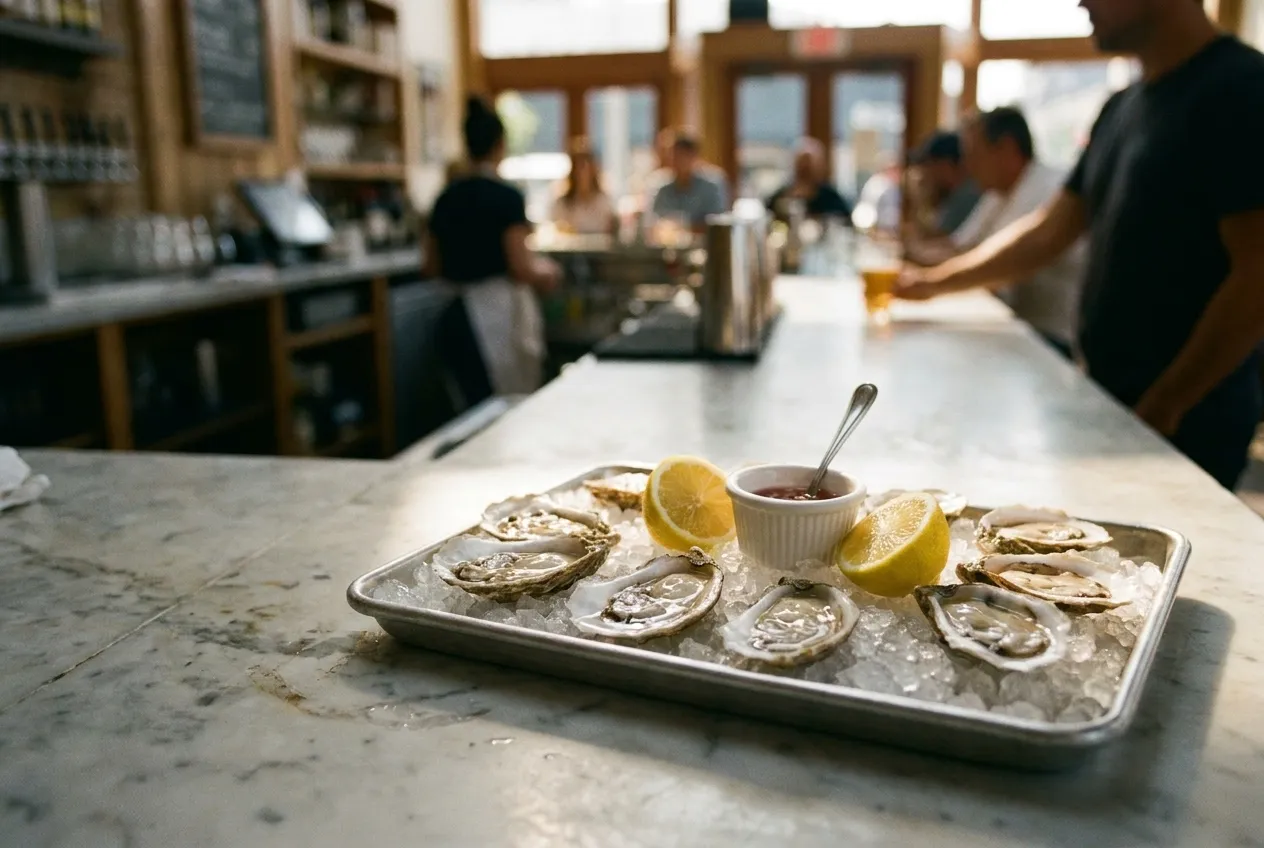
Swan Oyster Depot on Polk Street is the emblem and the strictest. It is an eighteen-stool counter that has been running since 1912, it serves oysters, crab, smoked fish, chowder and very little else, and it closes in the early afternoon rather than the evening. There is no table, no booking, no ordering ahead. You stand on the pavement until a stool frees up.
The strategy is entirely about arrival time. Before it opens, or within the first half hour, and you will be seated quickly. By late morning the queue is substantial. Turning up at one o'clock means a long wait for a place that will close before you have finished thinking about it. This is a lunch, it has to be planned as a lunch, and going alone or as a pair is dramatically faster than going as a four.
Queue type two: the bakery line that never ends
Tartine on Guerrero Street in the Mission has had a permanent queue for the better part of two decades. It is not a wait for a table, it is a wait for a counter, and it moves steadily rather than stalling - which makes it far less painful than it looks from the end of it. Twenty to forty minutes is typical, and the line is outdoors, so the weather matters more than the length.
The specific thing worth knowing is that the country loaves come out on a schedule during the afternoon and sell out, so a bread trip and a pastry trip are two different visits at two different times. If you want pastry and coffee, go early and the queue is shortest. If you want a loaf, find out when the bake lands and go then - arriving at a random hour and hoping is how people queue for thirty minutes and leave with a croissant they did not come for.
Queue type three: the room with a bar to wait in
House of Prime Rib on Van Ness is the classic version of a much more civilised system: it does take bookings, they are hard to get, and it holds a substantial bar area where walk-ins wait with a drink until a table frees. The wait is real but it is seated, warm and social rather than a pavement queue, which changes the experience entirely.
This model - book if you can, wait at the bar if you cannot - covers a large share of San Francisco's busiest restaurants, and the mistake people make is not asking. A room showing no availability online will very often seat two at the bar within half an hour on a weeknight. The question to ask is whether the bar is open seating and whether they take names for tables; the answers are frequently yes and yes.
Queue type four: the fast one that looks slow
Chinatown's dim sum counters and the Mission's taquerias both generate long-looking lines that move extremely quickly, because the transaction is thirty seconds. Good Mong Kok on Stockton Street can have twenty people outside and clear them in ten minutes. La Taqueria and El Farolito in the Mission behave the same way at peak.
The rule for these is not to be deterred by length. Count the people, not the metres - a counter queue of twenty is a ten-minute wait, whereas a table queue of twenty is ninety. If people are leaving with paper bags rather than being shown to seats, join it. This distinction is worth more than any individual recommendation in this article.
What the queue culture is actually for
It is worth saying why so many of these places behave this way, because it is not stubbornness. A no-booking policy means no-shows cost nothing, the room runs at full capacity, and access is distributed by willingness to wait rather than by who could get onto a booking site at ten in the morning six weeks ago. For small rooms with thin margins, it is a defensible commercial choice as well as a democratic one.
It also produces a specific kind of city where you can decide at eleven in the morning to eat somewhere excellent at one. That is genuinely rare and it is one of the better things about eating here. The trade is your time, and the whole skill is spending as little of it as possible by turning up at the right hour.
Practical notes
Swan Oyster Depot: lunch only, closes in the early afternoon, go at opening, and go as one or two rather than four. Tartine: the queue moves; go early for pastry, go at the bake for bread. House of Prime Rib and similar: book if possible, otherwise ask about bar seating and about leaving a name. Counter queues in Chinatown and the Mission move in minutes - do not be put off by length. Weeknights are dramatically easier than weekends everywhere. Bring a layer; several of these queues are outdoors and this city is cold in the wind. And send one person to hold a place while the others do something useful - nobody minds.
Tags: #BestPlacesToEatInSanFrancisco #SanFrancisco #SwanOysterDepot #Tartine #HouseOfPrimeRib #NoReservation #MissionDistrict #Chinatown #DimSum #WeekendPlans #SFEats #Queues #PolkStreet #GuerreroStreet
All trademarks are the property of their respective owners.
Ask Karpo first
A queue is only worth joining if it is the right queue at the right hour, and half of these places will be closed by the time most people think about dinner. Ask Karpo how long the lines are running right now, which of these is a lunch rather than an evening, and whether the room you wanted has bar seating going spare tonight.