There is a difference between a restaurant that is very good and a restaurant that is worth building a day around, and the gap between them is not quality. Plenty of excellent kitchens in this city are best encountered casually, on a Tuesday, because you were nearby. A small number are genuinely worth a month's notice, an hour of travel and a rearranged evening. What separates them is almost always structural rather than culinary, and once you can see the structure you stop wasting effort on the wrong ones.
Deciding what deserves the effort is a different question from deciding what is good, and it depends entirely on what your evening can actually absorb. Tell Karpo how much time and flexibility you really have, and let it sort the things worth planning around from the things worth remembering for a quiet Tuesday.
One: the format cannot be replicated casually
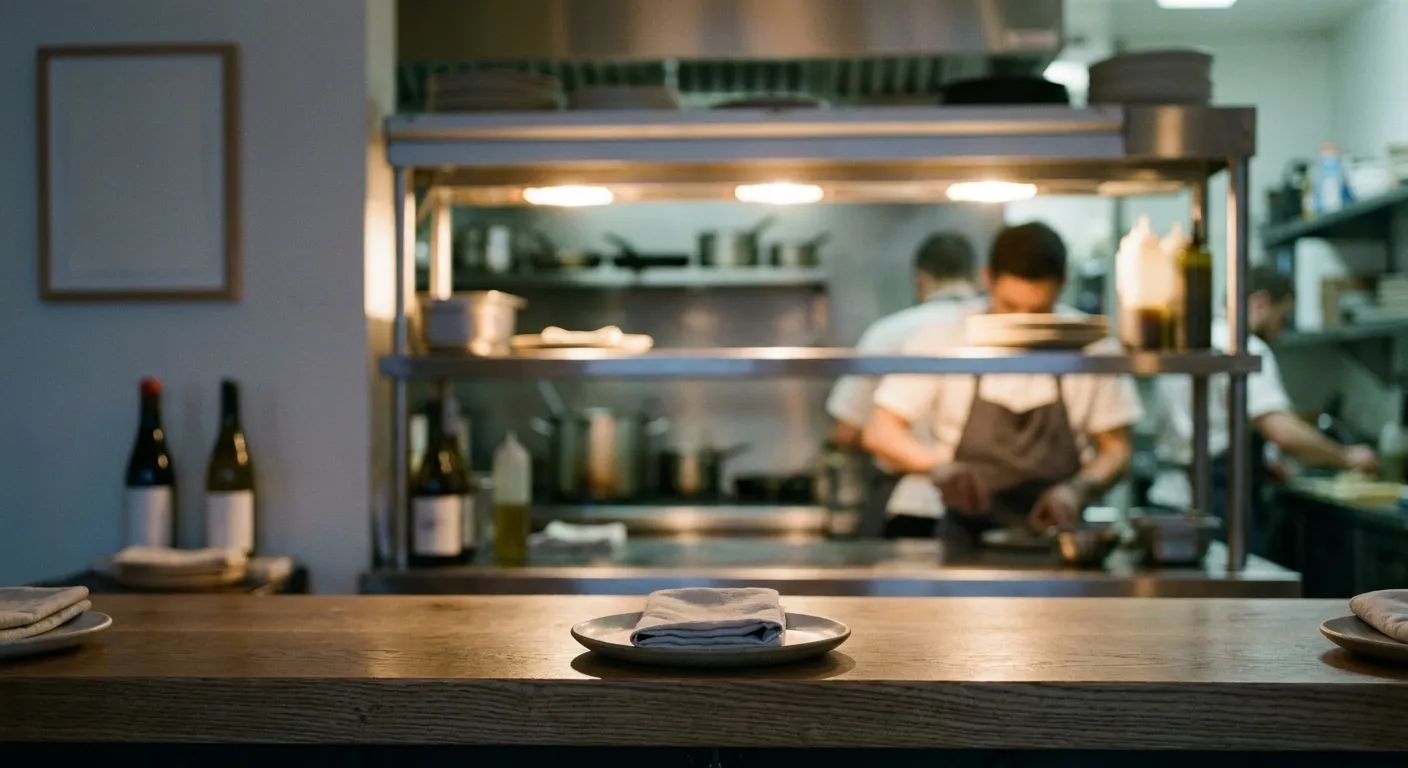
The strongest reason to plan around a place is that its whole point is something you cannot get by dropping in. A counter where the cooking happens directly in front of you and the sequence is fixed. A room with a single sitting where everyone eats the same thing at the same time. A kitchen built around one ingredient that arrives twice a week.
These formats are worth the effort because the effort is the product. You are not buying a better version of dinner, you are buying a different shape of evening - one with a beginning and an end, where the pacing is decided for you. If that appeals, it genuinely justifies the planning. If it does not, no amount of quality will make it worth it, and you should go somewhere you can leave when you want.
Two: the thing does not travel and does not keep
Some food is only itself for a few minutes, in the room where it was made. A Neapolitan pie two minutes out of a nine-hundred-degree oven. A soufflé. Fresh handmade noodles. Anything that arrives at the table still moving. These are worth going to because there is no other way to have them - takeaway and delivery are not degraded versions, they are different and lesser foods.
The corollary is a useful filter in the other direction. If a restaurant's signature thing travels well - a braise, a cured product, a bread, a sandwich - you can very often have an almost identical experience with a fraction of the effort. That is not a criticism of the restaurant. It is just a sensible allocation of your own time.
Three: the constraint is real rather than manufactured
This is the one that separates the genuinely difficult bookings from the theatrically difficult ones. A real constraint has a physical cause: the room has fourteen seats, the kitchen has three people, the fish comes in on Thursday. A manufactured constraint is a release schedule designed to produce a queue.
The tell is what happens when you get in. If a hard-to-book room turns out to be large, comfortable and running three sittings, the difficulty was a marketing decision. If it turns out to be genuinely tiny and obviously constrained by its own walls, the difficulty was real and the effort was probably justified. It is worth looking at the seat count before you spend a month chasing a table - the number is usually findable and it tells you almost everything.
Four: the neighbourhood is part of the point
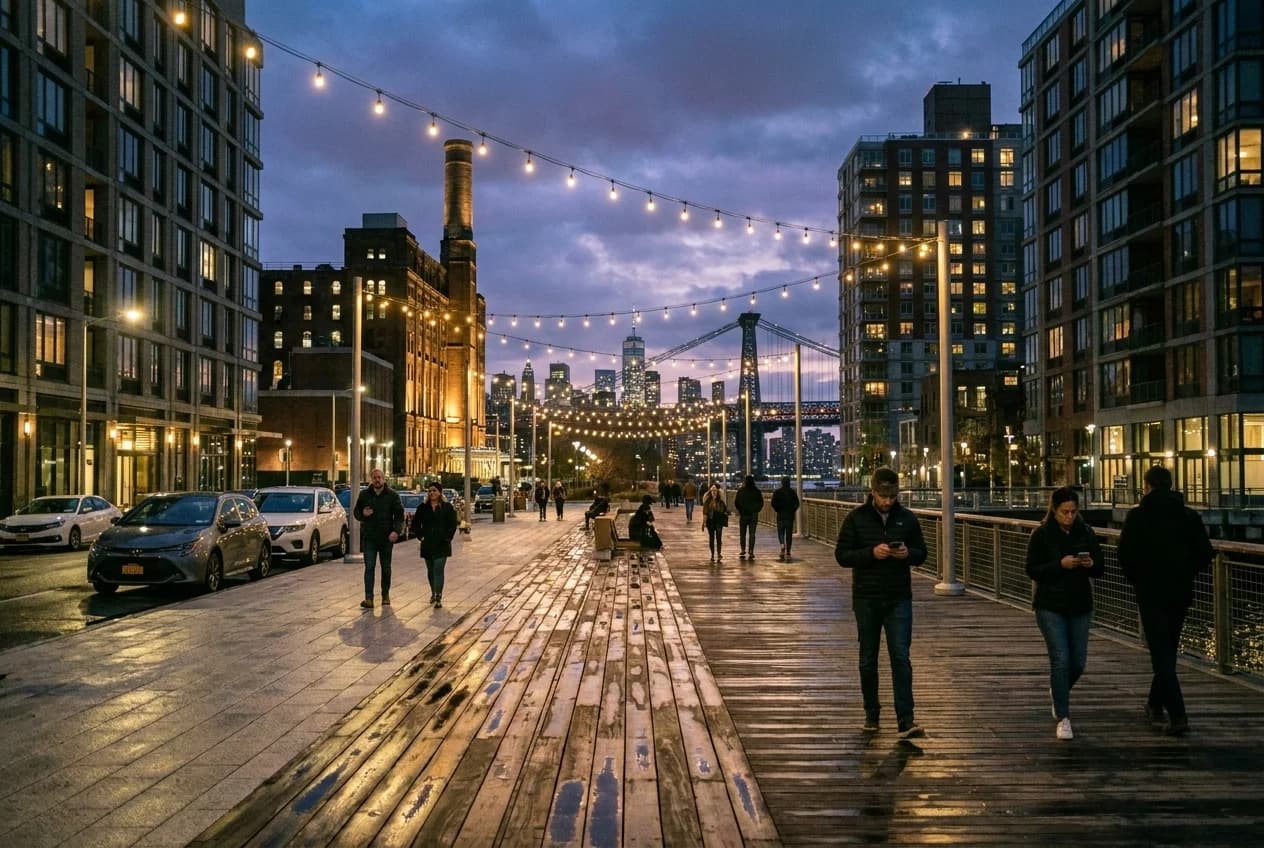
Some places justify an hour of travel because the hour is not overhead - it is part of what you came for. Eating somewhere in Sunset Park or Jackson Heights or Sheepshead Bay and then walking those streets afterwards is a different and better experience than eating the same food in Midtown would be. The journey buys you context.
This is the most reliable form of worth-it in New York and the most underrated. If a trip gives you a meal and a neighbourhood, the arithmetic works easily. If it gives you a meal at the end of an hour of tunnel and nothing else, the bar for the food is much higher and most places will not clear it.
How far in advance is actually necessary
The received wisdom that everything good in New York requires a month is mostly wrong, and it costs people meals. The genuinely month-out rooms number in the low dozens across the whole city. The far larger category is places that look impossible on a Friday at eight and are entirely available on a Tuesday at six or a Sunday at nine, often on the same week you ask.
Two habits do most of the work. Check the same restaurant across three different days before concluding it is unavailable - the difference between Saturday and Tuesday is frequently three weeks of notional wait. And look at the edges of service: the first sitting and the last sitting release later, hold fewer people, and are where cancellations land. A nine-fifteen table on a Thursday at a supposedly impossible room is a much more common outcome than people expect, and the kitchen at the end of the night is often better company than the kitchen in the middle of it.
The honest counter-argument
Against all of this: the single most reliable predictor of a good evening in this city is not the restaurant, it is how much of your attention the logistics consumed. A meal you arrived at relaxed, ten minutes from where you were, is very often better than a technically superior meal you arrived at forty minutes late and slightly stressed.
So the practical rule is to allow yourself one planned-around meal per visit, or per month if you live here, and to fill everything else in opportunistically. One is enough to get the thing that only planning can buy. Three turns a city into an itinerary, and this is a bad city to experience as an itinerary.
Practical notes
Worth planning around: fixed-sequence counters, single-sitting rooms, kitchens built around a twice-weekly delivery, and anything that is only itself in the first two minutes. Not worth planning around: anything whose signature dish travels well, and any difficulty that turns out to be a release schedule rather than a seat count.
Check the seat count before committing to a chase. And allow one planned meal per trip; fill the rest in as you go.
Tags: #BestPlacesToEatInNewYorkCity #NYCRestaurants #BucketList #NewYorkCity #WorthTheTrip #NYCDining #ChefsCounter #TastingMenu #WhereToEatNYC #WeekendPlans
All trademarks are the property of their respective owners.
Ask Karpo first
The scarce resource on any New York evening is attention, not money. Ask Karpo which of the places you are considering genuinely needs to be planned around, which one will happily have you on a Tuesday, and what is worth eating near wherever you already are tonight.