Miami does not have a food scene in the way that phrase is usually meant. What it has is six or seven distinct immigrant kitchens operating in parallel, most of them serving their own communities first, arranged in the city more or less by where those communities settled. Ranked lists flatten this into a single leaderboard and lose the actual structure. A far better weekend is to give each tradition one meal, in the neighbourhood it belongs to, at the hour it does best - which turns out to be both cheaper and more interesting than working through a top ten.
Six communities across five neighbourhoods, most of them lunch operations that close early, is a scheduling problem. Tell Karpo which days you have and where you are staying, and get it laid out as a route.
Cuban, in Little Havana, at lunch
Start here, because it is the oldest layer and the one everything else grew around. The meal is the almuerzo especial - a protein, white rice, black beans and plantain - served between roughly eleven and two at counters along SW 8th Street, at a price that has stayed startling. El Nuevo Siglo, a counter inside a supermarket at 1305 SW 8th St, is the clearest expression: stools, a laminated menu, a rotating daily special, and change from fifteen dollars.
Before or after, drink a cortadito standing at a ventanita - a coffee window cut into the side of a building. The one at Versailles on SW 8th Street has functioned as the neighbourhood's noticeboard for decades. And eat one pan con lechon, which is roast pork, raw onion and mojo on pressed bread with no cheese and no ham, and which is the sandwich the neighbourhood actually eats. Total spend for two people: under forty dollars, comfortably.
Haitian, in Little Haiti, before the evening
The second meal is griot: pork shoulder marinated in sour orange and green herb, braised then fried until the edges crackle, served with pikliz - a fierce vinegar pickle of cabbage, carrot and scotch bonnet. The pikliz is not a garnish, it is the acid the whole plate is built around, and pushing it aside is the most common first-timer mistake here.
Order diri ak djon djon if it is on the board - rice cooked in the liquid of black Haitian mushrooms until it turns slate grey - rather than white rice, every time. Add legim, a long-cooked vegetable stew that reads as a side and eats as a main. Chef Creole's Little Haiti location on NW 54th Street and Naomi's Garden on NW 71st Street are two very different rooms doing the same tradition. Come at lunch or early evening; these kitchens close well before the rest of the city.
Nicaraguan and Honduran, out west
This is the layer almost no visitor finds and it is one of the best-value hot meals in South Florida. The format is the fritanga - a counter with a grill and a steam table, selling grilled meats, gallo pinto, fried cheese, sweet plantain and cabbage salad, either by weight or as a combination plate. They concentrate in the strip malls of west Miami-Dade and Sweetwater, and they look like nothing from the road.
Order the combination plate and add a queso frito. The Nicaraguan version of grilled beef, carne asada, is thinner and more heavily marinated than the Mexican dish of the same name and comes with a chunky cabbage slaw that does the same job pikliz does two neighbourhoods east. Expect to spend twelve to eighteen dollars and to be given more food than that suggests.
Colombian and Venezuelan, anywhere
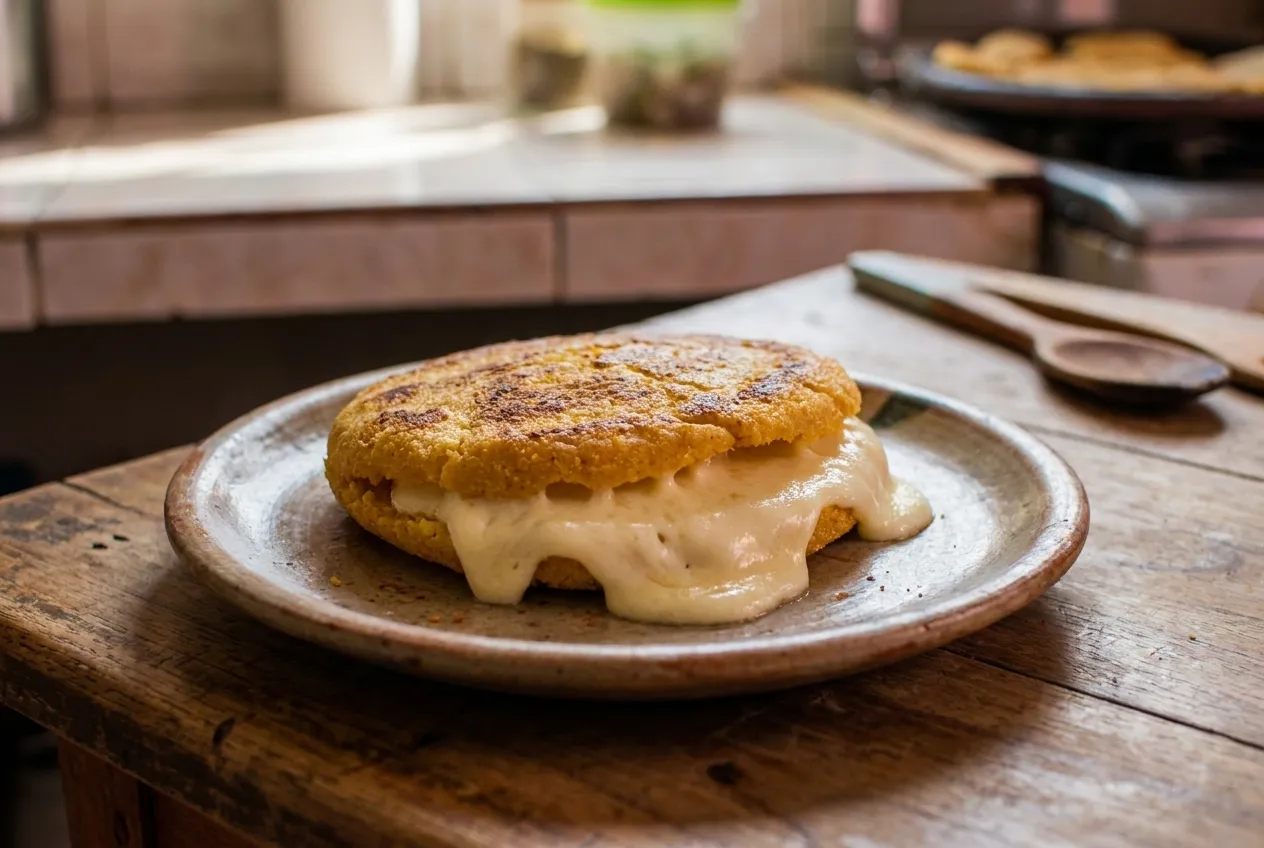
These two are the most widely distributed traditions in Miami and the easiest to slot into a gap. The Venezuelan contribution is the arepa - a split corn cake, griddled, filled - and the reina pepiada, with chicken and avocado, is the standard order. The Colombian contribution is the bakery layer: pandebono, buñuelos, almojábanas, and empanadas at a couple of dollars each, which is the cheapest way in this city to stop being hungry.
Both also do a full plate - the bandeja paisa on the Colombian side, an enormous assembly of beans, rice, pork, sausage, egg, avocado and arepa - which is worth ordering once and sharing between two. Doral and the western suburbs have the highest concentration, but arepa and empanada counters exist in essentially every neighbourhood, including Brickell and Wynwood.
Peruvian and Argentine, for the sit-down meal
If the weekend has one proper restaurant dinner in it, this is where to spend it. Peruvian cooking arrived in Miami with a substantial community and the dish to order is ceviche in its plain form - white fish cured in lime with red onion, chilli, sweet potato and corn - at lunch, when the fish came in that morning. Add a lomo saltado, which is beef stir-fried with soy, onion and chips, and is the clearest example of the Chinese-Peruvian tradition.
The Argentine version of a sit-down meal is a parrilla: a grill, several cuts of beef, chimichurri, and very little else. It is the most straightforward expensive meal in Miami and one of the few where a large group works better than a couple. Coral Gables and the western suburbs hold most of them, and unlike almost everything else in this article, they run properly into the evening.
Practical notes
Sequencing that works: Cuban at lunch on day one, Peruvian or Argentine for dinner; Haitian at lunch on day two, fritanga or arepas in the evening; Colombian bakery items as breakfast on both days. Hours are the constraint - Cuban and Haitian kitchens are lunch operations that fade by early evening, while the Argentine and Peruvian rooms keep restaurant hours. Budget: everything except the parrilla and the ceviche room lands under twenty dollars a head. Cash is still smoothest at the oldest counters. Distances: Little Havana to Little Haiti is about fifteen minutes by car, the western fritangas another twenty beyond that, and none of it is walkable - this is a driving weekend, and the causeways are the only genuinely slow part.
Tags: #BestPlacesToEatInMiami #Miami #LittleHavana #LittleHaiti #CubanFood #HaitianFood #Fritanga #Arepas #Ceviche #Parrilla #Sweetwater #Doral #WeekendPlans #MiamiEats
All trademarks are the property of their respective owners.
Ask Karpo first
Eating across six communities in one weekend is entirely a matter of catching each one during its own hours. Ask Karpo which counters are serving their specials at the times you are free, which of the western fritangas is nearest to where you will be, and how to order the whole thing so you are never crossing the county at rush hour.