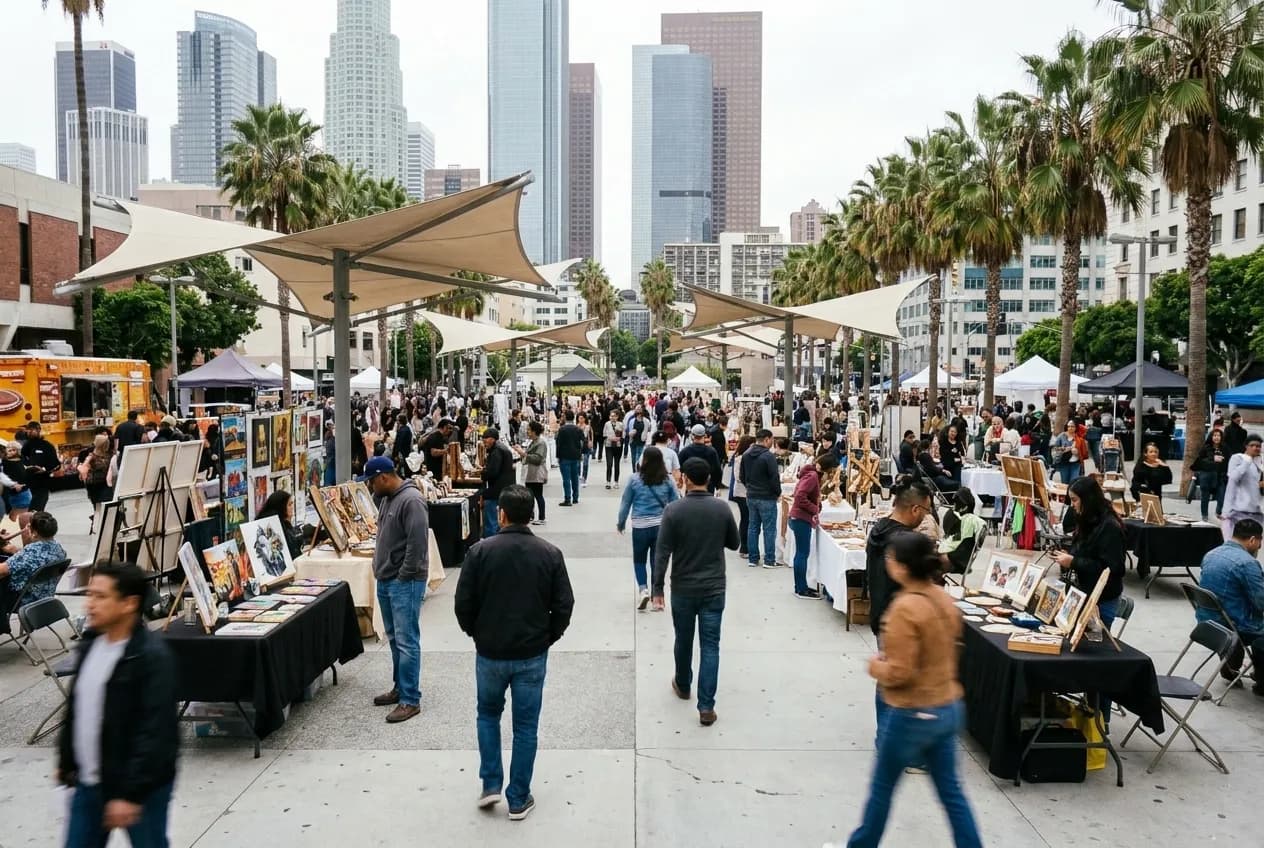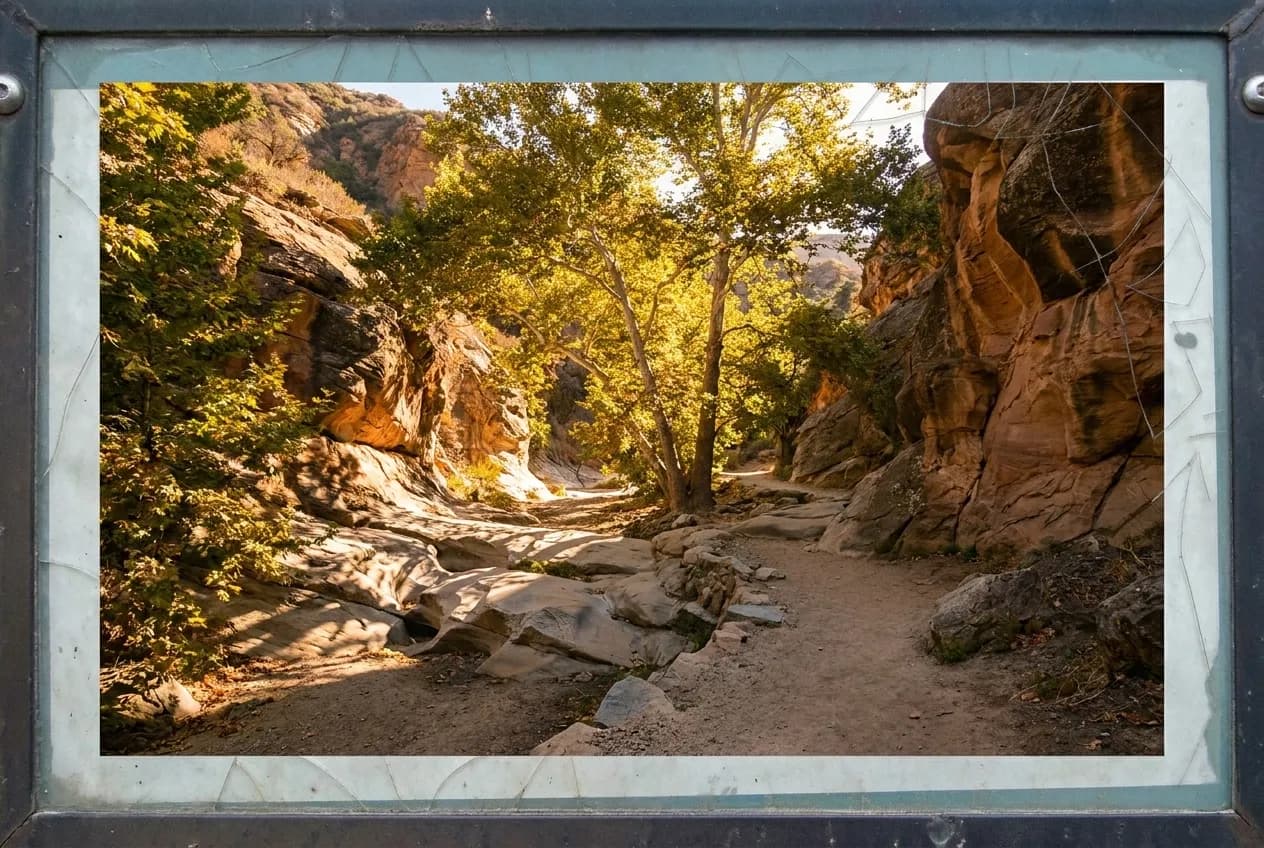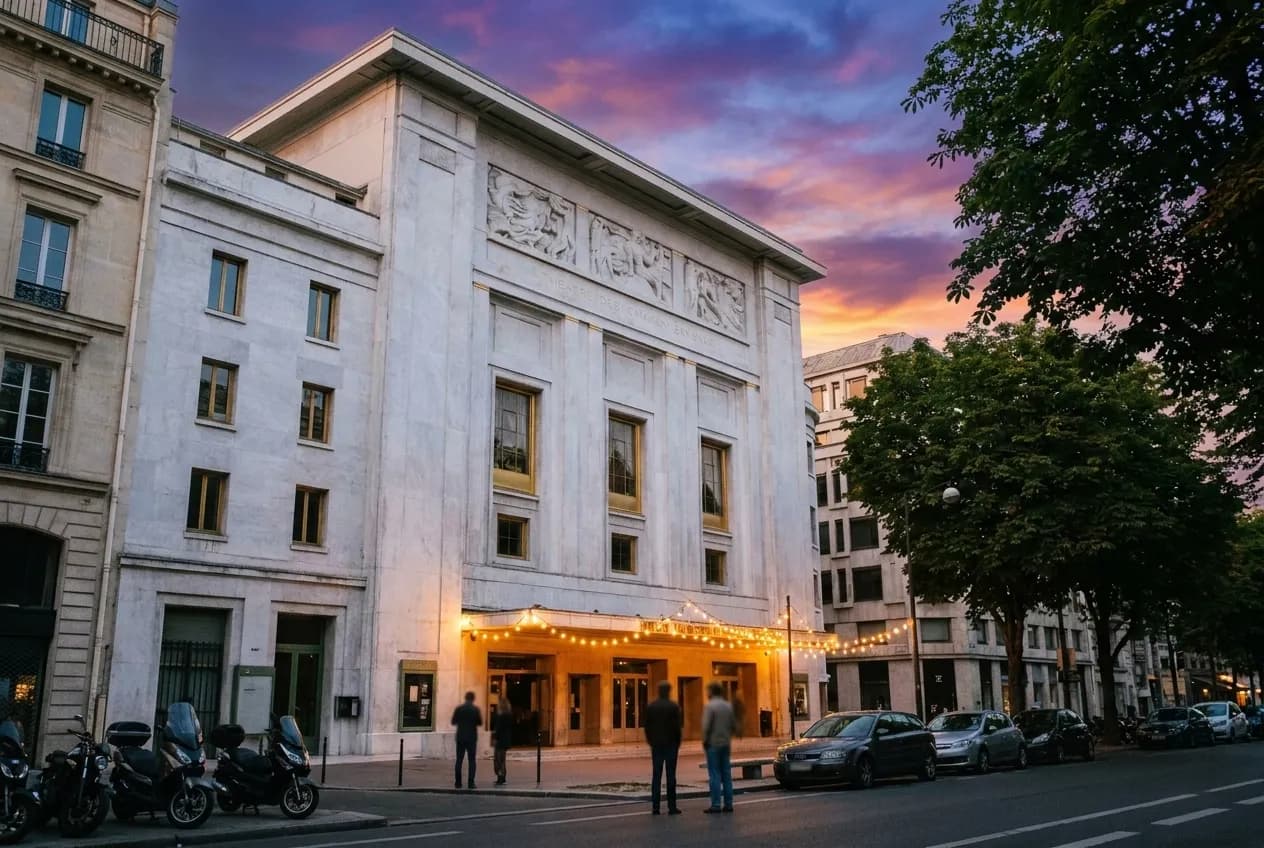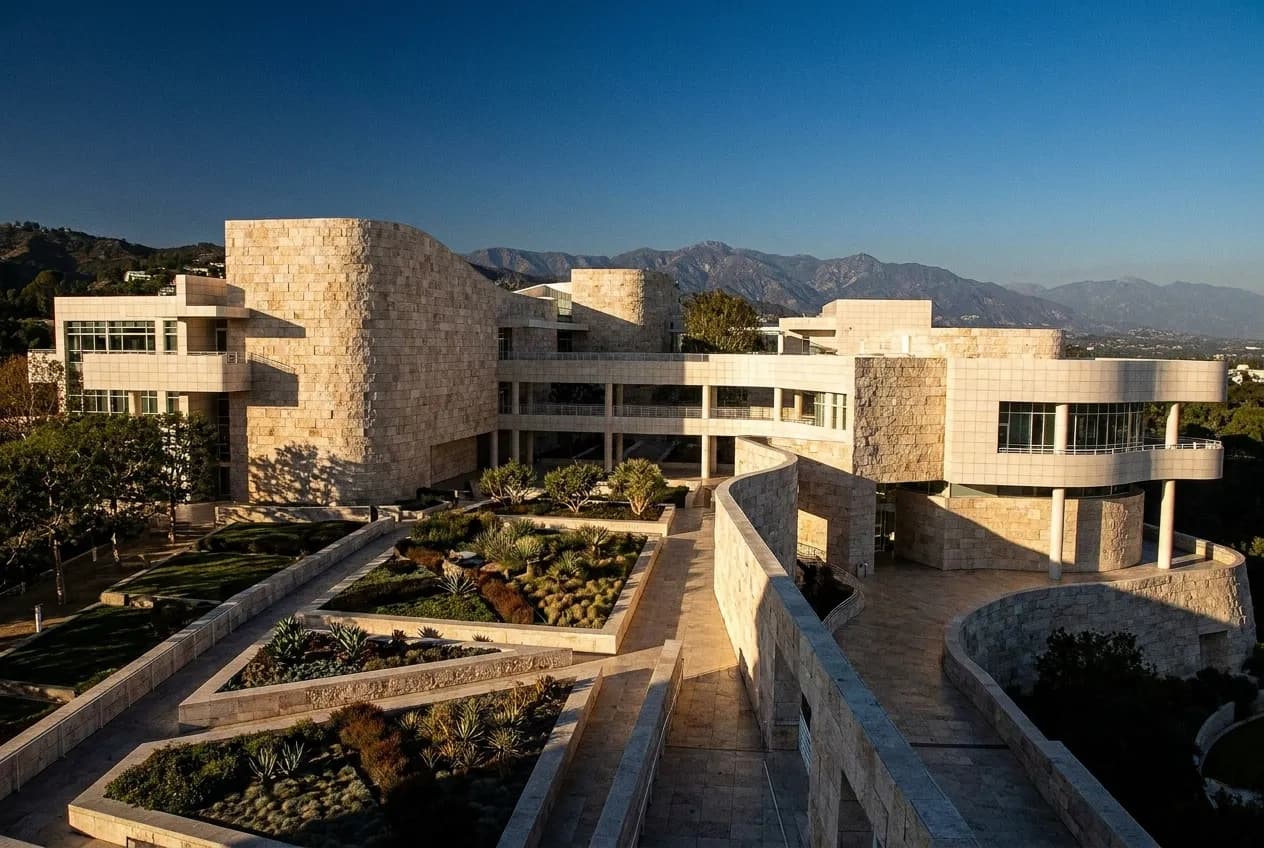
The museum density in Los Angeles runs along two corridors. The first is the Miracle Mile stretch of Wilshire Boulevard between Fairfax and La Brea, where four major institutions sit within a twelve-minute walk. The second is the hilltop campus around the Getty Center in Brentwood, which functions as a single enormous museum complex with multiple pavilions. Both clusters were built where land was available and where wealthy benefactors wanted their names on something permanent. The Miracle Mile became museum row because the original May Company building sat empty in the right decade. The Getty sits on a ridgeline because that is what oil money could afford to terraform in the 1990s.
Open the Karpo app right now to see which museum admission windows are free today, what time the garden grounds close, and whether the parking structure or the street meter is cheaper.
The Zero-Dollar Tier: Grounds, Courtyards and Weekly Windows
The Getty Center charges nothing for admission ever. You pay fifteen or twenty dollars to park depending on whether you booked the slot online, and then the entire campus is open. The architecture is the attraction as much as the collection. The travertine-clad pavilions, the central garden designed by Robert Irwin, the cactus garden on the south promontory and the view corridors to the Pacific are all accessible without a ticket. On a summer afternoon when the galleries are crowded and cold, the grounds are the better experience. You can spend three hours walking the terraces and never go indoors.
The Hammer Museum in Westwood has free general admission every day. The building is small, two floors, and the collection rotates frequently enough that a visit every four months shows you something different. The courtyard is open to the street and doubles as a place to sit between errands. No one checks whether you came for the art or the shade.
Most of the Miracle Mile institutions run free-admission windows one afternoon or evening per week. The rotation is staggered so that at least one museum is free on any given weekday. The windows typically run from two or three in the afternoon until closing, which is either five or eight depending on the institution and the season. The free window is not a secret or a loophole. It is printed on the website and staffed normally. The galleries are more crowded than they are on a Tuesday morning, but not unworkable. If you are flexible about which museum you visit, you can see a different collection every week without paying admission.
Parking reintroduces the cost. The structures on Wilshire charge between twelve and eighteen dollars for the first three hours. Street meters are cheaper if you can find one, but the turnover is fast and the enforcement is constant. The math tilts toward the structure if you plan to stay longer than ninety minutes. If you are visiting only for a free-admission window and you know you will be in and out in an hour, the meter is the better play. The real free option is to walk from the Fairfax or La Brea transit stations, which are both within ten minutes of the Miracle Mile cluster.
The Ten-to-Twenty-Dollar Tier: Outdoor Sculpture and Specialty Collections
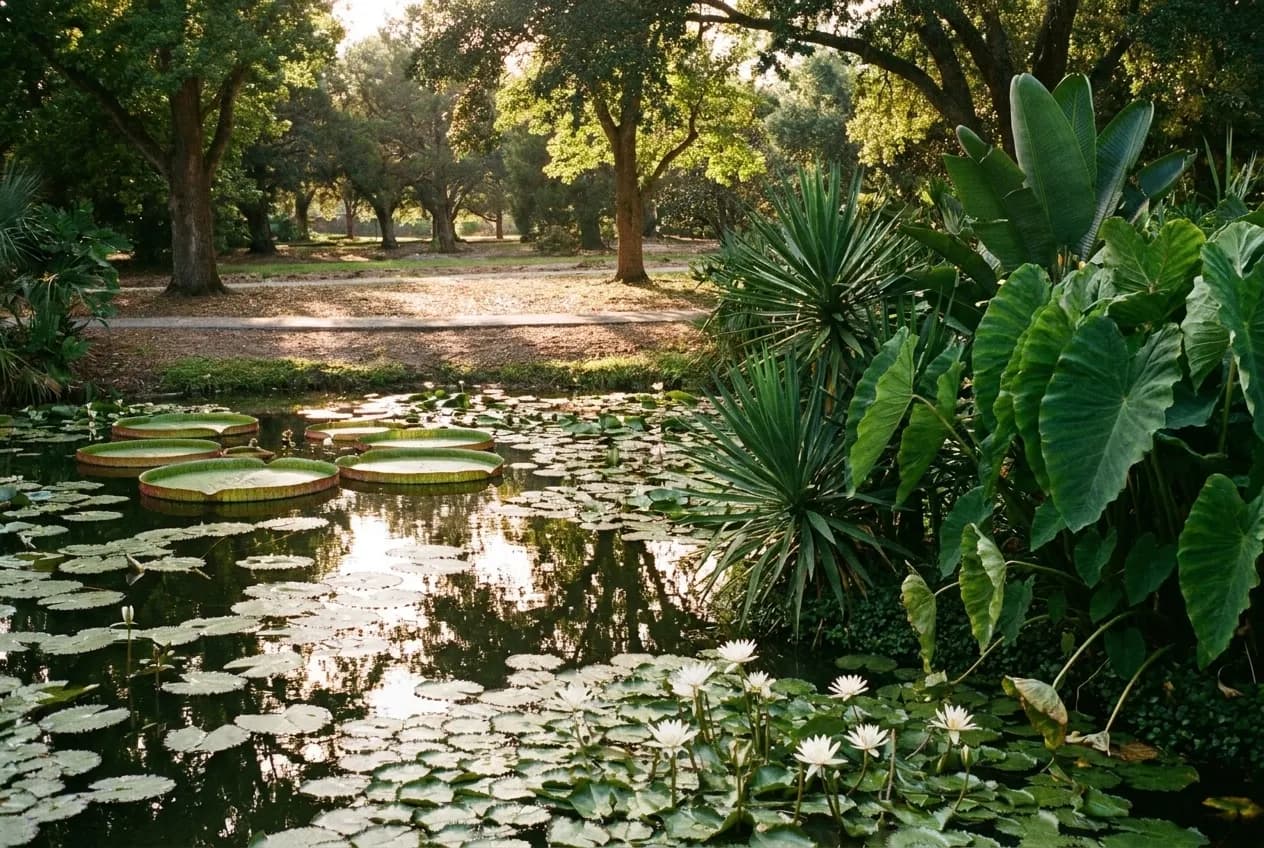
The Huntington in San Marino charges between fifteen and twenty-five dollars depending on the day of the week and whether you bought the ticket online. Weekend tickets are more expensive. The Huntington is a research library with an art collection, but the reason to go is the garden. The grounds cover more than two hundred acres and include a dozen distinct planted environments: a Japanese garden, a desert garden, a rose garden, a Chinese garden with a lake and pavilions. You can walk the perimeter loop in two hours if you move steadily, or spend an entire afternoon sitting in the bamboo grove near the teahouse. The galleries are small and climate-controlled, and they make sense as a break from the heat rather than the main event.
The Norton Simon in Pasadena charges fifteen dollars and focuses on European paintings and South Asian sculpture. The building is compact, and the collection is dense enough that you can see the highlights in under two hours. The sculpture garden in the back is modeled after Monet's property at Giverny, with a long rectangular pond and a perimeter path shaded by sycamores. The garden is small but well maintained, and it is open during museum hours at no additional charge. If you are already in Pasadena and you have ninety minutes, the Norton Simon is the most efficient museum visit in the city.
Several smaller institutions charge between ten and fifteen dollars and focus on single subjects. The craft and folk art museum on Wilshire, the museum of neon art in Glendale, and the Japanese American museum downtown all fall into this category. The admission price is low enough that you can visit on impulse without planning a half-day around it. These museums are less crowded than the major institutions, and the staff will talk to you if you ask a question. The trade-off is that the collections are smaller and the hours are shorter. Most close by five or six in the evening, and several are dark on Mondays and Tuesdays.
The Twenty-Five-Dollar Tier: Full Collections and Special Exhibitions
The major encyclopedic museums charge between twenty-five and thirty dollars for general admission. This tier includes the contemporary art museum, the natural history museum, and the art museum in Exposition Park. The collections are large enough that a single visit will not cover everything, and the special exhibitions rotate every few months. If you go to one of these institutions without checking the calendar first, you might walk into a blockbuster show with a separate ticket surcharge, or you might find that the wing you wanted to see is closed for reinstallation.
The value at this price point is the depth of the collection and the quality of the climate control. On a summer afternoon when the outdoor temperature is above ninety degrees, the appeal of a museum is that it is cold and dark and you can sit down. The galleries at the major institutions are large enough that you can walk a circuit without retracing your steps, and the benches are placed in front of the pieces that reward extended looking. If you are visiting primarily for the air conditioning, bring a sweater. The buildings are kept cold enough that you will want a layer after an hour.
Special exhibitions add ten to twenty dollars to the base admission price. The surcharge is not always advertised clearly on the website, and you do not find out about it until you are at the ticket counter. If you are visiting during a major traveling show, assume the ticket will cost more than the listed general admission. The special exhibition is usually time-limited and draws a larger crowd than the permanent collection. If you care about the show, buy the ticket online the night before and pick a morning time slot. If you are indifferent, skip the special exhibition and stay in the permanent galleries.
Sequencing a Half-Day to Avoid the Worst Heat
The outdoor components of a museum visit are best done before eleven in the morning or after four in the afternoon. The Getty terraces are exposed to full sun in the middle of the day, and the Huntington gardens are unpleasant to walk when the temperature is above eighty-five degrees. If you are visiting in summer, start with the outdoor portion while the air is still cool, then move inside when the heat becomes uncomfortable. The indoor galleries are coldest in the early afternoon, which is when the HVAC systems are working hardest. By late afternoon the buildings have warmed slightly, and the outdoor spaces are shaded and tolerable again.
If you are working with a free-admission window that starts at two or three in the afternoon, reverse the sequence. Arrive early and walk the grounds or the sculpture garden before the window opens, then go inside when admission becomes free. You will pay for parking either way, but you can stretch the value of the parking fee by arriving before the free window and staying through closing. The parking structures do not prorate, so there is no penalty for arriving early.
The single transferable habit is to check the weekly free-admission calendar before you decide which museum to visit. The rotation is predictable, and the schedule is published months in advance. If you are flexible about timing, you can see most of the major collections over the course of a season without paying for tickets. The parking fee is unavoidable unless you take transit, but the admission savings are real. The difference between a fifteen-dollar visit and a zero-dollar visit is whether you checked the calendar the night before.
Tags: #BestMuseumsInLosAngeles #LosAngelesMuseums #FreeMuseumDays #GettyCenter #HammerMuseum #HuntingtonLibrary #NortonSimon #MiracleMile #FreeThingsToDoLA #LosAngelesArt #MuseumGrounds #SculptureGardens #LAOnABudget #FreeLosAngeles #LACulture
All trademarks are the property of their respective owners.
Ask Karpo first
Open the Karpo app before you leave to see which museums have free admission today, what time the grounds close, and whether the parking structure has real-time availability. Karpo routes you to the nearest free window and tells you if the sculpture garden is open past gallery hours.