Access to every public beach in Los Angeles County is free. This is worth stating clearly, because the practical experience of a beach day here is dominated by a cost that has nothing to do with the beach: parking, which runs from eight dollars at the small state lots to twenty or more at the popular ones, and which sells out by mid-morning on any warm weekend. Finding the best beaches near Los Angeles is easy. Finding somewhere to leave the car is the actual problem.
Lots fill by mid-morning and street parking rules vary block by block. Ask Karpo where you can actually park near the coast today.
The parking hierarchy
Three tiers. The county lots at the wide, lifeguarded beaches — the ones with facilities and space — charge a flat fee and rarely fill entirely, which makes them the reliable but paid option. The small state beach lots at the dramatic Malibu coves charge less and fill by ten. And street parking, which is free, legal in specific places, and the entire game if you want a genuinely no-cost day.
The street option requires reading signs carefully. Restrictions along the coast road change every few hundred metres, enforcement is real, and a ticket costs more than a day in a lot. The rule of thumb is that the free spaces are a five to fifteen minute walk from the sand, and that the walk is the price.
The Malibu coves
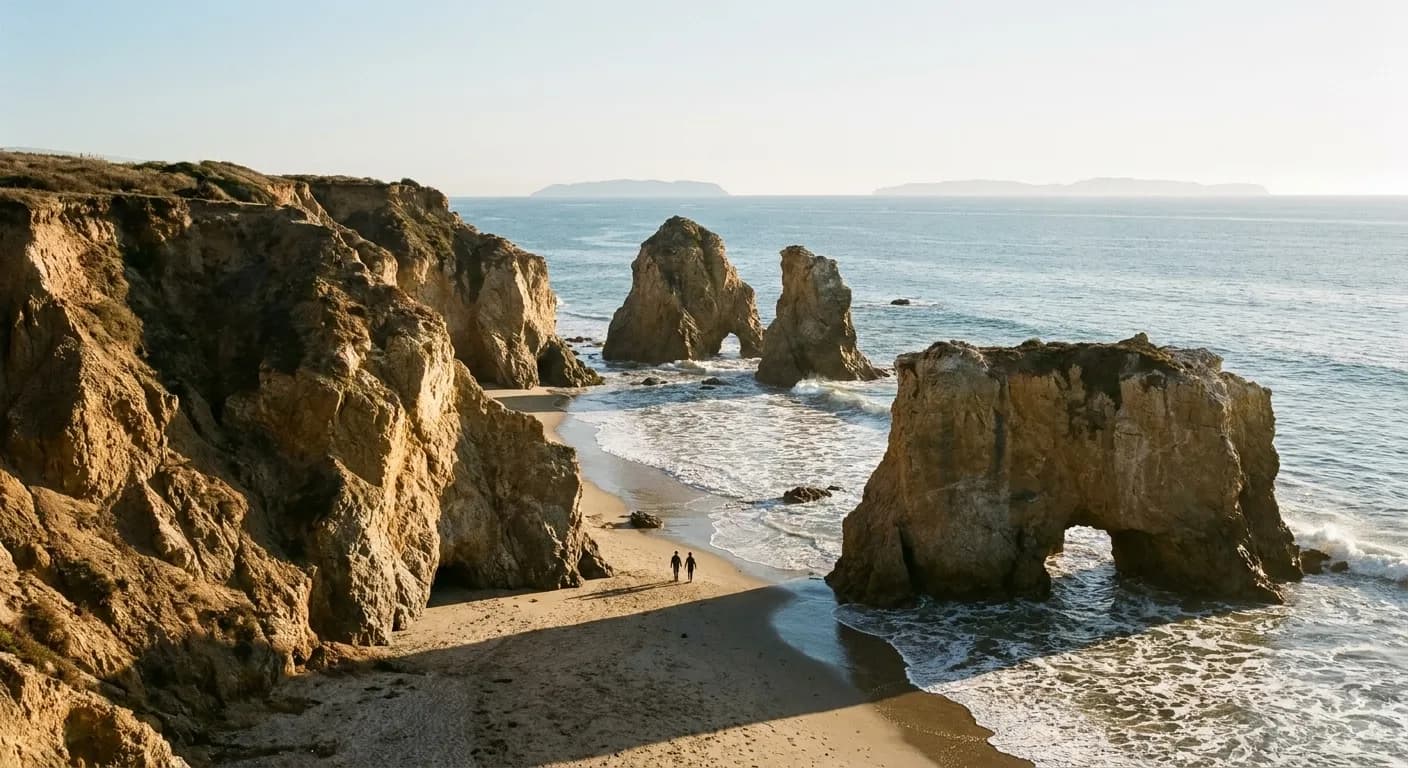
The string of small state beaches along the northern Malibu coast are the most photographed in the county for good reason — sea stacks, rock arches, caves at low tide, and cliffs that funnel you down a staircase onto a narrow strip of sand. The lots are tiny, which keeps the crowds down and makes arrival time the deciding factor.
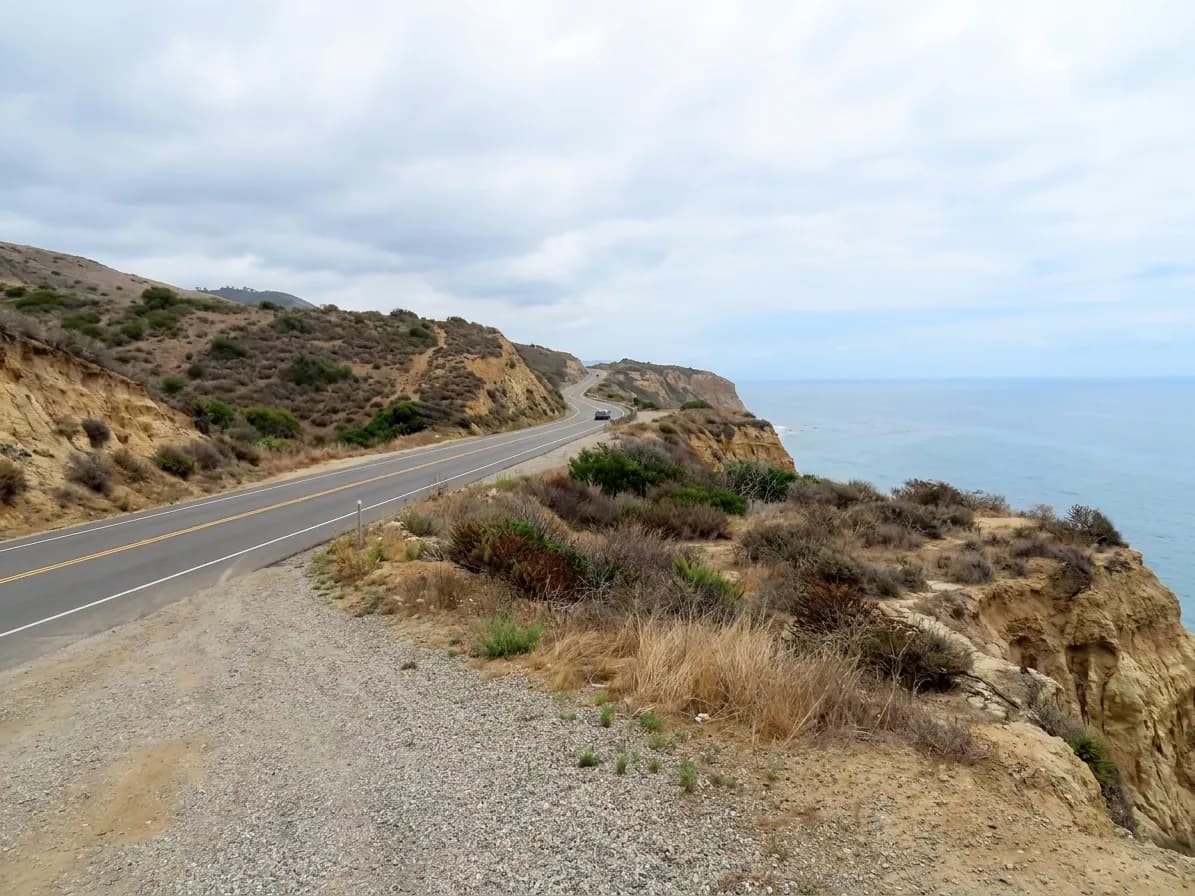
Limited free street parking exists along the highway near several of them. Arrive before nine, walk the last stretch, check the tide table before you commit — a high tide at some of these coves leaves very little beach — and be aware that the staircases down are steep and there are no facilities at most of them.
The wide, easy beaches
Further south, the long lifeguarded stretches are a different proposition: room for everyone, actual amenities, safe swimming and lots that do not sell out. This is where to go with children, with a group, or on a day when you want to arrive at noon without a plan. The parking costs money and the trade-off is that the day works with no logistics at all.
Several of these are also reachable on public transit from parts of the city, which removes the parking question entirely. It is slower than driving and it is the only genuinely free option on a busy Saturday.
Fire, storm and closure notes
Sections of this coastline have been affected by fire and storm damage in recent years, and access, parking and facilities at some points along the coast road have changed as a result. Rebuilding is ongoing in places and some lots and access points have been closed or relocated. Checking the current status of a specific beach before driving out is not excessive caution here; it is the difference between a day out and an hour in traffic for nothing.
The same applies to the canyons that connect the valley to the coast, which close periodically after weather. If you are routing over the hills rather than along the highway, confirm the road is open.
Timing the day
The coast here runs on a marine layer: grey mornings, clearing somewhere between eleven and one, and often clouding again in the late afternoon. Autumn — September and October — is the warmest and clearest stretch of the year on this coast, considerably better than midsummer, which is when everyone else goes.
Traffic is the other timing variable. The coast road on a warm Saturday afternoon is genuinely slow, and leaving the beach at four means sitting in it. Arriving early and leaving early, or arriving at three and staying for sunset, both avoid the worst of it. The middle of the day is the expensive choice in time as well as parking.
What to bring
Water and food, because the good coves have nothing nearby. Shade of some kind, since much of this coastline has none. Layers for after sunset, when the temperature on the sand drops faster than people expect. And shoes you can walk fifteen minutes in, because the free parking is never adjacent.
Which beach for which day
A short taxonomy that covers most decisions. Dramatic scenery and photographs: the northern Malibu coves, early, on a clear afternoon. Swimming and a full day with a group: the wide lifeguarded beaches to the south, where facilities exist. Tide pools and rocks: the state parks at the far northern end of the county, at low tide. A walk rather than a sit: the long flat stretches, at any hour.
The mistake people make is going to a cove when they wanted a beach day. Those Malibu coves are spectacular and they are small, rocky, shadeless and awkward — a superb ninety minutes and a poor six hours. Matching the beach to the length of the day is most of the planning.
The single best habit for a cheap beach day here is to treat the walk as part of it rather than as a failure to park close. The beaches you reach on foot from a free space half a mile away are consistently emptier and better than the ones you can pull up beside, which is the whole reason the parking costs what it does.
Tags: #LosAngeles #LABeaches #Malibu #FreeThingsToDo #ElMatador #BeachDay #PCH #WeekendPlans #SoCal #DayTrip #CoastalCalifornia #LAOutdoors #BeachParking
All trademarks are the property of their respective owners.
Ask Karpo first
Ask Karpo which beaches near you in Los Angeles have parking available right now, what the lot costs, and whether the access road is open.