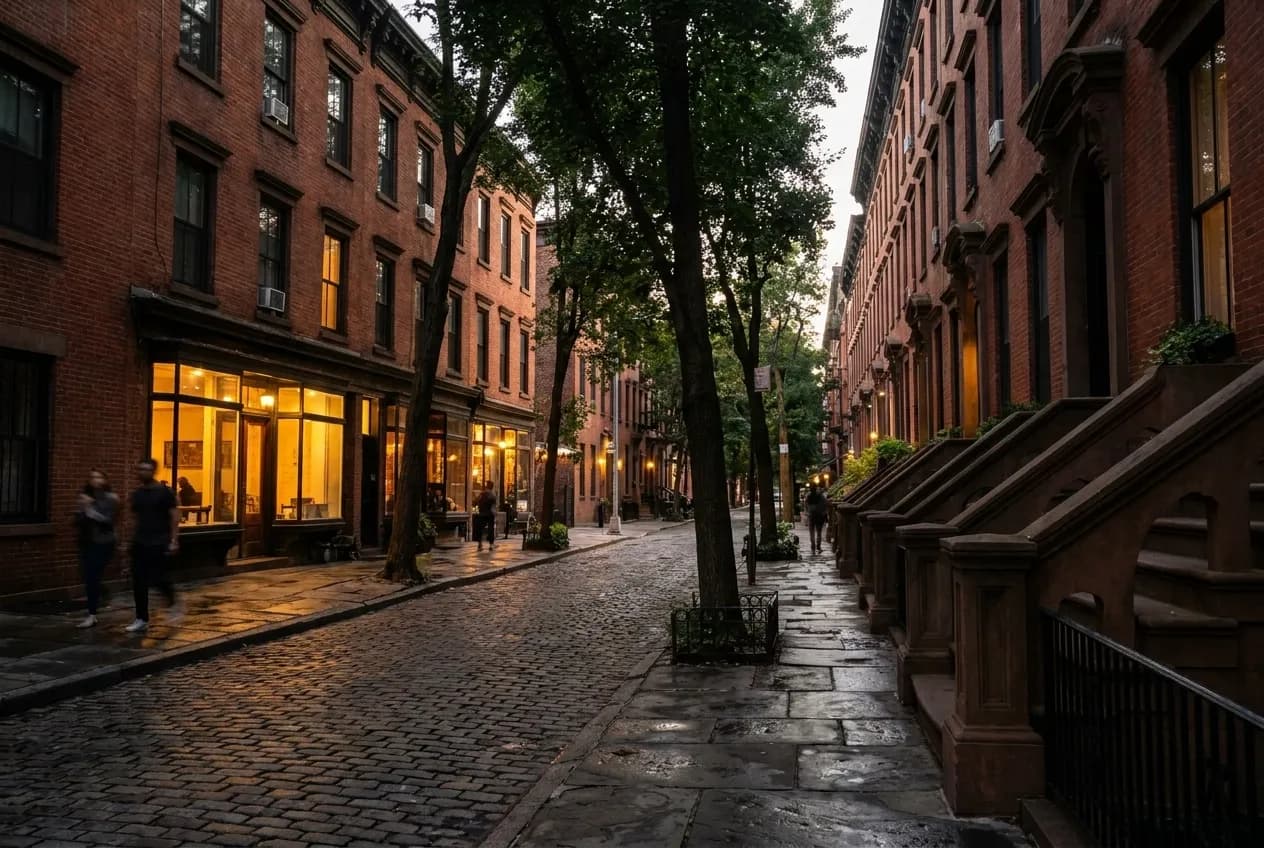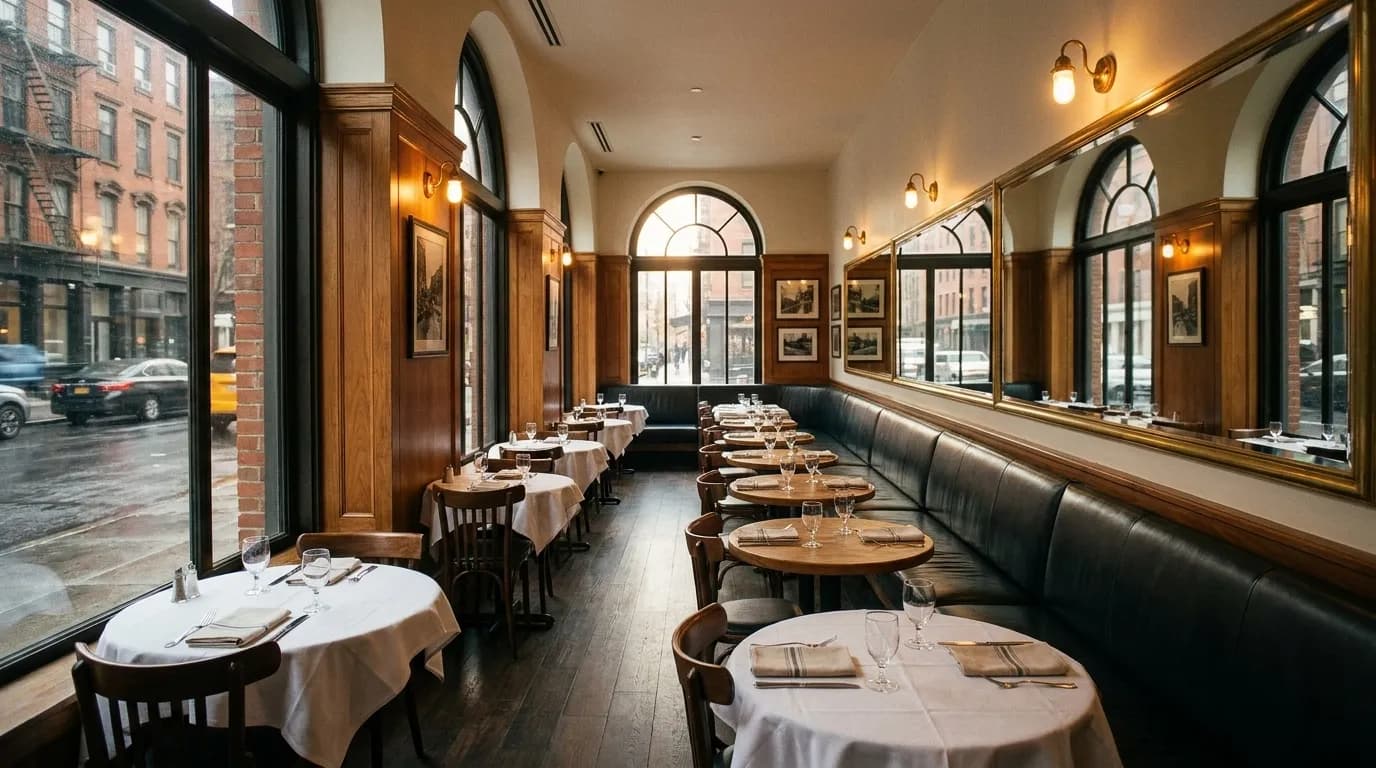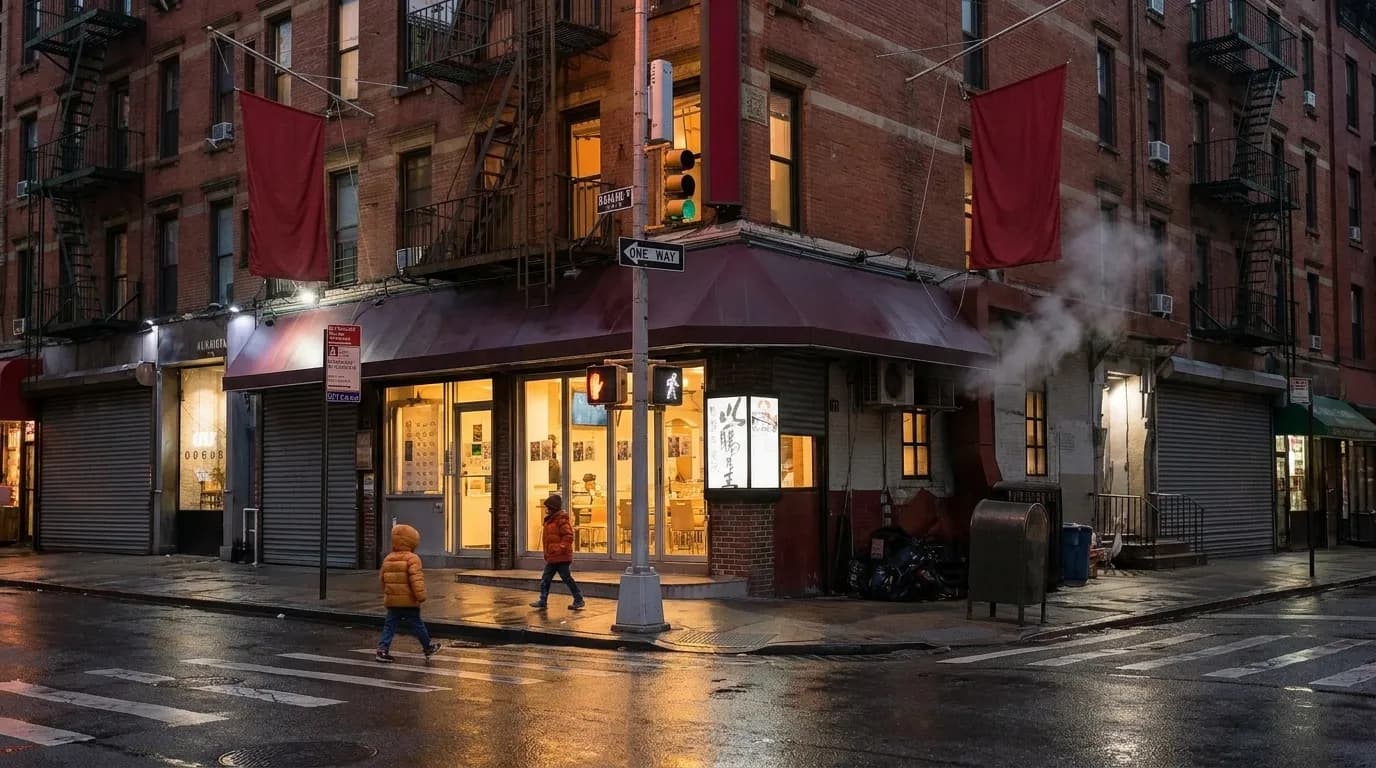
Sunday night is the one evening of the week when searching for the best food near you in NYC returns a map that is quietly wrong. A third of the results are closed, another third are running a shortened kitchen, and the listing you are reading was last updated on a Thursday. The city does not stop eating on Sunday. It just eats in different places, and the people who know which places those are almost never look it up.
Sunday hours are the least reliable data in this city, and they change again on holiday weekends. Ask Karpo what is actually open near you tonight and how late the kitchen runs.
Why Sunday redraws the map
Sunday and Monday are the two slowest services of the week for most independent restaurants, which is why they are the two days most often given up. Closing on the slowest night is the cheapest way to give a kitchen crew a real day off, and for small family-run rooms it is often the only way. There is a supply reason as well: produce and fish markets do not run a normal Sunday delivery, so a Monday opening means cooking on Friday's order. Given the choice, most operators would rather close.
What this leaves behind is not a thinner version of the city's food scene but a differently shaped one. The restaurants still open on a Sunday night are open on purpose. They are either large enough to absorb a slow night, family-run in a way that does not distinguish between weekdays and weekends, or they serve a neighbourhood whose own week does not end on Friday. All three of those are good signs, not bad ones.
The neighbourhoods that do not blink
Manhattan's Chinatown is the most reliable answer south of 14th Street. The Bowery and the blocks running east and south of it carry Cantonese kitchens that treat Sunday as an ordinary trading day, several of them serving well past the point at which the rest of Lower Manhattan has gone quiet. Great N.Y. Noodletown at 28 Bowery is the one most often named, and it is a fair proxy for the type: a plain room, a long Cantonese menu, salt-baked seafood and soy-sauce-poached duck, no interest at all in what night of the week it is.
Koreatown is the other dependable answer in Midtown. The stretch of 32nd Street between Fifth and Broadway is dense with rooms stacked several floors up, and the block's rhythm runs late by design — it fills after ten and peaks between eleven and two. A handful of the restaurants there run around the clock. Sunday barely registers as a distinction on that street, though a few kitchens do close an hour or two earlier than they would on a Saturday.
Further out, Roosevelt Avenue through Jackson Heights and Elmhurst, and Main Street and Prince Street in Flushing, are the two strongest Sunday corridors in Queens. These are neighbourhoods with a working population whose weekend is not the same as Midtown's, and the food follows the people. A Sunday evening in Flushing looks like a Friday evening almost anywhere else.
The institutions that are open because they are always open
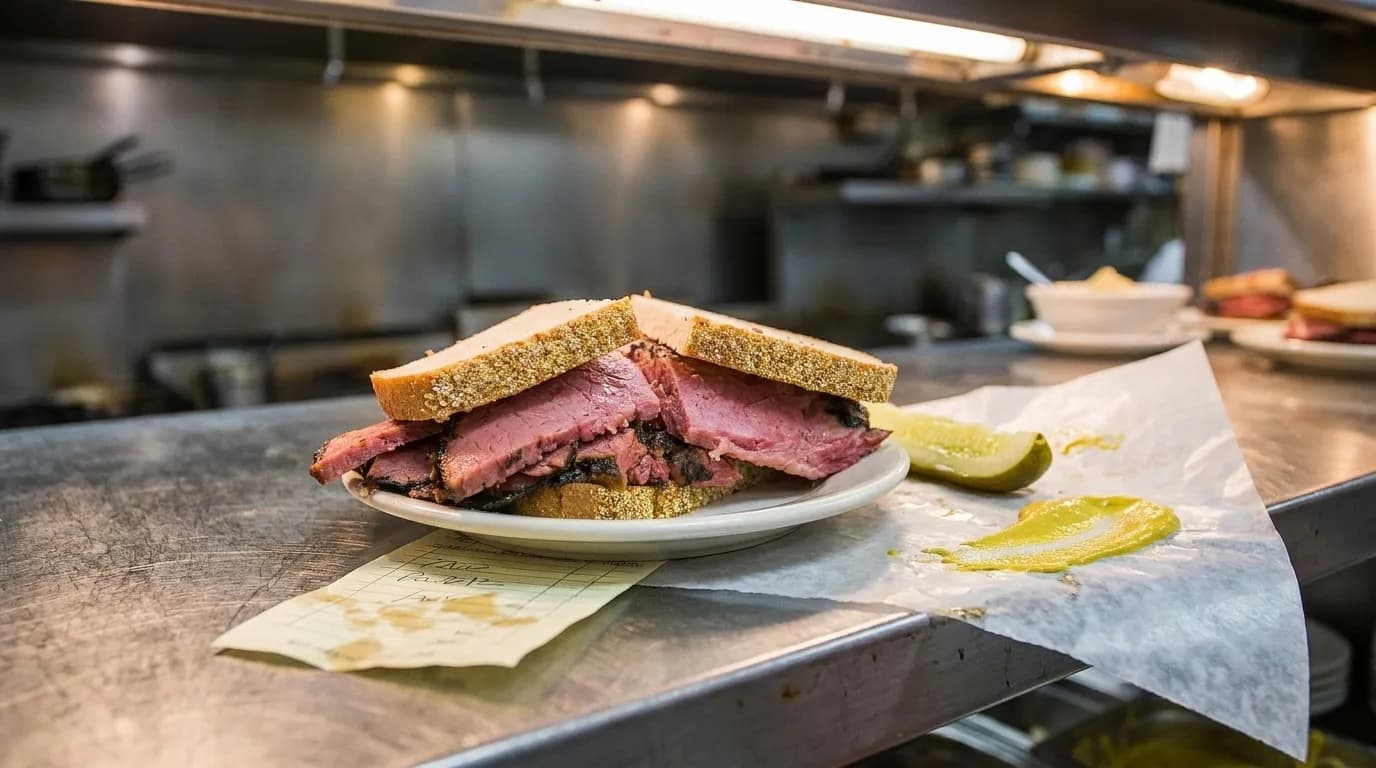
Katz's Delicatessen on East Houston Street has been trading since 1888 and is the oldest continuously operating delicatessen in the United States. It serves on Sunday because it serves on essentially every day, and a Sunday evening there is a genuinely better experience than a Saturday afternoon one — the tour-bus volume has thinned, the carvers have time, and the ticket system stops feeling like an obstacle course.
Veselka, on Second Avenue at 9th Street, is the East Village equivalent. It opened in 1954 as a candy shop and newsstand run by Wolodymyr Darmochwal, a Ukrainian immigrant who had settled in what was then one of the largest Ukrainian communities in the world, and it grew into the diner it is now. It keeps long hours, extends them across the weekend, and pierogi and borscht at eleven at night on a Sunday is one of the more reliably good ideas available in Manhattan.
The pattern generalises. A restaurant that has been open for forty years is usually open on Sunday, because the habit of closing was never formed. When a search returns nothing useful, sorting by age rather than by rating is a surprisingly effective fallback.
Read the kitchen, not the listing
The single most common Sunday mistake is confusing the door hours with the kitchen hours. Plenty of rooms will keep the front open until midnight while the pass shuts at ten, and the listing that told you "open until midnight" was describing the bar. If you are arriving after nine on a Sunday, the question to ask on the phone is not whether they are open but what time the kitchen closes and what time they seat last.
Sunday menus are also frequently shorter. Specials get cut, one section of the menu quietly disappears, and the whole-animal or long-cook dishes that need a full brigade are the first things to go. This is not a downgrade so much as a signal — a shorter Sunday menu usually means the things left on it are the things the kitchen can execute with a smaller team, which tends to mean they execute them well.
Booking is easy, timing is not
The good news about Sunday is that a table which would be impossible on a Friday is often available the same afternoon. Booking platforms clear out, walk-ins are absorbed, and the rooms that take reservations at all will usually have something between six and seven-thirty. The bad news is the cliff. Between about nine and nine-thirty the city's Sunday service contracts sharply, and a restaurant that would happily seat you at 8:45 will turn you away fifteen minutes later.
The practical version of this: eat early in the neighbourhoods where restaurants keep normal hours, and eat late only in the ones listed above, where late is the norm rather than an exception. Trying to eat late in a neighbourhood that closes early is how a Sunday evening ends at a bodega.
Practical notes
Verify hours the same day rather than trusting a listing, and verify them for the specific date — holiday weekends move Sunday hours in both directions, and a long weekend often converts Sunday into a Saturday and Monday into a Sunday. Cash still matters at the older Chinatown rooms and at some of the Queens counters, though card acceptance is now close to universal. Weekend subway service changes are the other Sunday variable worth checking before committing to a neighbourhood you cannot easily leave; planned track work is heaviest at weekends, and a twenty-minute ride can quietly become fifty. If you are a group of more than four, call rather than book online — Sunday rooms often have space they have not released to the platform.
Tags: #NYC #NewYorkCity #FoodNearMe #SundayDinner #NYCEats #Chinatown #Koreatown #Flushing #JacksonHeights #EastVillage #LowerEastSide #NYCRestaurants #WhereToEatNYC #SundayNight
All trademarks are the property of their respective owners.
Ask Karpo first
Want to know which kitchens near you are still cooking, what time they seat last, and whether the room is worth the trip across the bridge? Ask Karpo for tonight's open list in your part of New York, a walk-in-friendly backup two blocks away, and a live route before you leave the house.