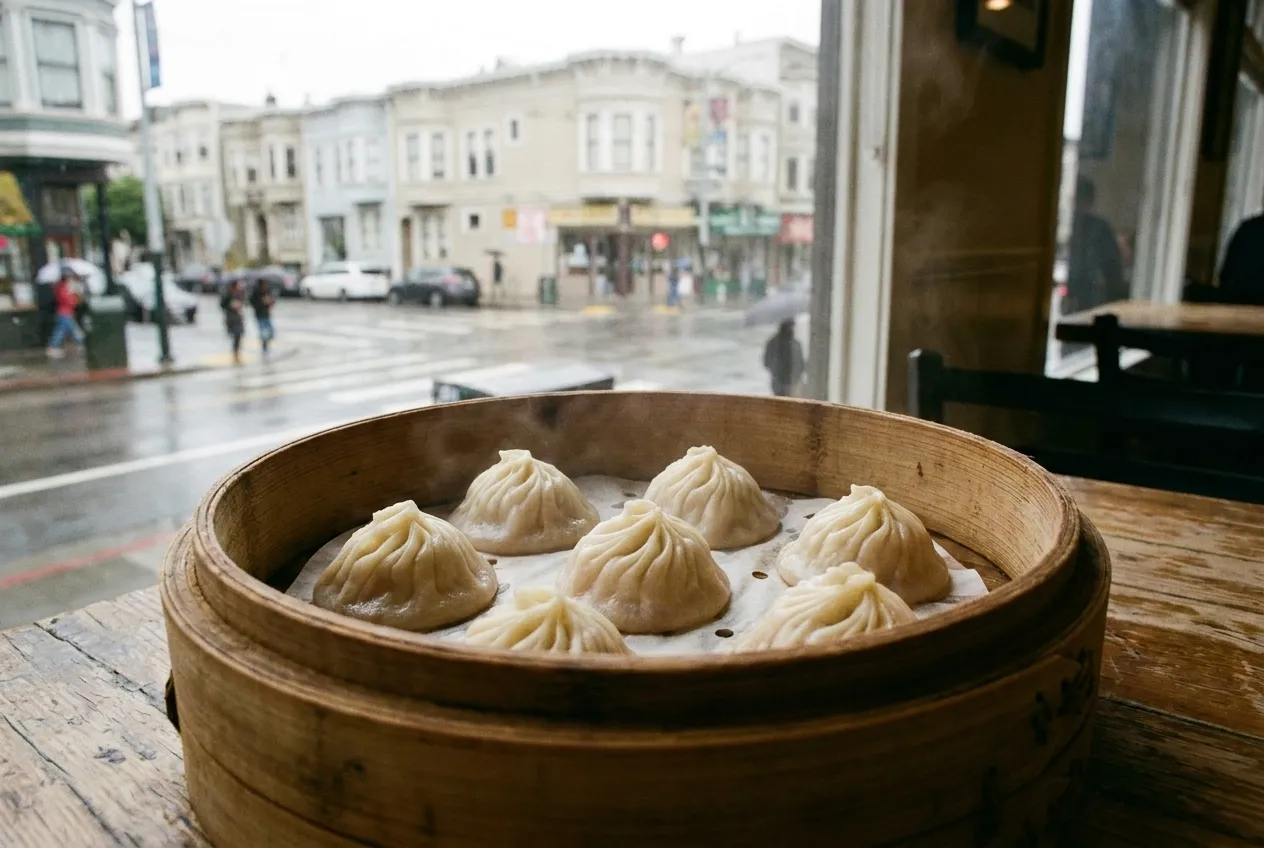
Din Tai Fung did something genuinely difficult: it took a dumpling that requires enormous manual skill and made it come out the same in dozens of countries. Eighteen pleats, a specified weight, a specified skin thickness, glass-walled kitchens so you can watch the quality control happen. That is an achievement and it has raised expectations everywhere. It has also, inevitably, narrowed them - a standardised xiao long bao is one very good version of a dish that has many. Understanding what got standardised is the fastest way to know what to look for in a small kitchen.
The small rooms doing this well are scattered across three districts and most stop serving by mid-afternoon. Tell Karpo where you are and when, and get one that is folding today.
What the standard actually specifies
The published standard is precise: a wrapper of a set thickness, a total weight of about twenty-one grams, and at least eighteen folds in the pleat. Each of those is doing a specific job. The thin wrapper maximises the ratio of soup and filling to dough. The weight makes portions consistent. The pleat count is a proxy for skill - you cannot get eighteen even folds into that circumference without a trained hand - and it also closes the top tightly enough that the soup does not escape during steaming.
The mechanism underneath is the same everywhere. The soup is not poured in; it is aspic - a stock set with gelatin, or with the natural collagen from pork skin - chopped cold into the filling. During steaming it melts. That is why a soup dumpling has to be steamed to order and why it has about a two-minute window on the table before the wrapper starts absorbing the liquid and going soft.
What a small kitchen does differently
Four things, mostly. Filling: a standardised operation uses one pork recipe across every branch, while a small kitchen will vary the fat ratio, add crab roe seasonally, or use a stock made that morning from that week's bones. Skin: hand-rolled wrappers are less uniform, which means slightly thicker at the pleat and thinner at the base - which some people prefer because the base stays intact more reliably.
Aspic: this is where the biggest difference lives. A house-made pork skin aspic tastes noticeably different from a gelatin-set stock, richer and more unctuous, and it is labour-intensive enough that it is the first thing to go in a scaled operation. And variability: a small kitchen has good days. That is a bug if you want certainty and a feature if you want a ceiling higher than consistent.
How to judge one yourself
Three checks, in order. Lift it by the pleat with chopsticks and move it to a spoon - if the base tears, the wrapper was too thin or it was steamed too long, and both are execution failures. Bite a small hole in the side and look at the soup: it should be clear-ish and abundant, and it should taste of pork and stock rather than of salt. Then eat the wrapper and the filling and pay attention to whether the dough is pleasant on its own or merely a container.
The pleat count is worth looking at but it is a proxy rather than a measure. A twelve-pleat dumpling from a kitchen making its own aspic will beat an eighteen-pleat one from a kitchen using a gelatin shortcut every time. Count the pleats to gauge the folder's training, then judge the soup to gauge the kitchen's ambition, and weight the second more heavily.
The dumpling the chain does not make
The strongest argument for the small rooms is a different dumpling entirely. Sheng jian bao are the pan-fried Shanghainese cousin of xiao long bao: a thicker, slightly leavened wrapper, the same aspic filling, cooked base-down in a covered pan so the bottom fries into a crisp disc while the top steams, finished with sesame and spring onion. Two textures, soup inside, and considerably more forgiving to eat than its delicate relative.
They are made in batches in a heavy flat-bottomed pan rather than folded to order in a steamer, which makes them a harder fit for a standardised chain and a natural fit for a small shop. San Francisco has good ones, mostly in the Richmond and the Sunset. If you have only ever had the steamed version, this is the more interesting order and it is usually cheaper.
How to eat it, since half of them get destroyed
The soup is genuinely hot enough to burn you and this is the most common way a first soup dumpling goes wrong. Lift it into a spoon rather than straight to your mouth. Bite a small hole in the side and let the steam out for a few seconds. Drink the soup from the spoon, then eat the rest, and only then add vinegar and ginger.
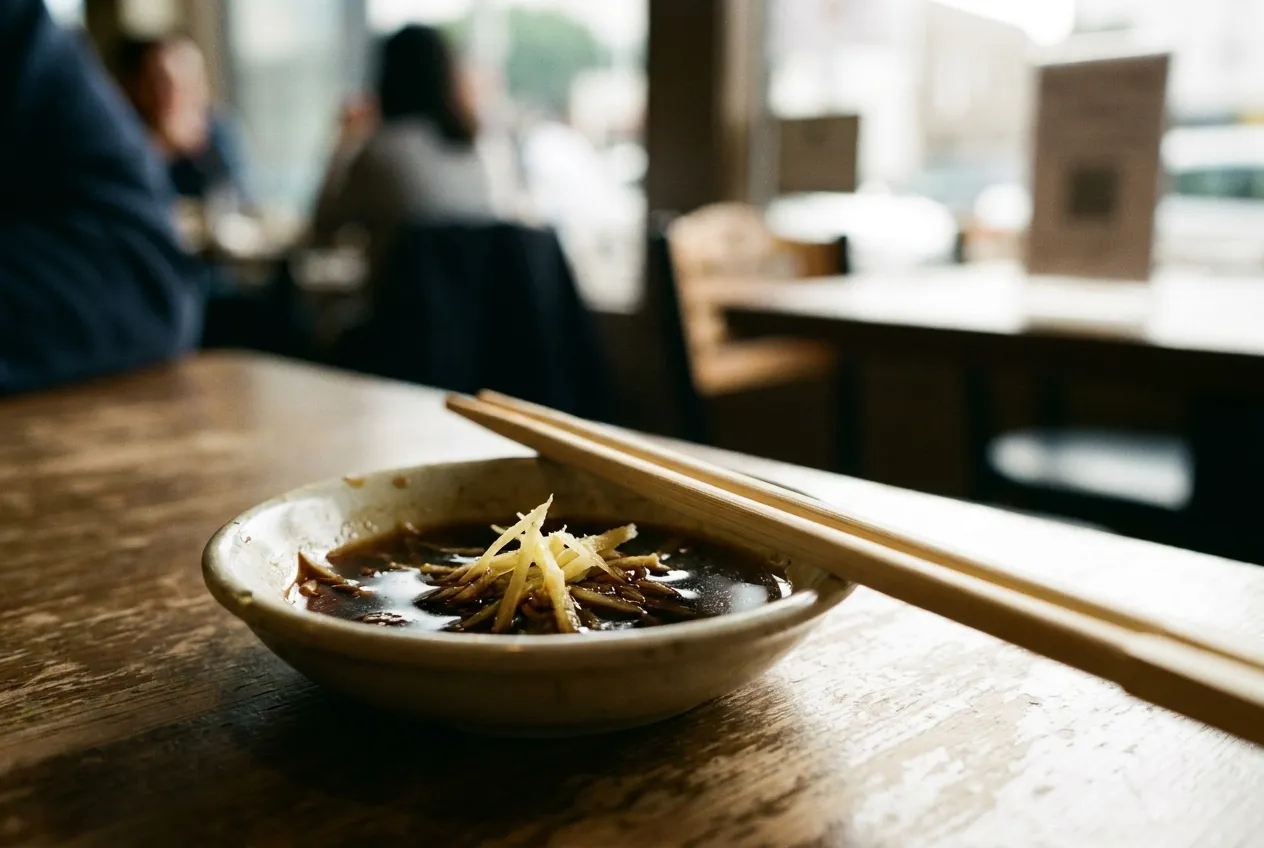
The dip is black vinegar with fine shreds of fresh ginger, and the ginger is not a garnish - the sharpness cuts the fat and the aromatic lifts the pork. Do not add soy sauce; it is salty enough already. And do not order six baskets at once for a table of four, because they arrive together and the window is short. Order in waves.
Practical notes
Judge on the soup and the wrapper, not the pleat count. Eat within two minutes of the basket arriving. Lift by the pleat, into a spoon, bite a small hole first. Black vinegar with ginger, no soy. Order in waves rather than all at once. Try sheng jian bao if you have only had the steamed version - it is usually cheaper and more forgiving. Prices run roughly twelve to eighteen dollars a basket. The small rooms cluster in Chinatown, the Inner Richmond around Clement Street and the Sunset along Irving and Noriega, and most stop serving by mid-afternoon or early evening. And accept the variability - a small kitchen has a higher ceiling and a lower floor than a standardised one, which is the whole trade.
Tags: #BestDumplings #SanFrancisco #XiaoLongBao #SoupDumplings #DinTaiFung #ShengJianBao #Chinatown #InnerRichmond #ClementStreet #OuterSunset #HiddenGems #SFEats #ChineseFoodSF #Aspic
All trademarks are the property of their respective owners.
Ask Karpo first
Hand-folded dumplings depend on who is working that day and most of these kitchens stop by mid-afternoon. Ask Karpo which rooms near you are folding today, which of them makes sheng jian bao, and whether the one you had in mind is still serving at the hour you can get there.