 Haaland Has Seven Goals and Norway Runs Entirely Through Him
⚽️2026 FIFA WORLD CUP

Spain’s Best Defense Stopped Argentina’s Best Tournament Attack
Spain's tournament-defining defensive discipline met Argentina's prolific attack in East Rutherford. The result was a masterclass in how elite defense can neutralize even the most dangerous offensive side.
When Spain faced Argentina in the final at East Rutherford, New York City, the matchup represented a collision of contrasting tournament identities. FIFA had described Argentina as the competition's highest-scoring team, while Spain entered as the side that had conceded the fewest goals. The clash of attacking prowess versus defensive excellence produced a definitive answer: Spain won 1-0, and Argentina did not record a single shot until extra time—a statistic that tells the story of defensive dominance more clearly than any other.
Text Karpo to dive deeper into tournament statistics, tactical breakdowns, and historical defensive performances. Our service delivers expert analysis on how elite teams construct defensive systems and the metrics that separate good defenses from championship-caliber ones.
Two Tournament Narratives Collide
The pre-final statistical profiles could not have been more different. Argentina had built their tournament run on attacking excellence, consistently finding the back of the net and overwhelming opponents with offensive pressure. Their status as the tournament's highest-scoring team reflected a tactical approach built around creating and converting chances. Meanwhile, Spain had quietly constructed something equally impressive: a defensive structure so sound that opponents rarely threatened their goal.
These contrasting identities set up a fascinating tactical question: would Argentina's proven ability to score against tournament opposition translate against a defense that had consistently frustrated every attack it faced? The final would become a laboratory for testing whether elite defense truly wins championships, or whether exceptional attacking quality inevitably finds a way through. Spain's approach suggested they believed the former; Argentina's tournament journey suggested they trusted their firepower to prevail regardless of opposition.
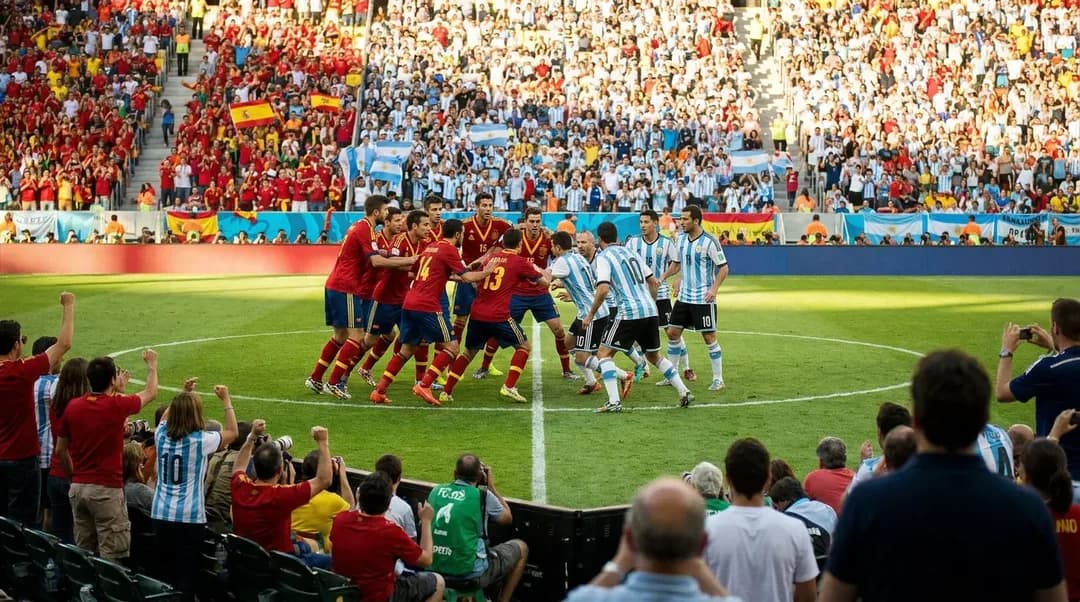
The Statistical Reality of Defensive Excellence
Spain's achievement in reaching the final while conceding the fewest goals in the tournament represents more than luck or favorable draws. Defensive excellence at this level requires systematic organization, disciplined positioning, and the ability to maintain concentration across multiple high-pressure matches. The fact that Spain carried this defensive identity all the way to the final suggests a team-wide commitment to a tactical philosophy that prioritized defensive solidity as the foundation for success.
What makes Spain's defensive record particularly impressive is the context: tournament football, where every opponent arrives motivated and prepared. Maintaining the lowest goals-conceded total requires adaptability against different attacking styles and the mental fortitude to execute defensive principles when fatigue sets in. Spain's defenders, midfielders, and goalkeeper all contributed to a collective achievement that became their defining characteristic—and ultimately, their path to victory.
Argentina's Offensive Identity Meets Its Match
Argentina's status as the tournament's highest-scoring team reflected an attacking identity that had delivered results throughout their run. Their ability to consistently find goals against varied opposition demonstrated tactical flexibility and individual quality. Yet the final exposed the vulnerability inherent in even the most potent attacks: when facing a defense organized specifically to neutralize offensive threats, firepower alone may not suffice.
The statistic that Argentina failed to register a shot until extra time represents a complete tactical suppression. For a team accustomed to creating chances and applying offensive pressure, the inability to even test the goalkeeper in regulation time signals more than bad luck or an off day. It suggests Spain's defensive game plan successfully identified and eliminated Argentina's primary attacking avenues, forcing them into areas where they could not generate dangerous opportunities.

How Defense Wins Finals
The 1-0 scoreline tells the story of a final decided by defensive superiority rather than attacking brilliance. While Spain did score the winning goal, the result was fundamentally shaped by their ability to prevent Argentina from implementing their usual attacking patterns. In championship matches where pressure intensifies and margins shrink, the team that concedes fewer mistakes often prevails over the team attempting spectacular attacking plays.
Spain's victory validates a tactical truth that sometimes gets overlooked in an era that celebrates attacking football: defense remains the most reliable path to championship success. By maintaining their defensive discipline from the tournament's opening matches through the final whistle in East Rutherford, Spain demonstrated that consistency in defensive principles can overcome even the most talented attacking opposition. The fact that Argentina could not record a shot until extra time shows how thoroughly Spain controlled the defensive aspects of the match.
The Tactical Chess Match in East Rutherford
Finals often become tactical chess matches where teams probe for weaknesses rather than playing with the freedom shown in earlier rounds. Spain's approach appeared designed to deny Argentina the space and time needed to execute their attacking patterns. By maintaining defensive shape and discipline, Spain forced Argentina to search for alternative approaches—searches that yielded no shots in regulation time. This represents tactical coaching at its finest: identifying an opponent's strengths and systematically removing them from the equation.
Argentina's inability to adapt tactically enough to generate even a single shot before extra time raises questions about their preparation for a defense of Spain's quality. While their attacking prowess had been sufficient against other tournament opponents, Spain presented a defensive challenge that required different solutions. The tournament's highest-scoring team was rendered shotless by the tournament's best defense—a result that appears almost inevitable in hindsight but required exceptional execution from Spain to achieve in practice.
The Legacy of a Defensive Masterclass
Spain's 1-0 victory will be remembered as a defensive masterclass—proof that championship-level defending can neutralize elite attacking talent. The match becomes a reference point for coaches and analysts studying how to build defensive systems capable of withstanding pressure from the world's best attackers. For Argentina, the loss demonstrates that offensive excellence alone does not guarantee success when facing an opponent that has perfected defensive organization.
The final in East Rutherford answered the tactical question at its heart: when the tournament's best attack meets the tournament's best defense, which prevails? Spain's ability to hold Argentina shotless until extra time while securing a 1-0 victory provides a definitive answer. Defense, when executed with the discipline and organization Spain displayed throughout the tournament, remains the most reliable foundation for championship success—even against opponents capable of scoring against everyone else.
Tags: #Spain #Argentina #TournamentFinal #DefensiveExcellence #TacticalAnalysis #ChampionshipFootball #EastRutherford #EliteDefense #SoccerStatistics
All trademarks are the property of their respective owners.
Ask Karpo First
Want to understand how defensive systems are built to stop specific attacking threats? Karpo provides detailed tactical analysis, historical comparisons of defensive performances in major finals, and statistical breakdowns that reveal how elite teams construct championship-winning defenses. Get expert insights that go beyond the scoreline to explain the tactical decisions that determine tournament outcomes.
Ask Karpo for more information.
Keep reading
- Haaland Has Seven Goals and Norway Runs Entirely Through Him
 World Cup Trophy Ceremony Timing Medals and Postmatch Celebrations
 Olise and France's Attack: The Semifinal Tactical Question