Searching pizza near me in Los Angeles produces two economies that barely touch. One is the twenty-five dollar pie from a wood oven with a named flour and a two-day ferment. The other is the slice shop, where a wide triangle costs a few dollars and the whole business model depends on selling a lot of them fast. The second economy is not a degraded version of the first. It is a different craft with different rules, and once you know the rules you can tell a good five dollar slice from a bad one before you order.
A cheap slice is good or bad for reasons you can see from the doorway, before you spend anything. Tell Karpo where you are and it will point you at shops that are running the oven hard rather than reheating a lunchtime tray.
What a cheap slice must get right
Turnover, first and above everything. A slice is at its best in the few minutes after it comes out of the oven and declines steadily after that. A shop selling forty pies a night is serving you fresh pizza by accident; a shop selling six is serving you a tray that has been under a lamp since lunch. This is why the busy shop is almost always the better one, and why the queue is a feature rather than a cost.
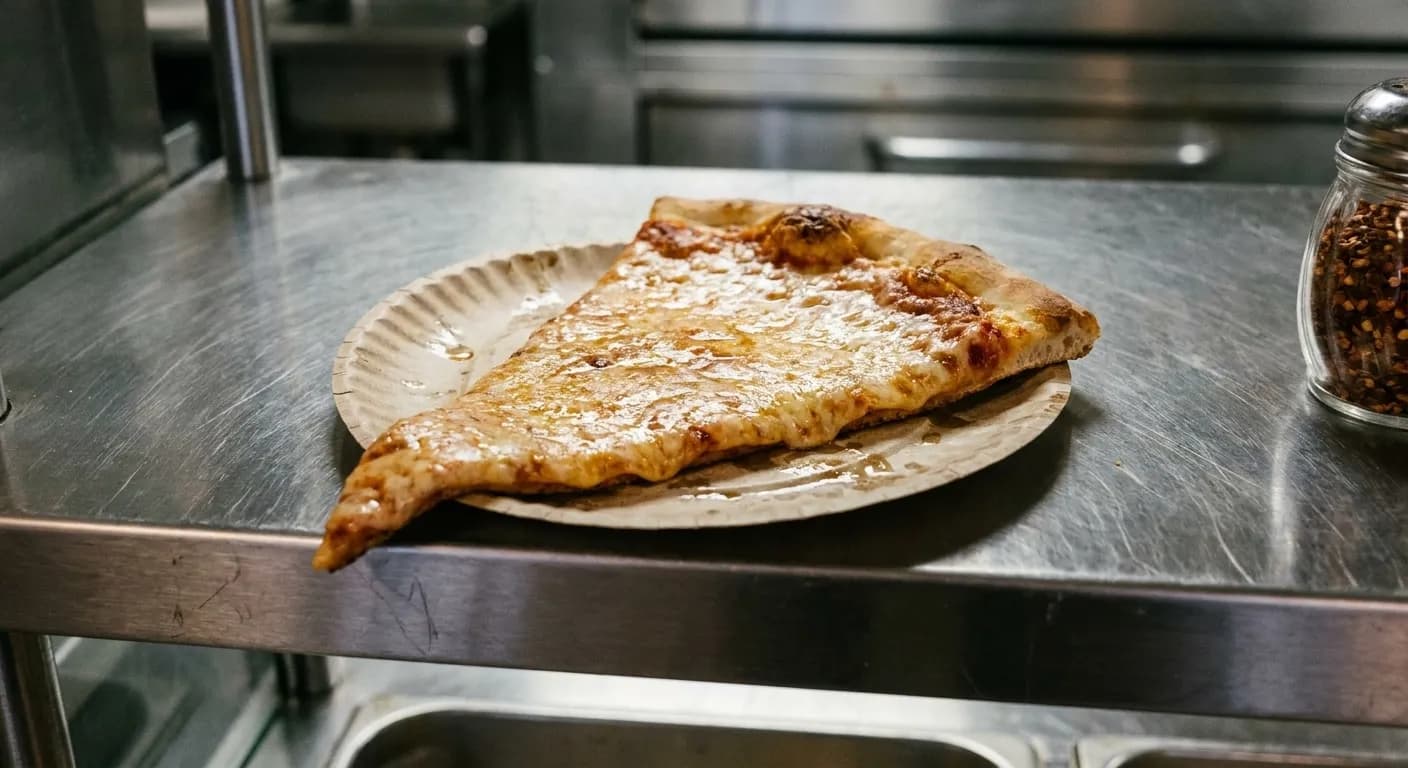
Second, the reheat. Every slice shop reheats, and the good ones do it in the deck oven for a minute rather than in a countertop toaster. If the slice comes back with a crisp underside and a leopard-spotted edge, the shop is doing it properly. If it arrives limp and uniformly hot, it went in a box.
What it is allowed to skip
Cheap slice shops skip the things that cost time rather than money. Long fermentation, imported flour, fresh mozzarella that weeps water under a lamp, delicate toppings. None of that is a failure. Low-moisture mozzarella is the correct cheese for a slice, a cooked sauce holds better than a raw one, and a dough that can sit for a few hours without collapsing is doing exactly its job. Judging a slice shop by the standards of a Neapolitan room is a category error that leads people to bad conclusions about very good pizza.
Where the slice shops are in this county
Los Angeles never had the dense downtown lunch geography that made New York a slice city, so the shops here follow other kinds of foot traffic: the bar corridors, the university edges, the beach towns, the theatre and venue blocks, and the older commercial strips in the Valley. The consequence is that the best slice in Los Angeles is disproportionately a late-night slice, because the shops are positioned where people come out of somewhere else at eleven.
The signals you can read from the doorway
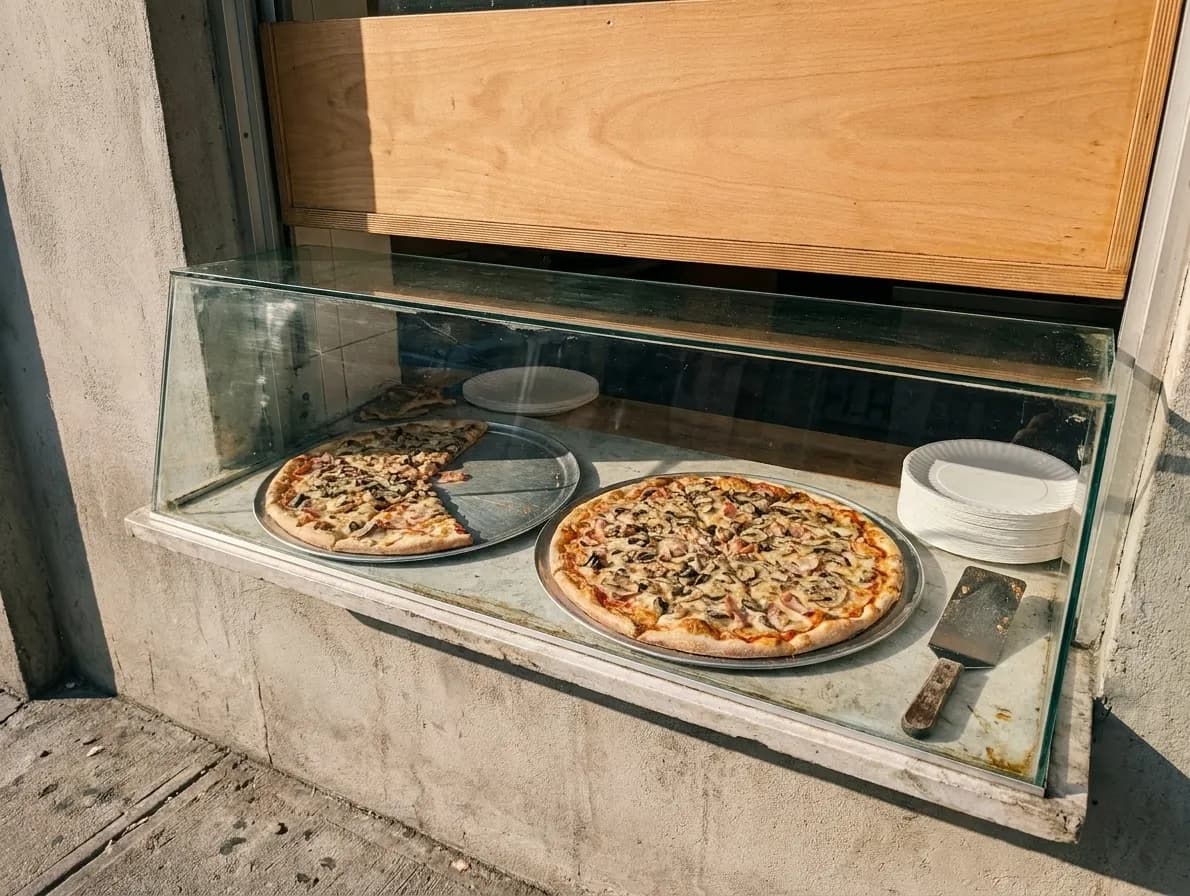
A deck oven you can see, with a person at it. Two or three pies out at once rather than eight, meaning they are baking to demand. A short topping list. Slices going out continuously rather than sitting. Paper plates rather than boxes for eat-in. None of this requires you to know anything about pizza — it is just a read on whether the shop is running hot.
The order that gets the best version
Ask for a fresh one if a pie is about to come out; most shops will tell you honestly how long it is. Take cheese or a single topping rather than a loaded slice, because weight is what makes a cheap slice sag. Two plain slices are almost always better than one elaborate one at the same price. And eat it standing at the shelf rather than walking, which sounds fussy and is the difference between crisp and folded.
Slice prices in this county have moved upward for several years and hours vary widely by shop, so treat the number in the headline as the target rather than a guarantee and check before you set out.
The late-night slice, which follows different rules
After about eleven the calculation inverts. The shops that are busiest are the ones near the bars, which means the pizza is fresh precisely when quality would otherwise be at its worst, and the shops that are quiet are reheating trays that have been out for hours. At that hour the queue is the single most reliable signal available, and joining the longer of two adjacent queues is almost always right.
Two practical notes for the late version. Cash moves faster than a card at a busy counter and some shops prefer it after midnight. And the slice that survives the walk home is a plain one — anything heavily topped collapses in a paper plate within three minutes, which is why the veterans in front of you are all ordering cheese.
Tags: #LosAngeles #LA #SoCal #FreeThingsToDo #CheapEats #BudgetFriendly #Pizza #LAEats #LAGuide #ExploreLA #LALocal #LAWeekend #LANights #LAFood
Sources consulted: la.eater.com · latimes.com · laist.com
All trademarks are the property of their respective owners.
Ask Karpo first
Karpo is a proactive AI assistant that lives in iMessage. Ask which shop is busy right now and it will send you to a hot oven.