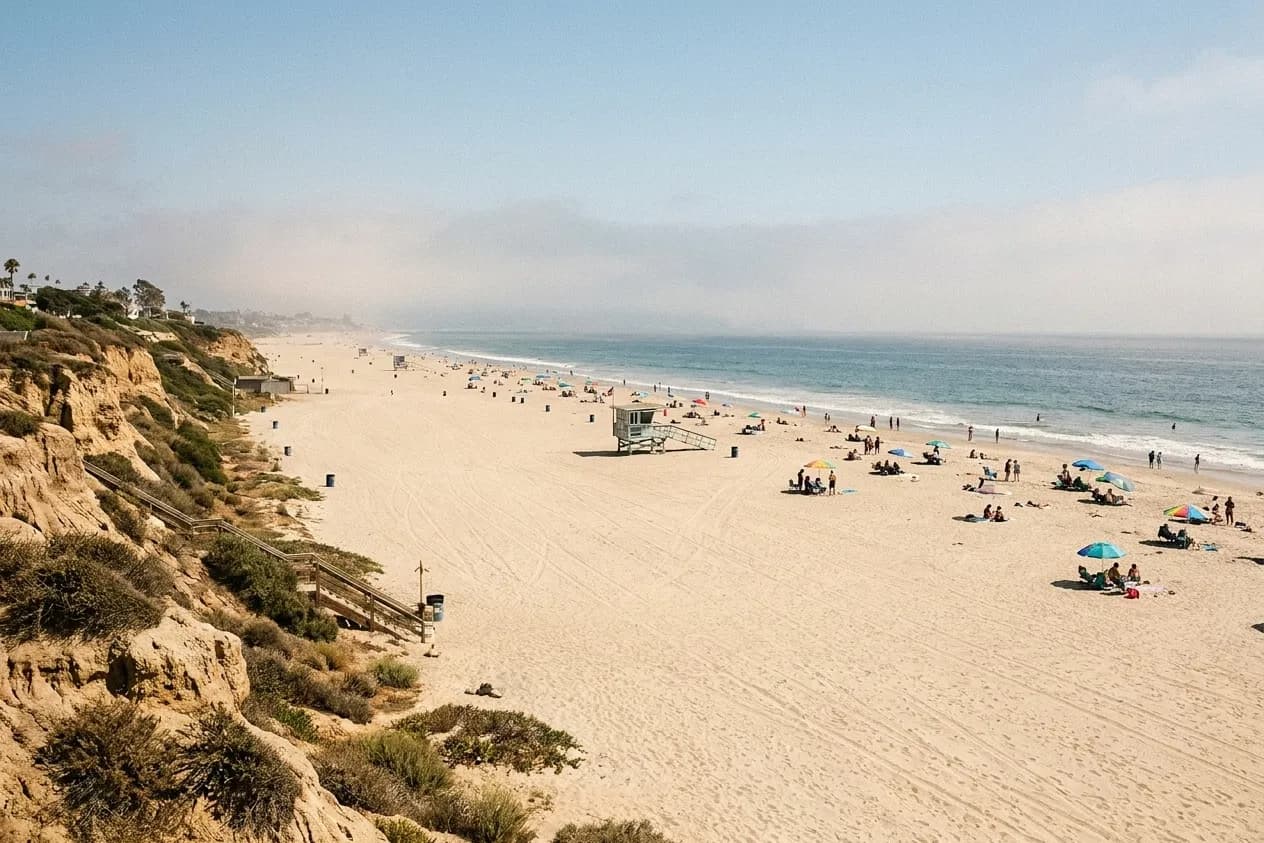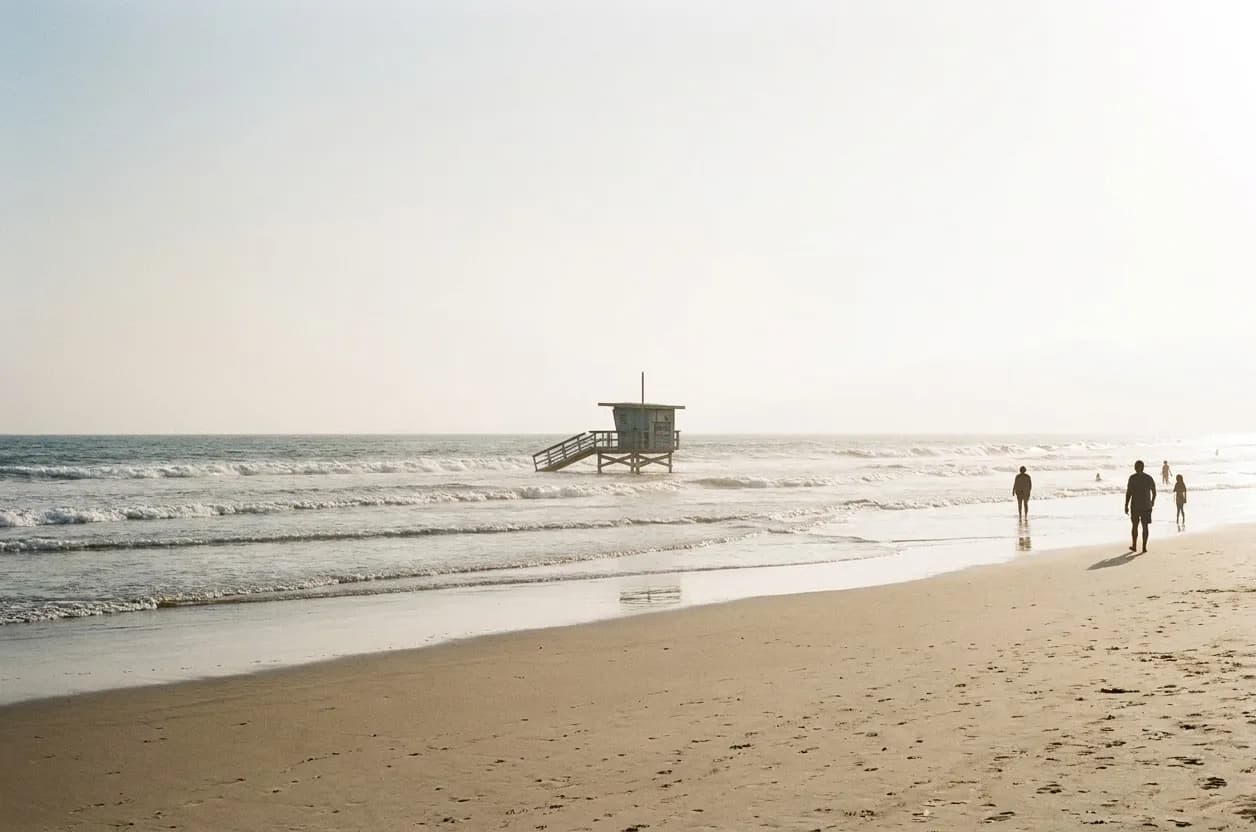
Ranking the best beaches near Los Angeles by sand quality or wave height is a mostly academic exercise, because the coastline here is uniformly good and the variable that actually determines your day is parking. A beautiful beach with a two-hour search for a space is a worse day out than an ordinary one with a lot you can drive straight into. So this is ranked by the thing that matters.
Lots fill by mid-morning and the pricing changes by season. Ask Karpo what parking looks like at your beach right now.
Easy: the beach cities with structured parking
Santa Monica, Manhattan Beach, Hermosa and Redondo all have proper municipal lots and structures, and while they cost money they essentially always have space outside peak summer weekends. Santa Monica's beach lots are the largest and the most expensive; the South Bay cities are cheaper and considerably less crowded.
Manhattan Beach is the pick of these for a straightforward day — good sand, a walkable town at the top of the hill, a pier, and structures a few blocks back that almost always have room. The Strand, the paved path running along the sand, connects all the South Bay beaches and makes it easy to walk or cycle between them once you have parked once.
Moderate: worth timing carefully
Venice has lots along the beach that fill early and street parking that is genuinely competitive. Playa del Rey and Dockweiler are the overlooked options in this stretch — Dockweiler sits under the flight path, which puts a lot of people off, and in exchange it has fire pits, parking and space. If you want a beach bonfire near Los Angeles without a fight, that is the answer.
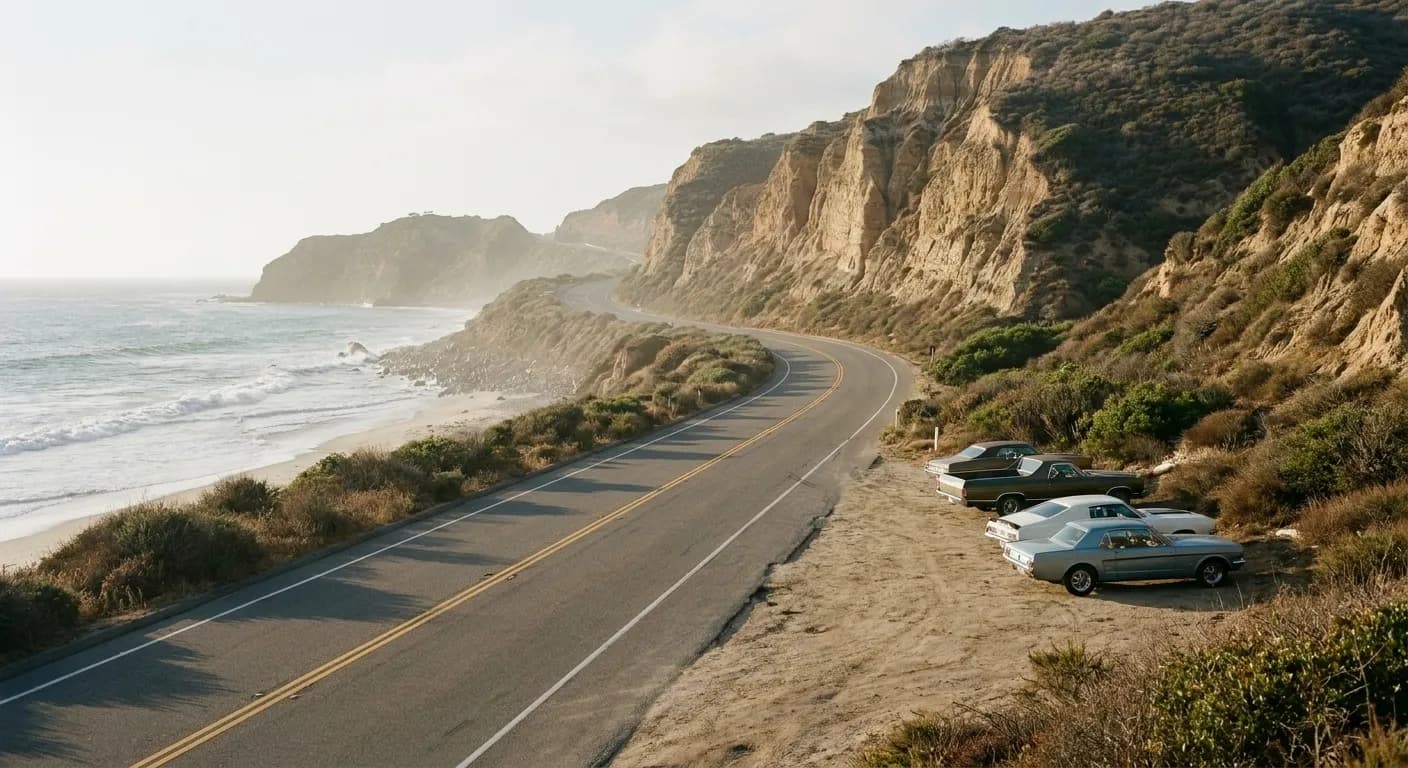
Will Rogers and the stretch north of Santa Monica have paid lots directly on the sand that are fine on a weekday and difficult on a summer Saturday. The general rule along this whole section: arriving before ten or after three transforms the experience, and the middle of the day is when everyone else is trying.
Hard: Malibu and the coves
The famous Malibu beaches — El Matador, El Pescador, La Piedra — are the most photographed on this coast and have tiny cliff-top lots holding a couple of dozen cars. When the lot is full people park along the highway, which is legal in places and dangerous everywhere. These beaches are genuinely spectacular and genuinely difficult, and they only work early on a weekday.
Zuma, further up, is the exception in Malibu: an enormous beach with an enormous lot, and it rarely fills. Point Dume next door is beautiful and has almost no parking at all. Choosing between them is choosing between scenery and sanity, and Zuma is usually the right call with a group.
It is also worth knowing that all California beaches are public up to the mean high tide line regardless of what the houses behind them imply, and there are marked public access paths between properties in Malibu. Signage discouraging access is frequently unofficial, and the state maintains maps of the legal ways through.
North of the county line
Driving an hour further gets you a different coastline. Ventura and the beaches around Oxnard are wide, uncrowded and have parking that never fills, and the towns behind them are unpretentious in a way the LA beach cities stopped being decades ago. Leo Carrillo, at the county line, has tide pools and caves and a campground, and it is the best beach within reach for anyone who wants rock pools rather than sand.
Going south rather than north, the Orange County beaches start about an hour out and have the same characteristics as the South Bay — structured parking, walkable towns, reliable space. Neither direction is a Los Angeles beach exactly, but both remove the parking problem entirely, which was the point of the exercise.
The transit answer
Several beaches are reachable without a car, which removes the whole problem. The Metro line running west reaches downtown Santa Monica, a few blocks from the pier and the sand, and it is faster than driving on a summer weekend. Bus routes reach Venice, the South Bay and along the coast toward Malibu, slowly but reliably.
If you are going on a hot Saturday in July, transit is not a compromise — it is the correct choice. The freeway west and the coast highway both jam completely, and the train is running the whole time at the same speed it always does.
The other variables worth checking
Water quality after rain, which is a genuine issue here — runoff makes the water near storm drains unpleasant and sometimes unsafe for a couple of days after a storm, and the county publishes grades. Fire pit availability, which is limited to specific beaches and goes fast. And the marine layer, which sits on the coast until midday for much of late spring and early summer while the rest of the city is sunny.
That last one catches people out constantly. May and June mornings at the beach here are grey and cool, and the sun frequently does not arrive until one or two in the afternoon. Planning a beach day for the afternoon in those months rather than the morning is the single easiest improvement available, and it has the useful side effect of arriving after the morning parking rush has cleared.
Tags: #LosAngeles #Beaches #SantaMonica #ManhattanBeach #Malibu #ElMatador #Zuma #Dockweiler #SouthBay #BeachParking #FreeThingsLA #SoCal #DayTrip
All trademarks are the property of their respective owners.
Ask Karpo first
Ask Karpo which beaches near you around Los Angeles still have parking right now, what the lot costs, and whether the marine layer has burned off yet.