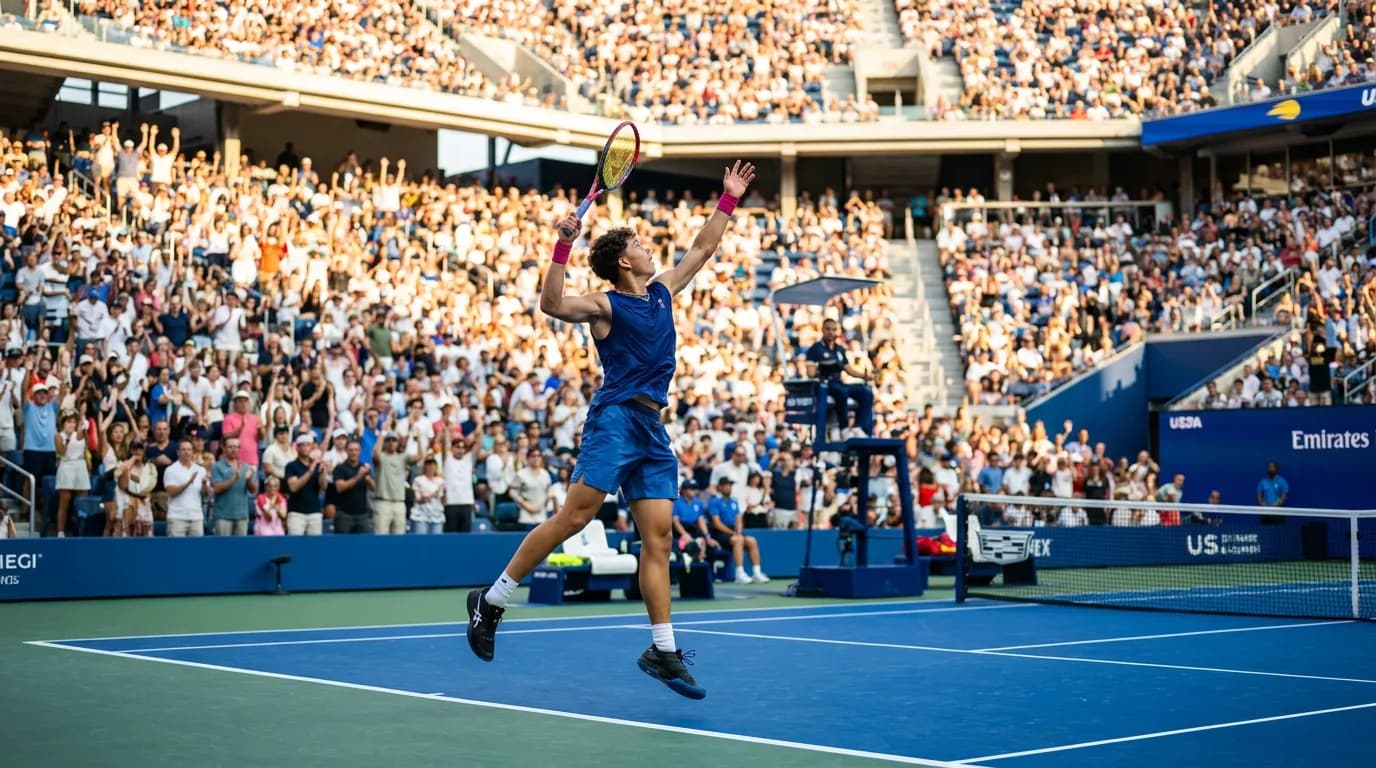
When Ben Shelton steps onto Arthur Ashe Stadium under the lights, the geometry of tennis changes. His left-handed serve, already a weapon that carried him to the 2023 US Open semifinals, takes on additional dimensions during night sessions when the ball moves differently through cooler, heavier air and returners must recalibrate their positioning against angles they rarely face. The combination of his natural southpaw advantage, the atmospheric conditions unique to evening matches, and the electric energy of a New York crowd creates a scenario where his service games become exponentially more difficult to break. For fans planning their US Open experience, understanding why Shelton's serve plays so effectively at night offers insight into one of tennis's most compelling tactical puzzles and why a night-session ticket featuring the young American might deliver exceptional entertainment value.
Text Karpo Now: Tell us what you want from Ben Shelton’s Serve Could Transform US Open Night Sessions, and Karpo can track official updates, match timing, tickets, transit, and the easiest way to plan your US Open day.
The Left-Handed Serve Advantage Explained
Only about ten percent of professional tennis players are left-handed, which means most opponents spend the vast majority of their practice time and match preparation returning serves that spin and angle in the opposite direction. When a right-handed server hits a slice serve out wide in the deuce court, the ball curves away from a right-handed returner's forehand. When Shelton hits that same serve, it curves into the body or toward the backhand, creating an entirely different return geometry. This unfamiliarity compounds throughout a match because returners cannot rely on the muscle memory they have developed over thousands of repetitions against right-handed opponents.
The advantage extends beyond simple unfamiliarity. Shelton's serve creates specific tactical problems in the ad court, where his natural slice angles pull right-handed returners wide to their forehand side, opening the entire court for his next shot. The geometry forces returners into defensive positions immediately, and the wider they stand to protect against the angle, the more vulnerable they become to serves down the T. This constant adjustment between protecting the wide angle and guarding the middle creates hesitation, and hesitation on return is fatal at the professional level.
Night Session Atmospheric Conditions
Tennis balls behave measurably differently during US Open night sessions compared to afternoon matches. As temperatures drop from the heat of a New York summer day into the seventies or even sixties at night, air density increases. Denser air creates more resistance, which means serves arrive slightly slower but with more pronounced spin effects. For a power server like Shelton, this atmospheric change actually enhances the effectiveness of his serve because the additional spin creates more dramatic curves and bounces while the modest speed reduction remains well within the range where returners struggle to react.
The lighting conditions also matter significantly. Arthur Ashe Stadium's lights create shadows and depth perception challenges that differ from natural sunlight. Returners must track a yellow ball against a dark sky filled with bright lights, and the contrast can make it harder to pick up the ball immediately off the strings. Those first few milliseconds of ball flight provide crucial information about spin, speed, and trajectory. Any delay in processing that information reduces reaction time, and against a serve as heavy as Shelton's, reduced reaction time translates directly into more service holds and more pressure on the returner's own service games.
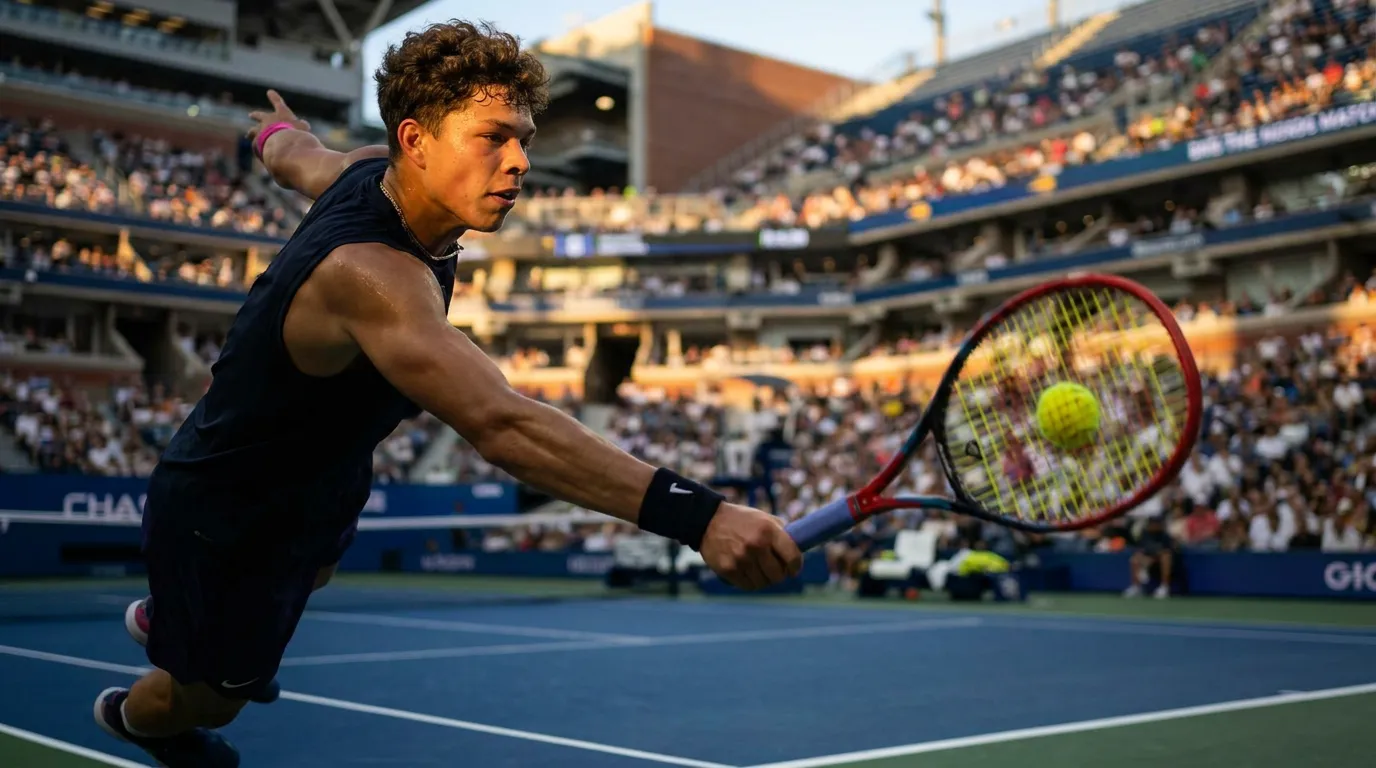
Crowd Energy and Momentum Shifts
US Open night sessions carry a different energy than day matches. The evening crowd has often come straight from work, paid premium prices for their tickets, and arrived ready to create an atmosphere. When an American player like Shelton delivers a crushing serve or an ace at a crucial moment, the roar from more than twenty-three thousand fans in Arthur Ashe Stadium becomes a physical force. That energy feeds directly into a player's confidence and can create a feedback loop where crowd support leads to better performance, which generates more crowd enthusiasm, which elevates performance further.
Shelton's expressive style amplifies this dynamic. His visible emotion and engagement with the crowd invite fans to become active participants rather than passive observers. When he pumps his fist after an ace or celebrates a service winner, the crowd responds, and that response becomes part of his tactical arsenal. Opponents must hold serve not just against Shelton's physical weapons but also against the psychological weight of an entire stadium pulling for their opponent. This pressure is particularly acute on break points, where the crowd's anticipation becomes almost tangible and returners must execute under conditions that feel more like a road playoff game in basketball than a typical tennis match.
Return Pressure and Mental Fatigue
Facing a dominant server creates cumulative mental pressure that builds throughout a match. When a returner consistently fails to put serves back in play or can only manage weak returns that lead to easy putaways, doubt begins to creep in. That doubt affects not only return games but also the returner's own service games, where the knowledge that breaking back will be extremely difficult adds pressure to every point. Against Shelton's serve in a night session, this mental burden intensifies because returners know they are fighting not just the server but also the conditions and the crowd.
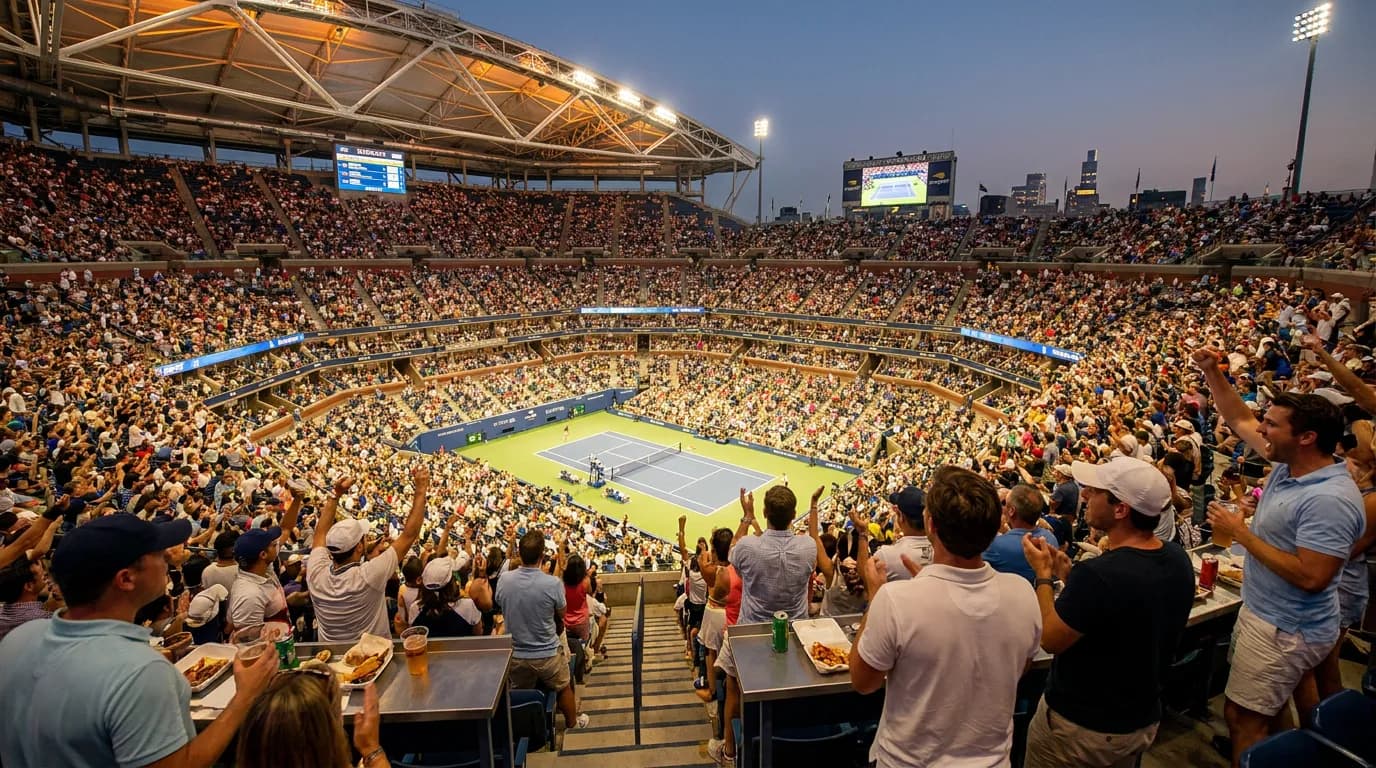
The mental fatigue compounds when returners must constantly adjust their positioning and timing. Against most servers, returners can settle into a rhythm and make small adjustments as the match progresses. Against a left-handed server with Shelton's variety and power, that rhythm never fully develops. Each service game requires renewed focus and adjustment, and maintaining that level of concentration over the course of a best-of-five-set match becomes exhausting. The night session environment, with its noise and energy, makes that concentration even more difficult to sustain.
- Cooler evening temperatures increase air density, enhancing spin effects on serves while maintaining effective velocity
- Stadium lighting creates tracking challenges for returners trying to pick up ball flight against dark backgrounds
- Night-session crowds typically arrive with higher energy levels and greater willingness to create atmosphere
- The left-handed serve angle becomes more difficult to read under artificial lighting conditions
Practical Notes
If you are planning to attend US Open night sessions, arrive early enough to experience the atmosphere build as the stadium fills and the sun sets over Flushing Meadows. The transition from daylight to artificial lighting creates a distinct shift in energy that enhances the night-session experience. Seats in the lower bowl provide the best perspective for appreciating serve angles and spin, while upper-level seats offer a tactical overview that makes it easier to see court positioning and shot patterns. Bring a light jacket even during summer because temperatures can drop significantly once the sun goes down, and the concrete structure of Arthur Ashe Stadium can feel cool in the evening breeze.
Tags: #USOpen2026 #Tennis #GrandSlam #NewYorkTennis #ArthurAsheStadium #FlushingMeadows #USOpenGuide #TennisFans #SportsTravel #HardCourt #NewYork #KarpoFinds
Sources consulted: usopen.org — Official reference · usopen.org — Official reference
All trademarks are the property of their respective owners.
Ask Karpo first
Before you lock in tickets or build a full day around an unconfirmed schedule, ask Karpo first. Share your dates, budget, and favorite players, and Karpo can help turn official US Open updates into a practical New York plan.