 Haaland Has Seven Goals and Norway Runs Entirely Through Him
⚽️2026 FIFA WORLD CUP
Finding Belgian Beer Halls and Red Devils Supporter Corners
Track down Belgian beer halls and Red Devils supporter corners across the U.S., where abbey ales meet World Cup fervor in wood-paneled, frites-scented glory.
Wood, Brass, and the Scent of Malt
Belgian beer halls in the United States occupy a curious niche: they're too serious for the sports-bar crowd, too convivial for the craft-snob set, and exactly right for anyone who believes beer should be poured into a chalice and paired with something fried. The best examples—scattered through neighborhoods in New York, Chicago, and a handful of other cities—feature long communal tables, brass taps dispensing Westmalle and Orval, and a menu that doesn't apologize for putting mayo on everything. They hum with a particular energy on match days, when the Red Devils take the pitch and the room fills with fans who've been nursing the same Duvel for an hour because twelve percent demands respect.
Backing the Red Devils? Ask Karpo where to find Belgian beer halls and supporter corners.
These aren't theme parks. The proprietors tend to be Belgian expats or beer obsessives who've made the pilgrimage to Bruges and returned with a conviction that American bar culture needs more lambic and fewer light lagers. You'll find abbey ales by the dozen, often served at cellar temperature in the correct glassware, and a staff that can explain the difference between a dubbel and a quadrupel without sounding like a seminary lecturer. The frites come in paper cones, the mayo is house-made, and the carbonade flamande—if they serve it—tastes like someone's grandmother shipped the recipe across the Atlantic in a locked box.
When the World Cup arrives in June 2026, these halls will transform into nerve centers for Belgium's traveling faithful and the American-born converts who've adopted the Red Devils as their second team. The tournament runs from June 11 to July 19 across the United States, Canada, and Mexico, with the final at MetLife Stadium in East Rutherford, New Jersey, on July 19. If Belgium advances deep into the knockout rounds, expect these rooms to be standing-room-only, the air thick with Flemish and the occasional burst of "Ça plane pour moi" when a goal goes in.
New York's Belgian Corridor
New York City claims the densest concentration of Belgian beer halls in the country, a legacy of decades of expat settlement and a dining culture that rewards specificity. In Manhattan, you'll find establishments in the East Village and Midtown that stock fifty or sixty Belgian labels, from the monastic heavyweights to sour Flanders reds that taste like cherry wood and time. The East Village spots tend to draw a younger, louder crowd on match days, while the Midtown venues skew toward finance types who've discovered that a Rochefort 10 pairs better with a conference call than another espresso.
Brooklyn's Belgian outposts—particularly in Park Slope and Williamsburg—lean into the neighborhood vibe, with chalkboard menus, mismatched furniture, and a clientele that includes both Belgian families and American beer nerds who've read every issue of *The New Brewer*. These are the places where you can order a flight of Trappist ales and a bowl of moules-frites and feel like you've stepped into a Ghent café, minus the cobblestones. When the Red Devils play, the owners often project the match onto a back wall and let the regulars take over, chanting and groaning in a mix of Dutch, French, and heavily accented English.
For the 2026 World Cup, New York will host official fan zones including the Fan Village at Rockefeller Center, the Jersey Fan Hub at Sports Illustrated Stadium in Harrison, the Queens Fan Zone at the USTA Billie Jean King National Tennis Center, and the indoor Dream Fan Fest at American Dream. But the real atmosphere will be in these beer halls, where the screens are smaller, the stakes feel higher, and someone always brings a flag the size of a bedsheet.
Chicago's Midwest Belgian Outpost
Chicago's Belgian beer scene punches above its weight, anchored by a handful of establishments in Lincoln Park, Lakeview, and the Loop that treat Belgian brewing with the same reverence the city reserves for deep-dish pizza and the Cubs. These halls tend to be cozier than their New York counterparts, with lower ceilings, darker wood, and a clientele that includes a surprising number of Midwestern transplants who discovered Chimay on a college semester abroad and never looked back. The frites here are often double-fried in beef tallow, the mayo spiked with Dijon, and the beer list organized by region and brewery rather than style.
On Red Devils match days, the Chicago Belgian halls fill with a mix of expats, soccer obsessives, and curious locals who've heard the atmosphere is worth the trip. The crowds are smaller than in New York but no less passionate, and the bartenders—many of whom hail from Antwerp or Brussels—have a knack for remembering your order and your opinion on Kevin De Bruyne's form. The vibe is less frantic than coastal cities, more akin to a living room where everyone happens to be drinking beer that costs fourteen dollars a glass.
Chicago won't host World Cup matches in 2026, but that won't stop these halls from programming every Belgium fixture, likely with extended hours and special menus. Expect Belgian waffles at halftime, Stella on draft for the less adventurous, and at least one regular who insists on wearing a vintage Enzo Scifo jersey from the 1986 tournament.
Frites, Mayo, and the Art of the Pairing
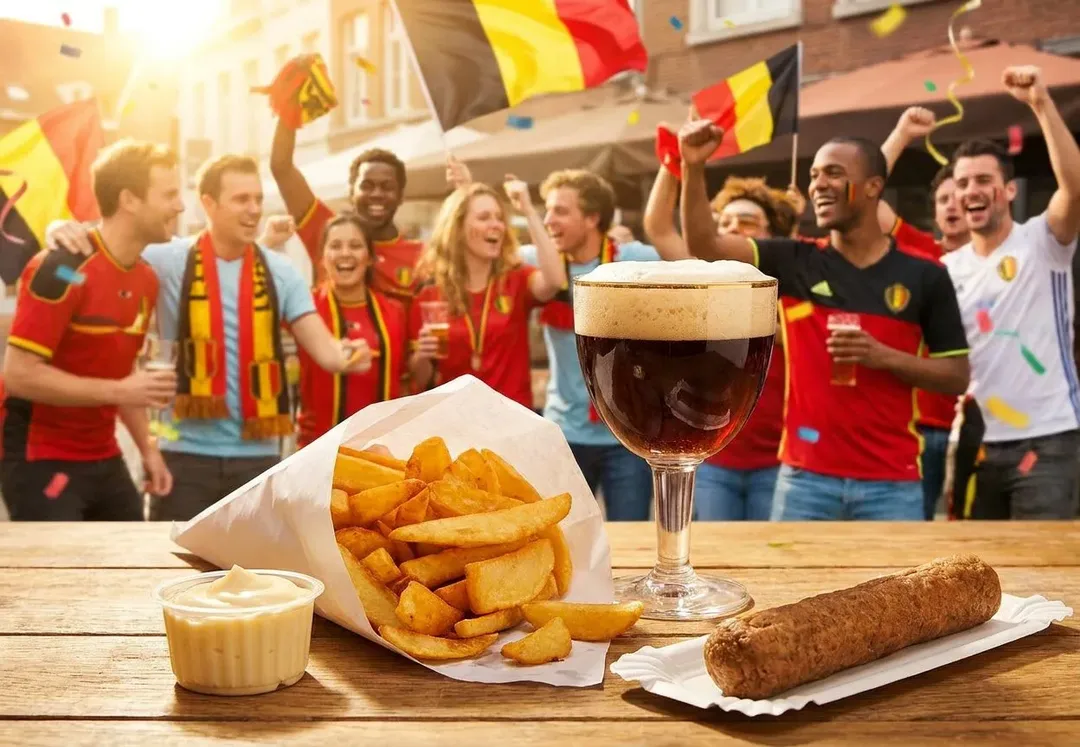
Belgian beer halls live or die on their frites, and the American versions have learned this lesson well. The best examples serve them in paper cones, double-fried to achieve that contrast of crackling exterior and fluffy interior, with a side of mayo that's been whipped with lemon juice and a whisper of garlic. Some halls offer a mayo bar with a dozen variations—truffle, harissa, curry ketchup—but purists stick with the classic, which is rich enough to coat the frites without drowning them and tangy enough to cut through the sweetness of a dubbel or the funk of a saison.
The pairing logic is simple: salty, fatty frites demand a beer with enough carbonation and bitterness to reset your palate between bites. A crisp Stella or Jupiler works for the masses, but the real move is a dry-hopped saison or a tart geuze, both of which scrub your tongue clean and make you reach for another frite. The abbey ales—dubbels, tripels, quads—are dessert beers, best saved for after the match or paired with the carbonade, where the beer's dark-fruit sweetness mirrors the stew's slow-cooked richness.
On match days, the frites come out in waves, often accompanied by bitterballen (fried beef ragout balls), cheese croquettes, and the occasional waffle for fans who can't wait until dessert. The goal is to keep everyone fed and lubricated without slowing down the drinking, a balancing act that Belgian beer halls have perfected over centuries and American operators have imported with varying degrees of success.
Red Devils Faithful and the Expat Network
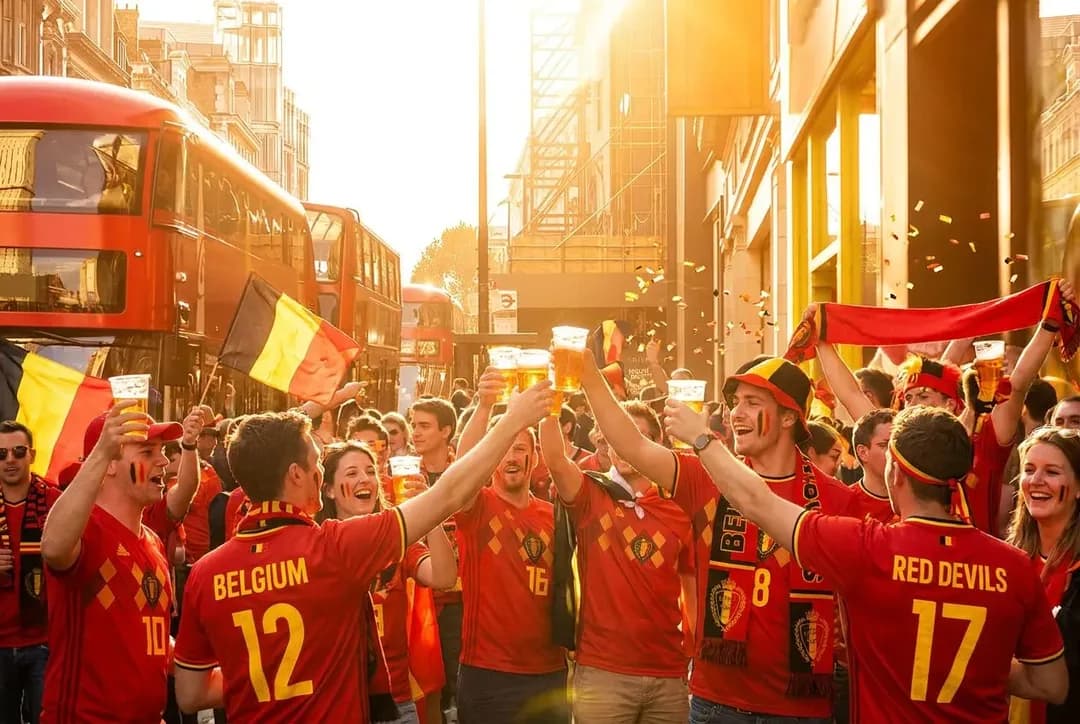
The Red Devils supporter network in the United States is smaller and quieter than the English, Mexican, or Brazilian equivalents, but it's no less devoted. Belgian expats and dual citizens anchor the community, joined by Americans who fell for the team during the 2014 or 2018 World Cups and never fell out. They congregate in the same handful of beer halls for every qualifier, every friendly, every tournament match, building a rhythm of ritual and superstition that would make any European football fan nod in recognition. There's always one guy in a vintage Wilmots kit, one woman who brings homemade speculoos cookies, one regular who insists Belgium will finally win it all this time despite decades of evidence to the contrary.
These supporter corners operate on a mix of Facebook groups, WhatsApp threads, and word-of-mouth, with the beer halls serving as de facto clubhouses. The owners often cut deals for match days—discounted Jupiler buckets, free frites at halftime, a round on the house if Belgium scores in the first ten minutes—and the atmosphere tilts toward communal rather than commercial. You don't need a membership card or a secret handshake; you just need to show up, order a beer, and refrain from cheering for the opposition.
For the 2026 World Cup, expect these corners to swell with casual fans and curious newcomers, especially if Belgium draws a favorable group and advances to the knockout rounds. The semifinals will be at AT&T Stadium in Arlington and Mercedes-Benz Stadium in Atlanta, and the final at MetLife Stadium on July 19 will feature the tournament's first-ever halftime show, curated by Chris Martin with Madonna, Shakira, and BTS. MetLife has no on-site spectator parking and no tailgating; fans will use official shuttles or NJ Transit rail, so plan to pre-purchase tickets and keep your return wristband. If Belgium makes it that far, the beer halls will be packed for every match leading up to it, and the final itself will feel like a national holiday for a country that isn't even hosting.
Beyond the Coasts: Belgian Beer in Unexpected Places
Belgian beer culture has seeded itself in unlikely corners of the American map, from Kansas City to Portland to Austin, often in the form of a single bar or bottle shop run by someone who spent a year in Leuven and came home with a mission. These outposts may not have the density or pedigree of New York or Chicago, but they serve the same function: a gathering place for expats, beer nerds, and soccer fans who want to watch the Red Devils with people who understand why a 1-0 win over Slovakia is worth celebrating.
Kansas City, for instance, has a small but active Belgian beer scene and will host World Cup watch parties at the Power & Light District's 'Soccer in the City' events, plus an official FIFA Fan Festival on the National WWI Museum and Memorial grounds. The city's Belgian-focused bars will likely program every Belgium match, complete with frites specials and Trappist tap takeovers. Portland's Belgian beer halls lean into the Pacific Northwest's craft-beer obsession, often blending Belgian styles with local ingredients—hazelnuts in the dubbel, Cascade hops in the saison—while Austin's lone Belgian bar caters to a crowd that's equal parts tech workers and soccer diehards.
These regional Belgian beer halls may lack the foot traffic and expat density of the coastal cities, but they make up for it in enthusiasm and specificity. The owners know their regulars by name, the beer lists are curated with care, and the match-day atmosphere feels less like a bar and more like a living room where everyone's invited. When the World Cup arrives, these places will be packed, and the frites will run out by halftime.
Practical notes
- Belgian beer halls typically stock 30–60 Belgian labels; ask for the abbey ales or Trappist selection if the menu overwhelms.
- Frites are best ordered with classic mayo first; branch out to truffle or curry ketchup only after you've established the baseline.
- Red Devils supporter groups coordinate via social media; search for "Belgian football [your city]" to find the local watch-party hub.
- For the 2026 World Cup final at MetLife Stadium on July 19, pre-purchase NJ Transit tickets and keep your return wristband; no on-site parking or tailgating is permitted.
- Match-day reservations at popular Belgian beer halls fill up fast during tournaments; call ahead or arrive an hour before kickoff to claim a spot.
Belgian beer halls in America exist in a sweet spot between authenticity and adaptation, places where the beer is taken seriously but the atmosphere never tips into solemnity. When the Red Devils take the field in 2026, these rooms will fill with the same mix of hope, nerves, and Trappist ale that's fueled Belgian fans for generations. The frites will be hot, the mayo will be cold, and someone will inevitably start singing "Ça plane pour moi" in the seventy-third minute. It's a small corner of Europe transplanted to American soil, and it's worth finding.
Tags: #BelgianBeer #RedDevils #BeerHalls #WorldCup2026 #AbbeyAles #TrappistBeer #FritesAndMayo #SoccerCulture #NYCBeerScene #ChicagoBars #BelgianFood #SupporterCulture #CraftBeer #FootballFans #BeerAndSoccer
Please drink responsibly. Must be of legal drinking age.
All trademarks are the property of their respective owners.
Ask Karpo first
Planning a Belgian beer crawl or scouting the best Red Devils watch party for the 2026 World Cup? Ask Karpo first. We'll point you toward the halls with the deepest Trappist lists, the crispest frites, and the crowds that know when to cheer and when to groan—so you can spend less time searching and more time raising a chalice when Belgium finally finds the back of the net.
Ask Karpo for more information.
Keep reading
- Haaland Has Seven Goals and Norway Runs Entirely Through Him
 World Cup Trophy Ceremony Timing Medals and Postmatch Celebrations
 Olise and France's Attack: The Semifinal Tactical Question