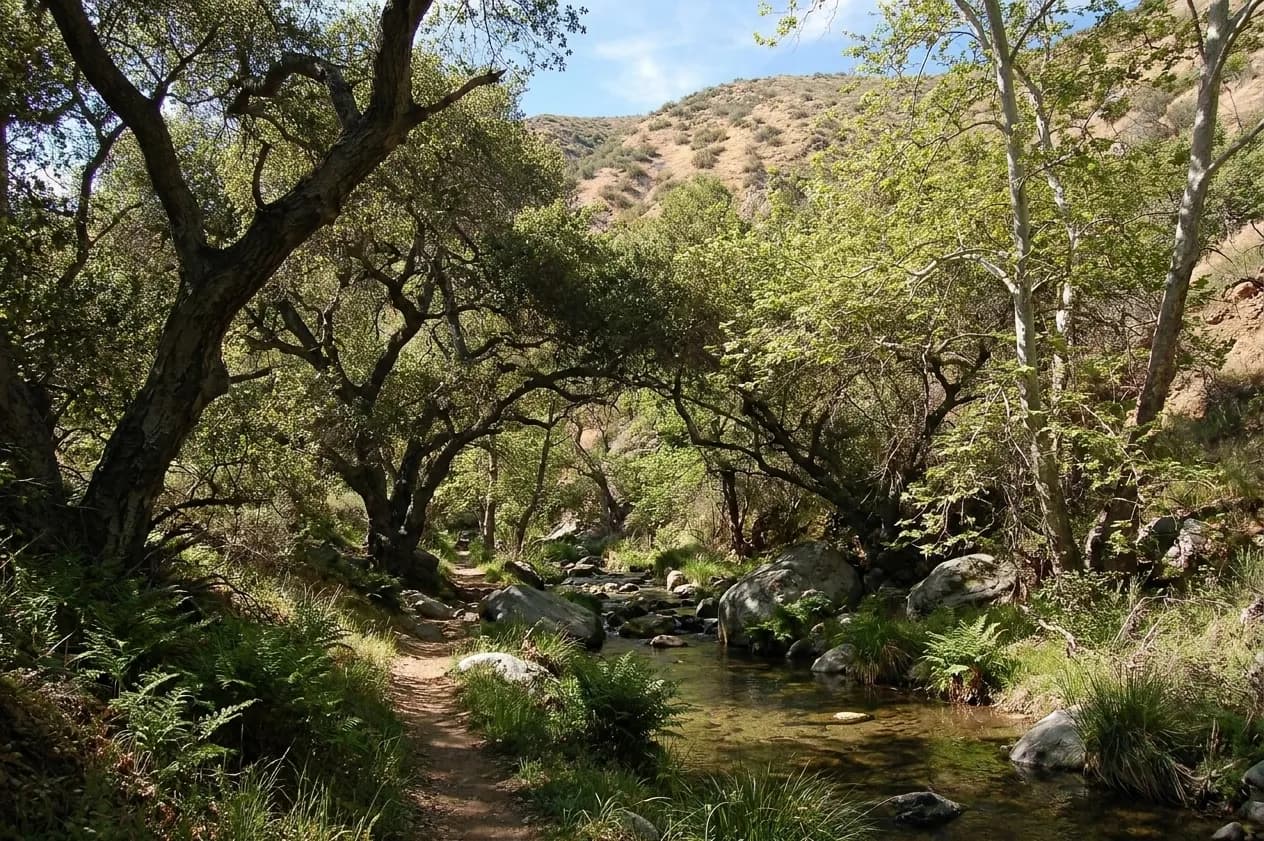
The beaches in Los Angeles County are free and public, all of them, right down to the waterline. What costs money is standing your car somewhere while you use them, and that single fact shapes the whole day — which beach you end up at, how early you leave, and whether the afternoon is relaxed or spent circling. Planning an LA beach day around parking rather than around the sand is the change that makes it work.
Parking is the part of an LA beach day that goes wrong, and it goes wrong before you get there. Tell Karpo when you are heading out and from where, and it will work out which stretch of coast still has room and what the lot will cost you.
Three parking systems, and how to tell which one you are in
The coast runs on three different regimes. County and state lots — the big paved ones behind the sand — charge a flat daily rate that rises in summer and on weekends, and they are the only guaranteed option on a hot Saturday. City metered parking on the streets behind the beach is cheaper per hour but enforced aggressively and usually capped at two or three hours. And free unmetered residential street parking exists in specific pockets, with restrictions that are posted and genuinely enforced.
The general shape: the further you get from a pier, a bike path hub or a restaurant strip, the more likely free street parking becomes. The trade is a walk, usually of five to fifteen minutes, often down a public access stairway between houses.
The access-way beaches: the best free option in the city
The most useful thing to know about this coastline is that California law protects public access to the shore, and there are marked public accessways threaded between private houses along much of the county's length. They are unglamorous — a gap between two fences, a flight of steps, sometimes a tunnel under the highway — and because they have no lot attached, the beach on the other side is almost always emptier than the one half a mile away with a car park.
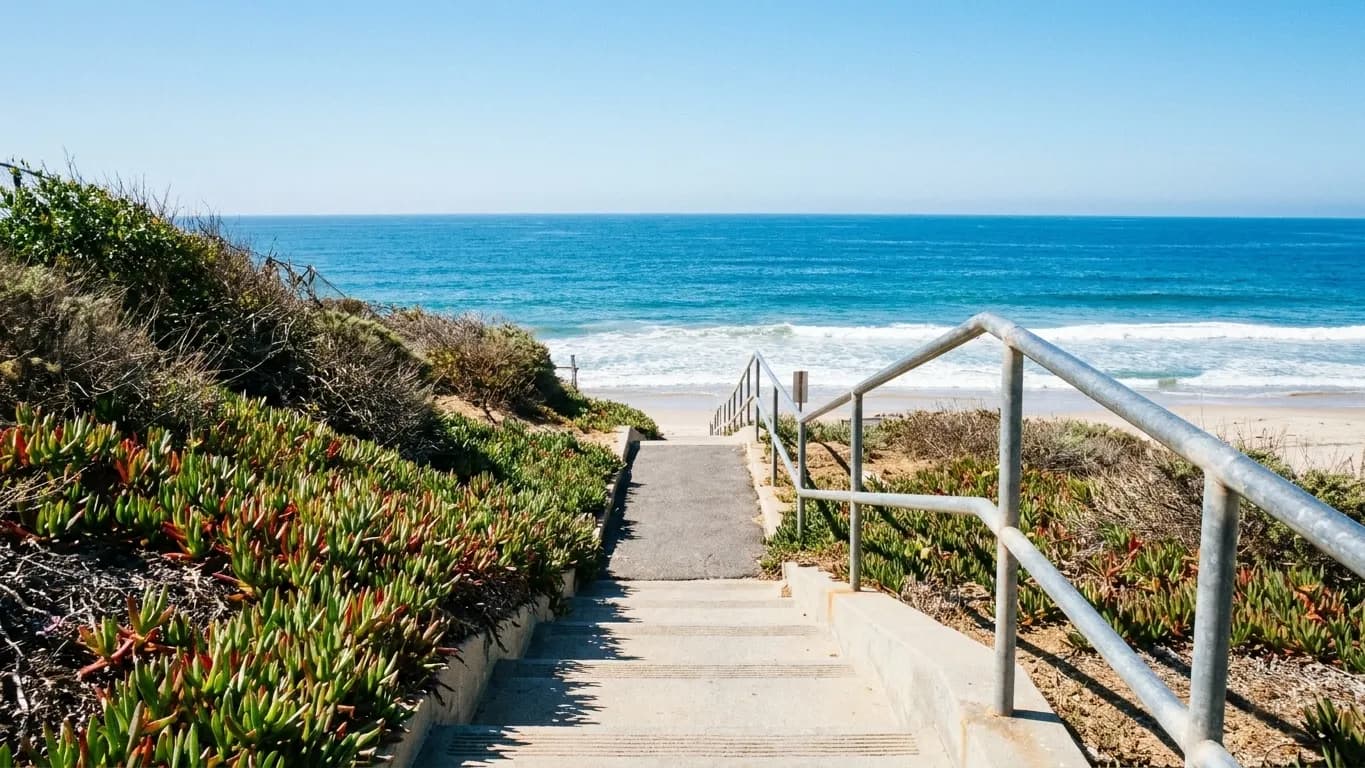
Two practical cautions. Read the kerb signage carefully, because permit-only blocks and street-sweeping windows are common in these neighbourhoods and tickets are issued briskly. And check the tide before you commit to a narrow beach reached by stairs — several of these stretches shrink to nothing at high water, which turns a nice afternoon into an uncomfortable scramble.
Where the crowds actually are, and how narrow the escape is
The crowding on this coast is extraordinarily concentrated. Beach use clusters within roughly a quarter-mile of the parking lots, the piers and the bathrooms, which means the difference between a wall of umbrellas and near-solitude is often a ten-minute walk along the sand. If you arrive at a packed beach, do not leave — walk north or south away from the lot entrance and the density drops off sharply.
The same logic applies to the calendar. The county's beaches are busiest between Memorial Day and Labor Day, on weekend afternoons, in the two hours either side of three o'clock. A weekday morning in October is a completely different coastline, warmer than June in most years, and with lots that are half empty and cheaper.
The marine layer is the real scheduling variable
Anyone who has driven an hour to the coast in June and found grey murk has met the marine layer. Cool ocean air sits under warm air and produces a low cloud deck that can cover the beach cities all morning while the valleys are in full sun — the local names for it, May Gray and June Gloom, exist because it is most persistent in late spring and early summer.
The practical response is to go in the afternoon during those months and in the morning in September and October, when the layer is weakest and the water is at its warmest. Checking a coastal webcam before leaving is worth more than any forecast, because the layer's edge can sit a mile offshore or a mile inland and moves within the hour.
Doing it without a car at all
Parking stops being a problem when you skip it. Several stretches of the county coast are reachable on transit, and the beach cities are connected by their own municipal bus lines running along the shore. For anyone on the Westside or in central LA, taking rail and a connecting bus to the sand is slower than driving on a Tuesday and considerably faster than driving on a Saturday in July, when the lots fill by mid-morning.
The bike path is the other option people forget. A continuous paved path runs for miles along the county shoreline, which means you can park once, well away from the water, and ride to a quieter stretch in fifteen minutes. On a peak summer weekend that is often the single fastest way to get onto sand.
Tags: #LosAngeles #LABeaches #BeachDay #FreeParking #SoCal #WeekendInLA #Malibu #SouthBay #PacificOcean #ThingsToDoLA #LAOutdoors #MarineLayer #BeachParking #CaliforniaCoast
Sources consulted: beaches.lacounty.gov · parks.ca.gov · metro.net
All trademarks are the property of their respective owners.
Ask Karpo first
Lot prices change with the season, access stairways close for repair, and the marine layer decides whether the drive is worth it at all. Ask Karpo which stretch of coast to aim at on the day you are going, where the car can legally sit, and what the sky is doing at the water.