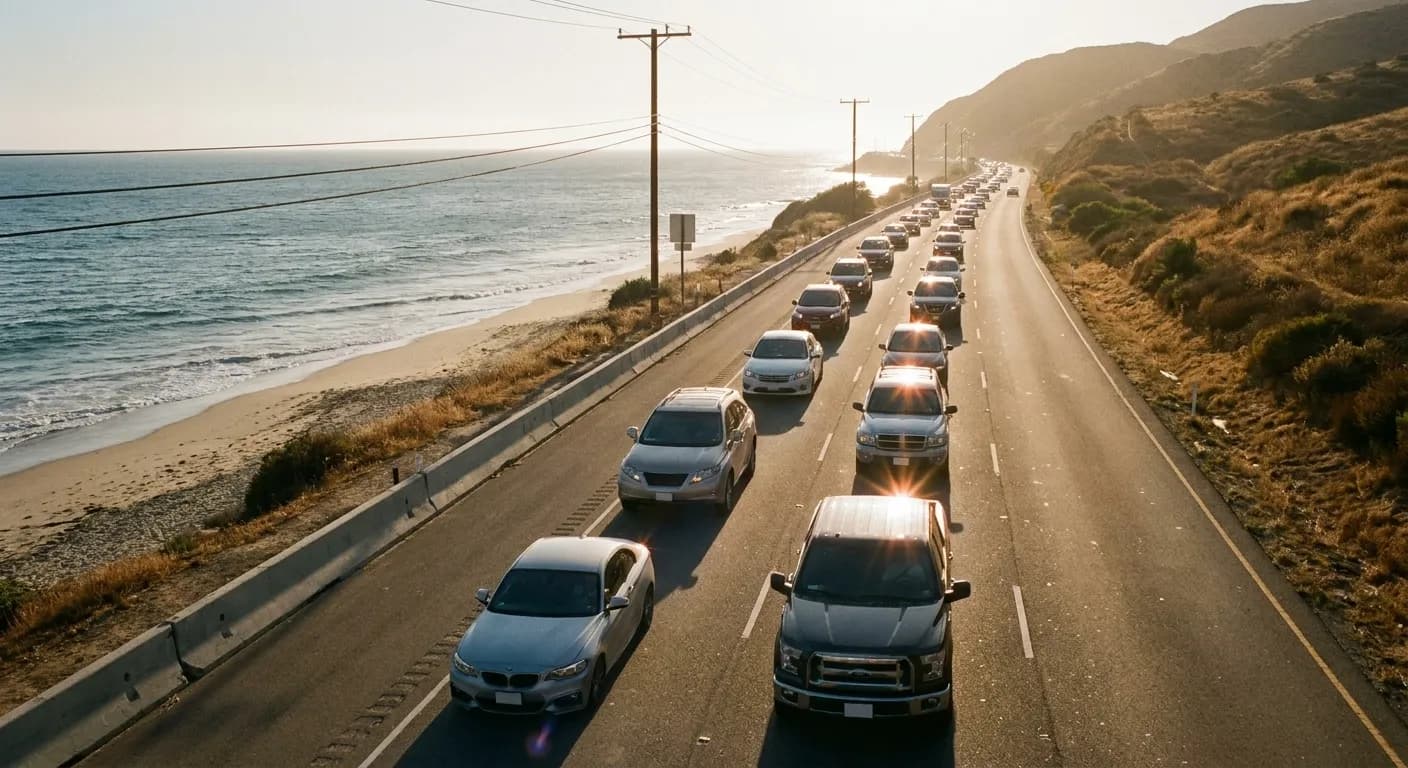
A beach day is one of the few genuinely free things Los Angeles does better than anywhere, and it is also one of the easiest to ruin. The failure is almost never the beach itself. It is leaving at 11 and spending ninety minutes in traffic, arriving to find every lot full, then sitting in the return crawl at 5 with sand in the car and a carload of unhappy people. Build the day around the drive and the parking and the beach part looks after itself.
Nobody's beach day is ruined by the beach — it is ruined by the drive home and the parking lot. Tell Karpo when you want to leave and which direction you can face, and it will build the day around the windows that actually work.
There are two good windows and one bad one
Traffic toward the coast has a predictable shape on a warm weekend. The early window runs before about 9am, when the roads are clear and the lots are empty. The late window opens around 3pm, as the first wave leaves and spaces free up; you trade the hottest hours for an easy arrival and the best light of the day. Between roughly 10am and 2pm is the bad window — you queue to get there and you queue to park.
The late window is underrated and it suits Los Angeles particularly well, because the marine layer often keeps mornings grey along the coast anyway. Arriving at 3, staying through sunset and eating dinner near the water before driving back at 8 is a better day than the same hours shifted six hours earlier, and the roads agree with you.
Parking is the actual constraint
Coastal parking in the county comes in three flavours and they behave differently. Paid state and county lots are the most reliable and the least stressful; they fill from mid-morning on hot weekends and empty again through the afternoon. Street parking near beach neighbourhoods is cheaper, heavily signed, and enforced seriously — read every sign twice, because permit-only blocks and street-cleaning windows are common and the tickets are not small.
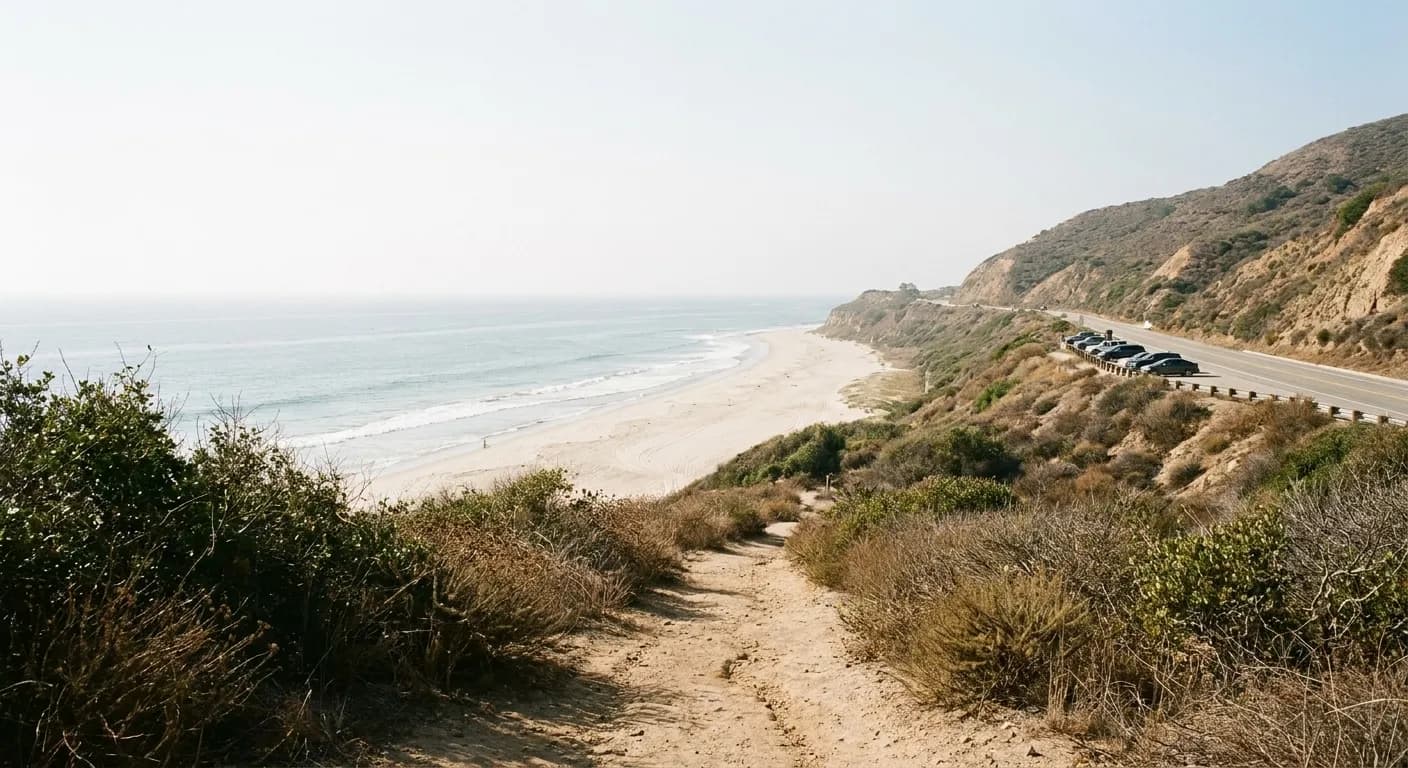
The third flavour is the shoulder pull-off along the coast highway, which is free, limited and requires crossing a fast road with your gear. It works if you arrive early and travel light, and it is a poor idea with small children. Whichever flavour you choose, decide before you leave — improvising a parking plan on arrival is how the day loses its first hour.
Choose the beach by what you actually want
Los Angeles County's beaches are not interchangeable. Wide flat sand with lifeguards, restrooms and food nearby is the right choice for a group or a family and the wrong one if you want quiet. Coves and pocket beaches under bluffs are quieter and prettier and involve a stairway and no facilities. Long straight stretches suit walking and swimming; rocky points suit tidepools and photographs and are unpleasant for sunbathing.
Wind matters more than people expect. Afternoon onshore wind is normal along this coast, and a beach with a bluff or headland at its northern end is noticeably more comfortable after 2pm than an exposed straight shoreline. If the day is windy, choose shelter over scenery.
What to bring, and what actually gets used
The genuinely useful list is short: more water than you think, shade of some kind, a layer for when the sun drops, cash or a card for parking, and a bag for wet things. Umbrellas need to be anchored properly or they become a hazard in afternoon wind. Everything else is optional and mostly ends up carried both ways.
Check conditions before you commit to a direction. Surf, water quality after rain, and seasonal closures all vary along the county coastline, and the official beach and parks sources are the ones to trust rather than a general forecast.
Build the return into the plan
The best-planned beach days end with a reason to stay put through the worst of the return traffic — an early dinner near the water, a walk at golden hour, a stop at a viewpoint on the way inland. Leaving at 5 puts you in the queue with everyone else; leaving at 7:30 after eating turns the drive back into twenty quiet minutes. That single decision is the difference between a good day and a long one.
Which direction to face on the day
From most of Los Angeles you have three realistic directions, and they behave differently. Heading west into the Santa Monica Bay is the shortest drive and the busiest; expect full lots by mid-morning on any warm weekend and plan on paid parking. Heading north along the coast trades a longer drive for smaller beaches and shoulder parking that fills unpredictably. Heading south toward the South Bay and the peninsula gives you wider sand, more facilities and easier parking, at the cost of the drive back through the heaviest of the evening traffic.
The choice should follow the group rather than the scenery. Small children and a lot of gear argue for facilities and a real parking lot. Two adults with towels and a book can take the shoulder-parking option and get a much quieter beach for the same day.
Tags: #LosAngeles #LA #SoCal #WeekendPlans #ThingsToDo #DayTrip #Beaches #LAEats #LAGuide #ExploreLA #LALocal #LAWeekend #LANights #LAFood
Sources consulted: parks.ca.gov · beaches.lacounty.gov · dot.ca.gov
All trademarks are the property of their respective owners.
Ask Karpo first
Karpo is a proactive AI assistant that lives in iMessage. Ask it to build the day around your departure time, not the other way round.