 Where to Eat Near Penn Station That Isn't a Chain
US Open 2026
Barclays Center Near US Open 2026: Airport Luggage Lockers For Evening Ticket Holders
For an evening US Open trip, the real move is less about the stadium and more about how you handle luggage, transit, and the hours between landing and the first serve.
If you are aiming for an evening session at the 2026 US Open, the hardest part is often not the tennis but the in-between hours: landing in New York, carrying a bag, moving through Queens, and making sure the last leg to Flushing Meadows stays simple. That is where a practical Barclays Center-style planning mindset helps: think in legs, not just destinations, and build a route that works for the airport, the 7 train corridor, and the time you actually want to arrive.
Want this adjusted to your session time, starting point, and group size? Text Karpo for a current Queens plan built around airport luggage lockers for evening ticket holders, with transit checks, food stops, and a backup if the day changes.
Start with the bag, not the seat
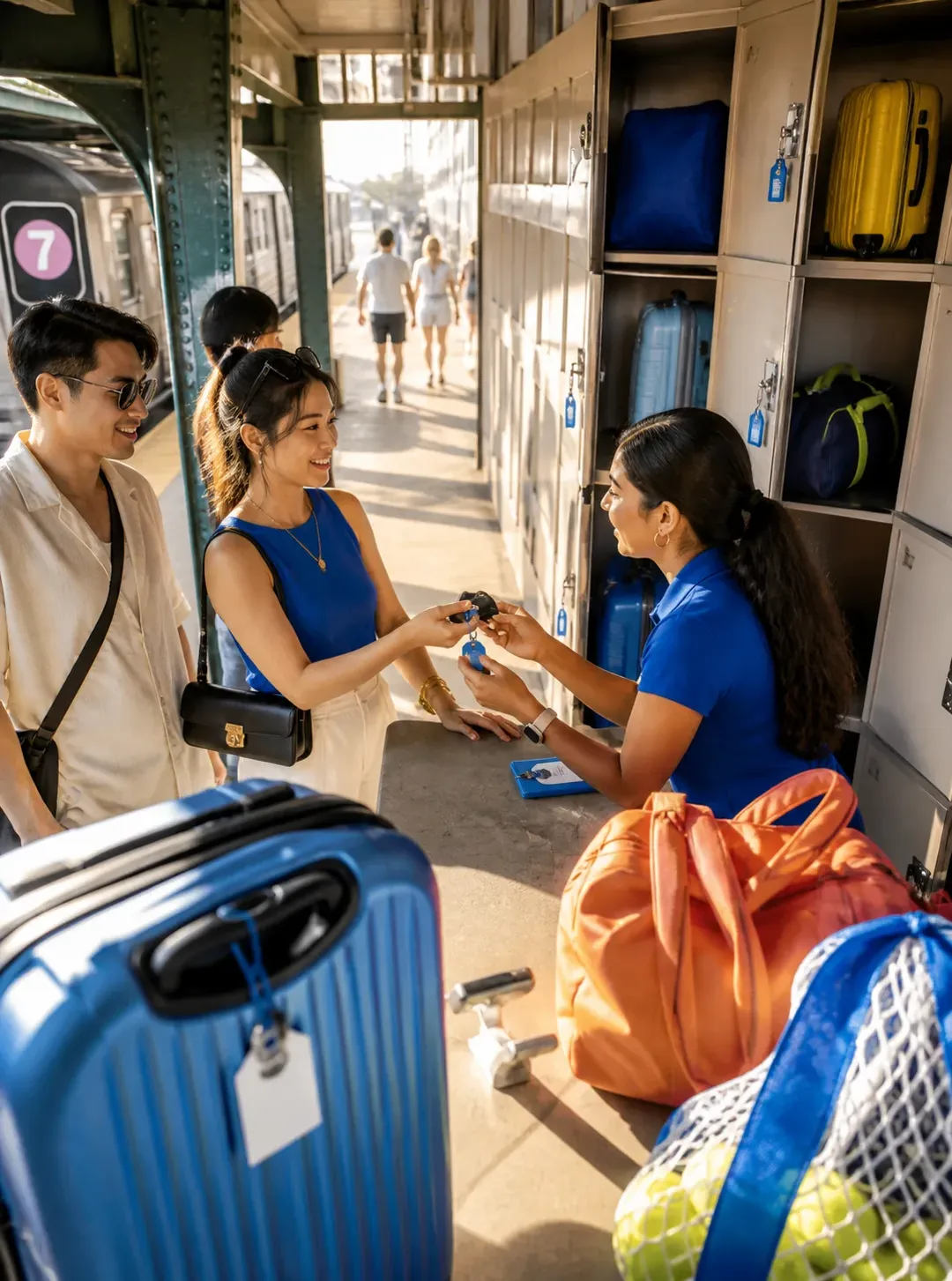
For evening ticket holders, luggage is the first real decision. New York does not reward last-minute bag juggling, especially if you want to spend a few hours in Queens before heading into Flushing Meadows Corona Park. The cleanest approach is to confirm your airport baggage options directly, check whether your hotel will hold bags, and make sure any off-site storage you consider is properly licensed and clearly posted. The point is not to chase a perfect workaround. It is to keep your hands free, your timing flexible, and your trip legally and practically simple.

Use the 7 train corridor as your spine
If you are staying or arriving in Queens, the 7 train corridor gives the trip a useful shape. Flushing, Jackson Heights, Corona, Long Island City, and even Astoria each offer a different way to spend the day before the match. That can mean a quick meal, a quiet coffee, a bookstore stop, a park bench, or a short gallery visit. The practical idea is to stay close enough to the transit line that you can pivot if your schedule changes, while still leaving room for a relaxed dinner and a steady walk toward the venue when it is time.
Why Flushing Meadows works for evening timing
Flushing Meadows Corona Park is the right anchor because it sits inside the same real-world rhythm as the US Open itself. You do not need a complicated plan to make it work. You need a few dependable habits: know which side of Queens you are starting from, give yourself more buffer than you think you need, and keep your pre-match plans close to the transit line. That is especially useful if you are coming from nearby neighborhoods like Long Island City, Astoria, Jackson Heights, or central Flushing, where a small delay can turn into a rushed dinner or a cramped entry into the grounds.
The official US Open visitor guides and MTA directions are the right place to verify the basics close to your visit. Use those sources for entry guidance, transit routing, and any item rules that may affect what you can bring. If your evening starts with a bag, your goal is to reduce friction before you even reach the park.
Pick a neighborhood stop, not a random wait
Queens is better when you treat it like a sequence of neighborhoods rather than a single blob of time to kill. In Flushing, you can keep the walk short and the food options dense. In Jackson Heights, you get a strong transit hinge and easy street life. In Corona, you stay close to the park. In Long Island City or Astoria, you can stretch the afternoon a little more, then move east when you are ready. A small museum visit, a park walk, a late lunch, or a quiet cafe stop works better than drifting aimlessly with luggage in tow.

What to check before you leave the airport
A smart evening plan starts with a few boring checks that save time later. Confirm the airport’s baggage service page. Verify whether your storage option is inside the terminal, on-site, or off-site. Read the US Open prohibited-items guide before you pack. Look at the MTA guide for the stadium and use it to confirm your transit path. If you are meeting friends, pick one clear rendezvous point near the route instead of trying to improvise by text once you are already moving through Queens.
- Keep the bag small enough to manage through transfers and station stairs.
- Verify luggage storage and ticket rules directly with official sources before you head out.
- Build the trip around one transit line and one neighborhood stop.
- Leave time for a real meal in Queens instead of depending on stadium timing.
- Check nearby business and institution pages close to the date for hours and access details.
A simple evening flow that actually works
The most reliable pattern is usually the least dramatic one. Arrive in New York, settle the bag, move to Queens by transit, and spend the early evening somewhere close to the 7 line. That might be a cafe, a bookstore, a park walk, or a no-frills dinner spot that does not eat your schedule alive. Then head toward Flushing Meadows with enough margin to handle lines, ticket scanning, and whatever your own pace requires. The evening feels better when the whole day is designed around one clear movement: airport, Queens stop, stadium.
Keep the local context fresh
For a trip like this, the details that matter most are the ones most likely to change: what is allowed inside the venue, how transit is being routed, which neighborhood spots are open, and whether your own luggage plan is still realistic. That is why the official US Open pages, the MTA, NYC Parks, DCWP, and Queens Public Library are worth checking close to the day. They help you turn a generic ticket into a grounded Queens evening, which is the whole point.
Tags: #USOpen2026 #Queens #FlushingMeadows #KarpoFinds #Karpo #barclayscenter #NewYorkLocal #TennisTravel #NYCLocalLife #TennisTravel
Sources consulted: usopen.org — Official event schedule · usopen.org — Official visitor A-Z guide · usopen.org — Official transportation directions · usopen.org — Official prohibited-items guide · MTA — Official US Open transit guide · NYC Parks — Flushing Meadows Corona Park · NYC Department of Consumer and Worker Protection · Queens Public Library
All trademarks are the property of their respective owners.
Ask Karpo first
Want to know what is actually open, how to time the trip, and where to pause around Queens? Ask Karpo for the latest public US Open context, a respectful visitor plan, and a live route around Flushing Meadows before you head out.
Ask Karpo for more information.
Keep reading
- Where to Eat Near Penn Station That Isn't a Chain
 Andytown Coffee in the Outer Sunset: The Snowy Plover Explained
- Best Things to Do in Chicago: What the City Gives Away