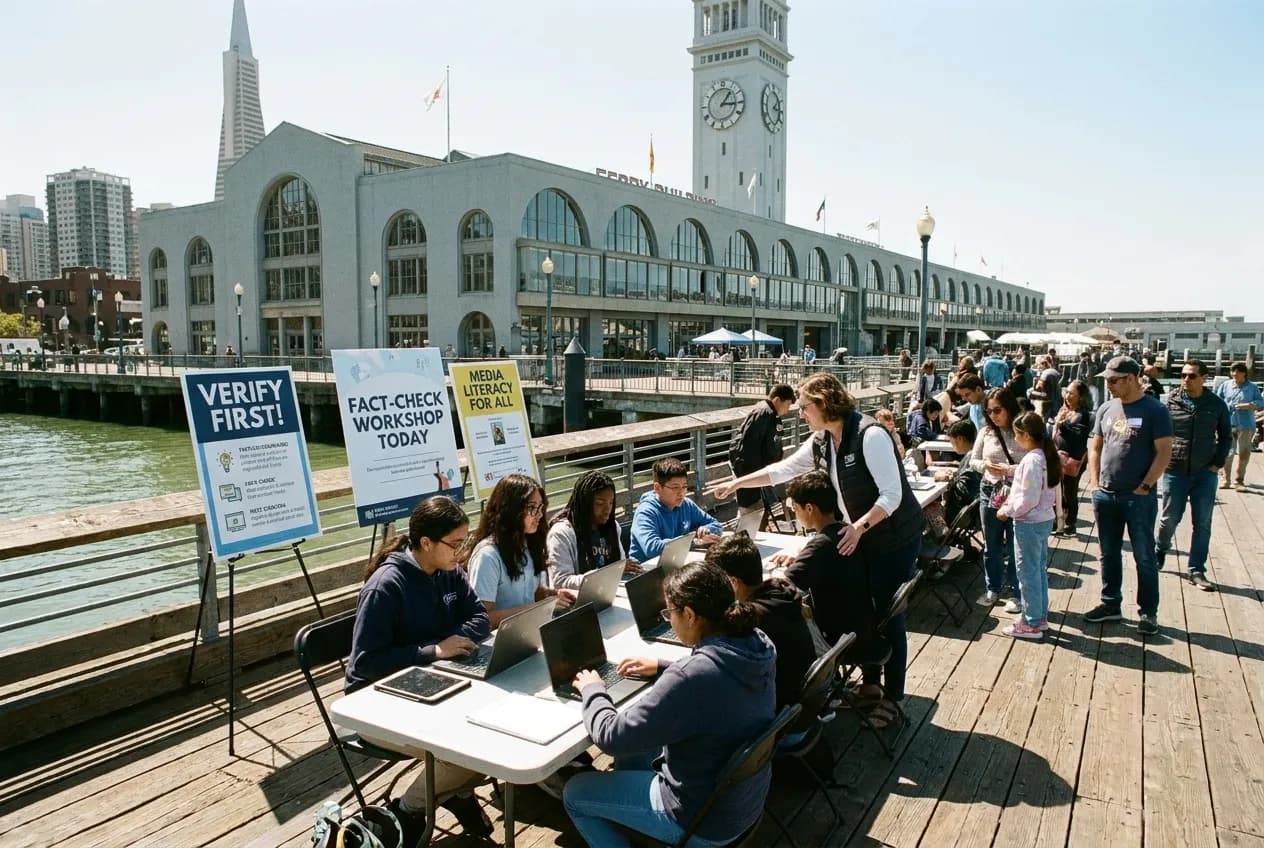
When a name like aryana trevino martinez trends across social feeds, middle schoolers face a split-second choice: share immediately or pause to verify. San Francisco school libraries address this modern dilemma through media-literacy workshops designed for families navigating the back-to-school transition, offering structured fact-checking instruction in familiar neighborhood settings. These sessions teach beginner verification techniques—distinguishing credible sources from viral speculation, tracing claims to original reporting, and recognizing the emotional triggers that make misinformation spread. Parents researching digital-literacy curriculum for the August return to classrooms will find these workshops positioned as decision guides rather than lectures, acknowledging the protective instinct to shield children from online manipulation while empowering students to develop independent critical thinking. The San Francisco Public Library system operates branches across every neighborhood, from the Main Library at 100 Larkin Street to Mission Bay at 960 4th Street, though families must confirm age eligibility and session availability directly with branch coordinators since programming details shift term by term.
Text Karpo your student's grade level, preferred SF library branch, and whether you need Spanish-language sessions or after-school timing. We'll send you three confirmed media-literacy workshop schedules with enrollment links, plus one weekend family digital-citizenship walk if weekday sessions are full.

Who Benefits From Verification Training and Who Might Wait
These workshops target students transitioning into middle school—typically ages eleven through fourteen—who possess basic internet navigation skills but lack systematic methods for evaluating source credibility. The beginner focus means sessions assume no prior journalism training or understanding of metadata, starting instead with observable clues like URL structures, author bylines, and publication dates. Parents accompanying their student gain parallel instruction, learning the same vocabulary and verification steps so household conversations can reference shared frameworks when the next viral claim arrives. The protective-yet-empowering emotional balance works best for families who recognize that total content restriction becomes impractical as students gain device independence, making discernment skills a necessary complement to parental oversight.
Families whose students already participate in school newspaper programs or debate teams may find the beginner pace redundant, though the workshops still offer value in formalizing intuitive practices into repeatable methods. Younger elementary students often lack the abstract reasoning required to weigh competing source credibility, making the content more frustrating than useful before cognitive development catches up. High schoolers seeking advanced techniques—reverse image searching, examining site registration records, or understanding algorithmic amplification—will need supplemental resources beyond these introductory sessions, though the library branches provide starting points for requesting more complex materials.
Reaching Branch Locations Across San Francisco Neighborhoods
The San Francisco Municipal Transportation Agency operates Muni transit connecting residential neighborhoods to library branches throughout the city, with trip planning tools available at SFMTA.com/Go for mapping routes from school dismissal points to workshop locations. Families leaving from downtown areas can reach the Main Library via multiple bus lines and the Powell Street cable car, while the Mission branch at 1234 Valencia Street sits near the 14, 49, and 33 bus routes serving the corridor. Western neighborhoods access the Richmond branch at 351 9th Avenue or Sunset at 1305 18th Avenue, both positioned along cross-town lines that intersect with north-south routes, creating transfer options that balance travel time against the number of connections required.
Walking routes from nearby schools offer another consideration for weekday after-school slots, particularly when library branches sit within a half-mile radius of campus dismissal gates. The Bayview branch at 5075 3rd Street and Visitacion Valley at 201 Leland Avenue serve southeastern neighborhoods where residential density concentrates students within walkable distances, though parents must weigh daylight hours and street familiarity when deciding whether to accompany older middle schoolers or allow independent travel. Bike routes present a third option, with San Francisco's expanding protected lane network documented on SFMTA maps, though families should confirm secure bike parking availability at specific branches before committing to pedal-powered logistics.
What Fact-Checking Workshops Actually Teach in Practice
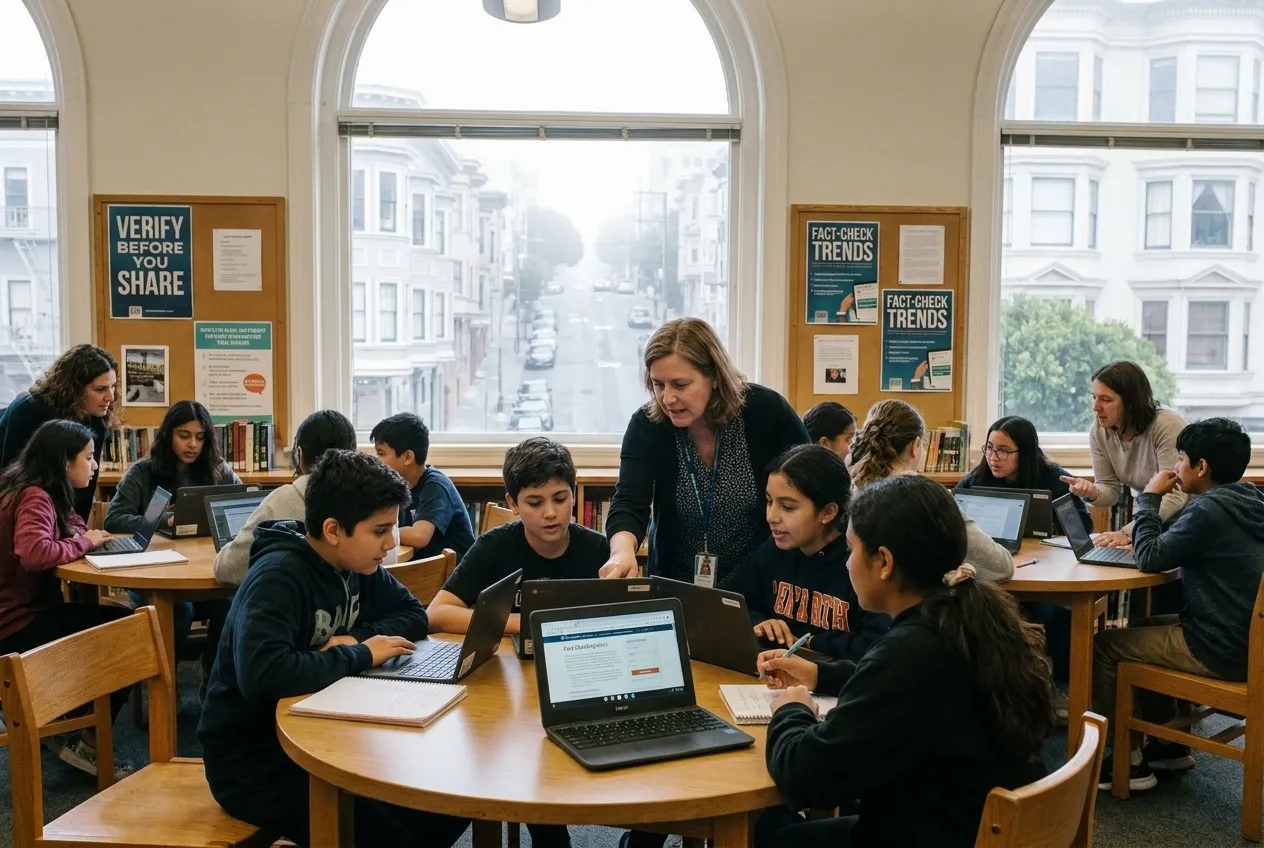
Session content typically begins with a trending search term—a celebrity name, breaking news event, or viral claim—and walks students through lateral reading techniques: opening multiple browser tabs to check what established news organizations report about the same topic before trusting a single source. Instructors demonstrate how to identify original reporting versus aggregated content, explaining why a local newspaper's firsthand account carries different weight than a blog post summarizing that article without adding new information. Students practice distinguishing between news articles, opinion columns, and sponsored content, learning to spot visual and textual cues that signal each category, then apply those skills to sample social media posts where context clues become more subtle.
The workshops avoid declaring specific sources universally trustworthy or forbidden, instead teaching evaluation criteria students can apply to unfamiliar outlets: Does the site disclose ownership and funding? Do articles include author names with verifiable credentials? Are corrections published when errors occur? This framework approach acknowledges that media landscapes shift—new outlets emerge, established ones change ownership—making rigid lists obsolete while transferable skills remain useful. Role-playing exercises ask students to explain their verification process to a peer, reinforcing the idea that slowing down to check sources before sharing represents social responsibility rather than paranoia, a framing that resonates with the protective-empowering balance parents seek.
Confirming Eligibility and Securing Workshop Spots
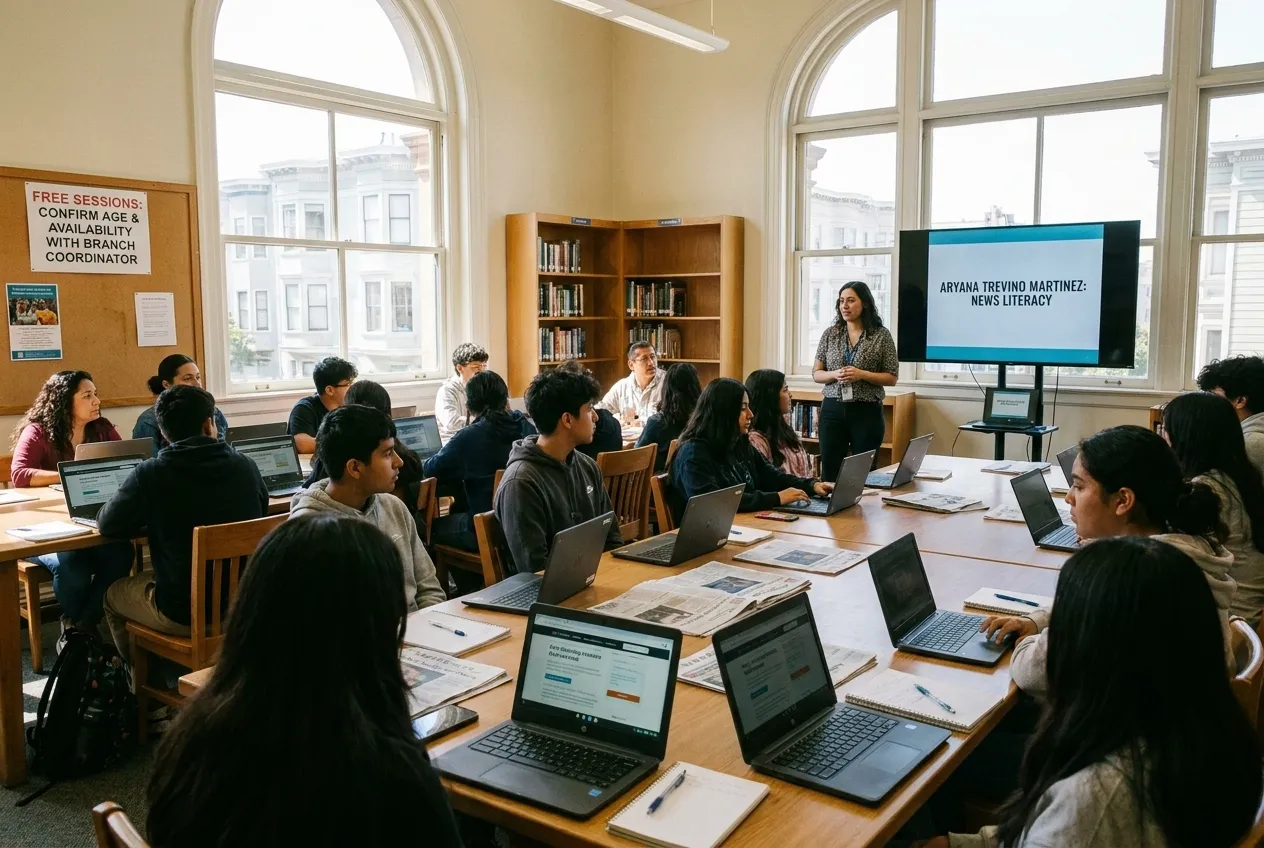
Because the San Francisco Public Library system does not publish centralized workshop schedules with guaranteed availability, families must contact individual branch coordinators to confirm whether media-literacy sessions run during the current term and whether space remains open. Branch phone numbers appear on the library website—Main Library at 415-557-4400, Mission Bay at 415-355-2838, Noe Valley at 415-355-5707—with calls during weekday business hours reaching staff who manage event calendars and registration lists. Some branches require pre-registration to manage room capacity, while others operate on a first-come basis, making early inquiry essential for families with inflexible after-school schedules who cannot easily pivot to alternate dates.
Age eligibility varies by branch and session design, with some workshops welcoming accompanied elementary students if parents commit to active participation, while others enforce strict middle-school enrollment to maintain peer-appropriate discussion dynamics. Families should ask whether the workshop assumes students bring personal devices or whether the library provides computers, since hands-on practice with browser tabs and search techniques forms the core instructional method. Confirming whether sessions repeat weekly, run as single events, or follow multi-week curricula helps parents assess whether the time investment aligns with other back-to-school commitments, particularly when students juggle sports practices, music lessons, and homework routines that intensify in late August.
Weighing Free Library Programs Against Alternative Literacy Resources
The zero-cost structure of library workshops removes financial barriers but introduces tradeoffs around scheduling flexibility and curriculum depth. Families gain access to trained librarians who specialize in information literacy without paying tuition, yet must accept session timing determined by branch staffing and room availability rather than personal convenience. The group format allows students to hear peer questions and observe how classmates approach verification challenges, building collaborative learning, though it also means instructors cannot tailor every example to individual student interests or current social media platforms dominating a particular friend group.
Parents comparing library workshops to paid online courses or school-based media literacy units should consider how each option addresses the companion dynamic—whether the program expects parental involvement or positions students as independent learners. Library sessions designed for parent-student pairs create shared vocabulary and household norms around fact-checking, while school curricula embedded in English or social studies classes reach students during instructional time but may not loop parents into the specific verification techniques being taught. The decision ultimately hinges on whether families prioritize cost savings and neighborhood accessibility or prefer structured multi-week programs with guaranteed enrollment and predictable progression, recognizing that combining free library workshops with supplemental at-home practice offers a middle path that maximizes both resource efficiency and skill reinforcement.
Tags: #newsliteracy #medialiteracyworkshops #SanFranciscoPublicLibrary #factcheckingskills #middleschoolstudents #digitalliteracy #backtoschool #parentresources #verificationtraining #informationliteracy #SFMTAtransit #neighborhoodlibraries #studentworkshops #criticalthinking #misinformationprevention
Sources consulted: Source 1: sf.gov · Source 2: sfmta.com · Source 3: sfpl.org · Source 4: sf.gov
All trademarks are the property of their respective owners.
Ask Karpo first
Ask Karpo to turn this San Francisco idea into a current plan for your date, budget, companion, transit preference, and energy level. Karpo can narrow the route and flag what to verify before you go.


