 Where to Eat Near Penn Station That Isn't a Chain
US Open 2026
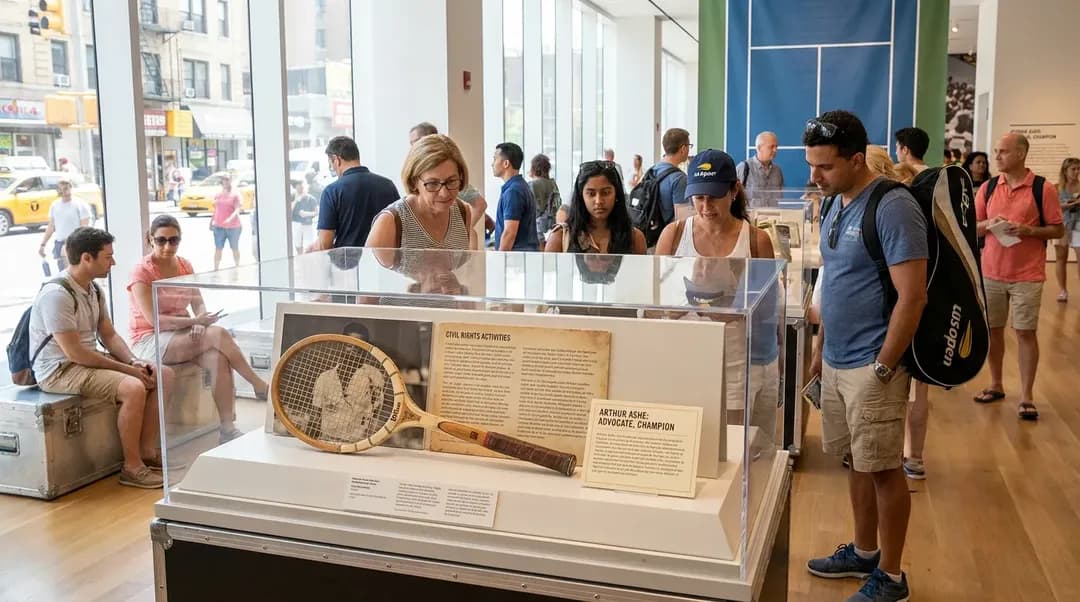
Arthur Ashe Legacy Moments Fans Can Understand
Arthur Ashe’s name is visible at the US Open, but his legacy becomes clearer when fans connect his tennis, activism, and public courage.
When fans walk toward Arthur Ashe Stadium, the name above the biggest stage in American tennis can either fade into the scenery or shape the whole visit. That choice feels especially current as sports fans keep debating what makes an athlete’s legacy last. Some legacies are built from trophies, records, and unforgettable matches. Others are carried by style, influence, courage, and the way a champion changes what people believe is possible. Ashe matters because his story joins those ideas instead of forcing a choice between them. He was not simply a famous name attached to a building. He was a major champion whose public life made the meaning of winning larger, more demanding, and more human.
Text Karpo for a current, low-friction plan for arthur ashe legacy moments fans can understand—including timing, route checks, and practical options that fit your day.
Why The Name Still Resonates
Arthur Ashe is not important because a stadium carries his name; the stadium name works because his life already carried weight. His 1968 US Open title remains one of the defining moments in American tennis history, and his place in the sport was earned through elite competition before it was honored through architecture. For casual fans, that is the first useful distinction. Ashe should not be treated as a ceremonial figure who belongs only to pre-match tributes. He belongs in the competitive memory of the tournament itself.
The name also asks fans to think about a different kind of greatness. Some venues honor dominance alone. Ashe’s name points toward character under pressure and visibility under unequal conditions. He used his platform to speak about civil rights, apartheid, education, and public responsibility, often in a measured style that made his convictions feel even firmer. A visitor does not need to know every chapter of his biography before entering the grounds. It is enough to understand that the main arena honors a player whose influence grew because he treated public life as part of a champion’s duty, not as a separate performance.
The Tennis Legacy First
To understand Ashe without turning him into a slogan, start with his tennis. He was not only a barrier breaker who happened to play well. He had a complete competitive identity. Ashe’s game is often remembered for intelligence, purpose, rhythm changes, and composure. That matters for modern fans because it connects him to ideas they still recognize during a match. When a player varies pace, moves forward at the right time, protects a vulnerable moment with nerve, or wins by solving problems instead of simply hitting harder, the crowd is watching values that help explain why Ashe remains such a strong tennis reference.
His career also shows why legacy debates can become too small when they reduce athletes to lists. Titles and firsts are essential, but they do not capture the experience of being watched differently, judged differently, and expected to carry meanings beyond the scoreboard. Ashe’s achievements were athletic events and cultural events at the same time. Fans do not need to inflate that point or turn every result into a symbol. They only need to recognize that his success changed the picture of who belonged on the sport’s most visible stages.

- See Ashe as a champion first, not only as an honored name.
- Notice the tactical intelligence associated with his best tennis.
- Separate confirmed history from simplified tribute language.
- Remember that visibility itself was part of the pressure he carried.
Beyond The Scoreboard
The reason Ashe’s name remains unusually powerful is that his public life did not end at the baseline. He is remembered as a serious voice on issues that reached far beyond tennis, and that can be hard to absorb in a busy sports setting full of crowd noise, food lines, merchandise, and match momentum. The point is not to turn a day at the US Open into a classroom assignment. The point is to understand why the name fits the setting. Ashe represented a version of athletic fame that asked what a platform was for after the applause faded.
That idea still feels alive because fans now discuss athlete legacy with unusual fluency. They argue about whether athletes should speak on public issues, how off-court work should affect a career’s meaning, and whether personal courage can matter as much as competitive dominance. Ashe’s example does not settle every modern argument, but it gives those arguments a historical anchor. He showed that an athlete could be thoughtful without being passive, principled without being theatrical, and ambitious without treating success as private property.
Reading The Grounds Differently
A practical way to make Ashe’s legacy feel real is to treat the grounds as a story, not only as a place to move between seats, concessions, and courts. The official US Open history places the tournament inside a long American tennis timeline, and Arthur Ashe Stadium stands as one of its clearest modern landmarks. Fans can approach it in layers. First, it is the main arena, built for scale and spectacle. Second, it is a naming decision that signals institutional memory. Third, it is a reminder that tennis history is about more than surfaces, champions, and eras. It is also about who gets remembered in permanent public space.
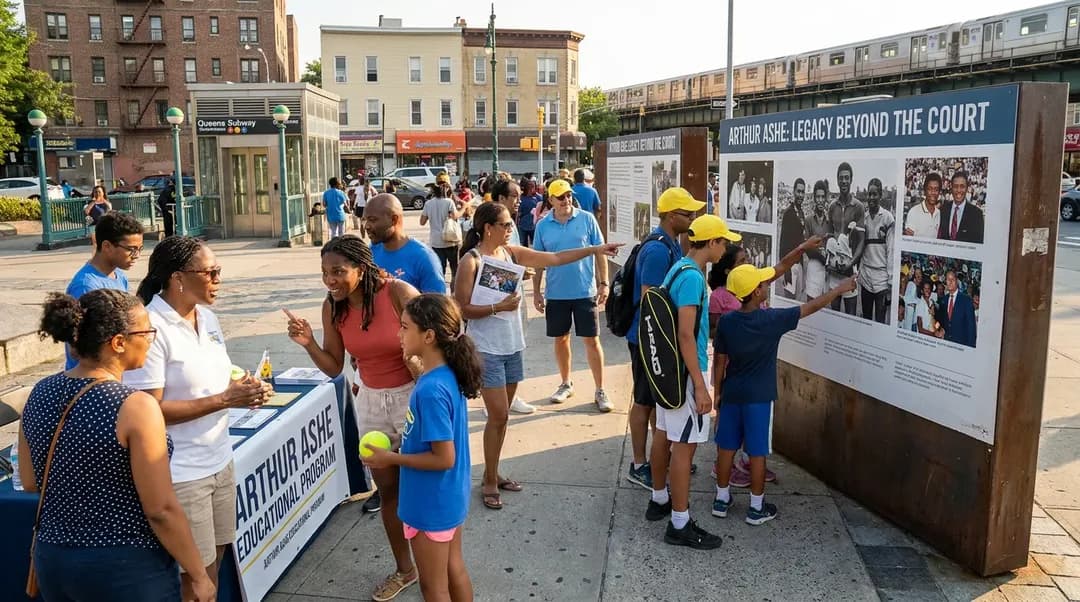
That framing is useful for families, first-time visitors, and guests who may not follow tennis closely. Instead of explaining every draw possibility or tactical detail, begin with a simple question: why would this sport choose Ashe as the name people see most? The answer opens several doors at once. It points to championship excellence, racial history, sportsmanship, activism, and the belief that a champion’s example can outlast a final score. That is more memorable than a rushed fact list, and it lets non-experts connect emotionally without pretending to be historians.
- Before entering, share one concrete Ashe fact and one value he represents.
- During breaks, compare today’s power game with Ashe’s reputation for control.
- After a match, ask what kind of athlete legacy the crowd seemed to reward.
- With children, keep it direct: he won, he led, and he used his voice.
Practical Notes
For “Arthur Ashe Legacy Moments Fans Can Understand,” the useful 2026 calendar anchor is August 23 through September 13, with singles main-draw play beginning August 30. Choose a day for the kind of experience you want rather than assuming any specific player, matchup, pace, or session atmosphere. Before traveling, use the official schedule and visit pages for current details. Published schedules, gate times, player fields, venue rules, transportation conditions, and on-site information can change.
If Ashe’s legacy is part of the reason for the visit, build in a little unhurried time near the stadium instead of treating it only as a doorway to the next match. Before acting on “Arthur Ashe Legacy Moments Fans Can Understand,” recheck the official security page; its current limit is one searchable bag per guest, no larger than 12 by 12 by 16 inches. The best tribute a fan can bring is attention: to the tennis, to the name above the court, and to the larger standard Ashe left behind.
Tags: #USOpen2026 #Tennis #NewYork #Queens #FlushingMeadows #USOpenGuide #TennisFans #SportsTravel #NYCEvents #HardCourt #KarpoFinds #Karpo
Sources consulted: usopen.org — Official reference · usopen.org — Official reference · usopen.org — Official reference
All trademarks are the property of their respective owners.
Ask Karpo first
Want to know what is confirmed, when to show up, and what is actually open to the public? Ask Karpo for the latest US Open updates and a practical New York plan for arthur ashe legacy moments fans can understand.
Ask Karpo for more information.
Keep reading
- Where to Eat Near Penn Station That Isn't a Chain
 Andytown Coffee in the Outer Sunset: The Snowy Plover Explained
- Best Things to Do in Chicago: What the City Gives Away