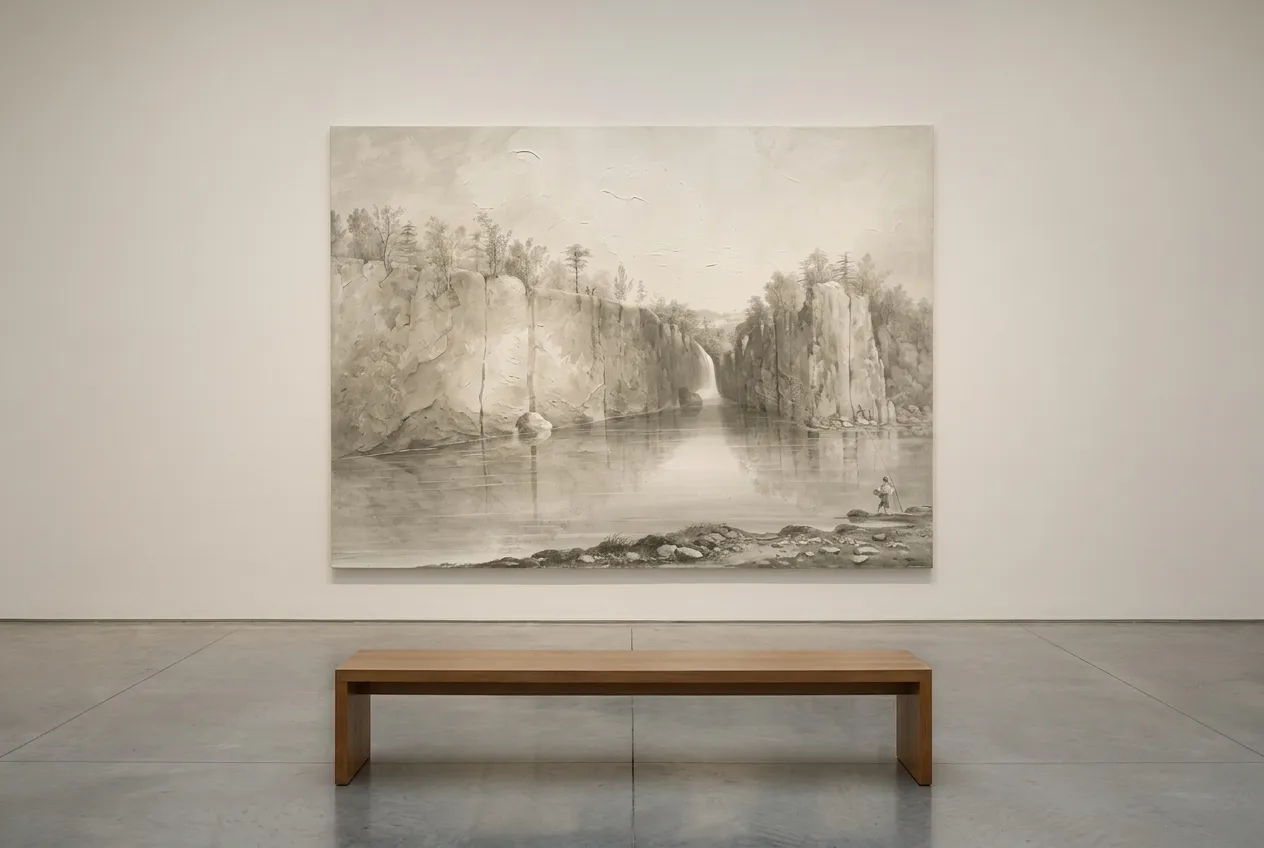
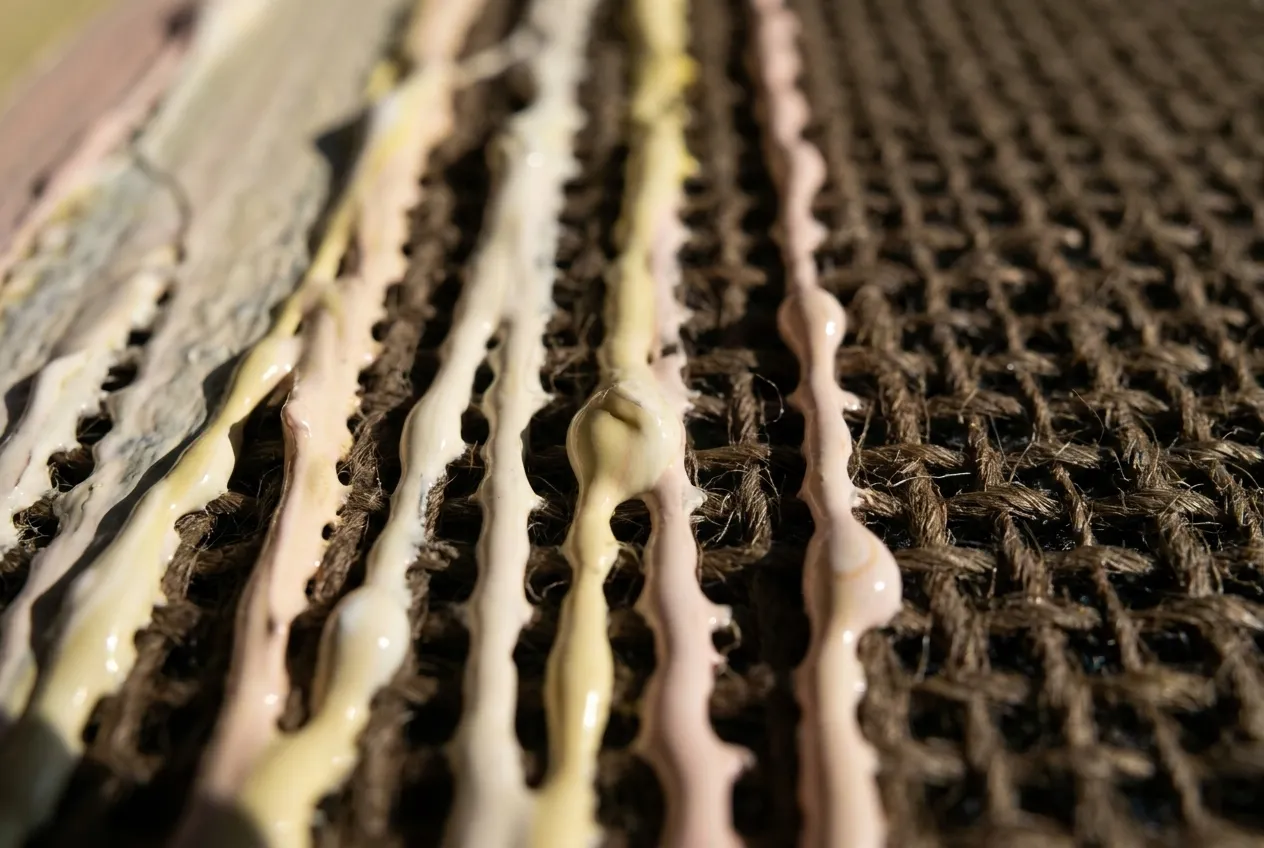
Almost every painting you have looked at was made from the front. Somebody stood facing a surface and put marks onto it. The reason to spend a weekend afternoon with the survey that opened at the Asian Art Museum on 25 September is that it is built around an artist who spent sixty years working the other way round — pushing thick oil paint through coarse hemp cloth from behind, and letting whatever came through the weave be the painting.
A weekend is easier to plan around one thing worth seeing than around a list of six. Ask Karpo what has just opened near you and which afternoon is the quiet one to go.
What the technique actually produces
The series is called Conjunction and it has occupied Ha Chong-Hyun for decades. Paint is forced through the back of a rough hemp support; it emerges on the front as ridges, blooms and blocked patches, shaped by how loose the weave is and how hard it was pressed.
The result sits somewhere between painting and relief. Standing in front of one, the surface reads differently from two metres than from thirty centimetres, and differently again from the side — which is the reason these are worth seeing in a room rather than in a photograph, where they flatten into grey rectangles and lose the entire point.
It is also a genuinely physical practice. Forcing oil paint through cloth by hand, at scale, is labour, and the work carries the record of that labour in a way a brushstroke does not. This is abstraction made by pushing, not by describing.
Why this show and not another one
It is the first major North American museum exhibition of his work, which for an artist central to Korean postwar abstraction is remarkable and slightly overdue. More than fifty paintings trace six decades, including two works finished as recently as 2025.
That span is the value. A single Conjunction on a gallery wall is an object; fifty of them in sequence is an argument being worked out over a lifetime, and you can watch the decisions change. It is guest curated by the Seoul-based scholar Sunjung Kim, which shows in how the rooms are sequenced.
How to actually look at it
Take the first room slowly and then move faster. The temptation with fifty similar-looking works is to walk the whole thing at a constant speed and leave with a general impression of beige, which is the standard way people waste a monochrome show.
Instead: pick four paintings across the whole exhibition and give each of them three minutes from three distances. Straight on from far back, close enough to see the weave, and then from an acute angle so the raking light catches the ridges. Four paintings properly is worth considerably more than fifty at walking pace, and it is the only way this particular body of work opens up.
- Asian Art Museum, 200 Larkin Street, Civic Center
- Ha Chong-Hyun: Retrospective, from 25 September, running into January
- More than fifty paintings spanning six decades, including two from 2025
- His first major North American museum exhibition
- Guest curated by Sunjung Kim; the Conjunction series is the core
The rest of the building
Do not treat this as a single-show visit, because the museum has an unusually strong run of things on at the same time: Garuda in Bali, Balinese sculpture and painting on the bird-warrior who became Indonesia's national symbol; Kim Minwook on carving, bending and binding wood; Al-An deSouza's Table Settings; and Mountains of the Mind, a Chinese landscape journey.
Two exhibitions and an hour in the permanent galleries is about the right load for one visit. Three is where museum fatigue sets in and you stop seeing anything, which is a real physiological limit rather than a lack of enthusiasm.
The context, briefly
Ha belongs to the generation of Korean painters who, from the 1970s onward, turned away from image-making towards the behaviour of materials — a body of work usually grouped under the term dansaekhwa. The shorthand translation is monochrome painting, which is accurate and misleading in equal measure, because the interest was never really in colour.
What these painters shared was a preoccupation with process as content: soaking, dragging, pressing, repeating. Knowing that going in is genuinely useful, because it reframes what you are looking at from a picture of nothing into a record of something specific that was done to a surface, repeatedly, over a long time.
It also explains why the work has travelled so well internationally in the last decade while remaining under-shown in American museums until now. There is no cultural decoding required — the argument is entirely present in the object, and a room of them is legible to anybody prepared to stand still.
Timing the visit
A new exhibition's first two weekends are its busiest, and a show of large quiet paintings is the type most damaged by a crowd — you cannot stand at three distances from a work if there are eleven people behind you. If you can go on a weekday, do; if not, go at opening rather than at two in the afternoon.
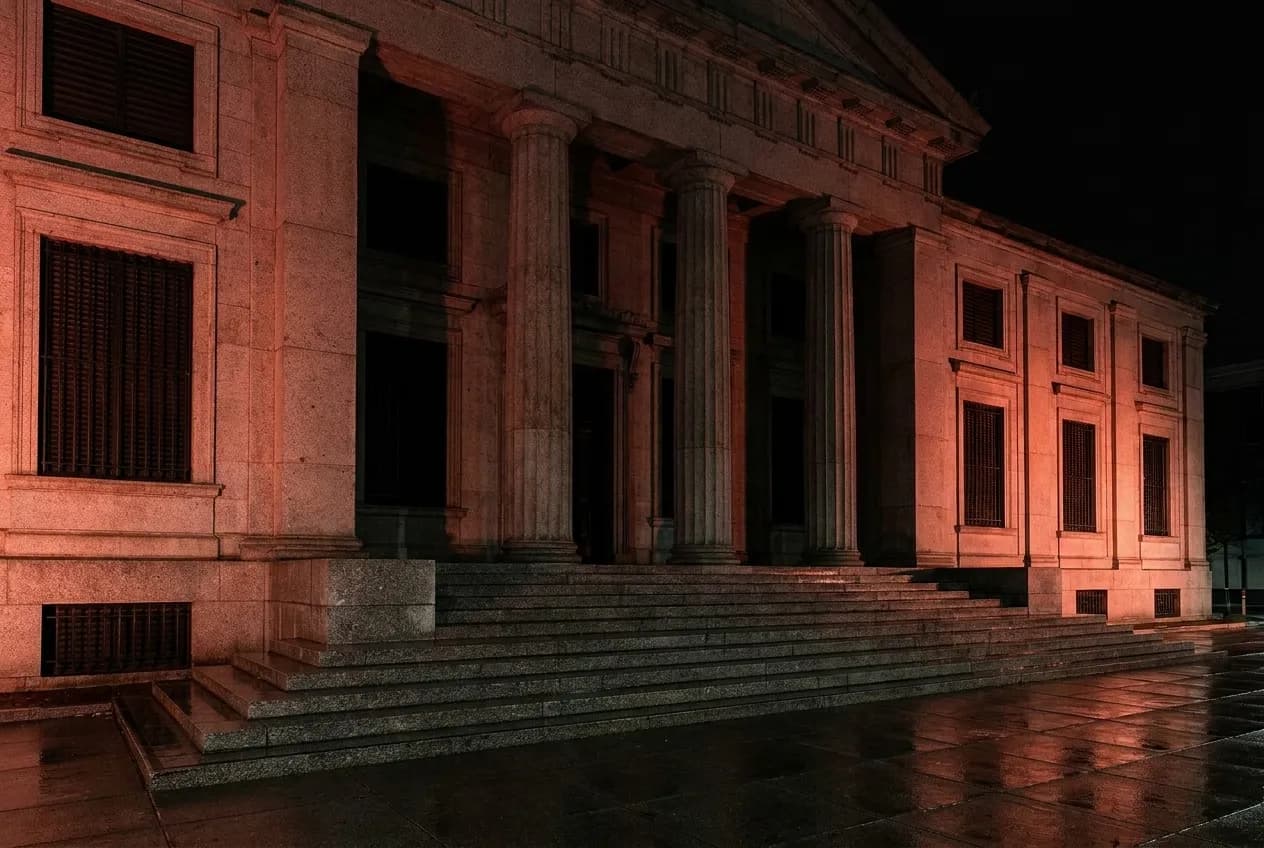
The museum sits on Larkin Street in Civic Center, directly opposite the main library and a short walk from Civic Center BART and Muni, which makes it one of the easiest large museums in the city to reach without a car. Driving into Civic Center on a weekend is the harder version of the same trip.
Making a day of it
Civic Center is not a neighbourhood people linger in, which is precisely why a planned route helps. The main library is across the plaza and is free. Hayes Valley is a ten-minute walk west and solves lunch and coffee comprehensively. The Tenderloin's Vietnamese kitchens are five minutes north and are the better and cheaper option if you want a proper meal rather than a café one.
Two hours of painting, a walk, and a bowl of something is a complete Saturday and costs very little beyond the admission. It is also the version of a museum day that people actually repeat, as opposed to the four-hour cultural forced march that nobody does twice.
Practical notes
Ha Chong-Hyun: Retrospective opened on 25 September 2026 at the Asian Art Museum, 200 Larkin Street, and runs into January 2027. It is the artist's first major North American museum exhibition, with more than fifty paintings across six decades including two completed in 2025, guest curated by Sunjung Kim. The core is the Conjunction series, made by forcing thick oil paint through the back of coarse hemp cloth. Also on at the same time: Garuda in Bali, Kim Minwook, Al-An deSouza's Table Settings and Mountains of the Mind. Go at opening or on a weekday, plan for two exhibitions rather than four, and reach it by BART or Muni to Civic Center.
Tags: #SanFrancisco #AsianArtMuseum #HaChongHyun #Dansaekhwa #WeekendPlans #ArtExhibition #CivicCenter #SFThingsToDo #KoreanArt #Painting #Museums #SFArt #Abstraction #Culture
All trademarks are the property of their respective owners.
Ask Karpo first
Want to know what has just opened near you, what it actually is and when the museum is empty enough to enjoy it? Ask Karpo before you spend a Saturday afternoon.