 Haaland Has Seven Goals and Norway Runs Entirely Through Him
⚽️2026 FIFA WORLD CUP
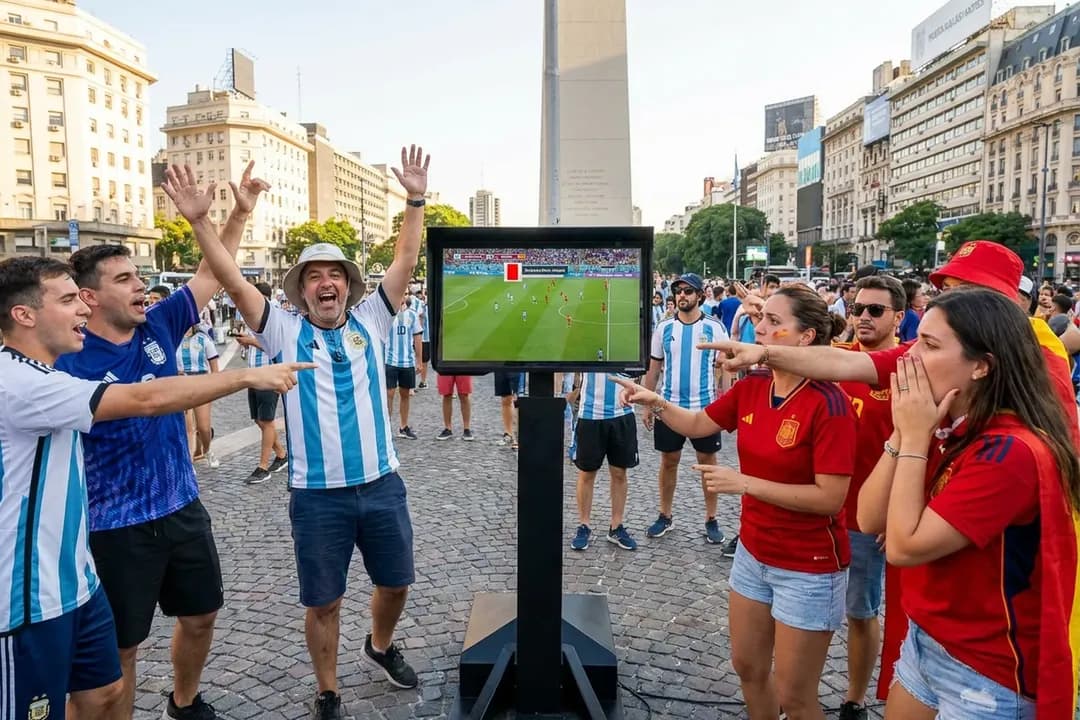
Argentina Red Card Shifted Spain’s World Cup Final Momentum
Spain defeated Argentina 1-0 after extra time in the July 19, 2026 World Cup final. Enzo Fernandez’s second yellow card changed Argentina’s late-game choices before Ferran Torres scored the only goal.
East Rutherford, in the New York City area, became the stage for a World Cup final decided by one goal and one major disciplinary turn. Spain beat Argentina 1-0 after extra time on July 19, 2026, with Ferran Torres scoring the only goal after Argentina midfielder Enzo Fernandez had been sent off for a second yellow card.
Text Karpo if you want a personalized final-recap plan: we can build a Spain celebration route, an Argentina post-match debrief, a late-night food plan in New York City, or a watch-party breakdown tailored to your neighborhood and mood.
Argentina Red Card Shifted Spain’s World Cup Final Momentum
The key phrase around the final is simple: argentina red card. But the explanation needs more care than the headline. Fernandez’s dismissal did not automatically decide the match, and it should not be treated as the only reason Spain won. What it did do was change the structure of extra time, narrowing Argentina’s choices and giving Spain a clearer path to control territory, tempo, and risk.
That distinction matters because late finals are often remembered through one frozen image: a card, a goal, a celebration. The fuller picture is procedural and tactical. A second yellow card removes a player, cannot be replaced, and forces the dismissed player’s team to continue short. From that moment, Argentina’s game was no longer only about finding a goal; it was also about managing every gap that appeared because one midfielder was gone.
What a Second Yellow Means Under the Laws
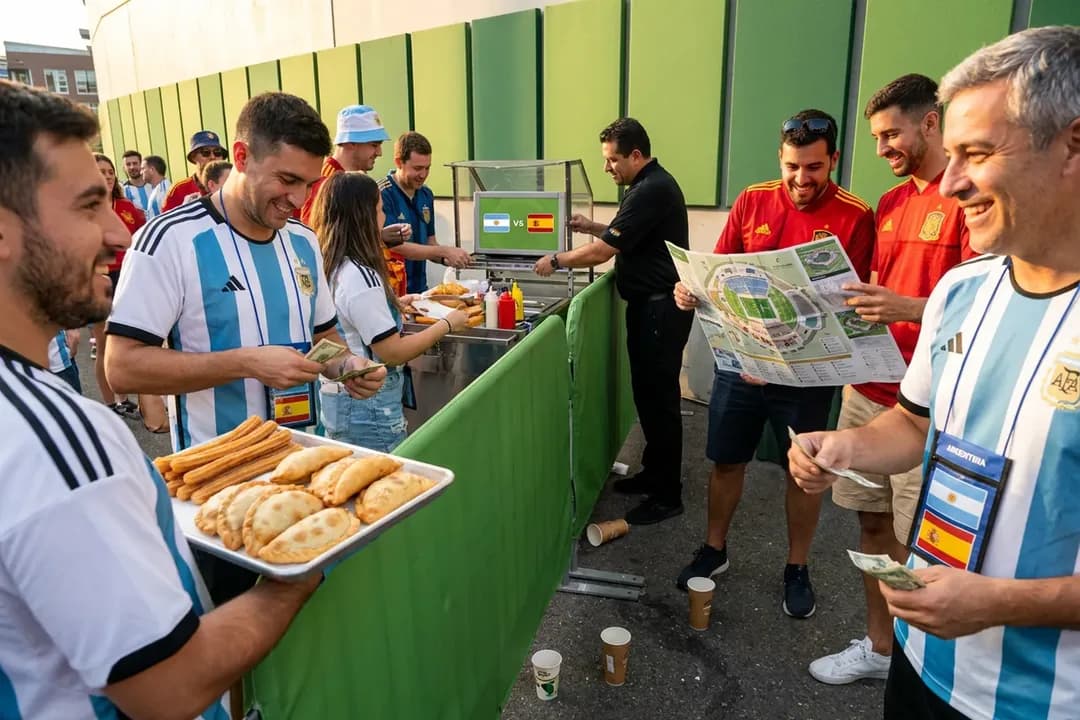
Under the Laws of the Game, a player who receives a second caution in the same match is shown a red card and sent off. The referee does not need to show a separate type of red-card offense for the dismissal to stand; the second caution itself triggers the sending-off. The important sequence is caution, second caution, then red card, with the player leaving the field of play.
Once that happens, the team plays with ten players. There is no replacement for a player sent off, even if substitutions remain. That is why a second yellow in extra time carries such tactical weight: it changes the numbers permanently for the rest of the match. It also affects how teammates challenge, press, recover, and protect space, because every decision must account for the missing player.
Why Losing a Midfielder Changes the Match Shape
Fernandez’s role as a midfielder makes the dismissal especially significant in a late-game tactical reading. A midfielder usually connects defensive recovery with attacking progression, helps screen central areas, supports pressing, and offers passing angles under pressure. Removing one from the match can leave a team with fewer routes out of pressure and less protection in front of the back line.
Without inventing a specific formation change or instruction, the general problem is clear. Argentina had to decide whether to preserve central compactness, keep an outlet higher up the pitch, or ask wide players and forwards to cover more ground. Each answer has a cost. Protecting the middle can reduce attacking presence, while chasing a goal with ten can expose spaces that a composed opponent can exploit.
How Spain Could Benefit Without Needing Wild Numbers
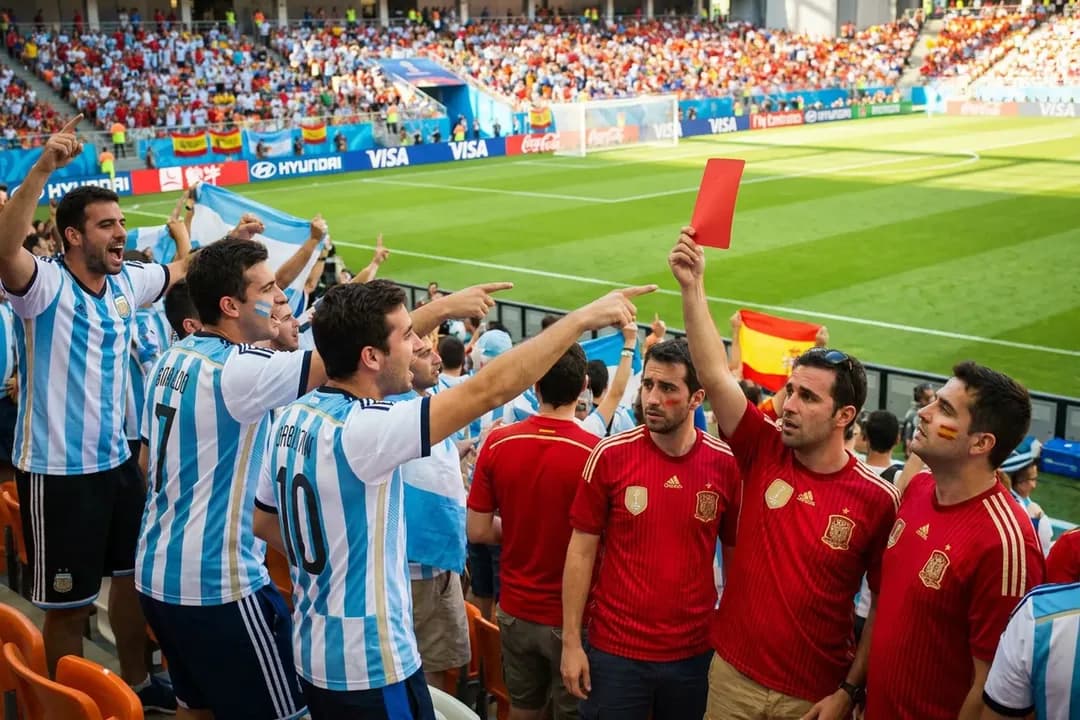
Spain did not need a verified possession spike, expected-goals figure, or shot count to make the red card meaningful. The advantage of playing eleven against ten is often found in the small mechanics of the game: one extra passing option, one less pressing opponent, one easier switch of play, and one more way to stretch a tired block in extra time.
Ferran Torres scored the only goal after Argentina were reduced to ten, which places the goal inside the changed match state. That does not prove a simple cause-and-effect chain, but it does show the sequence that shaped the final’s closing story. Spain had the numerical advantage when the decisive goal arrived, and Argentina had fewer late-game tools available to respond.
Argentina’s Late Options Became More Expensive
For Argentina, the red card made every attacking choice more expensive. Sending numbers forward could increase the chance of creating one decisive moment, but it could also open the field for Spain. Sitting deeper could protect against immediate danger, but it could leave Argentina with longer distances to travel when trying to break out. In extra time, those tradeoffs become sharper.
The dismissal also changes the emotional rhythm of a final. Players must stay disciplined after seeing a teammate sent off, especially because further fouls or mistimed challenges can create even more pressure. The challenge is not just tactical; it is psychological. Argentina had to absorb the setback, reorganize quickly, and still keep enough belief and structure to find a way back.
The Cleanest Reading of the Final’s Turning Point
The cleanest reading is that Spain’s 1-0 win came in a final where the second yellow to Fernandez altered the balance before Torres scored. It is fair to call the dismissal a major turning point. It is not fair to invent the minute, the foul details, the referee’s explanation, or hidden tactical instructions. The confirmed facts are strong enough without adding unsupported decoration.
That is also what makes the moment so instructive. World Cup finals are often won through elite finishing, discipline, and the ability to exploit small advantages. Spain found the breakthrough after Argentina went down to ten, while Argentina had to navigate the hardest phase of the match with one fewer player. The red card did not write the whole final, but it changed the vocabulary of its ending.
Tags: #WorldCup2026
Sources consulted: FIFA World Cup 26 final hub · Associated Press final report · IFAB Laws of the Game
All trademarks are the property of their respective owners.
Ask Karpo First
Ask Karpo for a personalized World Cup final recap, a Spain celebration plan, an Argentina reflection night, or a New York City food-and-drinks route built around how you watched the match.
Ask Karpo for more information.
Keep reading
- Haaland Has Seven Goals and Norway Runs Entirely Through Him
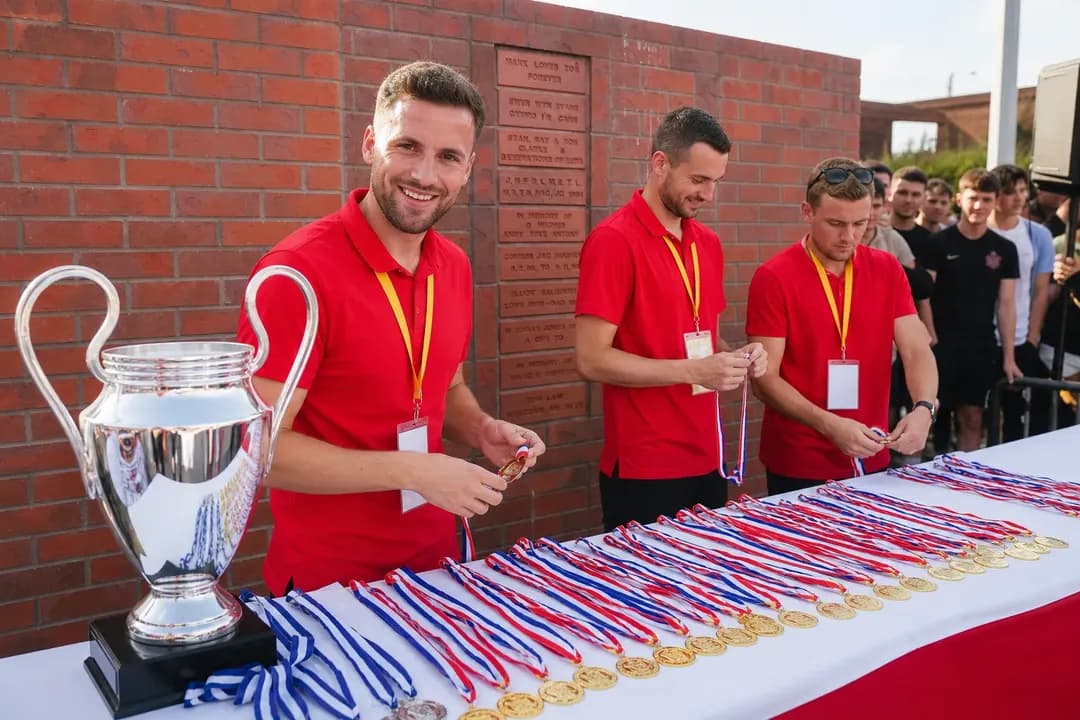 World Cup Trophy Ceremony Timing Medals and Postmatch Celebrations
 Olise and France's Attack: The Semifinal Tactical Question