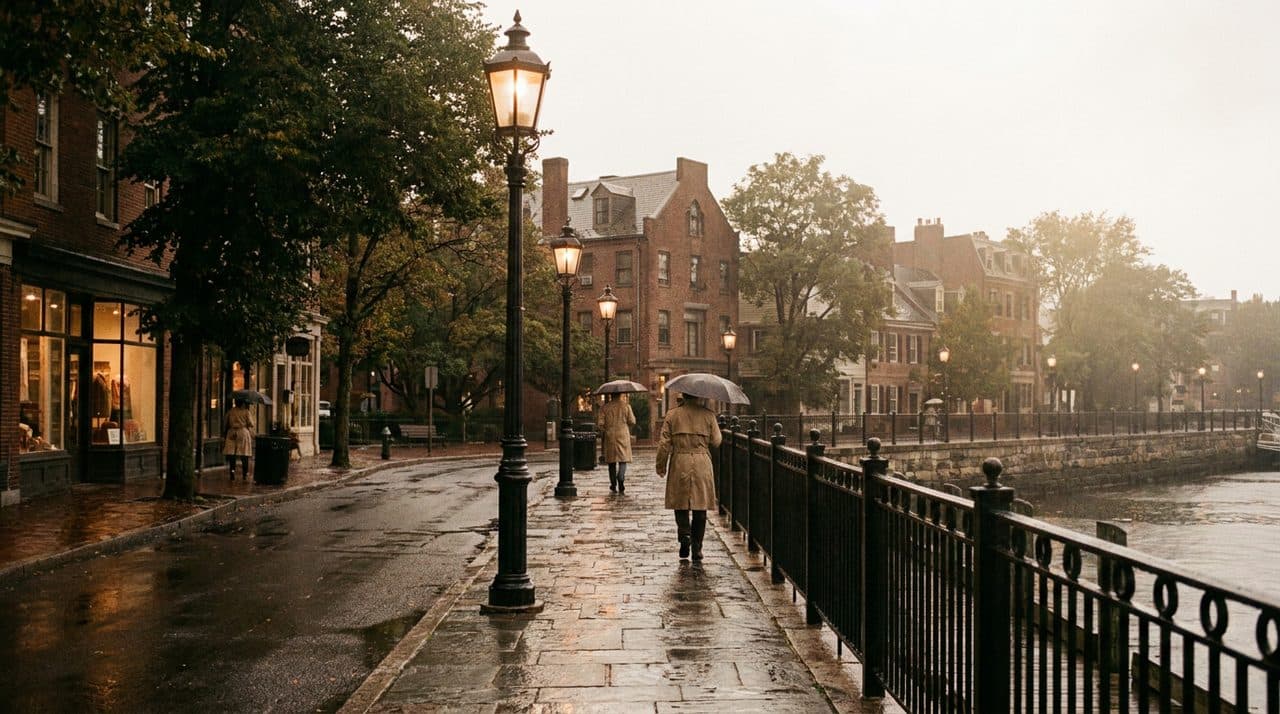
You walk out of Argentina Islandia with empanada grease still warm on your fingers and realize the real discovery isn't the trending bakery—it's the hour you're about to spend wandering through a neighborhood that feels like it borrowed its bones from an English garden suburb and never gave them back. Forest Hills Gardens sprawls west of the bakery in a tangle of Tudor Revival houses and winding lanes that refuse the grid, and on a Saturday afternoon when the light slants gold through the oaks, you're not in Queens anymore. You're in the long way home, where the walk becomes the thing you remember.
The Empanada Exit Strategy
You leave Argentina Islandia on Metropolitan Avenue around three in the afternoon, when the lunch rush has thinned but the glass case still holds a few beef and a couple cheese empanadas that haven't gone cold. The woman behind the counter wraps them in wax paper without asking if you want them for here or to go—everyone takes them to go. Outside, the avenue hums with the low-grade chaos of weekend errands: the laundromat, the cell phone repair shop, the bodega with plantains stacked in the window. You turn left, heading west, and within two blocks the commercial strip starts to fray at the edges. The sidewalk widens. The trees thicken. You're walking toward the Gardens now, even if you don't know it yet.
The empanadas cool in your hand as you walk, the pastry leaving a faint oil slick on the paper. You eat one at the corner where the avenue bends, standing under a maple that's starting to turn. The beef is dense and peppery, the dough flakier than you expected. You save the second for later, tucking it into your bag like a talisman for the miles ahead.
Where the Grid Gives Up
Forest Hills Gardens announces itself with an archway—stone, ivy-clad, vaguely ecclesiastical—that spans a street you'd swear wasn't there a minute ago. The grid dissolves here. Streets curve for no reason. Cul-de-sacs appear and vanish. The houses sit back from the road behind hedges and low stone walls, their half-timbered facades and slate roofs so committed to the English country fantasy that you half expect a vicar to emerge with a croquet mallet. This is a planned community from the early twentieth century, designed by Frederick Law Olmsted Jr., and it still feels planned in the best way—deliberate, composed, a little smug about its own charm.
You wander without a map, because the point here is to get lost. Station Square opens up on your left, a brick-paved plaza ringed by shops that look like they belong in a Cotswolds village: a bookstore, a café, a real estate office with mullioned windows. The plaza is empty except for a couple sitting on a bench, sharing a bag of something from the bakery you just left. The air smells like cut grass and old money. You keep walking, following a street that curves past a tennis court where two women in white skirts are hitting backhands with the kind of precision that suggests decades of lessons.
The Light Between the Leaves
The streets here have names like Greenway Terrace and Wendover Road, and they all seem to lead deeper into the maze. You pass houses with turrets, houses with carriage lamps, houses with gardens so meticulously tended they look like stage sets. The light filters through the canopy in shifting patches, dappling the pavement and the parked cars and the stone walls that line the sidewalks. It's the kind of light that makes you want to sit down and stay awhile, but you keep moving, because the walk is the point.
You notice the details: a front door painted the exact shade of Robin's egg blue, a mailbox shaped like a tiny Tudor cottage, a cat watching you from a second-story window with the bored disdain of someone who knows they live somewhere nicer than you do. The streets are quiet in a way that feels almost aggressive, like the neighborhood is daring you to make a sound. You don't. You just walk, your footsteps soft on the pavement, the second empanada still waiting in your bag.
The Park at the Edge of Memory
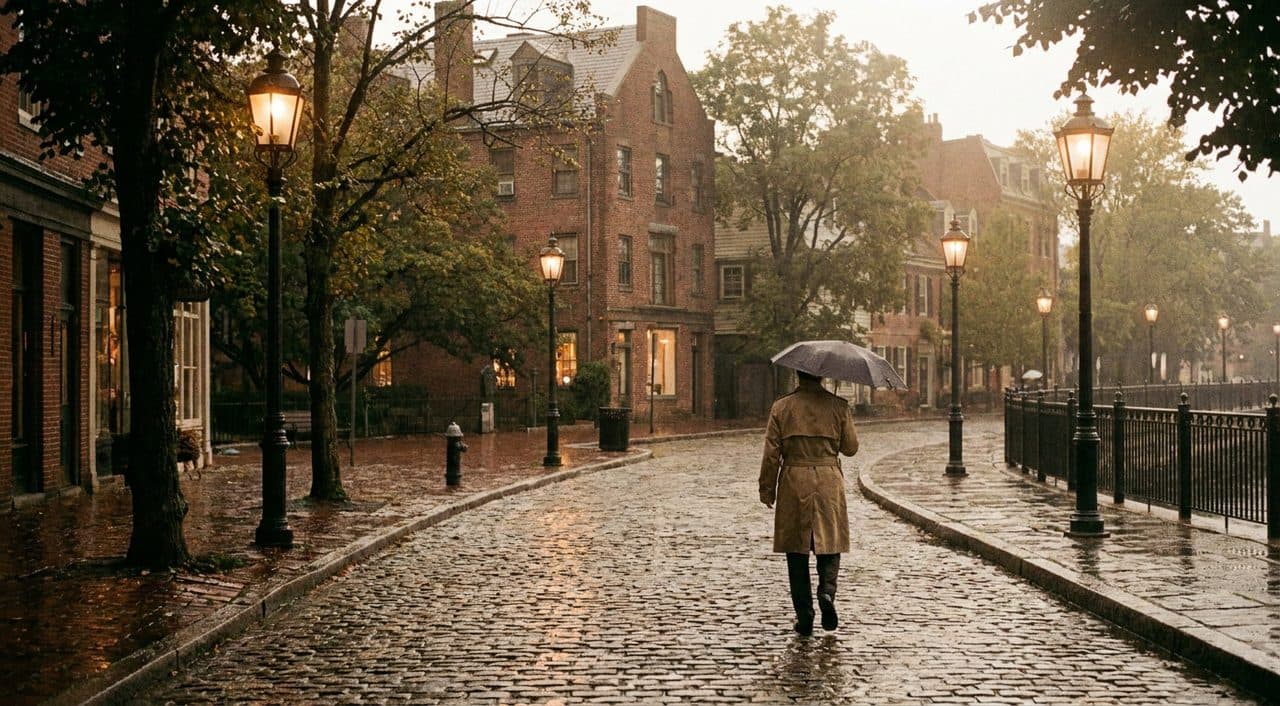
You follow a path that opens onto a green space—part park, part commons, part front yard for the houses that ring it. Families sprawl on blankets. A kid chases a soccer ball across the grass while his father watches from a folding chair, phone in hand. The trees here are older, taller, their trunks thick and gnarled. You find a spot under an oak and sit, pulling out the second empanada. It's cooled completely now, but the cheese is still stretchy, still good. You eat slowly, watching the light change as the afternoon tilts toward evening.
This is the part of the walk where time gets soft. You could sit here for ten minutes or an hour—it doesn't matter. The park has no name that you can see, no sign marking its boundaries. It just exists, a pocket of green in a neighborhood that already feels like a pocket of something else. You finish the empanada, wipe your hands on the wax paper, and tuck the paper into your pocket because there's no trash can in sight and you're not about to be that person.
The Houses That Refuse to Explain Themselves
You stand and keep walking, looping back toward the edges of the Gardens. The houses here are even stranger—more eclectic, less committed to the Tudor theme. You pass a Spanish Colonial with a red tile roof, a Georgian with white columns, a Craftsman bungalow that looks like it wandered in from California and decided to stay. The architectural mash-up should feel chaotic, but it doesn't. It feels like a neighborhood that knows exactly what it is and doesn't care if you understand.
You turn a corner and find yourself on a street lined with sycamores, their bark peeling in pale patches that catch the late-afternoon light. A woman walks past with a dog the size of a small horse, and she nods at you like you're neighbors, like you've lived here for years. You nod back. The dog ignores you entirely, focused on a squirrel that's taunting it from a low branch. The street curves again, and you're back at the archway, back at the edge of the grid.
Practical Notes
Argentina Islandia sits near the intersection of Metropolitan Avenue and Ascan Avenue, an easy walk from the Forest Hills-71st Avenue subway station. The bakery opens late morning and closes early evening, so plan accordingly. Forest Hills Gardens is a pedestrian-friendly maze—wear comfortable shoes and give yourself at least an hour to wander. The neighborhood is quietest on weekday afternoons, but weekends bring a low hum of family activity that feels less intrusive than ambient. No reservations needed, no tickets required. Just show up, grab an empanada, and walk.
Tags: #ForestHillsGardens #QueensWalking #ArgentinaIslandia #TheLongWayHome #ForestHills #NYCNeighborhoods #HiddenQueens #WalkableNYC #EmpanadasAndArchitecture #SlowTravel #UrbanHiking #QueensEats #TudorRevival #NeighborhoodWalks #NYCExploration
Sources consulted: timeout.com · atlasobscura.com · nycgo.com
All trademarks are the property of their respective owners.


