 Where to Eat Near Penn Station That Isn't a Chain
US Open 2026
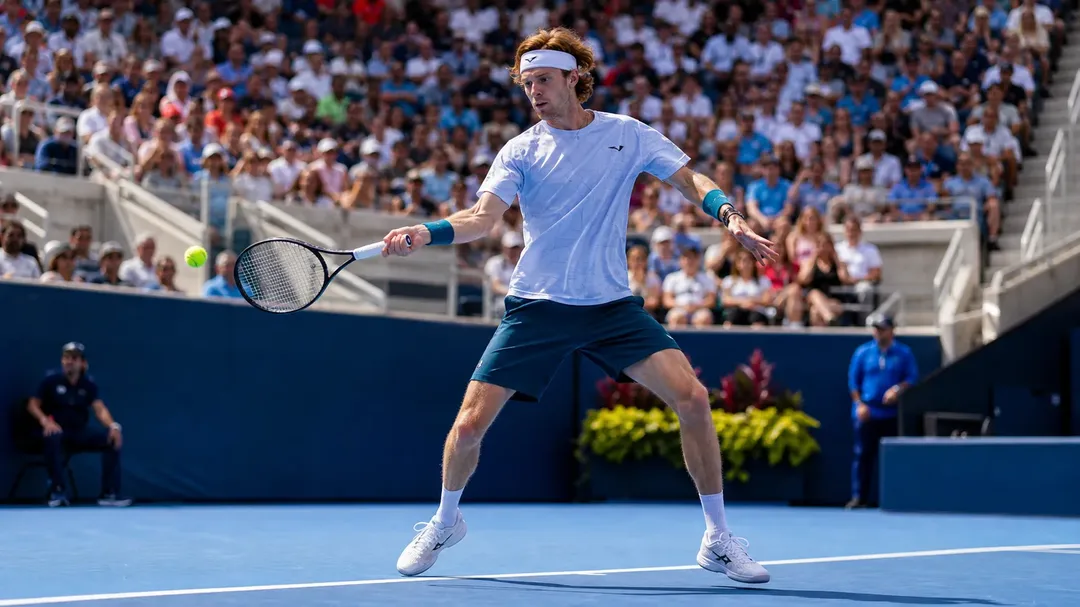
Andrey Rublev’s Forehand Pressure Could Break Open New York Matches
If Andrey Rublev appears in New York, his forehand pace and aggressive positioning could shape hard-court rallies in ways fans can read point by point.
Andrey Rublev’s tennis is easy to recognize even from high in a stadium: early contact, heavy pace, and a forehand that can turn neutral balls into uncomfortable questions. The confirmed, timeless point is simple: Rublev is known for forehand power, pace, and aggressive court positioning. Everything here is conditional rather than predictive. If he is part of New York’s late-summer hard-court conversation, those traits would be especially relevant because hard courts can reward first-strike tennis, clean timing, quick direction changes, and the ability to take time away before a rally settles. For fans, the interest is not only whether a forehand becomes a highlight. It is how pressure accumulates before the obvious ending: a winner, a forced error, a short reply, or a defensive miss. Watching the pattern makes the match more readable.
Text Karpo Now: Tell us what matters most for Andrey Rublev s Forehand Pressure Could, and Karpo can turn current US Open updates into a practical plan before you go.
Forehand Pressure Basics
Rublev’s forehand pressure begins with position. When a player stands close to the baseline and takes the ball early, the opponent has less time to recover, split step, and choose a reply. That does not mean every shot must be a clean winner. Often the more important shot is the one that makes the next ball predictable: a deep forehand through the middle, a sharp crosscourt ball that opens the sideline, or a hard inside-out forehand that pins a backhand corner.
On a hard court, that pressure can feel amplified because the bounce is usually true enough for an attacker to trust timing. If Rublev is landing forehands from inside or near the baseline, he can turn a normal exchange into a test of reflexes. Fans should watch the opponent’s feet after the first heavy forehand. If the defender is still moving while striking, the point is already leaning toward Rublev’s pattern, even if the final shot has not arrived.
Serve And First Ball
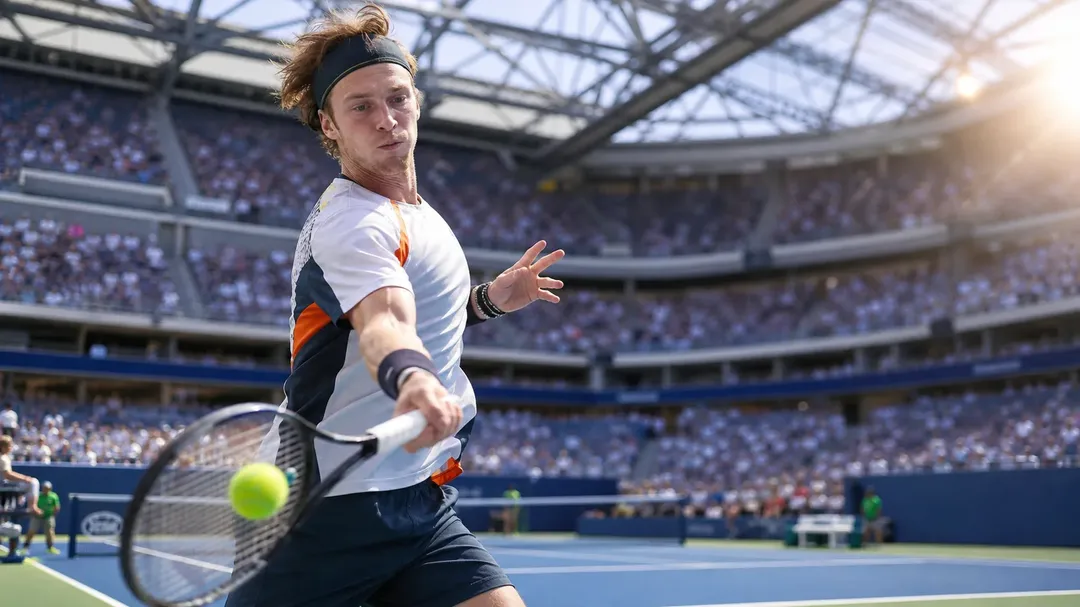
Serve patterns matter because they decide whether the forehand arrives as a weapon or a rescue shot. If Rublev earns a short or central return, the next ball can become the real attack. A serve wide may pull the returner outside the doubles alley and create space for a forehand into the open court. A body serve can jam the returner and produce a floating ball. A serve down the T can shorten the angle and give the server a clearer first strike.
The tactical question is not only where the serve lands, but where Rublev is positioned immediately after it. Aggressive court positioning means he can step forward before the return drops. That half-step can decide whether he controls the rally or has to absorb pace. In New York, where crowd energy can rise quickly after a loud forehand, those first-ball moments may look dramatic, but they are also practical geometry.
- Watch whether the return lands deep enough to push him back.
- Notice if the first forehand goes behind the mover or into open space.
- Track how often a serve sets up a forehand rather than a backhand.
- Look for short returns that let him strike from inside the baseline.
Return Games And Geometry
Return games test the same ideas from the opposite direction. Against a strong server, the first goal may be depth rather than instant offense. If Rublev blocks or drives a return deep through the middle, he can reduce the server’s angle and look for the next forehand. If the return is short, the server can attack first and keep him from setting his feet. That is why one of the best fan cues is return height and depth, not just speed.
Hard-court geometry rewards players who understand when to attack crosscourt and when to change down the line. Crosscourt forehands travel over a lower part of the net and provide more court length, so they are often the safer heavy strike. The down-the-line forehand is riskier but can be decisive because it changes the rally’s direction. If Rublev has time to step around a backhand and play inside-out, the opponent may have to cover a wider diagonal. If he then has the balance to go inside-in, the court can open suddenly.
Movement And Pressure Management
Forehand power only matters if the player can arrive in shape. Movement is therefore the quiet layer beneath the noise. Fans should watch whether Rublev is hitting with his body moving forward, sideways, or backward. Forward contact usually means he has earned time. Sideways contact can still be productive if his spacing is clean. Backward contact is more complicated, because pace without balance may invite errors or leave the court open.
Pressure management is another key. An aggressive player must decide when to keep squeezing and when to reset. In a long service game, a huge forehand might thrill the crowd, but the smarter play may be a deep, heavy ball that prevents the opponent from counterattacking. In a tiebreak-style atmosphere, the same choice becomes sharper: go for the line, hit through the safer target, or use pace to draw a shorter ball first.
For normal readers, the easiest way to read this is to separate intention from outcome. A missed attacking forehand is not automatically a bad decision, and a made winner is not automatically repeatable. The better question is whether the shot came from a balanced position, aimed at a sensible target, and followed a pattern that had been working. Over several games, also notice whether opponents can redirect his pace down the line. That reply can interrupt rhythm and force him to defend from positions he would rather avoid.
- Balanced feet usually signal controlled aggression.
- Repeated late contact can show the opponent is buying time.
- Deep middle balls can be pressure shots, not defensive choices.
- Court position late in rallies shows whether the pressure is holding.
Practical Notes
If Rublev is on a New York court, fans can make the match more readable by following patterns over several games rather than judging one highlight. Count how often he gets a forehand within the first two shots after serve or return. Notice whether opponents keep him near the baseline or push him several feet back. Watch the recovery step after a forehand, because it often reveals whether the next ball will be attacked or survived.
For planning, check official player information and the official event schedule before assuming any session, court, or start time. Do not assume any specific player will appear on a particular court unless the official schedule says so. If you attend, arrive early enough to find your seat, study warmups, and notice court speed from the first few rallies. Bring sun protection for day sessions and a light layer for evening conditions, since late matches can feel different after sunset. If you watch from home or a New York sports bar, keep the schedule nearby and follow completed matches before expecting a start time.
Tags: #USOpen2026 #Tennis #GrandSlam #NewYorkTennis #ArthurAsheStadium #FlushingMeadows #USOpenGuide #TennisFans #SportsTravel #HardCourt #NewYork #KarpoFinds
Sources consulted: atptour.com — Official reference · usopen.org — Official reference · usopen.org — Official reference
All trademarks are the property of their respective owners.
Ask Karpo first
Want to know what is confirmed, when to show up, and how to make andrey rublev s forehand pressure could work for your day? Ask Karpo for current US Open updates, a respectful fan plan, and a live route around Flushing Meadows.
Ask Karpo for more information.
Keep reading
- Where to Eat Near Penn Station That Isn't a Chain
 Andytown Coffee in the Outer Sunset: The Snowy Plover Explained
- Best Things to Do in Chicago: What the City Gives Away