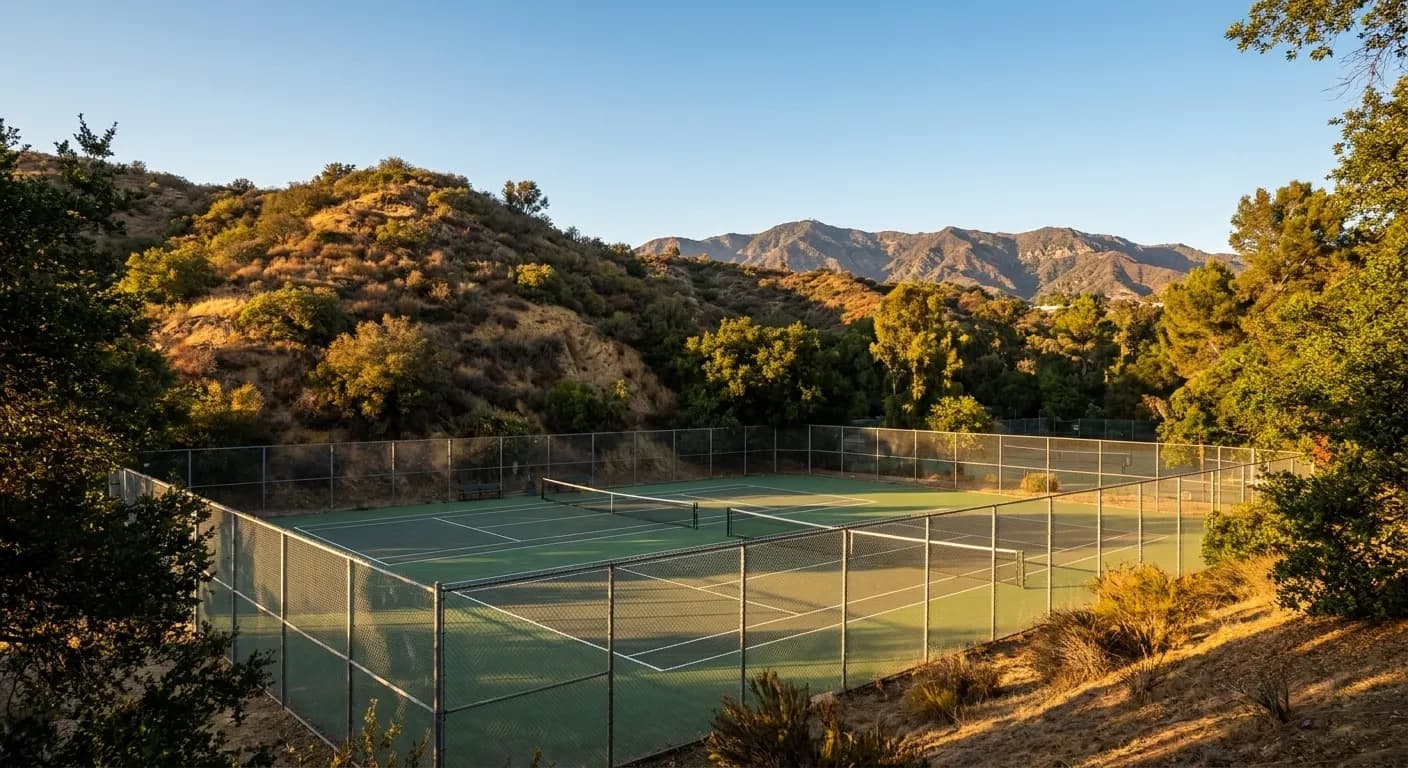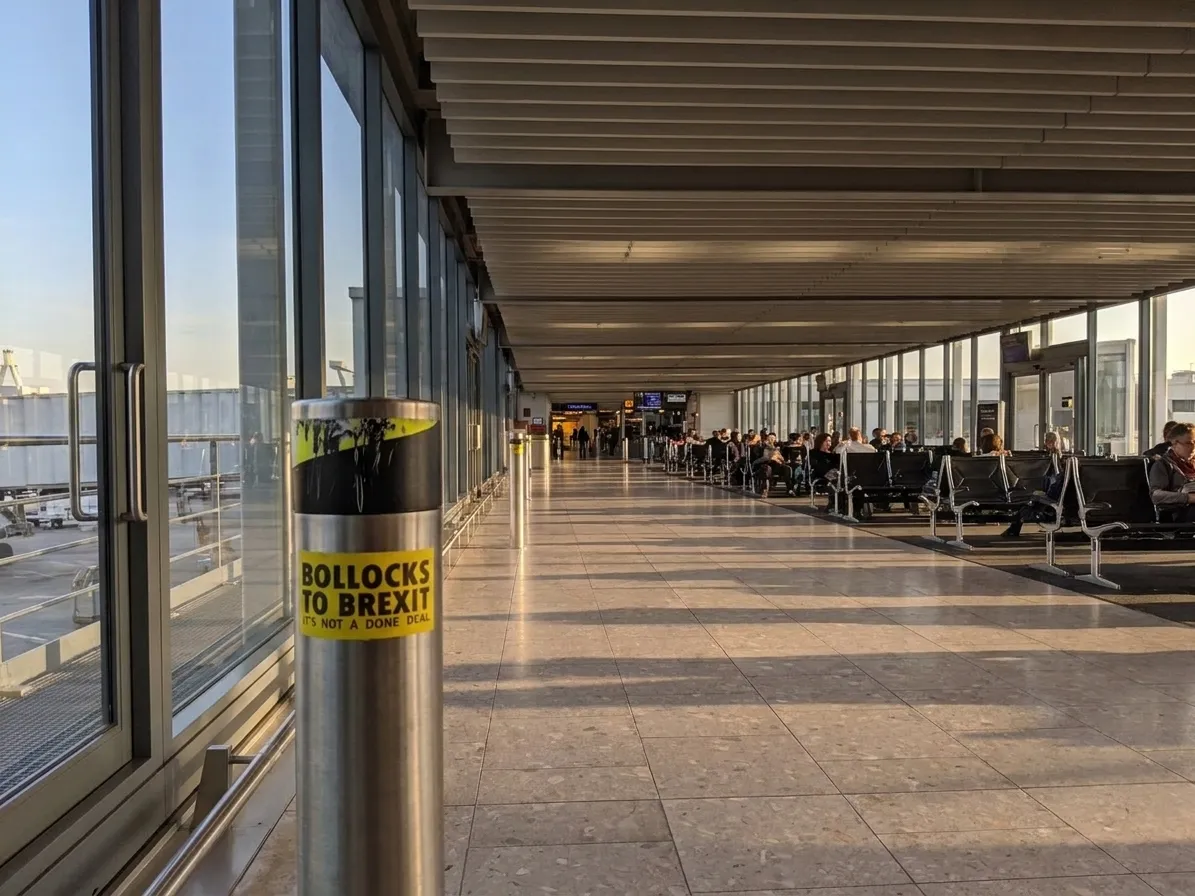
Hollywood Burbank Airport doesn't look like much from the curb. The terminal building is low and beige, the parking structure is a basic concrete box, and the whole facility occupies less land than a single concourse at LAX. But that's exactly why passengers who fly American Airlines to Dallas choose it. You can park, check a bag, clear security, and reach your gate in 25 minutes. The airport handled 4.5 million passengers in 2025—small enough that nothing takes long, large enough that American runs two daily nonstops to DFW. For travelers who live in Burbank, Glendale, Pasadena, or the eastern San Fernando Valley, it's the fastest way to connect to American's hub network without spending half the morning in an airport.
Karpo tracks live security wait times, gate assignments, and parking availability at Hollywood Burbank Airport right now—so you know exactly when to leave for your American flight to Dallas.
Why American passengers choose BUR over LAX
American Airlines operates two daily nonstop flights from Hollywood Burbank Airport to Dallas/Fort Worth, plus service to Phoenix. The Dallas route matters because it's American's largest hub—connecting passengers to nearly everywhere the airline flies. But the real advantage isn't the destination list. It's that you can park your car, clear security, and reach Gate A7 in under 20 minutes on an average Tuesday morning. At LAX, that same sequence takes 90 minutes if nothing goes wrong.
BUR handled 4.5 million passengers in 2025, compared to LAX's 88 million. That difference shows up in every part of the airport experience. Terminal A, where American operates, has nine gates total. The security checkpoint serves all of them. There's one TSA line, it moves, and you're done. No satellite terminals, no people-mover trains, no trudging half a mile to a gate that turns out to be in a different building.
The new terminal that opened in October 2026 kept the airport's compact layout but added 50 percent more square footage—355,000 total. Most of that space went into wider concourses and a larger baggage claim area, not additional gates. The airport authority deliberately maintained the 14-gate count because the goal was comfort and speed, not capacity. For American passengers heading to Dallas, that means Gate A7 is now 300 feet closer to the security checkpoint than it was in the old configuration.
The outdoor boarding quirk that saves time
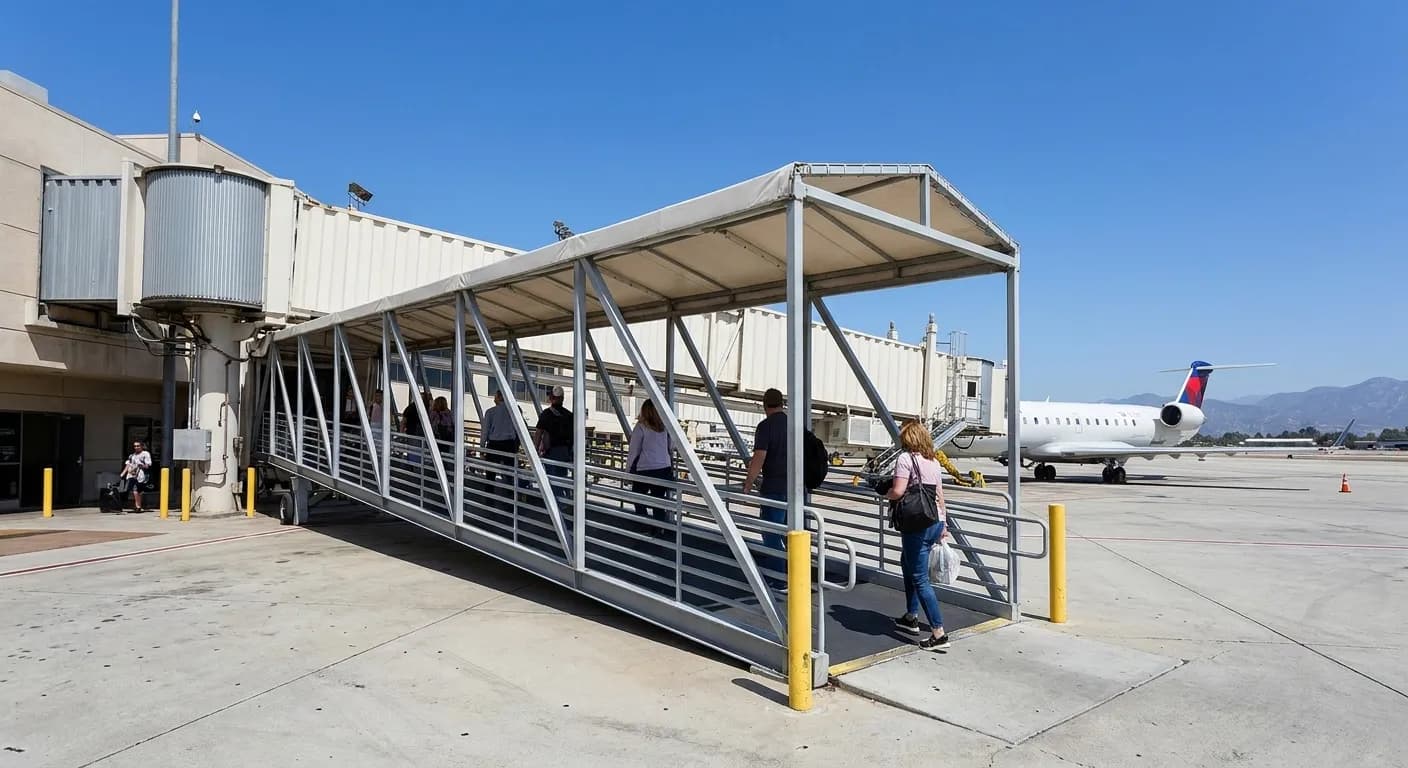
Hollywood Burbank Airport uses open-air jet bridges at several gates, including the ones American typically occupies. You walk down an enclosed jetway, then step outside for 15 seconds before boarding the aircraft. In January it's chilly. In August it's hot. But it also means the airport doesn't need the complex HVAC systems and pressurized corridors that slow down construction and maintenance at enclosed terminals. The result is gates that can turn planes around faster.
This setup traces back to BUR's origins in 1930, when passenger loading happened entirely outdoors. The current terminal, even after the 2026 renovation, preserves that mid-century approach. It's not nostalgia—it's pragmatism. Outdoor boarding areas require less square footage per gate, which keeps the entire terminal footprint small. That's why Gate A9, the furthest gate in Terminal A, is still only a four-minute walk from the security exit.
American's Dallas flights typically depart from Gates A5 through A9, though gate assignments shift based on daily schedules. The outdoor exposure lasts seconds, and the jetways are covered. Passengers who need extra time or mobility assistance board through the same jetway; there's no separate outdoor stair access. The trade-off—brief exposure to weather—buys you a terminal where you're never more than 300 feet from your gate.
Security takes ten minutes, not an hour
Terminal A has one TSA checkpoint on the upper level, near the ticket counters. It serves Southwest (which occupies Gates A1 through A4) and American, Delta, and the returning JetBlue (April 2026). TSA PreCheck lanes are always open. There are no CLEAR lanes, no biometric scanners, no app-based virtual queuing systems. You walk up, show your ID, put your bag on the belt, and you're through.
On a typical weekday morning between 6 a.m. and 8 a.m., the line has 15 to 25 people. Processing takes 10 to 15 minutes from the back of the line to the exit. Friday evenings and Sunday afternoons add volume, but even then you're looking at 20 minutes maximum. Holiday weekends—Thanksgiving, Christmas, Fourth of July—can push wait times to 30 minutes. That's still half of what LAX's Terminal 4 sees on a regular Tuesday.
BUR recommends arriving 90 minutes before domestic flights. That's conservative. If you're checking a bag and it's not a holiday weekend, 60 minutes is workable. If you have TSA PreCheck, know the terminal, and are only carrying a personal item, 45 minutes leaves margin for parking. The airport's size makes those tighter windows possible. There's no chance of ending up at the wrong terminal or realizing your gate is a 12-minute train ride away.
Parking and ground transport that actually work
The short-term parking structure sits directly across from the terminal entrance—maybe 150 feet from the automatic doors. You park, walk two minutes, and you're at check-in. Rates run $13 per day for economy surface lots (Lots C through G) and $28 per day for the short-term structure. Lot G, the closest economy option, has limited covered spaces. A free shuttle runs every 10 to 15 minutes from 5 a.m. to 11:30 p.m. between the surface lots and the terminal.
BUR also offers 24/7 valet parking. You pull up to the terminal curb, hand over your keys, and the valet parks your car in the structure. When you return, your car is waiting at the curb within minutes of your text or call. If you drive an EV, they'll charge it while you're gone for a handling fee. This service exists at a handful of US airports, but it's rare at facilities BUR's size. It costs more than self-parking, but it eliminates the shuttle wait and the hunt for a space.
Ground transit runs through the Regional Intermodal Transportation Center, a five-minute walk from the terminal via an elevated walkway. Metrolink trains stop at the Burbank Airport–South station, connecting to downtown LA and Union Station in about 30 minutes. Amtrak Pacific Surfliner trains use the same platform, running between San Diego and San Luis Obispo with stops in Santa Barbara and downtown LA. If you can't walk the quarter-mile, a free on-demand shuttle operates from 5 a.m. to 10 p.m. BurbankBus and Metro buses stop at ground level in the same center. Rental cars are also housed there, eliminating the off-site lot shuttles that other airports require.
Terminal A layout and what's actually inside
Once you clear security in Terminal A, you're in a single linear concourse. Gates A1 through A4 are to your left, A5 through A9 to your right. Southwest dominates the left side; American and Delta share the right. The concourse has floor-to-ceiling windows, charging stations at every gate area, and enough seating that you're not fighting for a chair even when three flights are boarding simultaneously.
Food and retail options are limited compared to LAX or other major hubs, but that's the trade-off for speed. There's a Starbucks, a grab-and-go market with sandwiches and salads, and a couple of quick-service counters. You're not coming to BUR for a dining experience. You're coming to get on a plane without spending two hours in a terminal. The 2026 renovation added a few more concession spaces, but the focus was on expanding seating and improving restroom capacity, not building a food court.
Because Terminal A and Terminal B share the same building and connect airside, you can walk between them without leaving the secure area. If you clear security at Terminal A but need to reach a United or Spirit gate in Terminal B, it's a four-minute walk through the connector hallway. That flexibility matters when gate assignments change or when you're meeting someone on a different airline. The entire terminal complex—both sides—takes less time to traverse than a single concourse at LAX's Tom Bradley International Terminal.
Practical notes
Hollywood Burbank Airport is located at 2627 N Hollywood Way, Burbank, CA 91505, about 12 miles northwest of downtown Los Angeles. It's accessible from Interstate 5 via Hollywood Way or from State Route 134 (Ventura Freeway) with nearby connections to Route 170 and US-101. American Airlines operates from Terminal A with flights to Dallas/Fort Worth and Phoenix. The airport recommends arriving 90 minutes before departure, though 60 minutes is usually sufficient for domestic flights outside peak travel periods. Short-term parking costs $28 per day; economy lots start at $13 per day. TSA PreCheck is available at all checkpoints. For current gate assignments, security wait times, and parking availability, check the airport's website or ask Karpo for live updates.
Tags: #HollywoodBurbankAirport #BurbankAirport #BURAirport #AmericanAirlines #LosAngelesTravel #LAXAlternative #FastSecurity #SanFernandoValley #DallasFlight #AirportHacks #TravelTips #CaliforniaTravel #BurbankCA #SmartTravel #AirportGuide
All trademarks are the property of their respective owners.
Ask Karpo first
Need to know if Terminal A security is moving faster than Terminal B right now, or whether Lot G still has covered spaces? Just ask me—I'll check live conditions at Hollywood Burbank Airport and tell you exactly what to expect when you arrive.